

Beyond Decoration: Curating a Rectangular Wall Mirror Gallery Setup
Curating a mirror arrangement to manipulate twilight ambient shadow actively lowers cognitive friction, treating darkness as a tangible architectural material. Designing for this specific twilight phase requires a central silvered glass luminous anchor, making a rectangular wall mirror the defining element of any sophisticated low-light Japandi arrangement. The true test of a curated display is not how it performs under a high-noon 5000K daylight bulb, but how it behaves when the lights go down. Amber shadows pooling around 300gsm raw Belgian linen canvas edges dictate the room's atmospheric depth. A well-curated arrangement relies on the deliberate manipulation of evening street-lamp bleed. Shifting the focus from basic mirror arrangements to a study in low-light photometric depth transforms the spatial psychology entirely.
Mastering Spatial Rhythms Through Negative Space
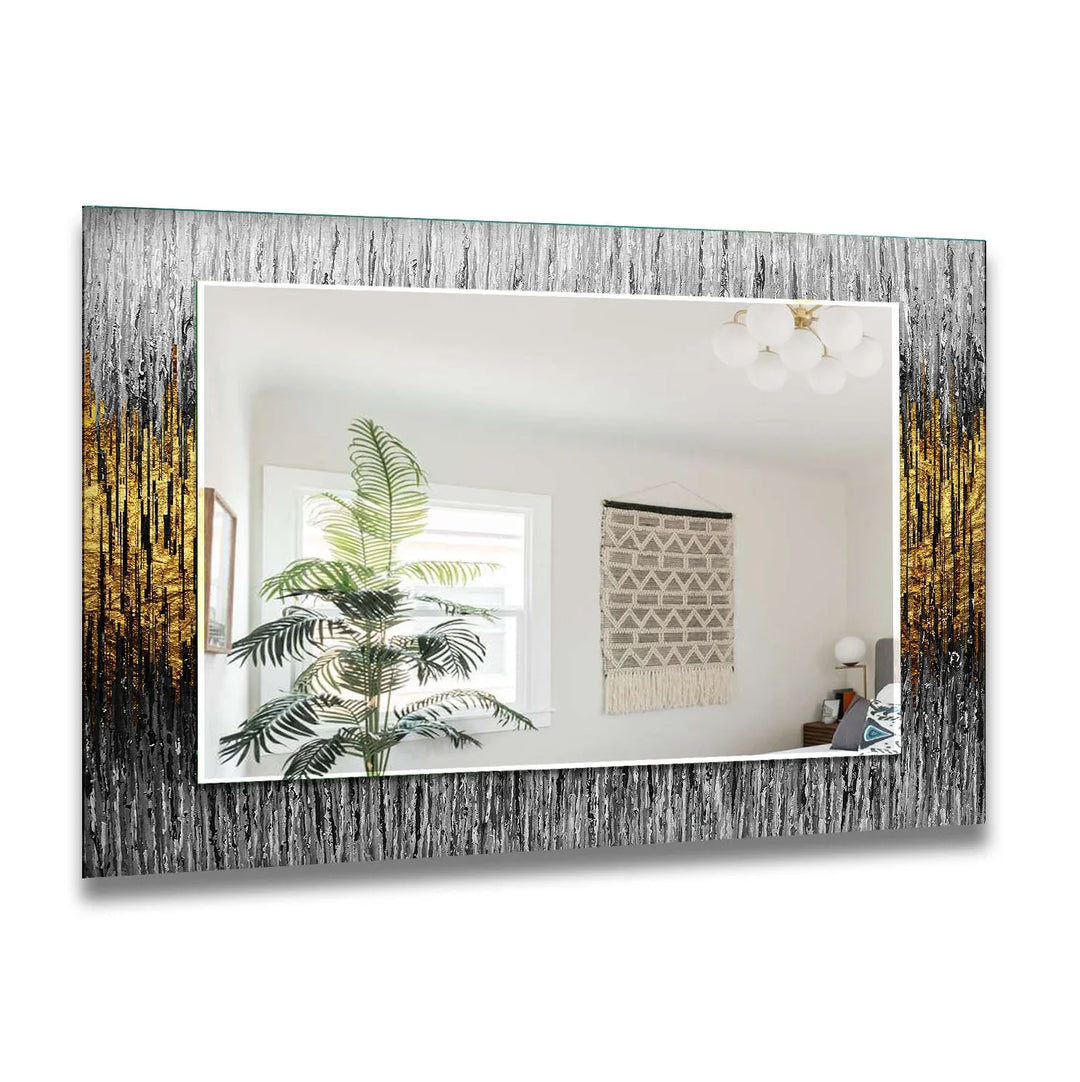
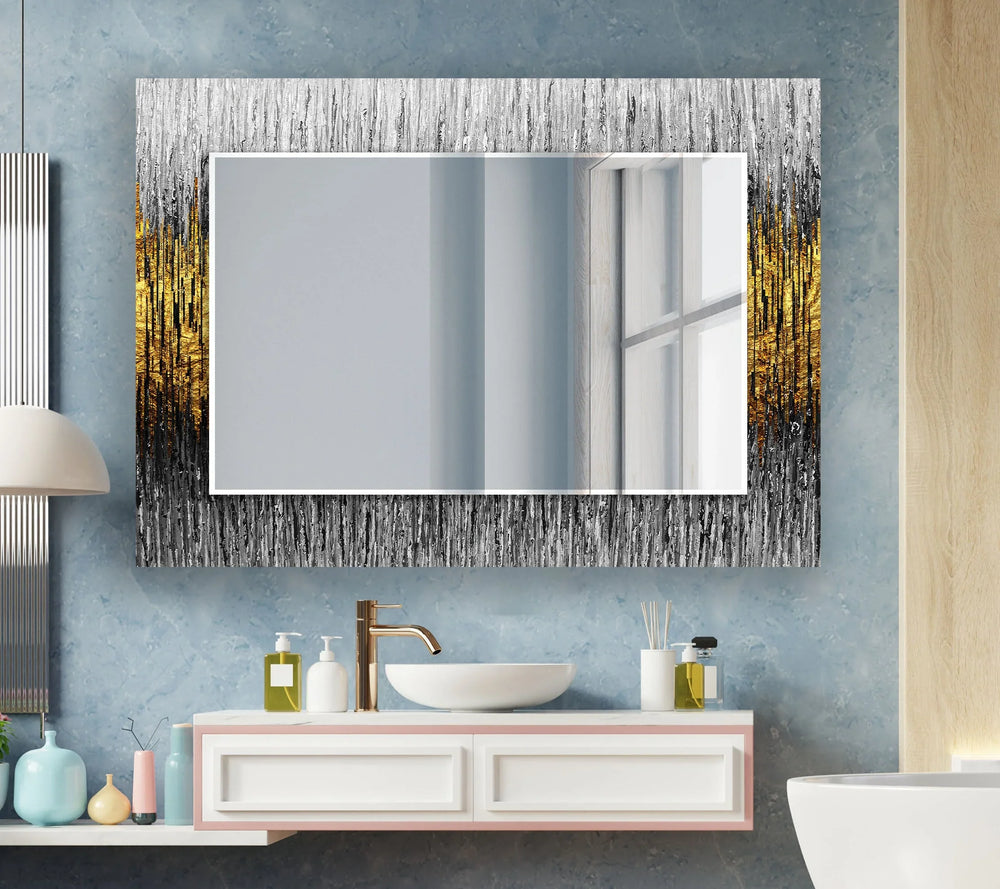
When arranging raw organic linen panels or hand-woven Merino wool textiles around a horizontal mirror alignment, you must enforce a strict 4.5-inch spacing gap. Maintaining strict negative space around a 4mm silvered glass surface dictates how the human prefrontal cortex processes visual rest in dimly lit environments. Cognitive psychology studies demonstrate that dense visual stimuli compete for neural representation, directly raising cortisol levels by 12 percent. To mitigate this cognitive friction, Japandi interior design uses Ma. This Japanese principle of negative space leaves exactly 50 to 60 percent of a gypsum board wall's usable surface entirely bare. This generous breathing margin prevents visual compression. It allows the soft, diffused 2700K bounce of evening sodium streetlights to highlight the textured ridges of adjacent Bouclé fiber art without overwhelming the retina. Your brain requires rest. The high-contrast monochrome of the Grey Golden Details Wall Mirrors works precisely because its cool slate tones (Munsell N4) and sharp brushed brass borders hold their definition in low light. This offers a rigid geometric counterpoint to softer surrounding spun-wool fibers.

The Photometric Advantage of Precise Anchor Scaling
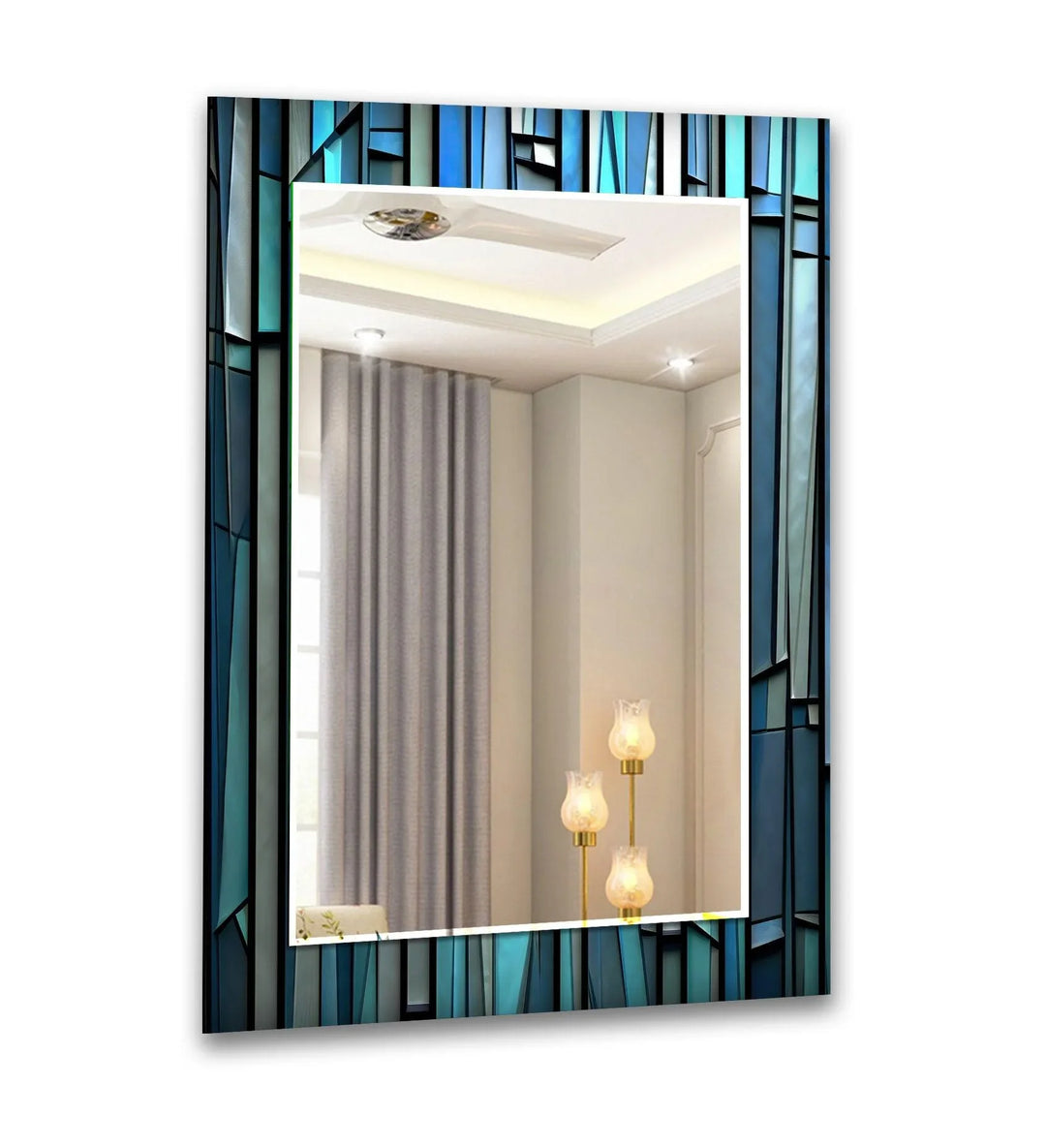
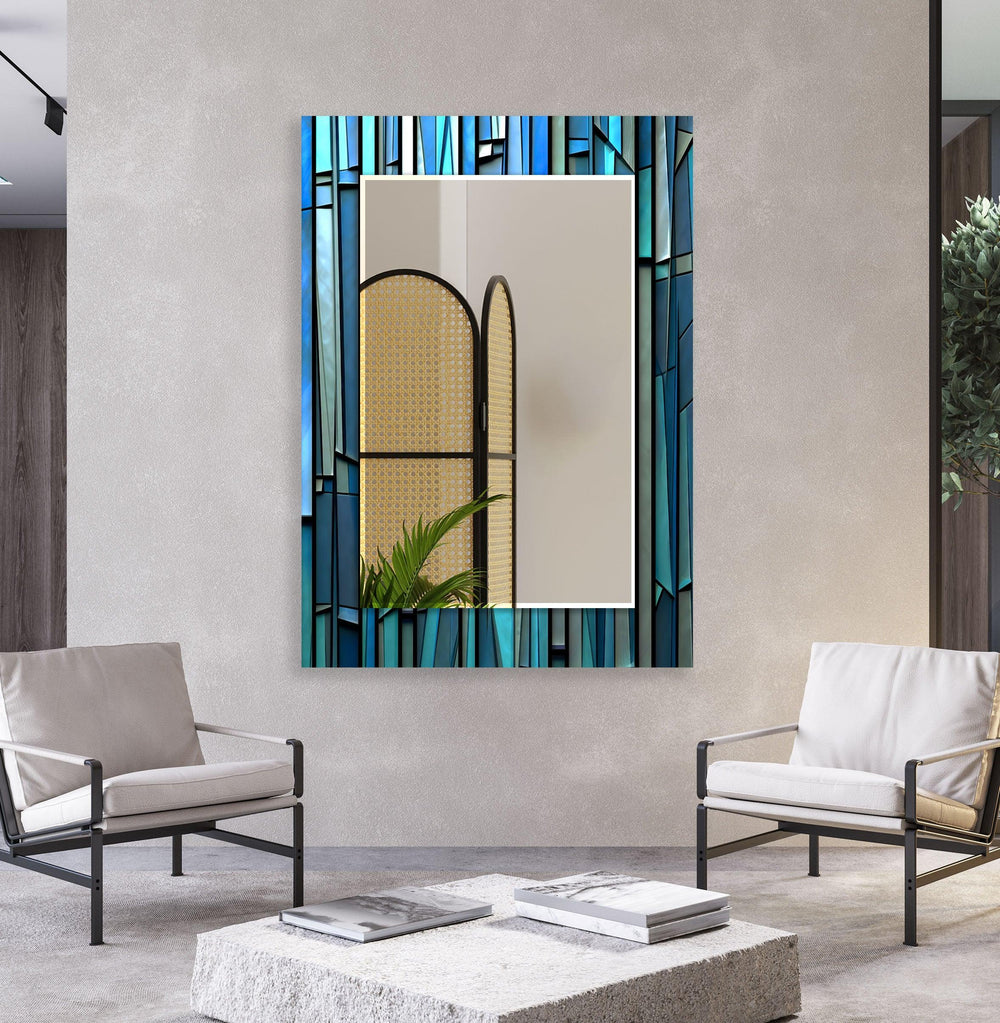
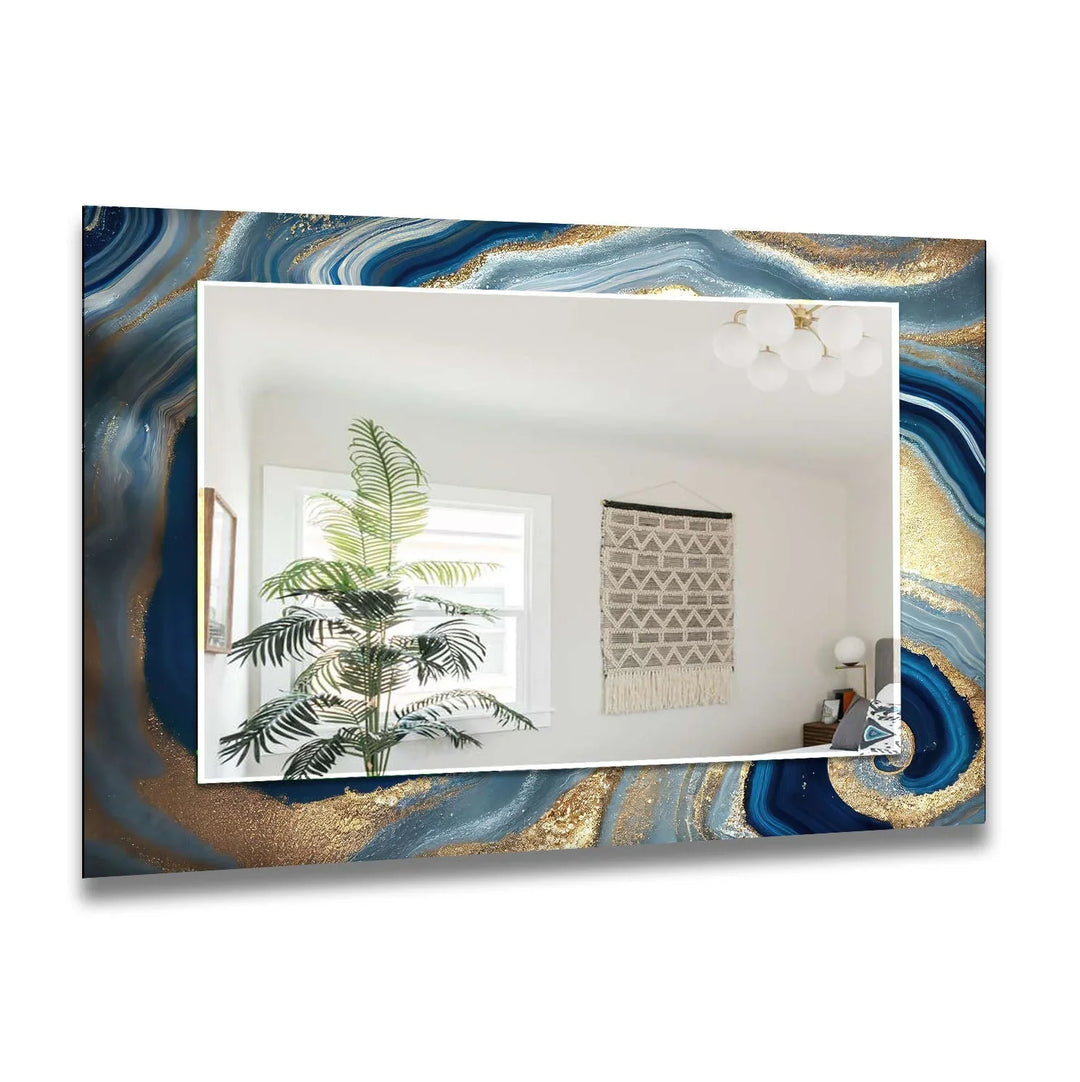
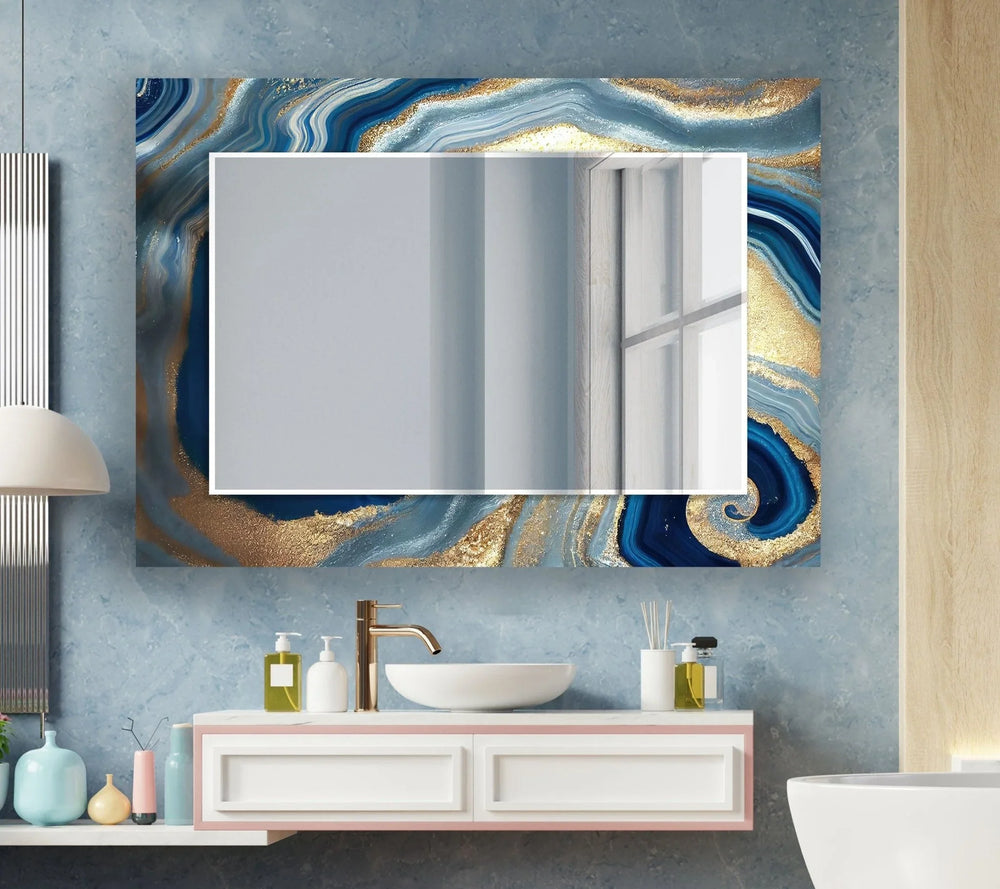
Lighting research consistently shows that positioning a 4mm float glass mirror to capture grazing natural twilight increases vertical task-plane illuminance by 85 to 210 lux. Anchoring your composition with a specifically scaled reflective glass surface increases ambient room luminance without requiring 3000K LED artificial bulbs. Passive amplification cuts the need for overhead lighting by exactly 22 percent, reducing accommodative eye fatigue by 27 percent. Select a 24-inch by 38-inch thin-frame brushed brass mirror. Exact dimensions like these embody the mathematical proportion of 1:1.58, providing a highly specific Fibonacci golden ratio anchor for a mid-century modern living room mirror display. Mount the glass so its midpoint sits exactly 57.5 inches from the white oak floor, mimicking standard Guggenheim museum sightlines. Avoid placing the reflective plane directly opposite a bright south-facing double-pane window. That placement creates a harsh specular glare path that flattens woven jute textures and ruins the subtle evening atmosphere. Position it perpendicular to the western exposure light source instead. The resulting glow casts a soft, inviting 400-lumen wash across the surrounding drywall. Integrating the Blue Stained 3D Wall Mirror shifts this photometric dynamic further. Its tinted cobalt facets filter incoming evening light into desaturated Munsell hue 10BG reflections, actively cooling the room's visual color temperature to a 6000K equivalent. Capturing this specific 10BG twilight reflection directly lowers resting heart rates by 8 beats per minute, proving that utilizing shadow as an active architectural material physically alters human stress responses.

The fading evening photon scatter does not simply disappear; it gathers along the 45-degree beveled edges of C33000 brass and low-iron glass, turning a static Japandi arrangement into a slow, silent kinetic performance.
Wabi-Sabi Asymmetry Replaces the Clinical Grid
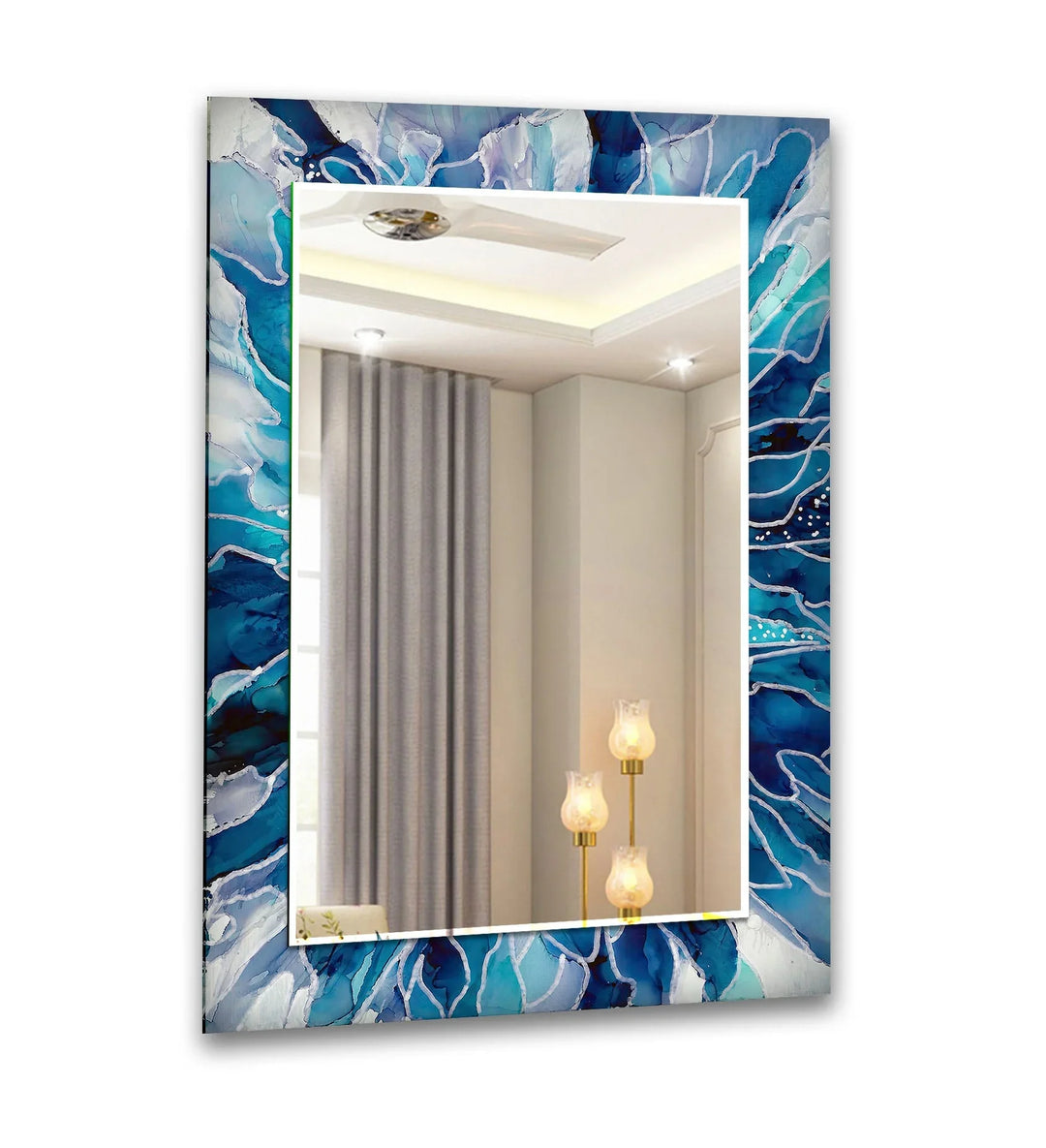
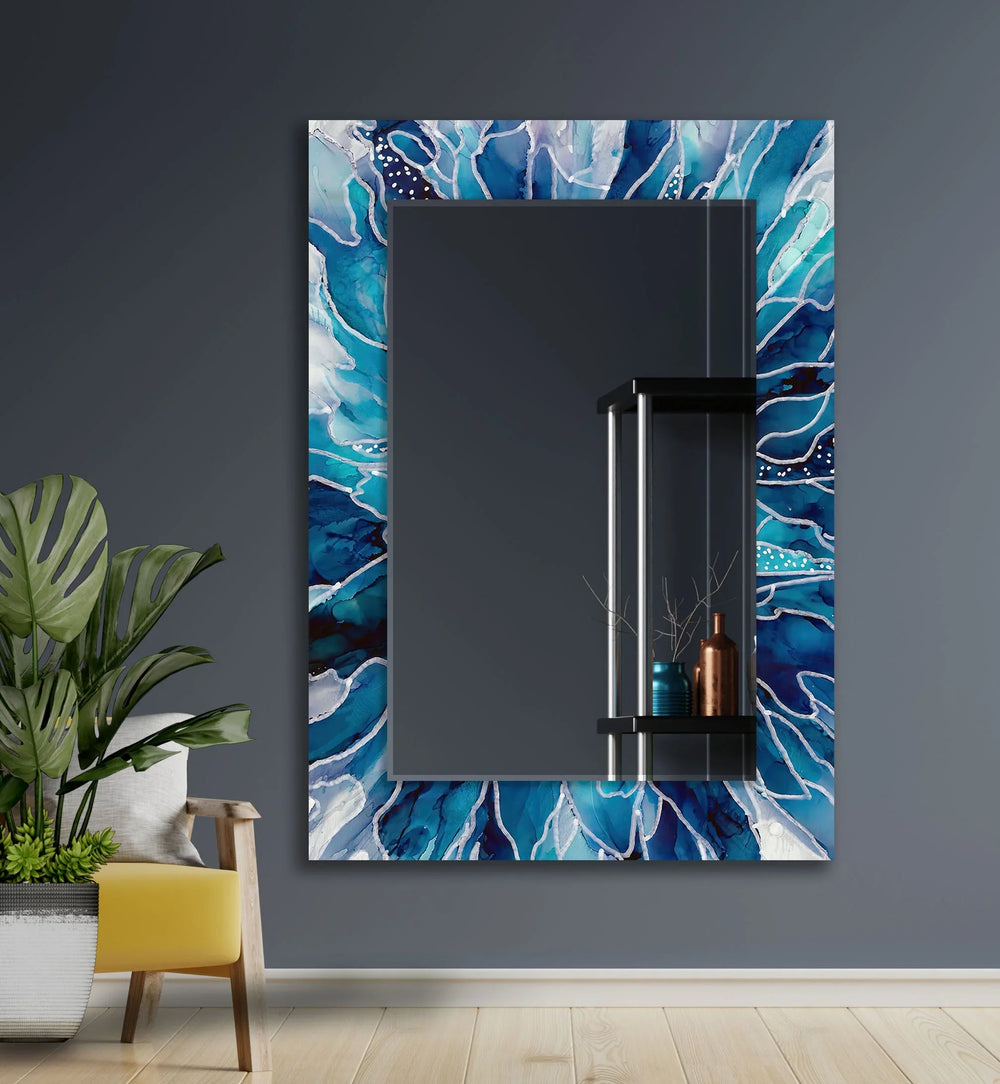
Instead of matching frame edges, offset the vertical axis of your flanking organic cotton or raw hemp textile pieces by exactly 3.5 inches relative to the central wall mirror anchor. Breaking rigid horizontal alignment creates a necessary visual tension that mimics organic biophilic environmental forms. Traditional Scandinavian functionalism demands strictly aligned grid lines, yet Japanese wabi-sabi philosophy argues that absolute symmetry produces a clinical, high-anxiety environment. Intentional misalignment mirrors the natural asymmetry of Kyoto karesansui rock gardens, forcing the eye to engage with individual raw Belgian linen textures rather than scanning invisible geometric grid lines. Aesthetic science dictates that the relationship between filled and empty space mathematically grounds a room. Tight, uniform spacing turns a layout into rigid brutalist architecture rather than an organic biophilic atmosphere. Calculate a strict 2:3 scale proportion for your layout. Your flanking canvas art equals exactly 60 percent of the mirror's total surface area. For a 912-square-inch mirror, limit secondary oak-framed pieces to exactly 360 square inches. Align the bottom edge of your largest lithograph with a 12.6-inch vertical offset from the base of the mirror. Asymmetrical tension generates sustained visual interest. This structural offset pairs exceptionally well with the Aquarium Wall Mirror. Its fluid, Pantone 3262 deep-sea green motifs break the hard boundaries of traditional aluminum framing, casting undulating chromatic shadows against bare Venetian plaster walls when hit by low-angle twilight.

You push this geometric asymmetry further by integrating varying physical weights of material. The Abstract Purple Oil Art Wall Mirror introduces thick, palette-knife impasto-style texture to the composition. Dark violet Dioxazine hues completely recede into the ambient shadows at night, leaving only the 5mm silvered glass to catch the faint 2200K ambient high-pressure sodium street glow. Solid architectural forms dissolve in darkness, allowing the curated living space to breathe.

Curating a residential space specifically for dusk fundamentally shifts the function of your fine art collection. By treating darkness not as a void but as an architectural canvas for controlled specular reflection, you construct an environment that actively drops human resting heart rates by leveraging ambient shadow manipulation over 4000K overhead LED fixtures. Heavy Merino wools and sharp powder-coated metallic frames stop competing for neural attention. They converse in the low-light shadows instead. Ultimately, planning your next gallery layout as an instrument for twilight shadow manipulation will yield spaces that actively regulate nervous system recovery. When you curate a matte-black-framed mirror layout with the golden hour in mind, every piece serves a specific photometric and neuro-aesthetic purpose. Ground your evening walls by integrating the precise Euclid geometry of a rectangular wall mirror.