

Beyond Decoration: Using Best-Selling Art as a Newlywed Anchor
Achieving a deliberate architectural boundary requires scaling your artwork to exactly 60 to 75 percent of the headboard width. A shared space devoid of this defining focal point lacks structural gravity. One bedroom features a low-slung oak frame against an echoing expanse of white drywall, while another places the exact same mid-century slatted bed beneath a deeply pigmented stretch of matte cotton-poly canvas. The former feels temporary, but the second space feels permanent.
Sharing an environment as a newly married couple exposes a stark reality about extreme minimalism: without a focal point, the primary bedroom feels aimless. You lived with the quiet restraint of bare walls by choice, where morning sun strikes pale Venetian plaster, catching the faint texture of a skim coat and the crisp scent of French linen. Shadows pool in empty corners while the low hum of a Carrier HVAC system cycles through the hollow space. Curating a permanent anchor from our most sought-after pieces establishes the visual boundary of your new shared life.
The Mathematics of Shared Architecture
A focal piece must cover exactly 60 to 75 percent of the headboard beneath it to prevent the primary suite from feeling spatially disproportionate. The American Society of Interior Designers (ASID) surveys consistently show that newlywed couples experience significant stress when merging design styles, frequently arguing over undersized, fragmented Pierre-Joseph Redouté botanical lithographs salvaged from previous individual apartments. You resolve this friction with mathematics. Mounting a single 127-centimetre wide horizontal canvas over a standard 193-centimetre California King bed creates an immediate sense of order. The heavy weave of the 400gsm Epson cotton-poly substrate grounds the airy expanse of the ceiling. Mastering these physical dimensions establishes a structural architectural boundary, proving far more valuable than browsing Pinterest for arbitrary inspiration. Focusing on scale before ever looking at colour guarantees design harmony.
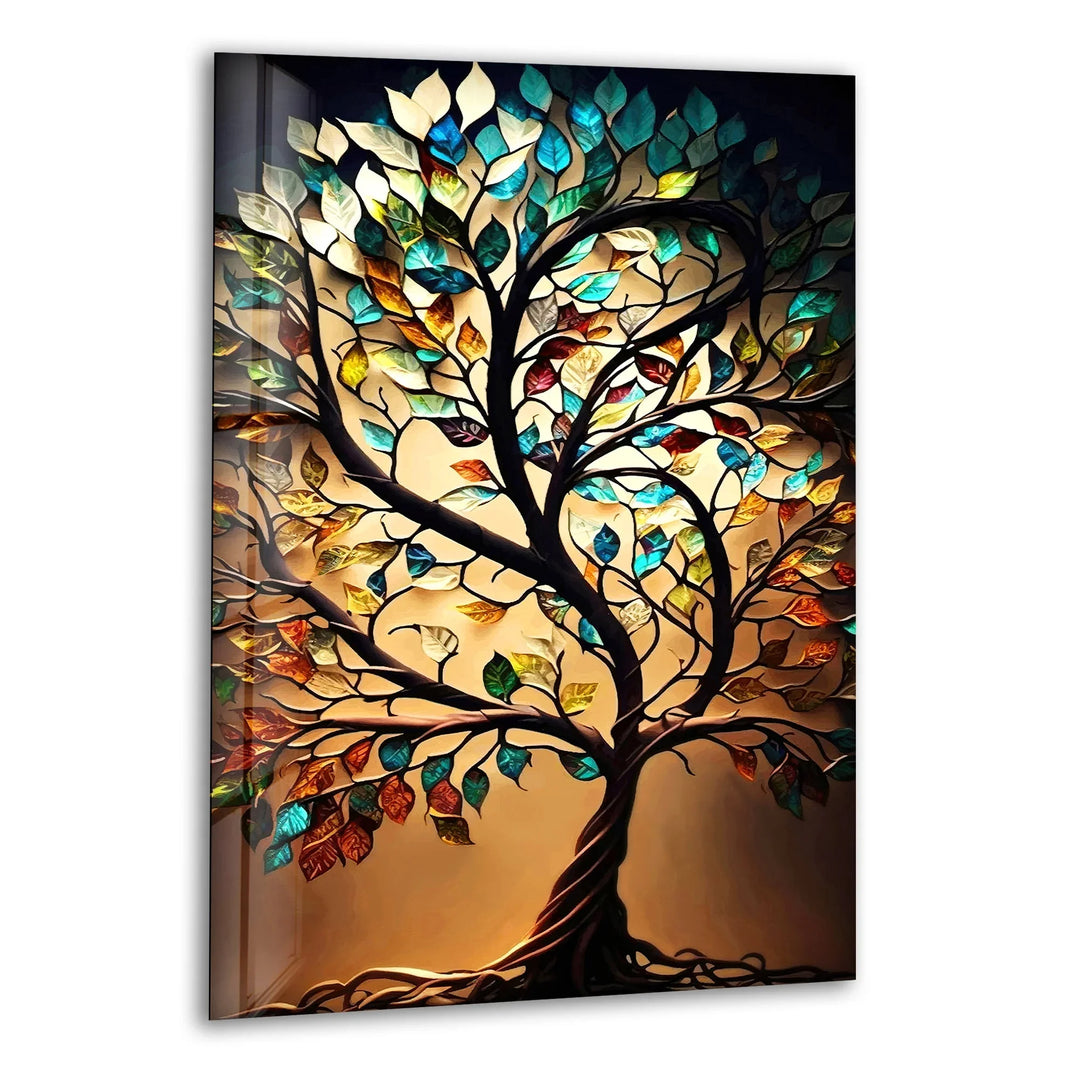
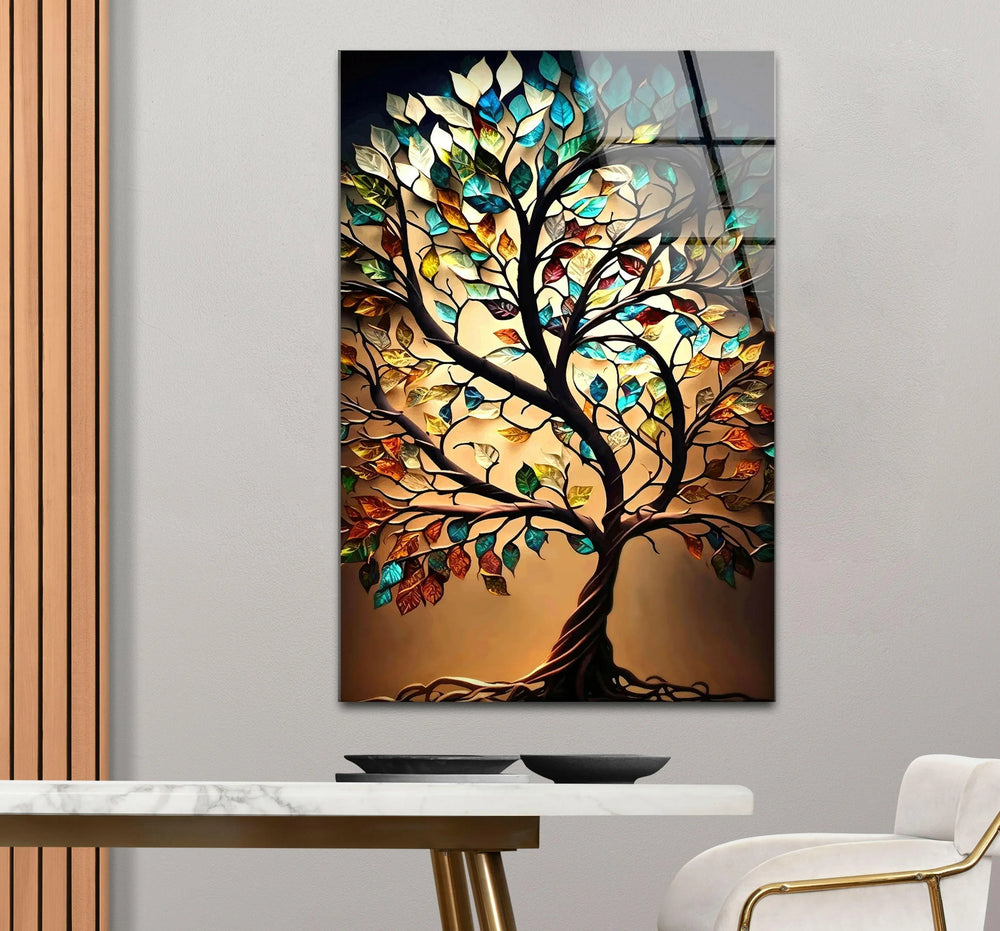
Strict mathematical proportion forces a chaotic room into harmony. Architectural Digest featured designers hang the bottom edge of a frame precisely 15 to 20 centimetres above a tufted chesterfield headboard crown to bridge traditional visual weight with contemporary lightness. You need a piece that holds its own space without crowding the Belgian flax linen pillows below. The Tree with Blue and Gold Flowers Glass Wall Art serves this precise function. Its sprawling composition draws the eye outward across the horizontal plane, while the metallic gold leaf accents catch the ambient daylight filtering through sheer Romo linen drapery. This specific structural configuration anchors the bedroom wall.

Avoiding Colour Coordination in Shared Spaces
An anchoring canvas must function as an independent architectural opening rather than a soft-goods accessory. Coordinating your artwork with a Brooklinen percale duvet cover artificially flattens a primary suite into a staged showroom instead of a layered home. Conventional advice dictates pulling accent hues directly from your textiles, but leading transitional designers like Kelly Wearstler vehemently reject this approach. Matching your art to your bedding produces a rapidly dating aesthetic that amplifies design friction when you swap seasonal Pendleton wool blankets. Studio McGee and other experts require large-scale, atmospheric statement pieces in quiet, tonal palettes of raw umber, bone, and charcoal. These dense Williamsburg oil pigments absorb the sharp morning light rather than reflecting it. Building deep contrast is mandatory. Such a rigorous method creates an environment that easily outlasts the fleeting trends found in the Restoration Hardware 2026 catalogue.
Treating the canvas as an autonomous structural focal point rather than a decorative accessory grounds the room with gallery-grade credibility. Desaturated, textural counterweights intentionally avoid the room's secondary textile colours. The Blue Floral Oil Painting Glass Wall Art exemplifies this independent visual weight. Its thick, palette-knife impasto brushstrokes and moody, Munsell 10B desaturated cerulean tones stand entirely apart from warm Ralph Lauren home fabrics. The cool chromatic range physically lowers the perceived visual temperature of the room. Consequently, the resulting atmosphere feels entirely distinct. Just as New York Times bestselling paperbacks of 2025 quickly fade from memory, superficial colour-matching rapidly loses its aesthetic appeal.

The heavy drag of a palette knife through thick Williamsburg oil pigment catches the 2700K amber glow of a brass bedside lamp, turning a flat drywall surface into a deeply shadowed landscape.
Defeating Specular Glare with Matte Finishes
Archival giclée prints produced with 12-channel Canon Lucia Pro pigment inks and sealed with a UV-inhibiting Hahnemühle matte liquid laminate guarantee your chosen anchor remains unchanged for over a century. The Guild of Fine Art Trade framers state that high-gloss varnishes reflect the pinpoint 2700K warm glow of brass bedside sconces, creating severe specular glare that induces visual fatigue. Rigorous testing confirms this specific 400 gsm acid-free cotton canvas setup withstands standard residential LED lighting for generations. Standard reflective glass glazing destroys bedroom aesthetics. A matte finish actively absorbs that warm illumination, ensuring the texture remains soft. You experience the art, not the harsh reflection of a Philips Hue light bulb. Much like a Penguin Classics edition of Moby Dick that remains relevant long past its debut on the Publishers Weekly top book rankings of 2026, proper archival materials ensure lasting visual integrity.
Selecting a museum-grade material finish prevents your statement piece from becoming an unintentional mirror. The Elephant Carving Glass Wall Art relies on its intricate, deeply shadowed relief rather than a glossy polyurethane topcoat to command attention. Its raw, tactile appearance mimics weathered limestone and rough-hewn oak timber, adding necessary organic friction to a room otherwise filled with smooth Egyptian cotton Sferra sheets and polished walnut mid-century nightstands. This tactile contrast anchors the visual field, drawing viewers to observe the intricate micro-details. Similar to how Cormac McCarthy novels dominate the New York Times top fiction lists of 2026, this elemental texture provides a permanent, unchanging foundation for the space.

A bare drywall expanse offers only a void, but a properly scaled, structurally independent artwork establishes the definitive boundary of your shared environment. You move beyond treating art as a temporary Target accessory and embrace it as a permanent architectural fixture. By selecting a 400 gsm acid-free canvas scaled to exactly 66 percent of a 152-centimetre West Elm Queen headboard width, you eliminate the aesthetic friction that plagues newlywed design choices. Scaling your artwork to cover exactly 60 to 75 percent of the headboard transforms it from a decorative afterthought into a permanent architectural boundary. The primary suite feels intentionally built rather than casually assembled. Just as audiences anticipate a defining cultural shift from a Christopher Nolan IMAX blockbuster release, you curate a defining physical shift in your daily life. Establishing these deliberate structural boundaries with a piece from our most sought-after gallery collection ensures your shared space feels permanent and grounded for decades.