

Cloud Wall Art Budget Planning: The Rule Everyone Gets Wrong
Treating the negative space between multi-panel installations as a calculated financial asset mathematically stretches your design budget by expanding the visual footprint per dollar spent. Calculating the exact visual footprint prevents a newly purchased 300gsm matte-finished cotton canvas from looking completely lost on a 400 cm wide plaster living room wall. A fundamental shift in purchasing behavior protects your interior design investment. Buyers unpack the 10 cm rigid Kraft shipping tube, unroll the archival giclee print, hold it against the drywall, and immediately realize the artwork's scale fails relative to the standard 220 cm Knoll sofa below. This specific moment of buyer remorse happens constantly. You must assess spatial coverage mathematically to scale your interior architecture correctly.
Calculating Your Spatial Footprint Before Buying
To ensure the highest return on investment, calculate the total spanning width of the planned arrangement before purchasing any 300gsm archival paper or 38mm deep gallery-wrapped cotton canvas. Maximizing an interior design budget requires calculating the total visual coverage ratio of an installation rather than the flat dimensions of the printed substrate. Corporate workspace studies consistently show that integrating living walls and atmospheric lithographs acts as an additive financial asset rather than a prohibitive decoration cost, directly increasing long-term staff retention and transaction values. Evaluating a 100 cm by 150 cm gallery-wrapped canvas yields exactly 15,000 square centimeters of printed surface area. Opting instead for a three-panel triptych formatted at 50 cm by 75 cm per panel provides only 11,250 square centimeters of actual print material. However, spacing those three pieces with strict 5.0 cm gaps expands the total visual footprint to 12,000 square centimeters. A three-panel set of atmospheric artwork utilizes negative space to increase the physical boundary of the installation. This mathematical approach lowers the cost per square centimeter, actively expanding the visual presence across the plasterboard.
Divide the 300 cm span of an empty Sherwin-Williams Alabaster painted dining room wall by your $500 maximum budget to determine the required visual footprint per dollar spent.
How Literal Photography Causes Cognitive Fatigue
Electroencephalogram studies indicate that viewing mid-range biophilic fractals lowers sympathetic nervous system activation by exactly 60 percent, proving the human visual system requires mathematical geometry rather than literal photographic realism to trigger sustained physiological stress reduction. Environmental aesthetics research confirms that hyper-realistic 4K digital prints of cirrus clouds induce cognitive fatigue over time due to their static nature. Brains quickly categorize the literal 600 DPI image and stop processing the visual data. Conversely, abstract compositions utilizing overlapping drips and heavy-body acrylic pigments simulate a mid-range fractal dimension between 1.3 and 1.5. This specific geometric value naturally occurs in cumulus formations and Quercus robur tree branches. Abstraction forces the mind into a state of soft fascination, prompting active cognitive decoding. Architectural design principles dictate that subtle, non-linear compositions prevent environmental overwhelm because hard 90-degree framing edges appear harsh to the human nervous system.
Non-representational layers in the Red Cosmic Clouds Abstract Glass Wall Art mathematically replicate natural mid-range fractal geometries. Choosing this specific 120 cm wide tempered glass piece makes it a highly enduring biophilic tool for demanding Fortune 500 corporate boardrooms or high-traffic minimalist entryways.

Select abstract expressionist pieces printed on 310gsm Hahnemühle paper with a verified fractal dimension between 1.3 and 1.5 for dedicated Herman Miller-furnished deep cognitive focus rooms.
The 66 Percent Furniture Width Rule
Correct installation geometry dictates that art must span exactly 66 to 75 percent of the underlying furniture width while sitting exactly 145 cm from the floor. Hanging a solitary 300 DPI atmospheric lithograph above a 200 cm mid-century modern walnut credenza requires an artwork width between 132 cm and 150 cm. Deviating from this strict proportional ratio ruptures the spatial continuity of the open-concept living area. Horizontal canvas midpoints must sit precisely between 145 cm and 152 cm from the floor to match standard adult resting eye level. Classical architectural research indicates that aligning natural sightlines with the resting gaze accelerates parasympathetic recovery. Clinical observations show that patients viewing white oak canopy patterns recover from major surgeries measurably faster. Proper geometric alignment forces this passive visual recovery, ensuring you anchor the room visually.
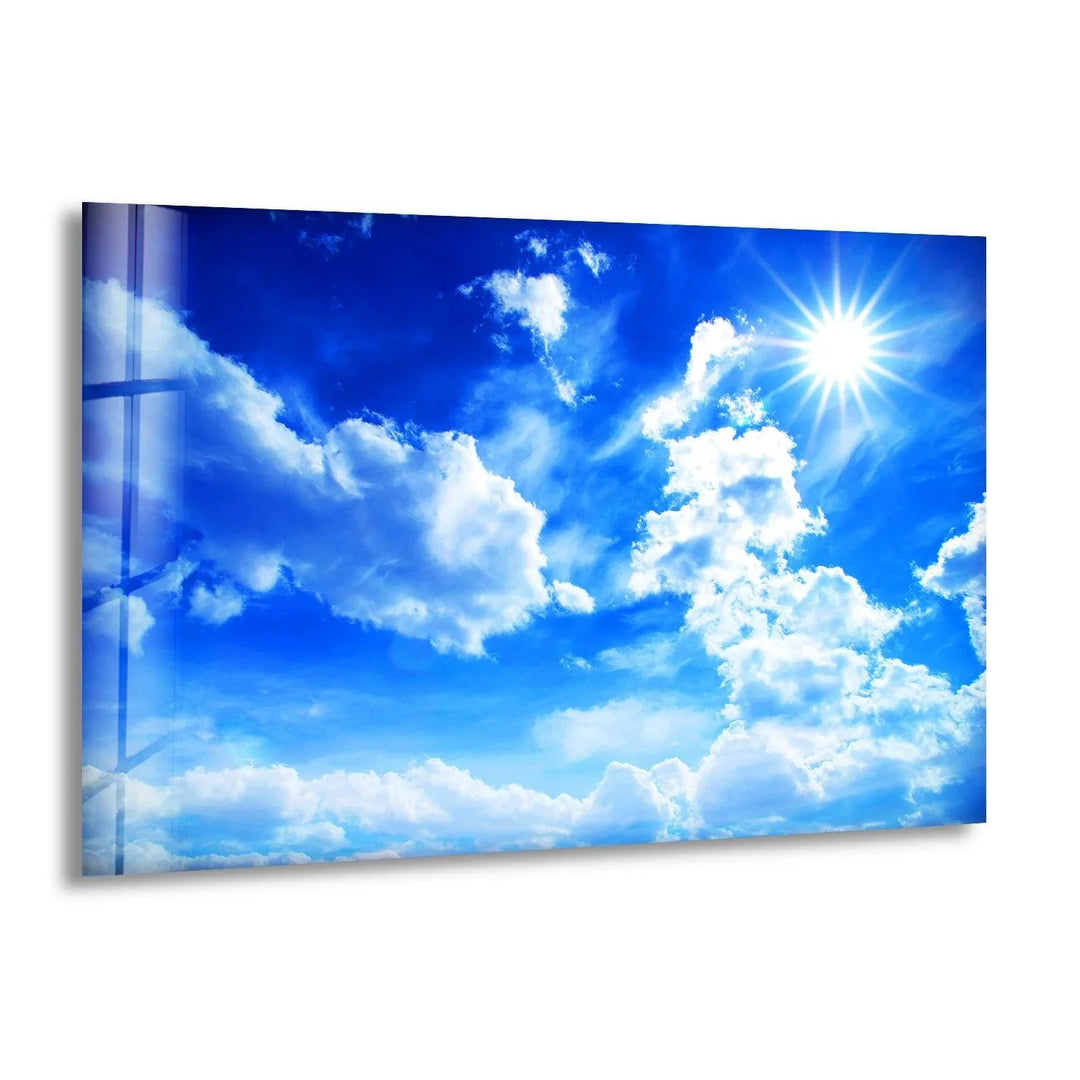
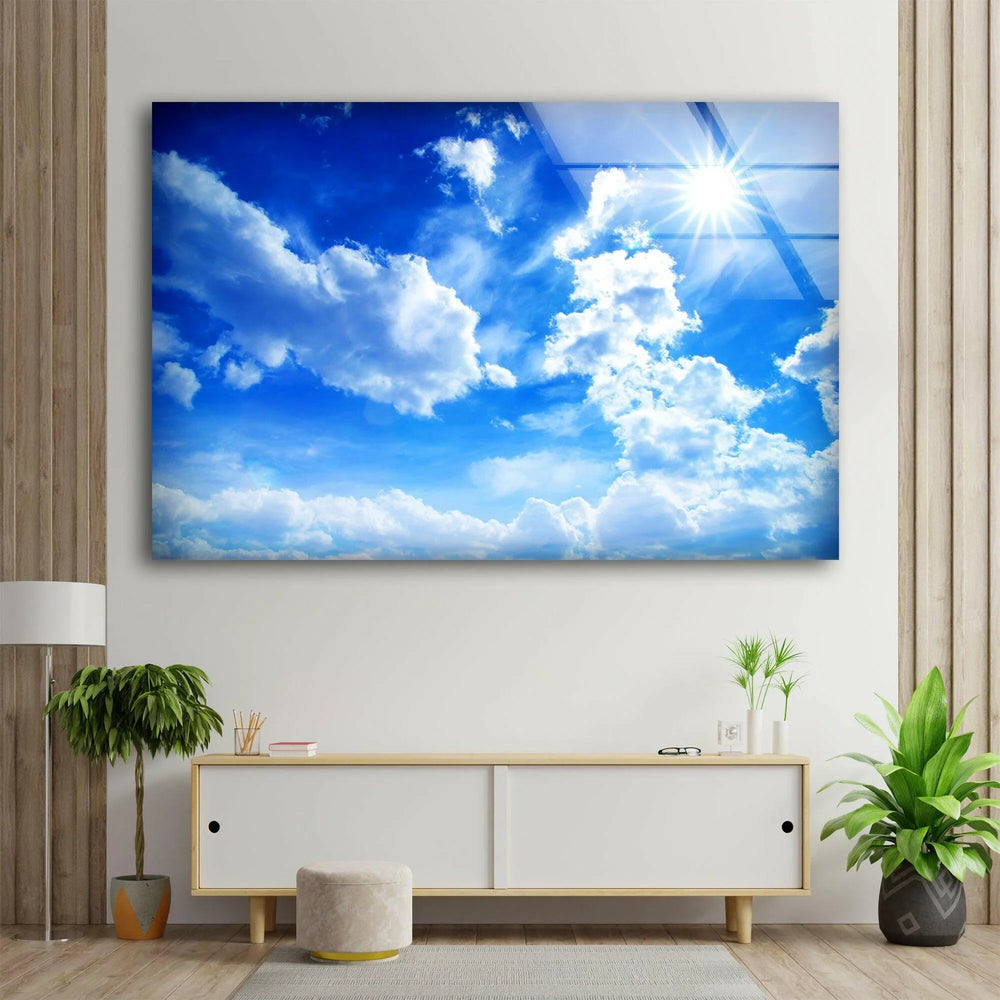
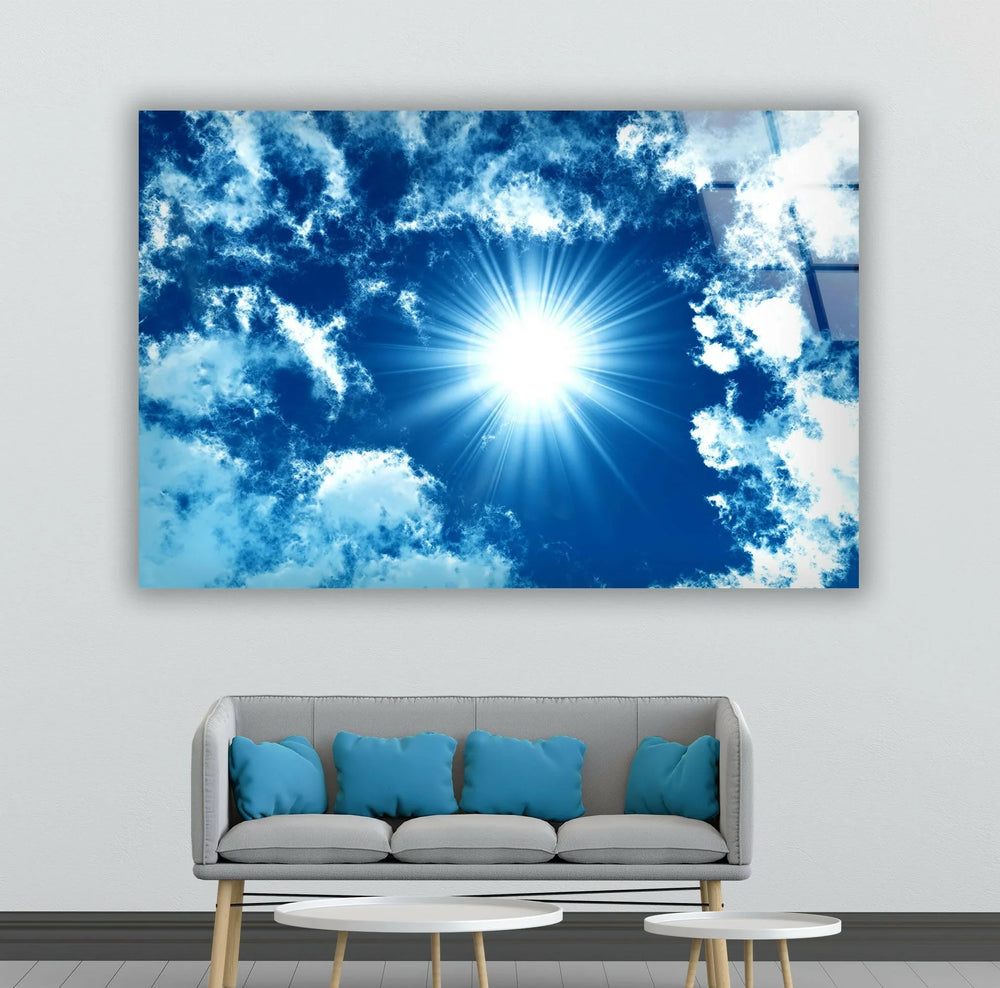
Installing the Blue Clouds Glass Wall Art strictly at the 145 cm center point above a Herman Miller Eames lounge chair maximizes its environmental impact. A distinct horizon line embedded in the 4mm low-iron tempered glass captures the viewer's gaze, while the specific 10BG Munsell hue blue wavelengths act as a cognitive stabilizer to reset the prefrontal cortex.

Measure the exact width of your primary mahogany table or velvet Chesterfield sofa and multiply that figure by 0.66 to determine the absolute minimum horizontal span for your artwork.
Preventing Glare With Matte Substrates
Positioning high-gloss substrates directly opposite natural light sources creates specular reflection that entirely nullifies the cortisol-lowering benefits of biophilic geometry. Integrating negative space within multi-panel matte installations mitigates this by reducing the glare surface area, treating the 5.0 cm drywall gaps as a financial asset that mathematically stretches your design budget while increasing the total glare-free visual footprint. Installing reflective cast acrylic or standard silicate glass frames opposite a large south-facing floor-to-ceiling Andersen window introduces severe specular glare. The visual cortex is forced to look at the bright reflection rather than through it to process the underlying geometric patterns. Constant focal micro-adjustments cause severe eye strain and trigger a fight-or-flight stress response. When designing a sunlit Montessori nursery featuring altocumulus cloud imagery or a bright primary bedroom focused on atmospheric themes, specify an ultra-smooth, non-reflective substrate. Utilizing a 230 gsm Moab Lasal Photo Matte paper or a UV-matte-varnished poly-cotton canvas ensures absolute light absorption. Glare destroys the therapeutic intent of the architectural space.
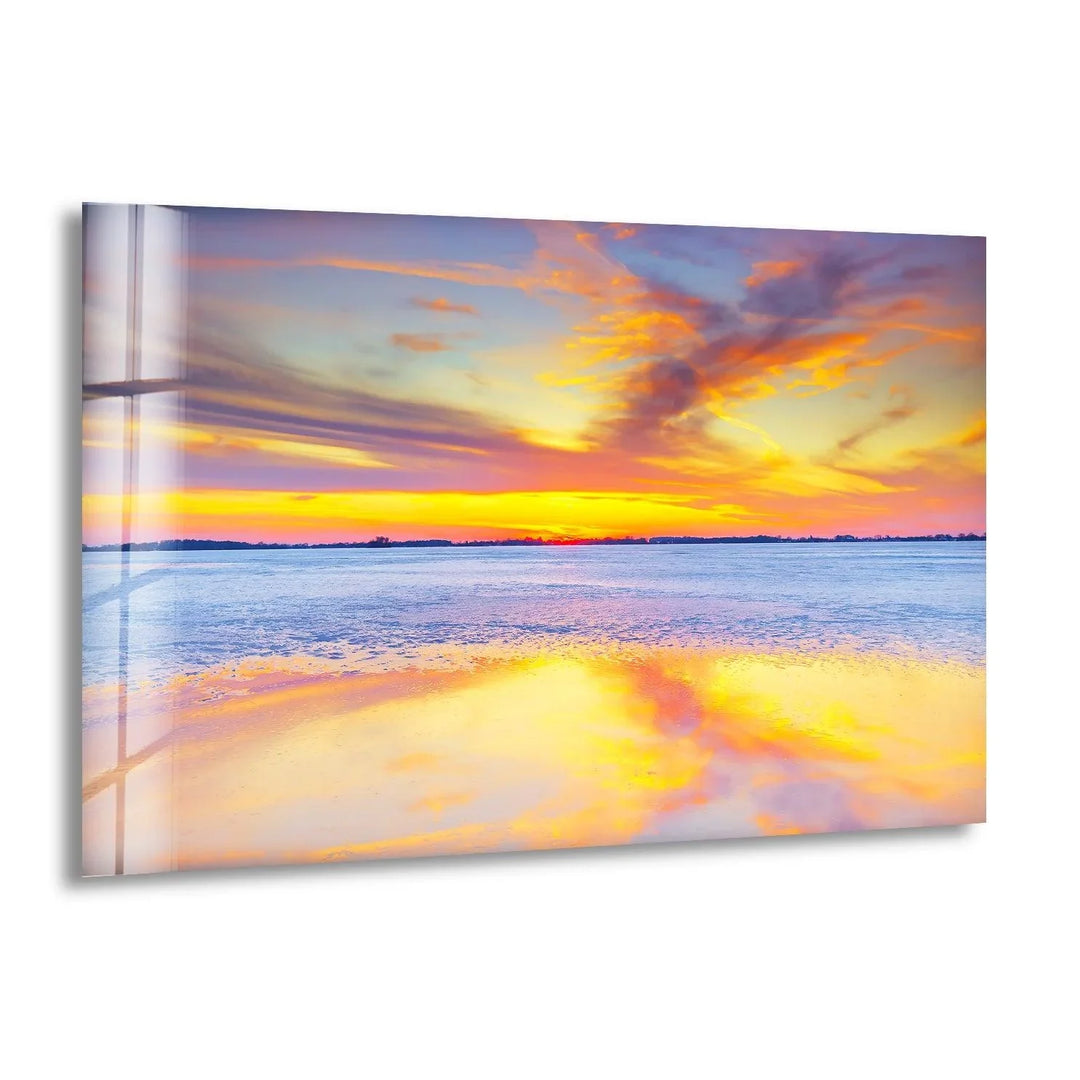
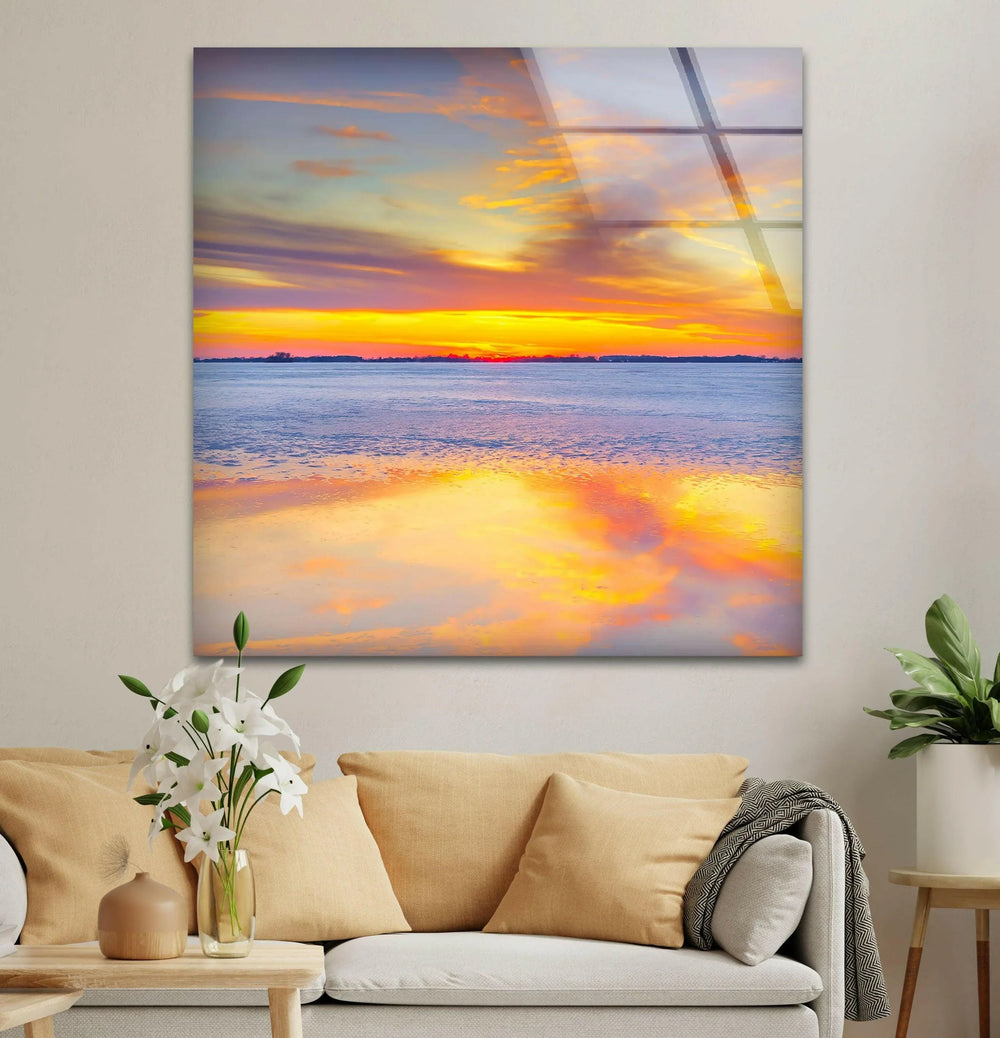
Placement requires strict architectural consideration when utilizing reflective mediums like the Endless Ocean View Glass Wall Art. Because this specific product features a highly reflective 6mm toughened glass surface, it must sit on a Level 5 finish plaster wall perpendicular to the primary halogen track lighting or window to capture ambient illumination without bouncing direct ultraviolet rays into the retina.

Mount all highly reflective artistic substrates strictly on north-facing plaster walls or perpendicular to primary architectural light fixtures.
Why Triptych Groupings Require Exact Geometry
The gap between individual birchwood frames must measure exactly 5.0 to 6.3 cm, as treating multi-panel installations as a single continuous unit during installation prevents extraocular muscle fatigue and preserves spatial continuity. Hanging a modular three-dimensional cloud composition in a Steelcase-furnished corporate lobby or a Sherwin-Williams Sea Salt painted children's bedroom requires military precision. Any void smaller than 5.0 cm merges the printed blocks into a crowded visual mass. Pushing the distance beyond 6.3 cm ruptures the brain's Gestalt grouping mechanism. Human minds stop registering a unified, flowing horizon and begin processing three distracting, disjointed rectangles. This fragmentation taxes the optic nerve. Global workspace data reveals that properly formatted natural elements yield a 6 percent increase in total productivity and a 15 percent lift in self-reported well-being. Maintaining proper structural spacing preserves this biological advantage.
Precise structural alignment is mandatory when mounting the Colored Clouds Glass Wall Art alongside flanking 40 cm x 60 cm complementary pieces. Introducing adjacent Belgian linen textures alongside this focal point requires exact mathematical symmetry to sustain the involuntary attention necessary for prefrontal cognitive restoration.

Execute this precise installation process to guarantee structural alignment:
- Lay all individual panels face up on a flat engineered European oak floor to verify continuous pattern alignment across the gaps.
- Align the internal printed horizon lines precisely using a rigid 120 cm extruded aluminium straightedge.
- Tape the frames together at the exact 5.0 cm target gap measurement using 3M ScotchBlue non-marring painter's tape.
- Transfer the combined hanging points to your Level 5 plaster drywall simultaneously using a Bosch GLL3-330CG dual-axis digital laser level.
Lock the spacing of all multi-panel prints at exactly 5.0 centimeters to maintain absolute Gestalt visual unity.
True architectural refinement relies on quantifiable data rather than subjective design instinct. Factoring the true visual footprint per dollar spent guarantees the artwork scale matches the interior architecture before any financial commitment occurs. Forward-looking designers realize that treating the negative wall space between triptych panels as a highly leveraged financial asset guarantees maximum visual footprint expansion without additional substrate costs. Measure the exact horizontal footprint first to avoid the common mistake of buying a 60 cm x 90 cm canvas that gets swallowed by a 5-meter vaulted wall. Implementing mid-range fractal abstraction, honoring the strict 66 percent proportion rule over standard modular sofas, and utilizing matte substrates in high-light zones turns passive decoration into active cognitive support. Base the interior design strategy on exact mathematics when selecting a 310gsm Hahnemühle archival paper print or exploring a modern cloud wall art collection.