

The Energy Effect: Rethinking Beach Wall Art for Cognitive Focus
A deliberate injection of high-velocity blue-green wavelengths through high-gloss ocean photography physically alters room lighting to sustain cognitive energy. One commercial office in London features flat Gyproc plasterboard walls and heavy eyelids by mid-afternoon. Another workspace maintains sharp focus, crisp ambient light, and consistent biological alertness through gallery-grade acrylic prints, despite identical steel-frame architecture.
The Victorian terrace home office measures four by five meters. A single south-facing window casts harsh, directional glare across a solid Tasmanian oak desk. Dust motes drift through stagnant air. The visual field remains locked on a backlit 27-inch Apple Studio Display for hours. Shadows stretch long across the bleached floorboards as the sun dips below the suburban Manchester rooflines. The space feels entirely static. It drains momentum. An environment lacking dynamic visual stimulus quickly induces cognitive monotony. Your eyes strain against the rigid geometry of plaster and wood.
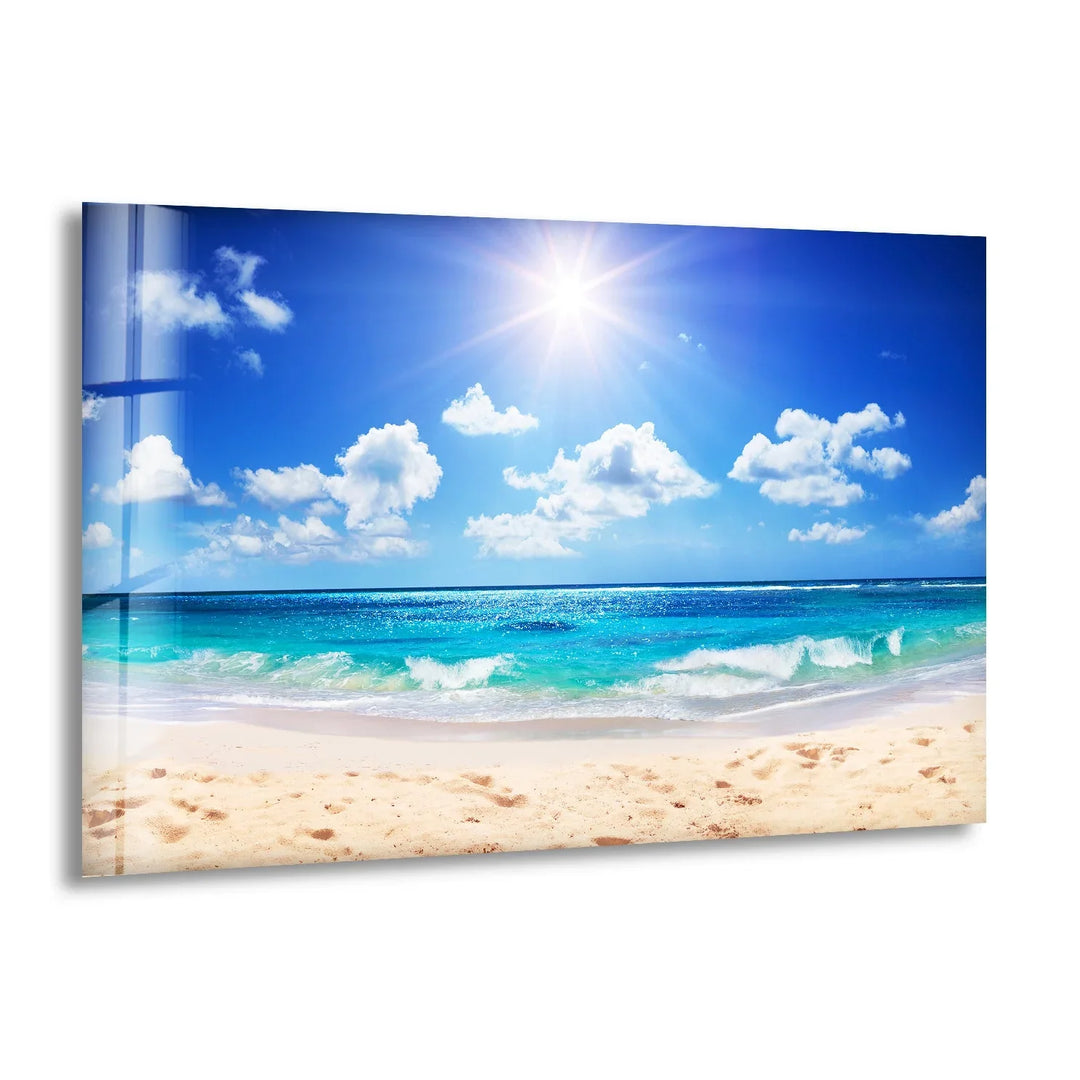
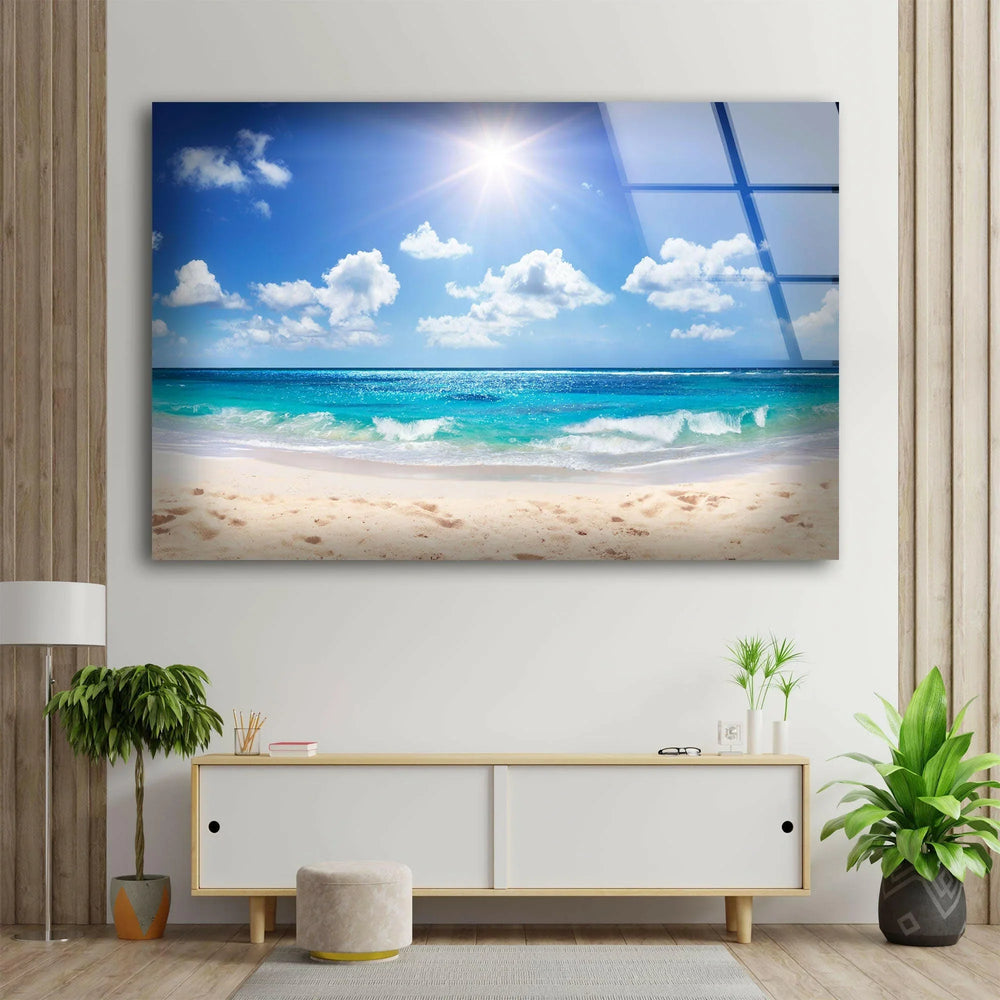
High-gloss, active water imagery acts as a passive light conduit. It refracts specific 450 to 495 nanometer wavelengths to sustain cognitive energy and biological alertness. Introducing deliberately chosen beach wall art initiates this exact biological response. Standard Bauhaus-inspired interior styling treats pictures as mere decoration. True optical tools serve a functional purpose. A strategically placed large-format Hahnemühle fine art print alters the physical light composition of the room.
Harnessing the Biological Potency of Short-Wavelength Light
The presence of 460-nanometer short-wavelength blue light systematically suppresses the endogenous sleep hormone melatonin to sustain daytime alertness. Circadian biology demonstrates that lighting peaking around 460 nanometers acts as a powerful environmental cue. It stimulates intrinsically photosensitive retinal ganglion cells directly. Even passive ambient reflections trigger this highly specific biological response at intensities as low as 30 to 50 lux. Flat, misty grey North Sea horizons induce parasympathetic relaxation. Lowered cognitive drive follows naturally. Selecting low-contrast art causes mental sluggishness. You need active movement. Dynamic, high-velocity Pacific Ocean waves capture soft fascination without effort. The brain interprets the visual turbulence as engaging rather than exhausting.
Environmental psychology research notes that indoor active water features like cascading glass fountains provide a dynamic visual stimulus. This constant movement prevents the mental exhaustion associated with flat indoor environments. Psychologists Stephen and Rachel Kaplan developed Attention Restoration Theory around this exact mechanism. Natural patterns with high fractal complexity automatically hold our gaze. A breaking crest of a Hawaiian pipeline wave allows the prefrontal cortex to rest. Deep Pantone teal water and crisp white foam provide sharp visual contrast. The simulated breeze feels palpable. Exposure to these dynamic blue spaces reduces physiological indicators of autonomic nervous system arousal within 120 seconds. Participants exposed to high-contrast National Geographic nature photography consistently show a 20 percent improvement in directed attention capacity, primarily because high-gloss ocean photography physically alters room lighting by refracting 450 to 495 nanometer blue-green wavelengths to sustain cognitive energy.
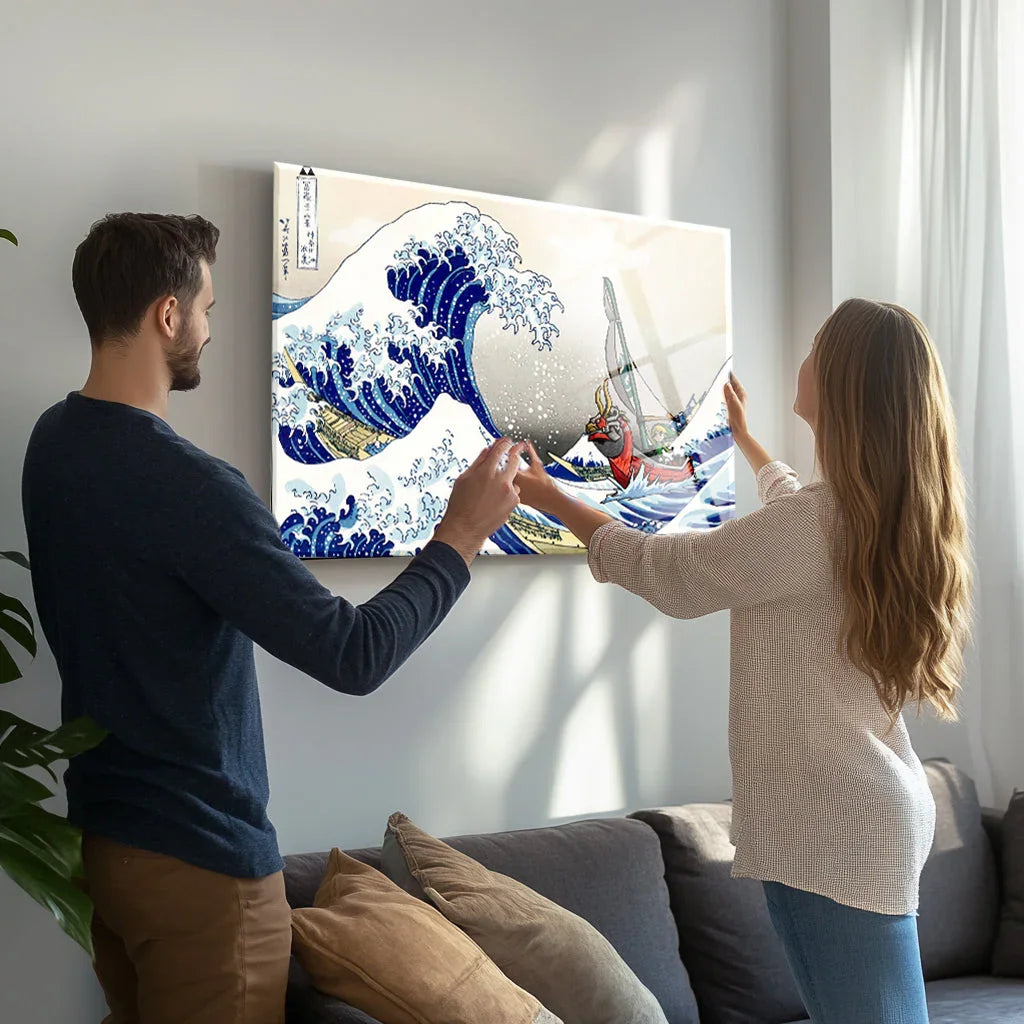
Select pieces depicting high-velocity kinetic motion to maximise cognitive recovery. The Shallow Serenity Surfboard Wall Art anchors a space through its aggressive contrast. Deep cerulean blues clash against bright titanium white surf. A composition mimicking Katsushika Hokusai-style dynamic ocean waves creates immediate interest. This specific colour ratio increases physiological arousal. It mentally energises the brain without requiring active concentration. Human eyes track the surfboard cutting through the turbulent water. Such tracking is a biological reflex. You feel the kinetic force. Precise 12-color Canon ProGRAF high-definition printing captures the micro-droplets of sea spray, holding your attention entirely on the physical power of the ocean.

Why Architectural Glass Outperforms Traditional Matte Finishes
High-gloss architectural-grade Starphire glass acts as a passive light conduit mimicking the natural shimmer of moving water to increase photon density. Traditional workplace design strictly dictates matte surfaces like 310gsm Hahnemühle heavy cotton paper or a standard polyester-blend canvas used for coastal decor to eliminate distracting reflections. Such an approach ignores optical biophilia. A high-gloss Tru Vue Optium polymer finish actively projects short-wavelength light. It captures ambient daylight and scatters it across the room. Tempered glass reflects the physical properties of actual ocean water. This material interaction feels highly stimulating. The surface acts as a mirror for ambient photons, successfully doubling the presence of specific daylight wavelengths within your four walls.
The smooth glass surface refracts those specific 450 to 495 nanometer wavelengths directly into your peripheral vision. This sustained exposure maintains cognitive energy throughout long workdays. Avoid placing highly reflective prints directly opposite unshaded south-facing floor-to-ceiling windows or an unshielded Philips Hue directional spotlight. Resulting specular glare forces your pupils to continuously constrict. It causes severe ocular fatigue. All restorative benefits vanish entirely. Instead, mount the Lucite acrylic piece on a wall perpendicular to your primary light source. Sunlight grazes the glossy face at an angle. A soft luminous glow follows naturally.
Positioning determines biological impact. Incoming daylight hitting the reflective face at a ninety-degree angle produces a specific visual rhythm.
The afternoon sun strikes the polished Plexiglas polymer surface, casting a Benjamin Moore aquamarine reflection across the Gyproc plasterboard that dances in time with the shifting daylight.
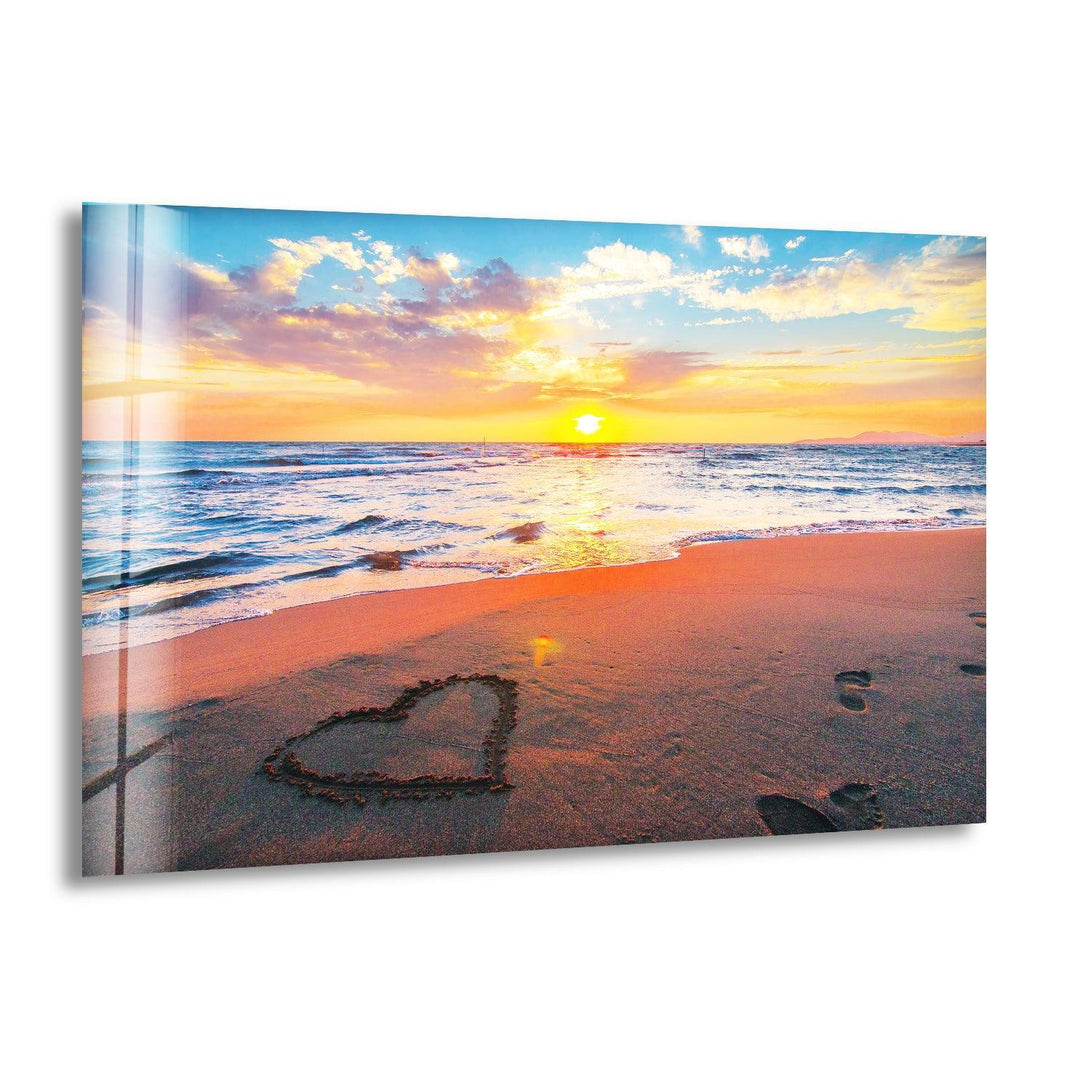
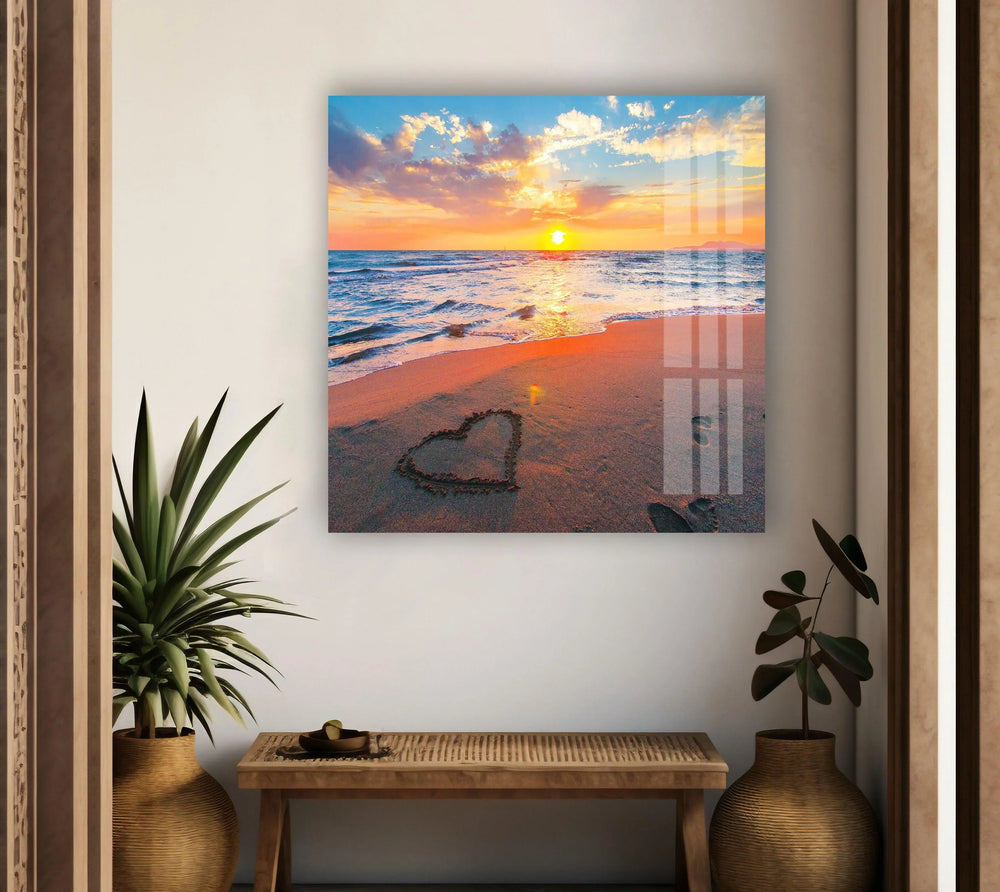
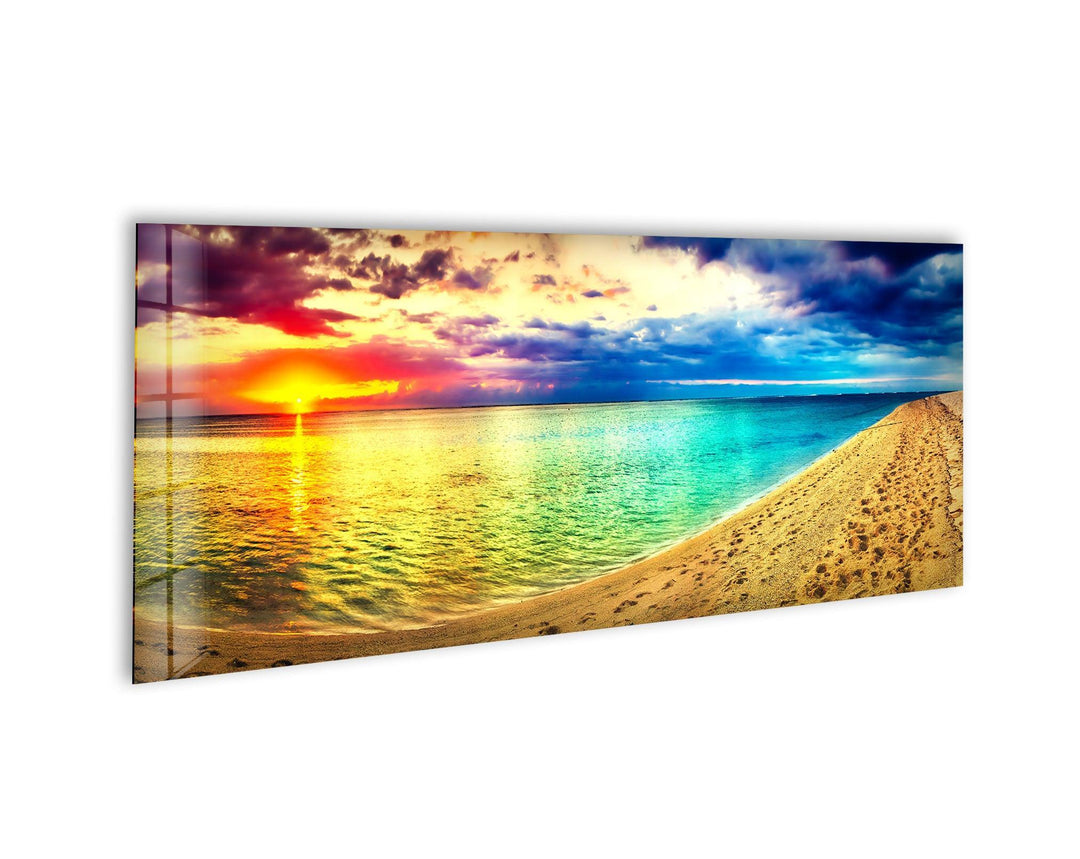
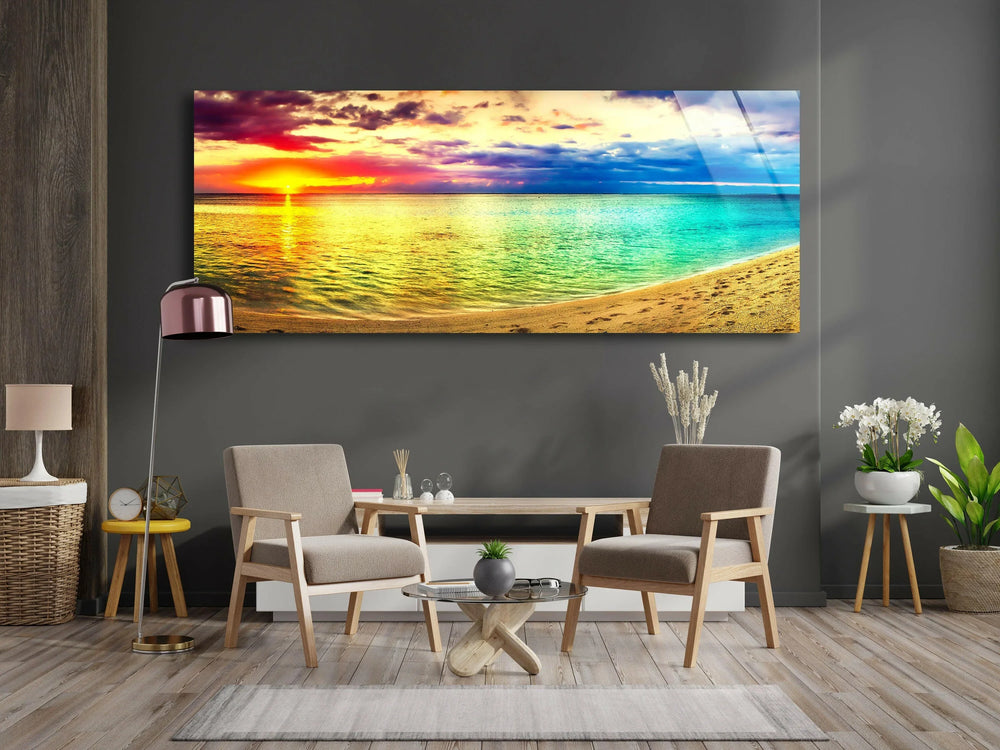
Vivid refraction requires a piece designed for luminosity and depth. The Sunset on The Tropic Beach Glass Wall Art utilises this light interplay through its high-gloss medium. Warm cadmium amber sunset tones balance the deep indigo Pacific ocean swells. This bold contrast prevents visual monotony over long hours. A 6mm thick tempered glass layer amplifies the ambient glow radiating from the horizon line. You sense the radiant heat. It converts a static wall into a dynamic light fixture. Varying opacities in the cloud formations catch the 3000K LED artificial room lighting, creating a secondary layer of depth that shifts as you move around your Herman Miller desk.

The Mathematical Precision of Scale and Placement
Sizing pieces strictly to the golden ratio of 1 to 1.618 relative to your furniture minimises visual clutter and lowers cognitive strain. Interior design principles dictate that spatial scale determines a room's success. Large-scale artwork needs to occupy exactly 60 to 70 percent of the available wall width. For a Knoll office credenza measuring 185 centimetres wide, you select a landscape print exactly 115 centimetres wide. This precise mathematical proportion naturally feels balanced. It reduces subconscious visual friction. Your white oak standing desk feels grounded. Negative space framing the artwork allows the eye to rest, preventing the claustrophobic sensation of an overcrowded Dulux Heritage white wall.
Position the exact centre of the artwork at 145 centimetres from the floor. This measurement represents the standard standing eye level for adult humans. Looking up from a backlit Dell UltraSharp screen for a micro-break lands your gaze directly on the horizon line. Such immediate ergonomic alignment facilitates rapid cognitive recovery. Your eyes rest on the distant vanishing point. Vibrant 4K high-definition pixels pull your perspective outward. The room immediately feels larger. Aligning the focal point with your natural resting gaze prevents neck strain and reinforces the involuntary attention restoration process.
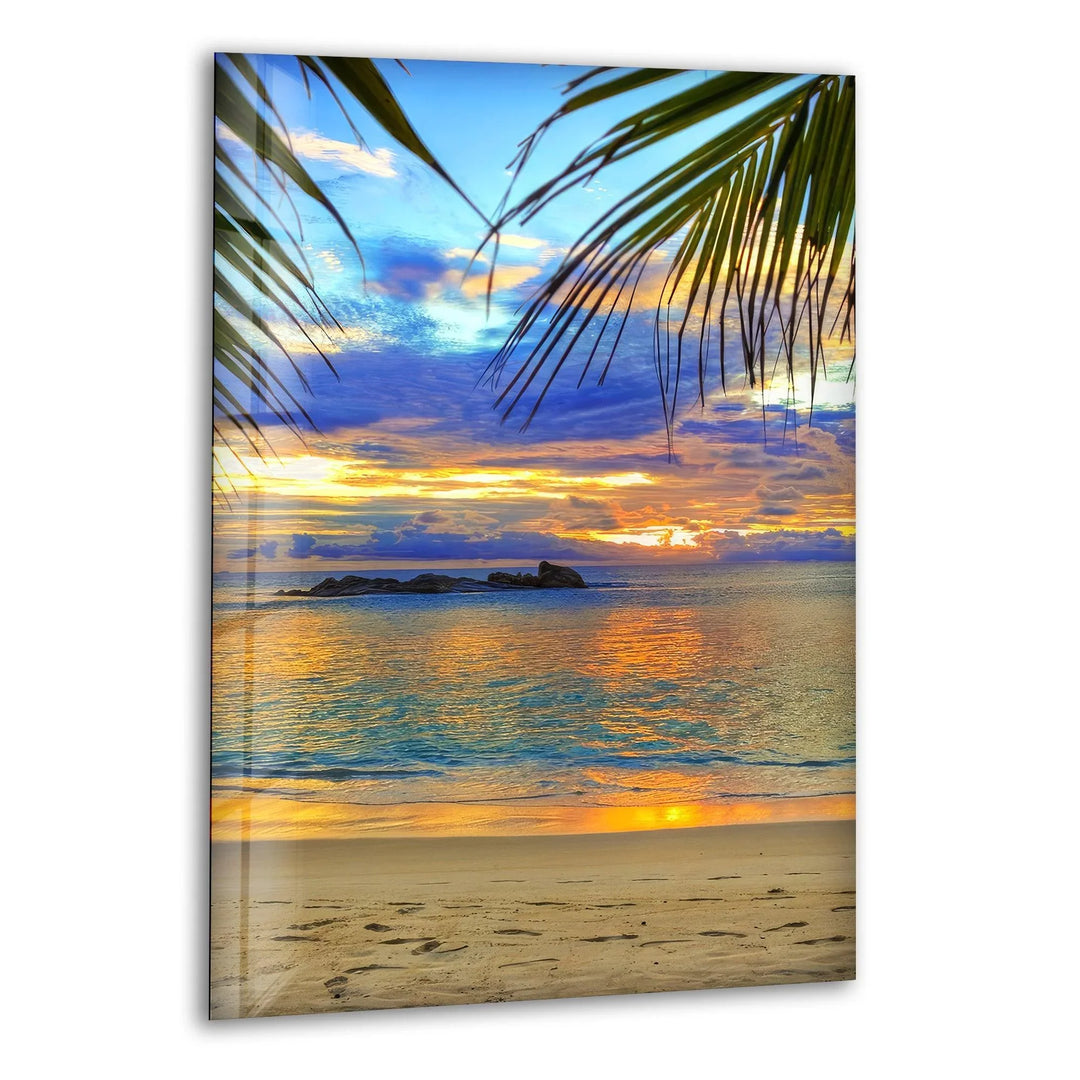
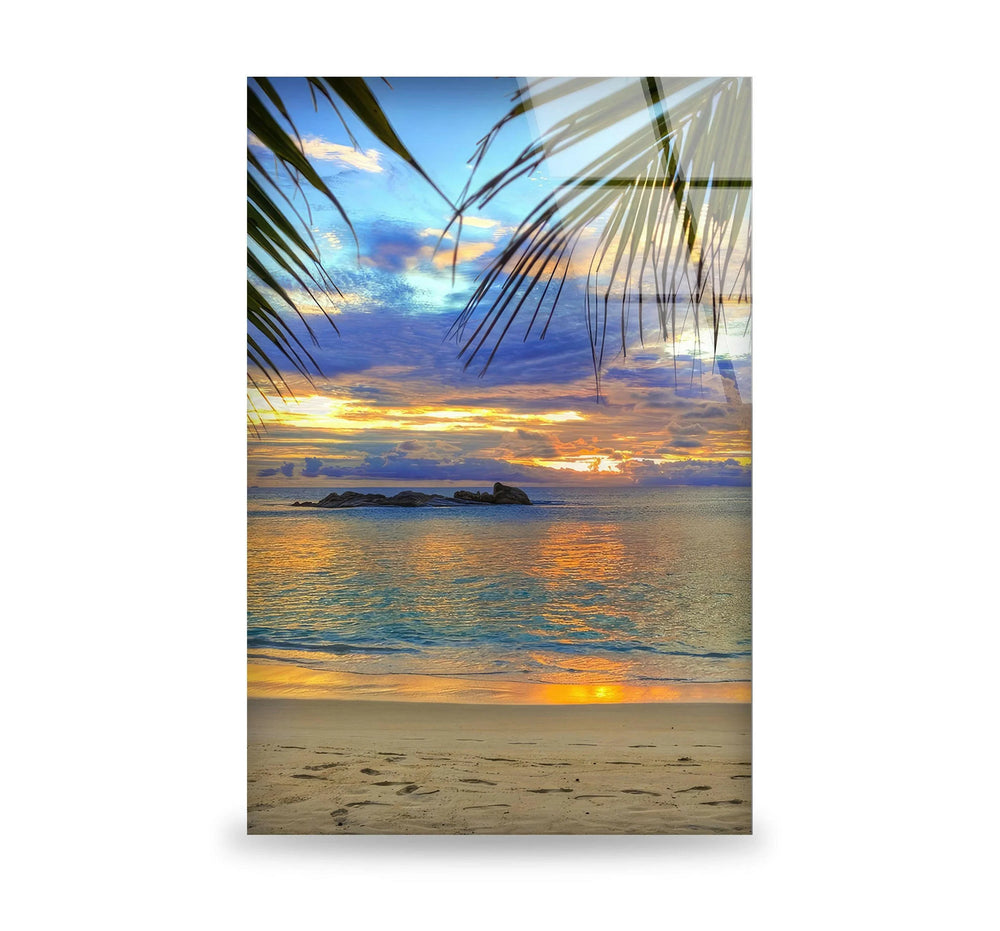
Proper placement requires artwork with distinct focal points. The Tropical Beach With Palm Tree Glass Wall Art provides a clear vertical anchor through the Cocos nucifera palm trunk. A horizontal ocean line intersects this vertical axis directly. It establishes a strong visual grid. Rich green fronds contrast sharply with the Caribbean cyan sky. You hear the simulated rustling leaves. Hanging this piece at the 145-centimetre mark ensures the horizon meets your natural gaze. This intersection of organic curves and geometric horizon lines provides the exact fractal complexity required to soothe an overworked prefrontal cortex.

Sourcing specific sizes and materials requires absolute precision in your selection process. You explore regional coastal galleries in Auckland, New Zealand or Vancouver, Canada to find suppliers offering premium architectural glass finishes. Local options regularly appear when searching for coastal photography nearby. Even mass-market retailers like IKEA or Target replicate this glossy aesthetic. True cognitive benefits require professional-grade Perspex glossy acrylics or tempered glass. Standard MDF framed landscape prints absorb too much light. Flat matte textures deaden the optical impact. A high-contrast glossy print belongs in your office. Save the low-contrast mist for the art styling in your bedroom. This dynamic approach directly applies to bathroom alcoves, where morning light initiates early biological alertness.
Deliberate Stanford University neuro-architectural spatial design treats imagery as an active biological tool rather than passive decoration. As Silicon Valley remote work protocols demand higher sustained focus, utilizing high-gloss ocean photography to physically alter room lighting by refracting 450 to 495 nanometer blue-green wavelengths provides a scientifically validated strategy to maintain cognitive energy. It fundamentally alters the physiological state of the room. The air feels lighter. Ambient light feels sharper. You dictate the atmosphere through precise optical calibration. Direct your focus and refine your workspace lighting by integrating specific beach wall art into your daily environment.