

The Gallery Wall Setup Rule That Fails With Forest Wall Art
The physical Z-axis side-profile depth dictates your multi-medium gallery layout long before you calculate the mathematical wall center. Hanging a mixture of 4cm thick poly-cotton canvas wraps and flat 2cm solid oak frames creates a structural nightmare if you only measure horizontal distances. The conventional horizontal-first approach fails entirely when mixing materials because protruding frames block ambient LED gallery light from reaching recessed 250gsm matte paper prints. Fixing this requires a structural approach to woodland wall pieces planning. You must calculate Z-axis depth transitions to prevent harsh directional shadows.
Determine Depth Transitions Before Finding Your Wall Center
A 7.5cm horizontal shadow buffer acts as a physical void to stop the heavy side profile from obscuring the adjacent flat monstera leaf botanical print. Placing a 4cm deep wrapped canvas directly next to a flat 2cm deep raw oak frame creates a jarring depth drop-off. Directional room halogen lighting catches the thick profile, casting heavy shadows that ruin visual balance. When selecting a large-scale woodland giclée canvas for your arrangement, group the deepest pieces on the side of the wall furthest from the primary South-facing window. Position flat-framed pieces closest to the natural light source.
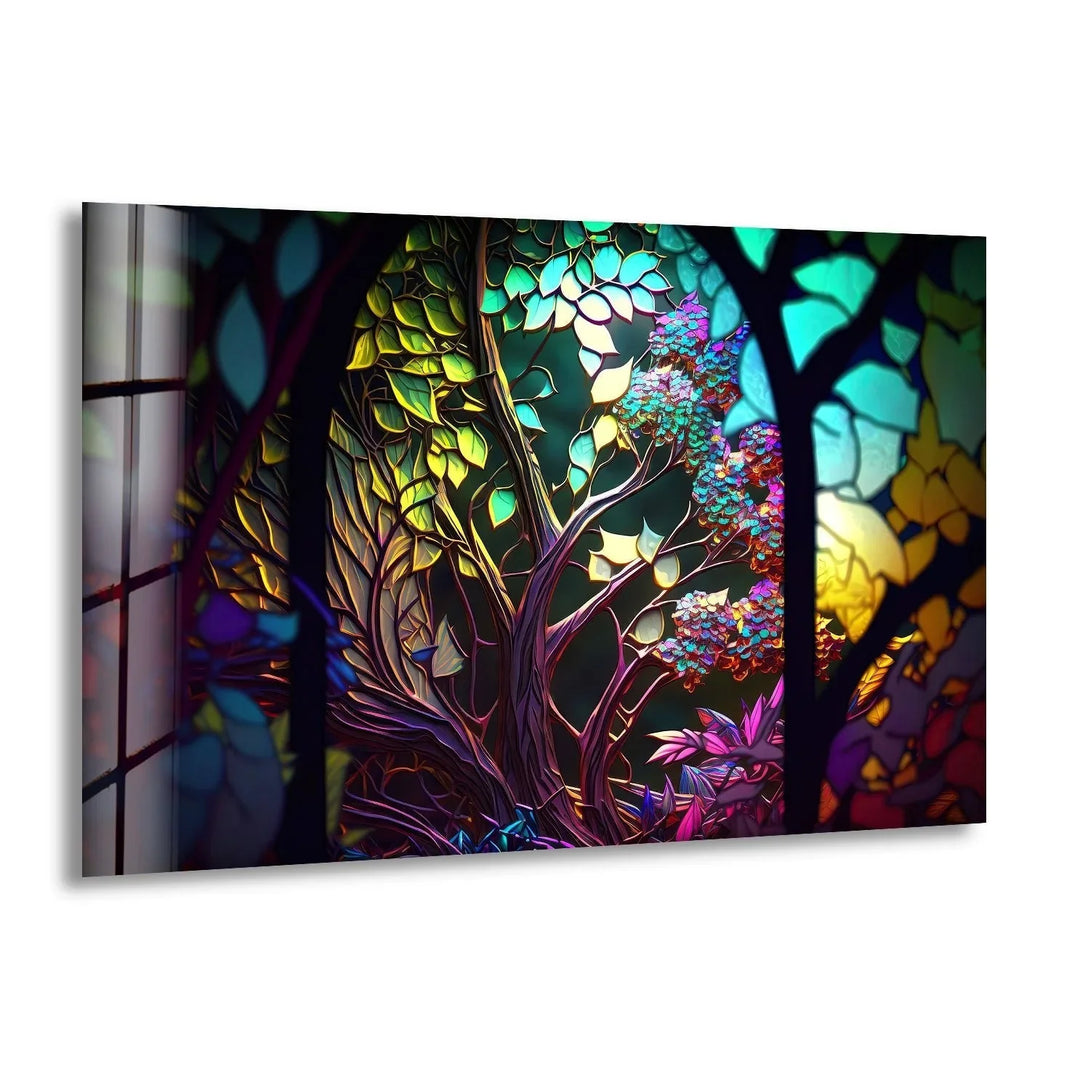
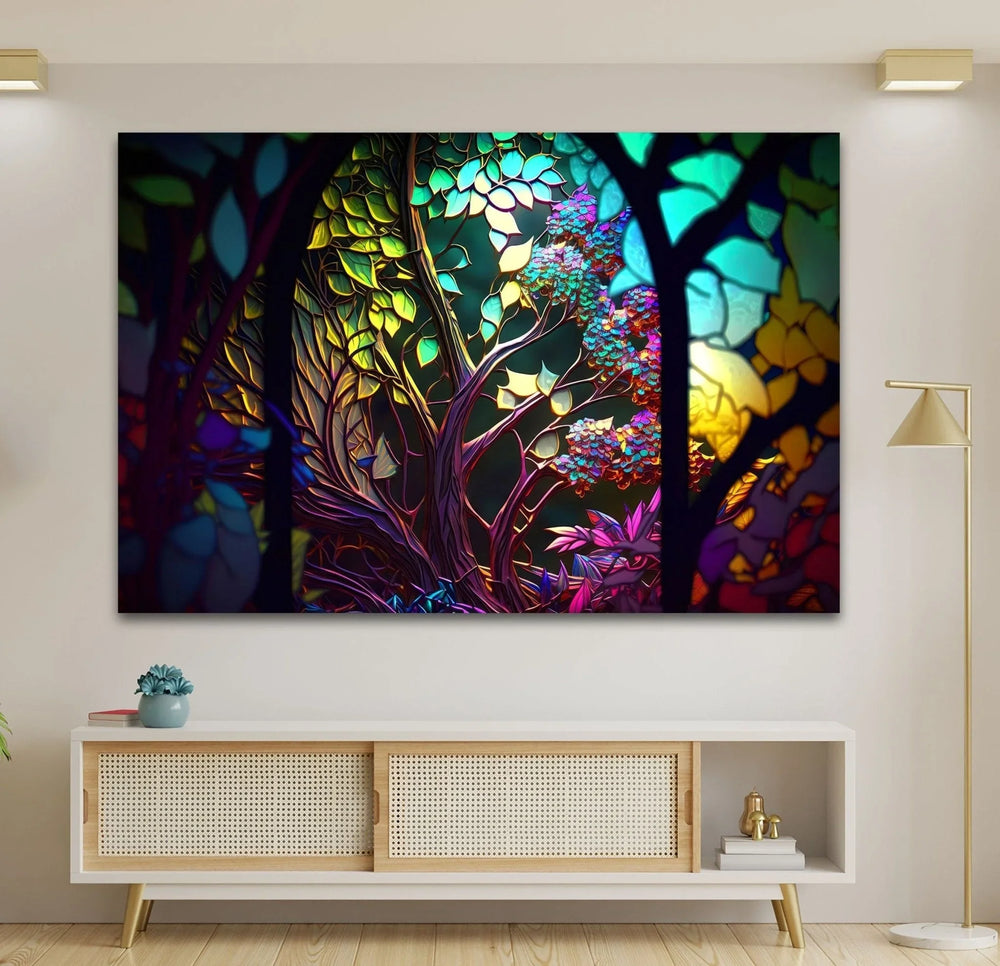
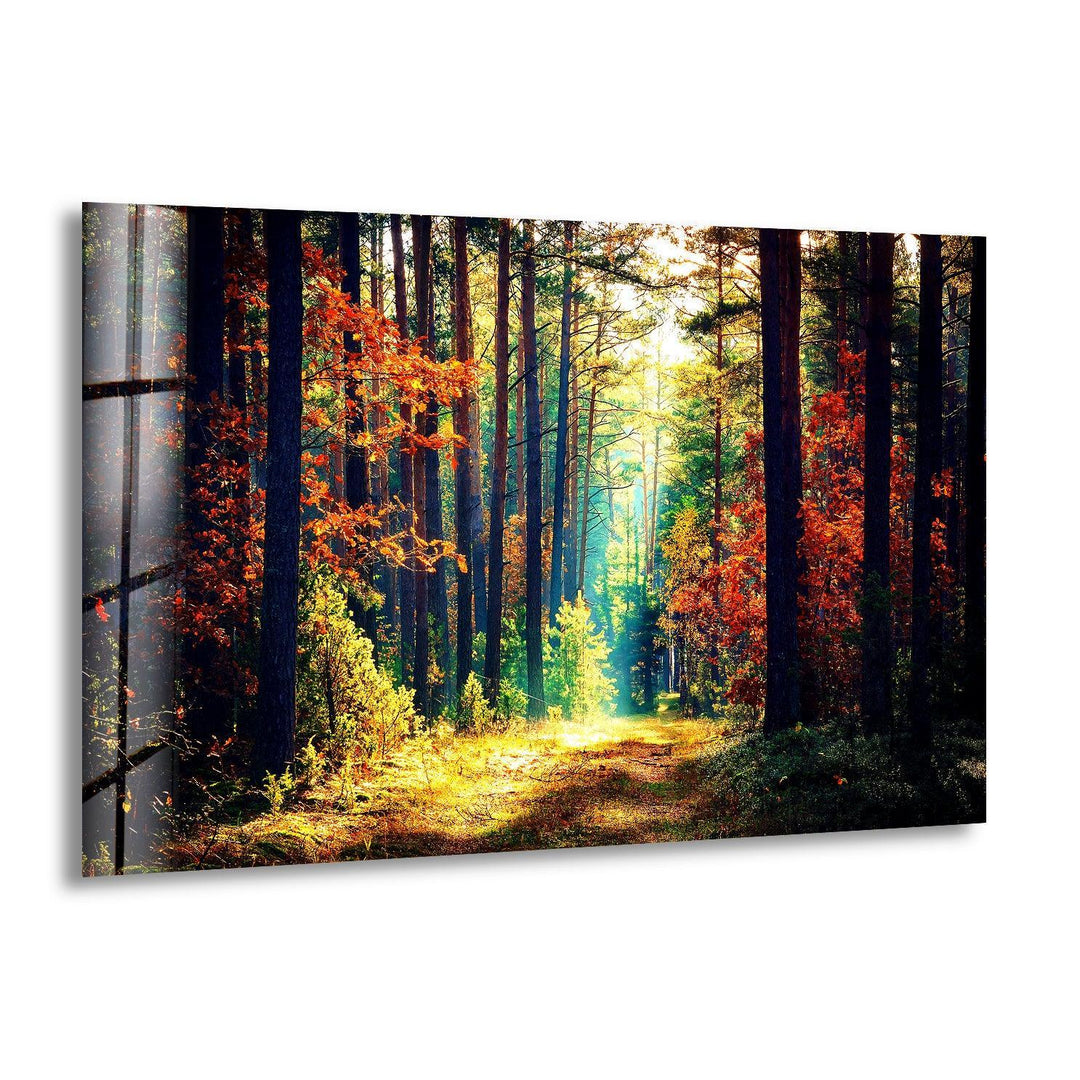
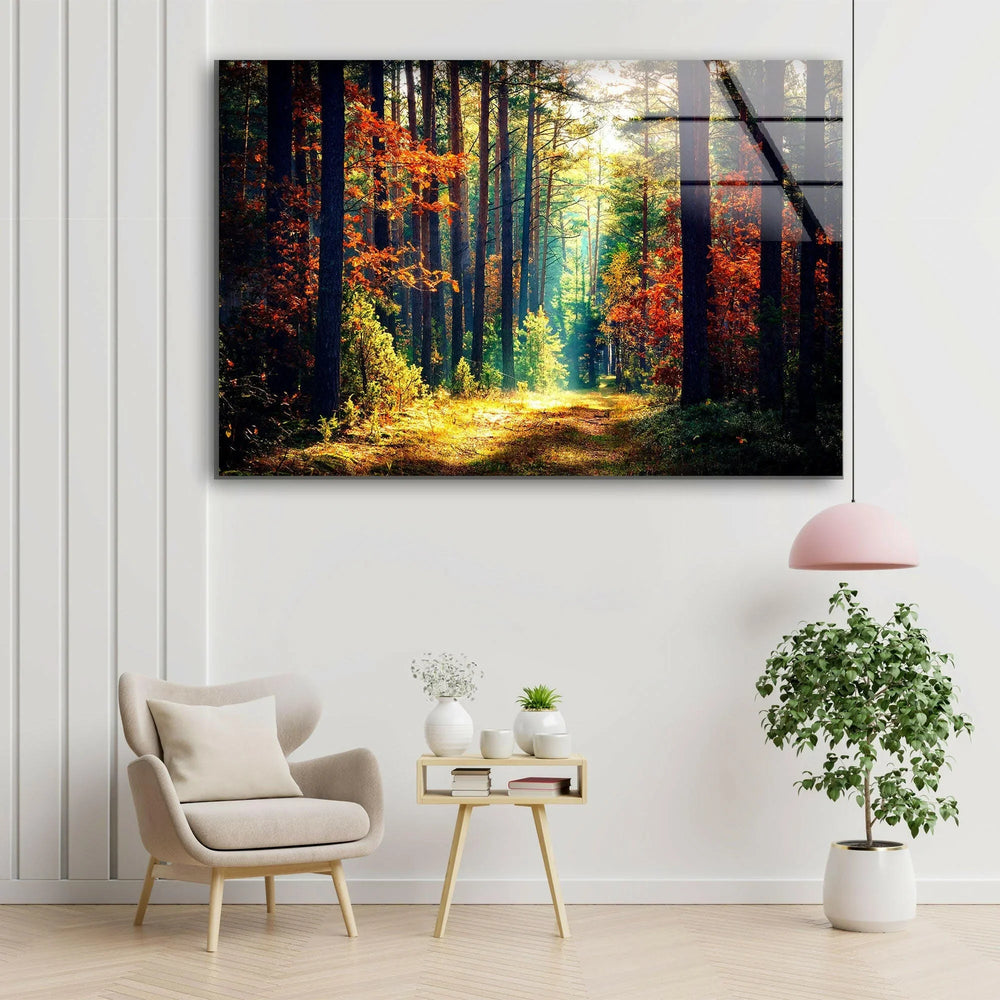
The reflective surface of Misty Forest Sunlight: A Dreamy Woodland Scene on Glass Wall Art catches ambient light, requiring you to place it nearer to the window than deep, light-absorbing cotton canvases. Cool, desaturated blue-green tones approaching Munsell hue 10BG require a strict 7.5cm shadow buffer. By keeping the deep canvas shadow away from this tempered glass surface, the atmospheric fog imagery remains legible from any angle in the living room.

Drafting these 7.5cm horizontal buffers on the floor before taking a Stanley tape measure to the Gyproc drywall prevents costly drilling mistakes. British interior design standards consistently show that material depth strictly limits mathematical spacing.
Aligning The Collective Height Standard To Eye Level
Centering the entire mathematical footprint of your mixed-media art collection exactly 145cm from the hardwood floor satisfies the human biological preference for horizontal viewing. Do not hang individual pieces by their own centers. Measure the total vertical span of your proposed layout, starting from the top edge of the highest framed print down to the bottom edge of the lowest piece. Divide that specific number by two to establish your layout core. Environmental psychology research confirms that forcing the human eye to look significantly upward or downward to process room layouts increases cognitive strain. Aligning the collective center point at 145cm matches the resting horizontal eye level for an average standing adult.
Viewing nature-themed vintage botanical lithographs containing mid-range fractal dimensions actively reduces physiological stress levels. Forest silhouettes and canopy structures naturally contain a D-value between 1.3 and 1.5. This specific visual fractal fluency allows the human brain to process the imagery effortlessly. Displaying Pacific Northwest woodland canopies in primary bedroom sleeping spaces demands this exact biological alignment. If the art sits too high, the resulting neck extension negates the autonomic nervous system relaxation triggered by the fractal patterns.
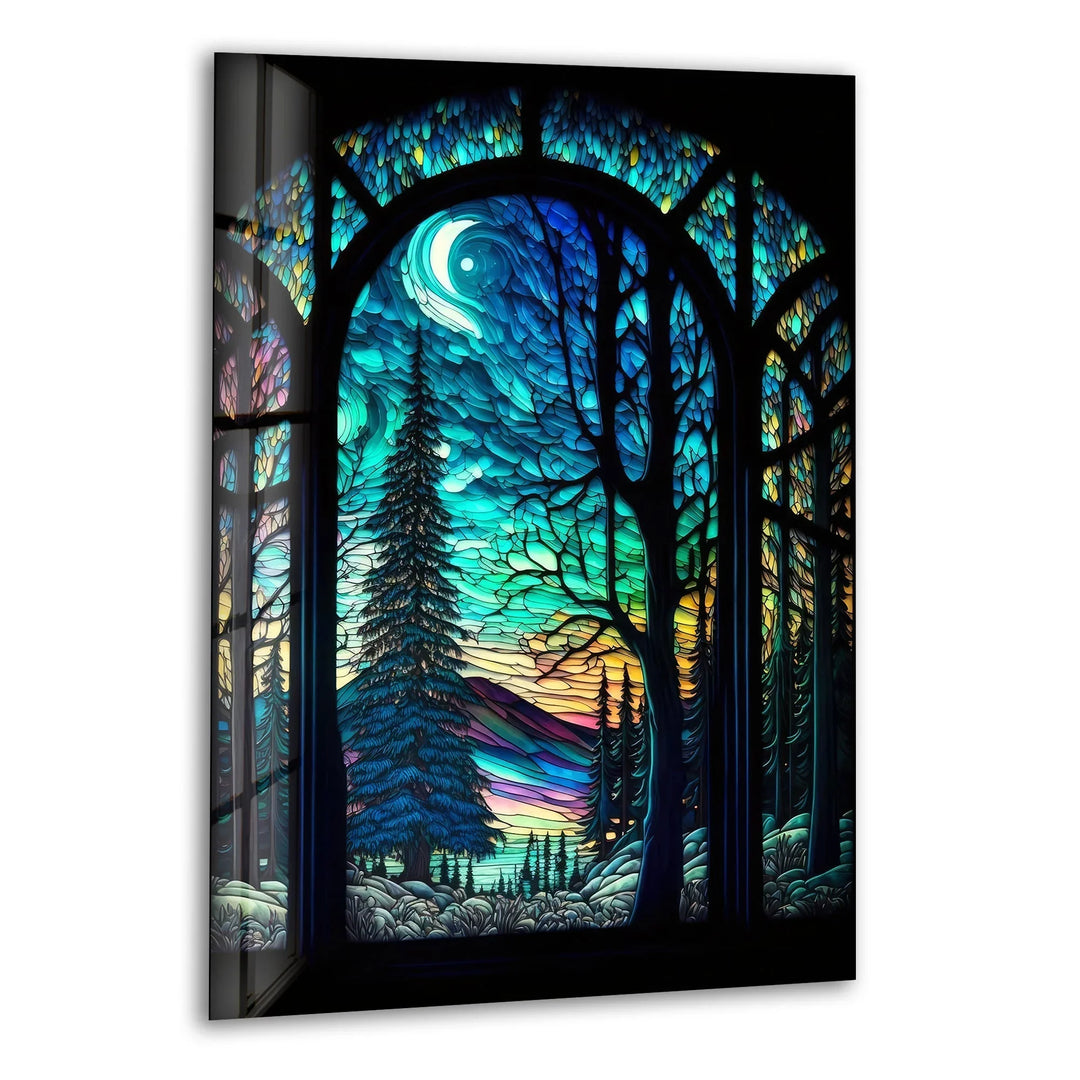
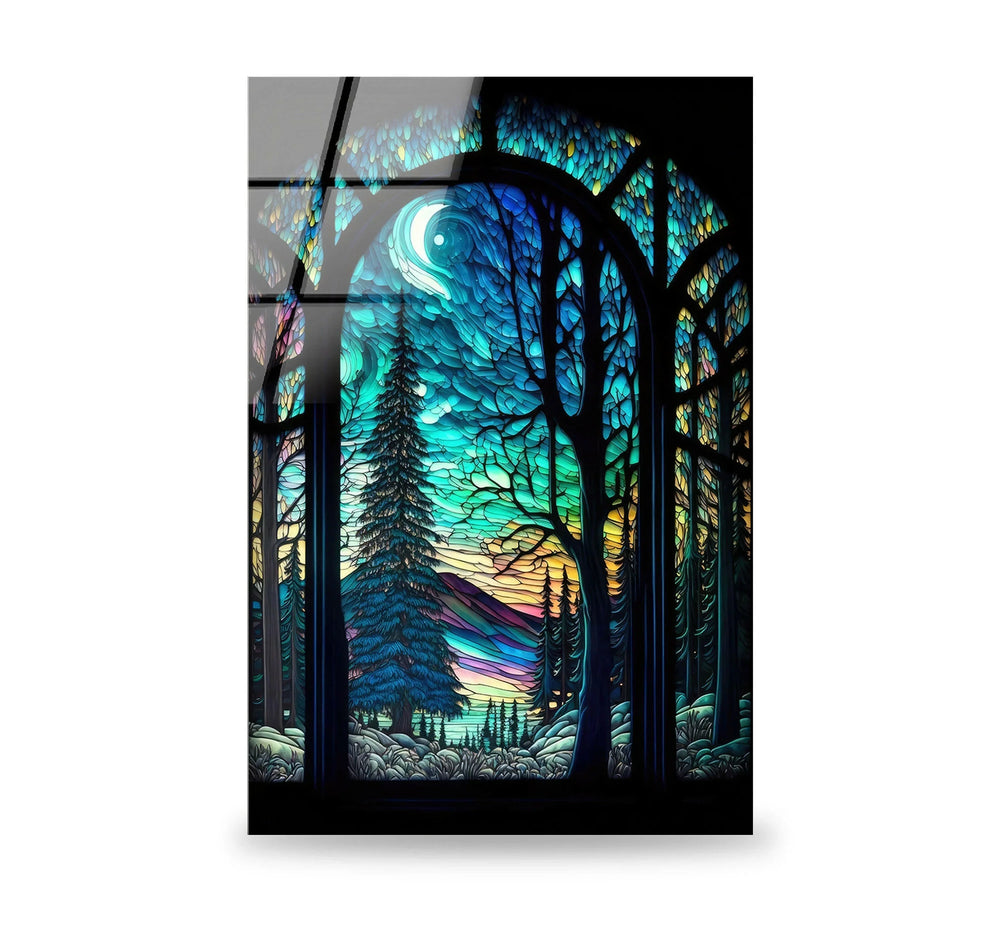
Targeted fractal density lowers resting viewer heart rates, making a large 80cm x 120cm glass print the optimal piece for grounding the vertical center of a 145cm layout. High-contrast tree branches found within Mysterious Night Forest Glass Wall Art provide an immediate focal anchor for the human eye.

Wire Drop Physics Dictates True Hardware Placement
Measuring hardware placement from the top edge of a frame without subtracting the exact D-ring wire slack guarantees a crooked installation. While Z-axis side-profile depth determines your 7.5cm horizontal shadow buffers to prevent shadowing, vertical wire drop physics dictate your precise hardware placement. Unframed 40cm x 60cm canvases hang flush to the drywall via zinc-plated sawtooth brackets. Solid raw oak frames hang via dual D-rings connected by braided steel wire. This wire contains inherent slack. If you calculate your wall markings based purely on the physical tops of the frames, the framed prints hang exactly 2.5cm to 5cm lower than the flush-mounted canvas pieces. The geometry breaks completely. Unaccounted wire drop throws the horizontal alignments entirely out of square.
Hanging oversized 100cm x 150cm woodland acrylic pieces means gravity pulls wire slack to its absolute maximum. You must physically measure this tension. Regardless of whether you use local Monterey pine or imported Australian eucalyptus frames, the physics of 43-strand braided steel wire remain identical. To find the true hardware placement, execute the following specific steps for every wired frame.
- Pull the mounting wire taut toward the top wooden frame edge to simulate full gravitational weight.
- Measure the exact distance from the taut wire apex to the physical frame border.
- Subtract this specific wire drop measurement from your intended pencil wall marking before drilling.
Flush-mounted canvases bypass this issue completely, as you simply measure directly from the internal sawtooth bracket down to the top of the kiln-dried timber stretcher bar.
The Biological Case For Asymmetrical Patterning
Rigid geometric spacing between artwork triggers subconscious visual policing rather than psychological relaxation. Mainstream Scandinavian design guides insist that gallery walls demand uniform, identical 5cm spacing to look professional. However, from a biophilic standpoint, strictly geometric grids suppress the stress-reducing biophilia relaxation effect. Nature is inherently non-rhythmic. Strictly symmetrical gallery layouts trigger cognitive policing, forcing the human brain to scan actively for errors in synthetic indoor environments. Visual fatigue builds quickly. Restorative biophilic layouts employ a non-rhythmic spacing progression instead.
This contrarian approach works because it mimics natural spatial distribution. Intentionally vary the gaps between pieces. Cluster an FSC-certified raw oak frame and a matte canvas tightly at 5cm to mimic the density of a dense pine forest canopy. Leave a 10cm gap before the next print to mimic a natural forest clearing. Biophilic design principles concerning Complexity and Order dictate that highly organic patterns require strategic spatial variation to prevent visual information surplus. Hanging a three-panel botanical triptych requires this intentional unevenness.
Integrating Stained Night Forest Glass Wall Art into an asymmetrical cluster adds necessary visual boundaries. Heavy stained glass borders mimic structural architectural lines, containing the dense botanical shapes within. This physical boundary prevents visual information surplus, adhering strictly to the biophilic Complexity and Order pattern while allowing the adjacent pieces to breathe. Leave a strict 10cm gap after a visually dense Tiffany-style stained glass piece to let the overall composition breathe naturally.

Diagonal Distribution Anchors Mixed Visual Weights
Distributing borderless pieces diagonally across from structured frames prevents one side of the installation from feeling artificially heavy. Unframed stretched giclée canvases feature receding edges that blend softly into eggshell-painted drywall. Raw oak frames feature highly structured, high-contrast boundaries that command immediate visual weight. If you cluster all framed pieces on the left and all canvas pieces on the right, the entire wall appears physically tilted. Position your largest 100cm x 100cm visually dominant canvas slightly off-center to serve as the structural anchor. Counteracting its borderless layout requires placing smaller framed Bauhaus-style geometric prints diagonally opposite.
Choosing high-contrast monochrome prints in heavy frames amplifies visual weight disparities. The extreme contrast of matte black aluminum framing demands a counter-balance. Biophilic interior practices consistently highlight that combining natural timber materials with organic botanical geometry improves subjective stress management. Spaces featuring these natural geometries see a 24% higher overall room satisfaction compared to layouts dominated by polycarbonate synthetic plastics. Designing Montessori woodland-themed nursery layouts or planning a standard living room focal wall requires this specific diagonal distribution to maintain a calming atmosphere.
The high structural contrast within Castle & Forest Stained Glass Wall Art provides intense localized visual weight. The rigid architectural lines of the castle opposing the organic forest canopy demand an opposing, receding watercolor canvas to balance the physical composition across a diagonal axis. This prevents the mixed-media gallery layout from leaning heavily to one side.

Material physics dictates the success of your installation, not aesthetics alone. Your mixed-medium layout succeeds only when Z-axis depth transitions and physical hardware slack define the true structure of the space, ensuring future additions to your gallery won't cast destructive shadows over existing artwork. Measuring the physical side-profile depth solves the ambient shadowing problem before you ever touch a drill. Calculating exact galvanized steel wire drop keeps top edges razor-sharp. Establishing a 145cm collective eye level aligns the installation with human ocular biology. Once you abandon rigid mathematical grids for organic biological spacing, the arrangement functions flawlessly. Apply these specific Z-axis depth measurements to your own modern living room before finalizing your woodland wall pieces.