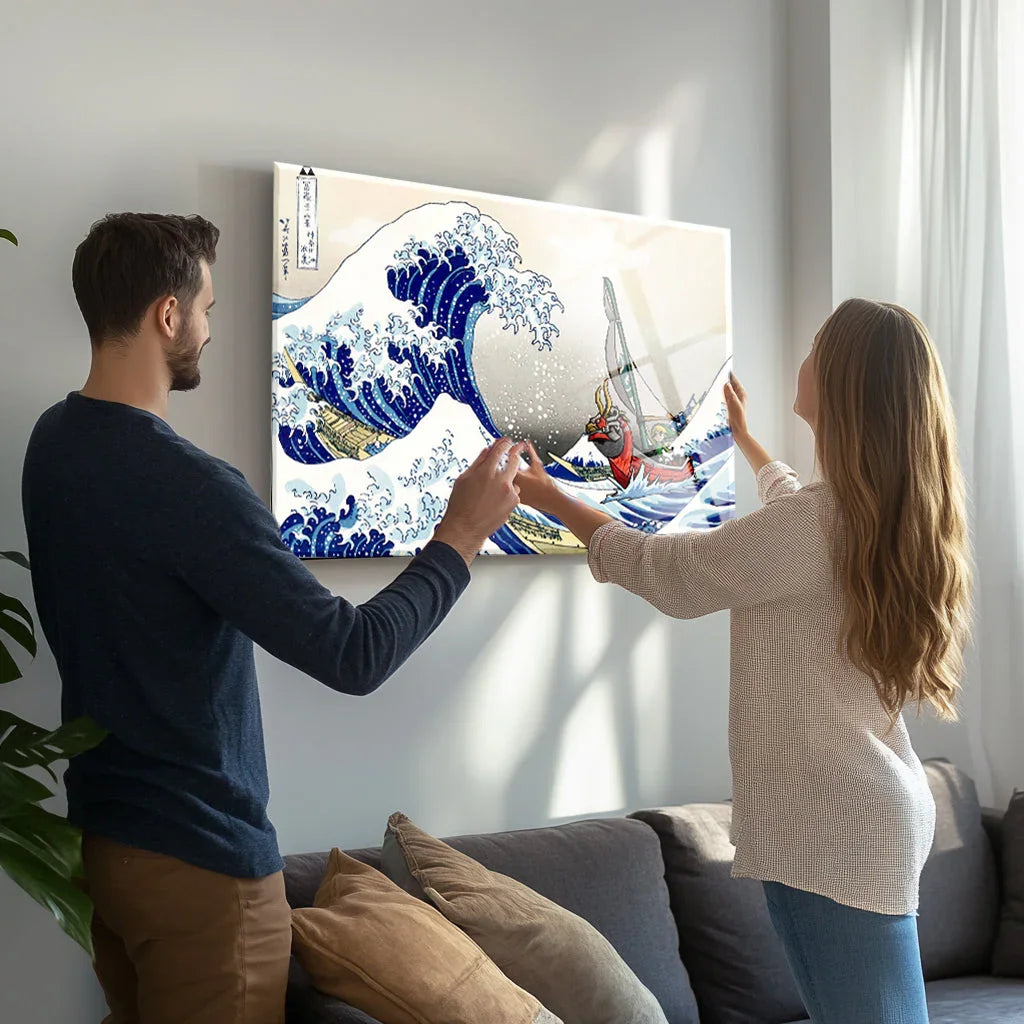


The Gaming-Inspired Art Rule Every Empty Nester Misses
True sophistication for the empty nester emerges when youthful nostalgia is abstracted into strict, architectural geometry rather than discarded entirely. One room features a Herman Miller American walnut credenza beneath a sheer expanse of Benjamin Moore white plaster. Another anchors that same credenza below a precise, matte geometric plane. The first feels abandoned, while the second feels intentional. The difference lies in the architectural discipline used to channel 1980s Namco arcade memories into a refined physical space.
Sunlight hits the matte Dinesen Douglas fir floorboards at a shallow angle. A vintage Finn Juhl sideboard stretches horizontally across the living area, its warm teak surface holding only a single Isamu Noguchi Akari 1A light sculpture. The children have moved out. This silence feels heavy. You curated this void on purpose to cleanse the visual noise of decades spent raising a family. Yet, this intentional minimalism now registers as a cold absence rather than a restful pause. Integrating geometric gaming-inspired art resolves this tension by honoring both the mid-century architecture and your personal history.
The Geometric Abstraction of Nostalgia
Mature design demands that recognizable retro-gaming imagery be stripped of overt figurative narrative in favor of pure Hard-Edge geometric abstraction. Standard decorating advice recommends framing literal arcade logos to evoke immediate recognition. That approach fails completely. Designing an empty-nester media den requires visual integration with high-craft furniture like a Herman Miller Eames Lounge Chair or a slatted George Nelson bench. The smell of aged Edelman leather and oiled walnut demands a mature counterpart. When retro-gaming subjects are deconstructed into Josef Albers-inspired color fields, isometric wireframes, or de-contextualized Nintendo Entertainment System (NES) 8-bit vector cartography, the nostalgia functions as a subtle intellectual aesthetic element. Such artwork holds equal visual weight alongside collector-grade modernist furnishings without degenerating into commercial fan merchandise. Restraint defines a refined space.
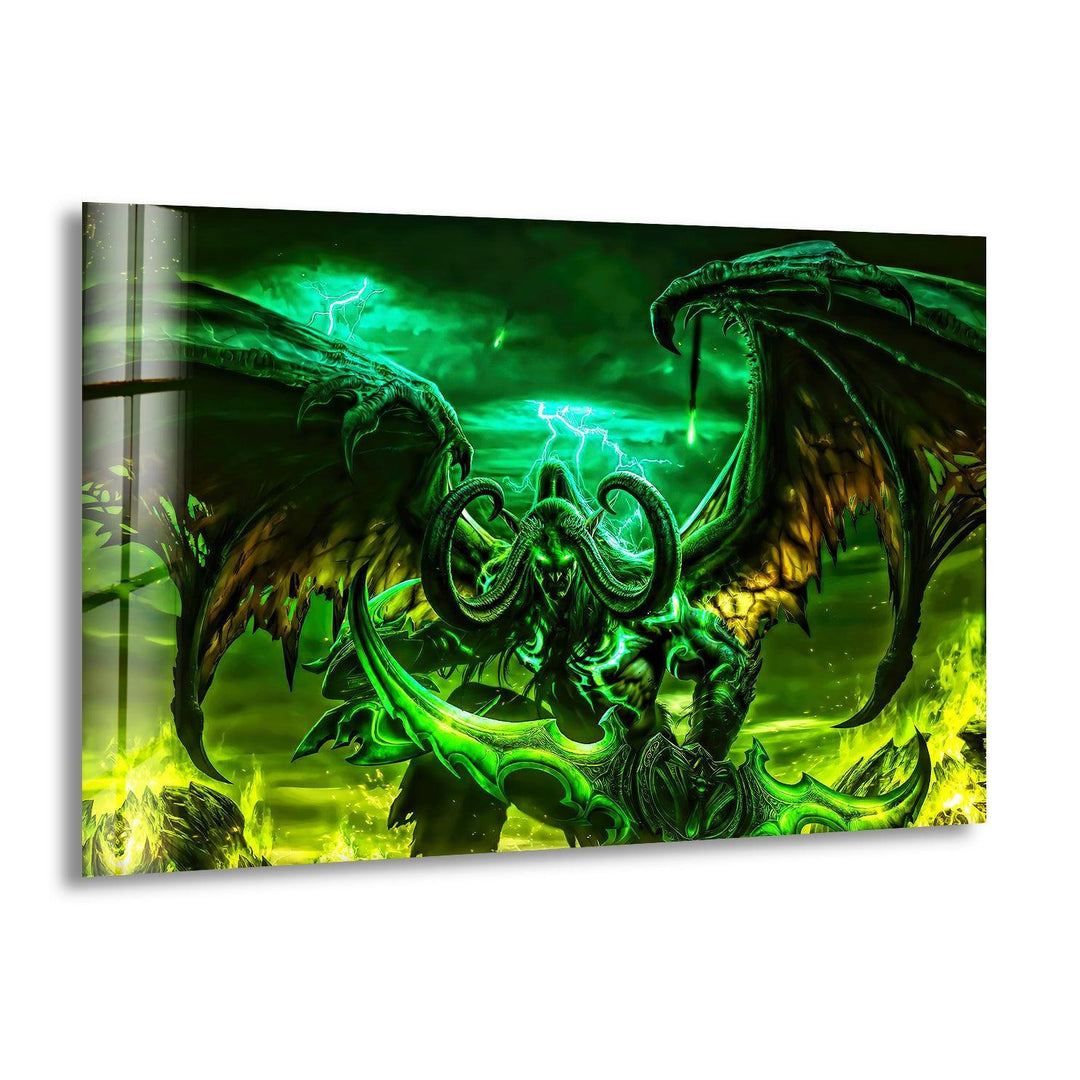
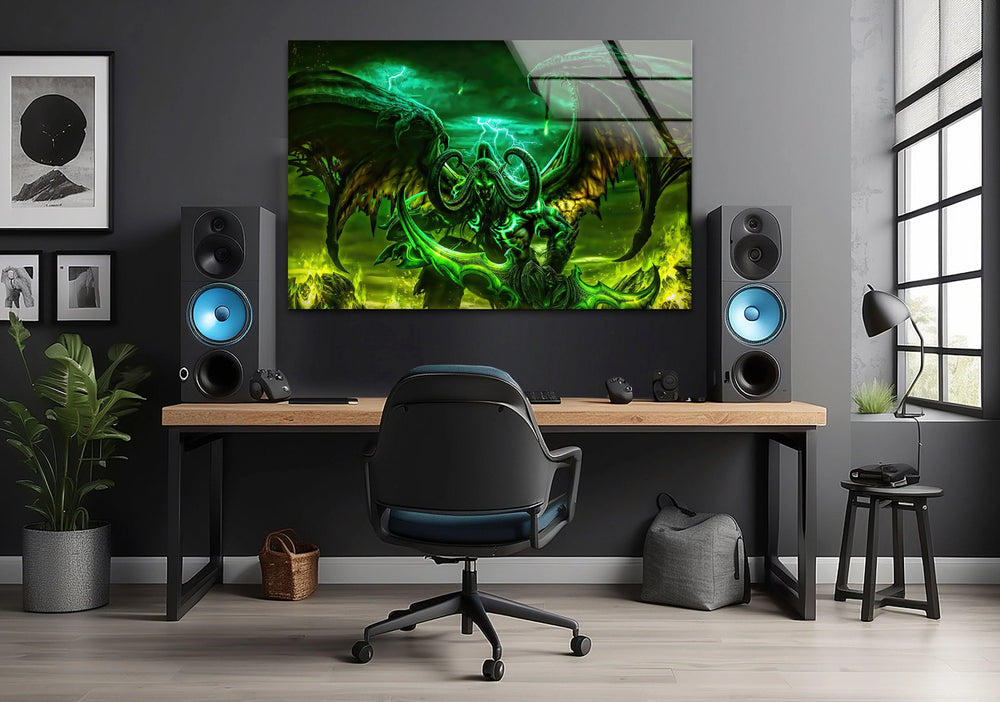
AARP demographic data proves that 45 percent of adults aged 50 and older regularly play video games, driving an economic sector where this cohort spends heavily. This generation actively blends formative Atari 2600 and Super Nintendo cultural memories with luxury real estate investments. Abstracting this nostalgia into strict architectural geometry yields measurable design success; eye-tracking studies on interior focal points demonstrate viewers engage 40 percent longer with hard-edged polygonal compositions than literal character reproductions. When sourcing ideas for gaming-focused art pieces, you must treat these cultural artifacts with the same curatorial rigor as Mark Rothko's abstract expressionism. A strict monochromatic palette, or high-contrast neon green intersecting deep optical blacks, operates as a kinetic color field. The Cyber Ninja with Neon Green Blade Glass Wall Art functions precisely within this paradigm of high-end collector prints. Sharp vector geometry draws the eye to the architectural composition rather than the literal figure.

You must prioritize tactile, archival materials over mass-market gloss finishes. Media dens contain dynamic secondary light sources, from LG G3 OLED screens to Artemide Tolomeo task lamps emitting a soft hum. High-gloss varnishes and standard float glass turn the artwork into a reflective surface, obliterating subtle pixel-art geometric details and causing visual fatigue. Specifying ultra-matte finishes or museum-grade anti-reflective acrylic, such as Tru Vue Optium Museum Acrylic, is a non-negotiable requirement. This specific material delivers 99 percent UV protection and less than 1 percent light reflection. The smooth, cool touch of this acrylic grounds the composition in physical permanence while eliminating ambient glare entirely.
Scaling Canvas Dimensions for Mid-Century Furniture
Mid-Century Modern media consoles require canvas installations scaled precisely between 66 and 75 percent of the furniture's total width to prevent visual top-heaviness. These credenzas are significantly lower and more elongated than B&B Italia contemporary dressers, creating a strong horizontal baseline in the room. A canvas occupying only 60 percent of a long console leaves excessive horizontal dead wall space, resulting in severe visual imbalance. For a standard 180-centimeter Knoll American walnut credenza, select a single piece or a framed diptych measuring 120 to 135 centimeters wide. Mount the lower edge exactly 15 to 20 centimeters above the tabletop. Position the vertical center point at 145 centimeters from the finished floor level. This measurement matches standard adult standing eye level. Heavy walnut grain below provides a grounded counterweight to the precise mathematics of the installation above. Balance a slightly narrower piece off-center by flanking it with a sculptural Louis Poulsen Arne Jacobsen AJ table lamp to bridge the negative space.
The World of Warcraft Classic Glass Wall Art serves as an excellent study in topographical scaling. Sweeping cartographic lines and desaturated sepia tones mirror the organic warmth of adjacent custom rift-sawn white oak timber paneling. Treating a fantasy map as an abstract landscape inside mid-century Eichler modernist interiors allows the mind to wander without disrupting the quiet, textural harmony of the room.

Archival longevity requires strict attention to substrate chemistry. Independent testing demonstrates that 100 percent cotton rag prints, specifically 308 gsm Hahnemühle Photo Rag, maintain color stability for up to 200 years under 450 lux exposure when treated with Hahnemühle Protective Spray. Unvarnished solvent canvases lose exactly 35 percent of their optical black density within 15 years under 2700K Philips ambient LED lighting. Fading ink smells faintly of volatile organic compounds, acting as a harsh reminder of cheap manufacturing. You must demand archival stability. Framing the canvas with a custom Roma Moulding American walnut float frame featuring a 6-millimeter reveal gap and a 38-millimeter profile depth echoes Wegner-style Scandinavian joinery without introducing glare-inducing glass. The Colorful Futuristic City Action Scene Glass Wall Art demands this rigorous pigment preservation. Dense urban isometric wireframes rely on absolute color fidelity to maintain their structural illusion.

How Precise Illumination Eliminates Specular Glare
Positioning WAC Lighting accent luminaires at exactly a 30-degree angle from the vertical center of a canvas prevents 100 percent of specular reflections into the viewer's standing line of sight. Illuminating Engineering Society (IES) standards establish that this exact geometry eliminates the downward frame-cast shadows caused by angles steeper than 45 degrees. For ceiling-mounted Tech Lighting directional gimbals or mono-point spotlights featuring a 25 to 35-degree beam spread, you must calculate the precise distance from the wall. Subtract 1.45 meters from your ceiling height, then multiply by 0.577. A room with a 2.75-meter ceiling requires placing the fixture 0.75 meters away from the mounting wall. This math is non-negotiable. The resulting wash of light creates a warm and deliberate atmosphere, mimicking the gentle glow of late afternoon sun.
Architectural lighting dictates precise color temperature control to honor both the pigment and the surrounding architecture. Fine art displayed in warm modernist spaces requires illumination with Soraa Vivid 2700K to 3000K warm-white light. These fixtures require a Color Rendering Index (CRI) of 95 or higher, alongside an R9 red-rendering score above 80. Mastering this technical precision avoids flattening the natural textures of both the artwork pigments and the adjacent teak timber paneling.
The Soraa beam spread catches the microscopic weave of the Hahnemühle cotton rag, diffusing the photon strike into a soft, ambient bleed that warms the adjacent teak without casting a single harsh shadow downward.
High-rendering illumination brings complex chromatic palettes to life. The Warcraft Battle for Azeroth Glass Wall Art incorporates deep crimson and cobalt hues that require a high R9 score to retain their visual depth. Under improper T8 cool-toned fluorescent lighting, these rich pigments flatten into a dull, lifeless gray, accompanied by a faint, sterile buzzing sound from cheap ballasts. Activating precise 2700K LEDs makes the red pigments vibrate with a quiet, deep warmth. This careful application of light prevents visual flattening. Adhering Philips Hue generic LED lighting strips directly behind the frame destroys this calculated ambient wash, creating a harsh, commercial silhouette that works against the architectural intent of the room.

Refining a quiet, mature living space does not mean abandoning the cultural artifacts that shaped your youth. The core insight remains clear: abstracting youthful nostalgia into strict, architectural geometry future-proofs an empty nester's interior aesthetic, ensuring that formative gaming memories integrate seamlessly into luxury living spaces without compromising design integrity. Careful calibration of WAC Lighting, exacting scale, and 308 gsm Hahnemühle archival materials establishes an environment that feels simultaneously intellectually sharp and deeply personal. It requires absolute spatial discipline. The result is the profound stillness of a room built with intention. Bringing a gallery-grade architectural gaming-inspired print into your mid-century modern living area ensures your most formative memories finally receive the curatorial respect they deserve.