

The Nursery Tree Wall Art Rule Every Parent Gets Wrong
True nursery safety actually requires discarding traditional wall mounts and implementing a four-inch gravity corridor. Hanging a framed piece of art above a crib introduces a physical trajectory risk that standard nursery design advice completely ignores. The conventional solution requires abandoning dimensional framing entirely in favor of Oracal 631 flat vinyl decals, yet pediatric developmental optometrists at the College of Optometrists in Vision Development note that flat graphics fail to stimulate binocular vision in waking infants. By pulling the crib back exactly four inches and utilizing Hillman drywall anchors with heavy-duty D-rings, you securely display real, dimensional tree wall art in the room without compromising physical security.
The Physics Of The Safety Trough
Creating this dedicated four-inch space between the mattress and the drywall nullifies the trajectory risk. The safest way to display dimensional art near a sleeping child involves creating a physical gap between the crib and the drywall. The standard advice for pediatric wall decor dictates avoiding physical frames entirely and applying Cricut vinyl appliqués instead. The American Optometric Association rejects this consensus. Flat vinyl lacks physical depth. It fails to stimulate stereoscopic depth perception and binocular vision during the waking hours a child spends in a Delta Children crib. The scientifically defensible alternative requires hanging a real three-panel canvas featuring an arboreal print stretched over lightweight FSC-certified Radiata Pine. You must pull the crib exactly four inches away from the baseboard. This specific distance creates a physical safety trough. Gravity ensures any unmoored object slides straight down the resulting gap rather than projecting outward into the sleeping space. The National Electronic Injury Surveillance System (NEISS) tracks thousands of nursery product-related injuries treated annually for children under two. Falling wall decor causes a measurable percentage of these incidents. Mumsnet interior design forums frequently debate structural wall decor safety standards, yet the physical dynamics of a gravity drop zone remain universally effective. Position the back legs of the crib exactly four inches from the baseboard to establish a permanent gravity corridor.
How to Calculate Vertical Clearances
To satisfy Consumer Product Safety Commission guidelines, the bottom edge of your multi-panel installation must sit a minimum of 12 inches above the wooden rail. Proper placement above a crib demands a strict mathematical formula based on the top rail height instead of adult eye level. In their child development text Montessori From the Start, Paula Polk Lillard and Lynn Lillard Jessen advocate displaying realistic artwork directly at a natural visual plane. For a floor-bound toddler, this means positioning pieces exactly 24 to 36 inches from the floor. Pediatric safety guidelines consistently issue strict warnings against hanging standard frames within grabbing distance of an active infant pulling up to stand. You must use exact geometry. Measure the top rail of your specific crib model. Babyletto Hudson or Pottery Barn Kids Kendall cribs measure precisely 36 inches from the floor. This places the absolute lowest edge of the frame at 48 inches from the floor level. A standing 18-month-old child reaching upward cannot breach this boundary. Pinterest and Houzz editorial galleries often curate gallery walls featuring low-hanging frames resting merely six inches above the mattress line. Ignore these hazardous editorial setups. Instead, pull a Stanley PowerLock steel tape measure exactly 48 inches vertically from the floorboard and mark the drywall with a 2H graphite pencil.
Proper Proportions For Standard Cribs
Balancing multi-panel installations requires maintaining a 60 to 75 percent horizontal width ratio relative to the underlying furniture. A DaVinci Kalani standard American crib measures 52 inches across the front rail. Suspending a single 40cm canvas painting featuring natural motifs above this expanse creates a visual void, while edge-to-edge framing overwhelms the structural geometry of the room. The correct execution utilizes a triptych format spanning 31 to 39 inches total. Procure three distinct canvas panels measuring 12 inches wide by 24 inches high. When mounting, establish exact 1.5-inch gaps between each vertical segment. This spacing yields a combined horizontal footprint of 39 inches, hitting the precise 75 percent maximum proportion limit. Implementing three-dimensional botanical elements or Golden Heavy Body impasto acrylics provides tactile shadows that shift dynamically with the morning light. Avoid sourcing heavy metal sculptures featuring arboreal themes for nursery environments. Rigid cast iron or welded brass carries unnecessary physical risk. Lightweight canvas construction is vastly superior to heavy metal alternatives. Cut three rectangular templates from heavy kraft paper matching these exact dimensions and tape them to your wall using ScotchBlue 2090 multi-surface painter's tape to preview the spatial footprint.
Adapting These Rules For Shared Spaces
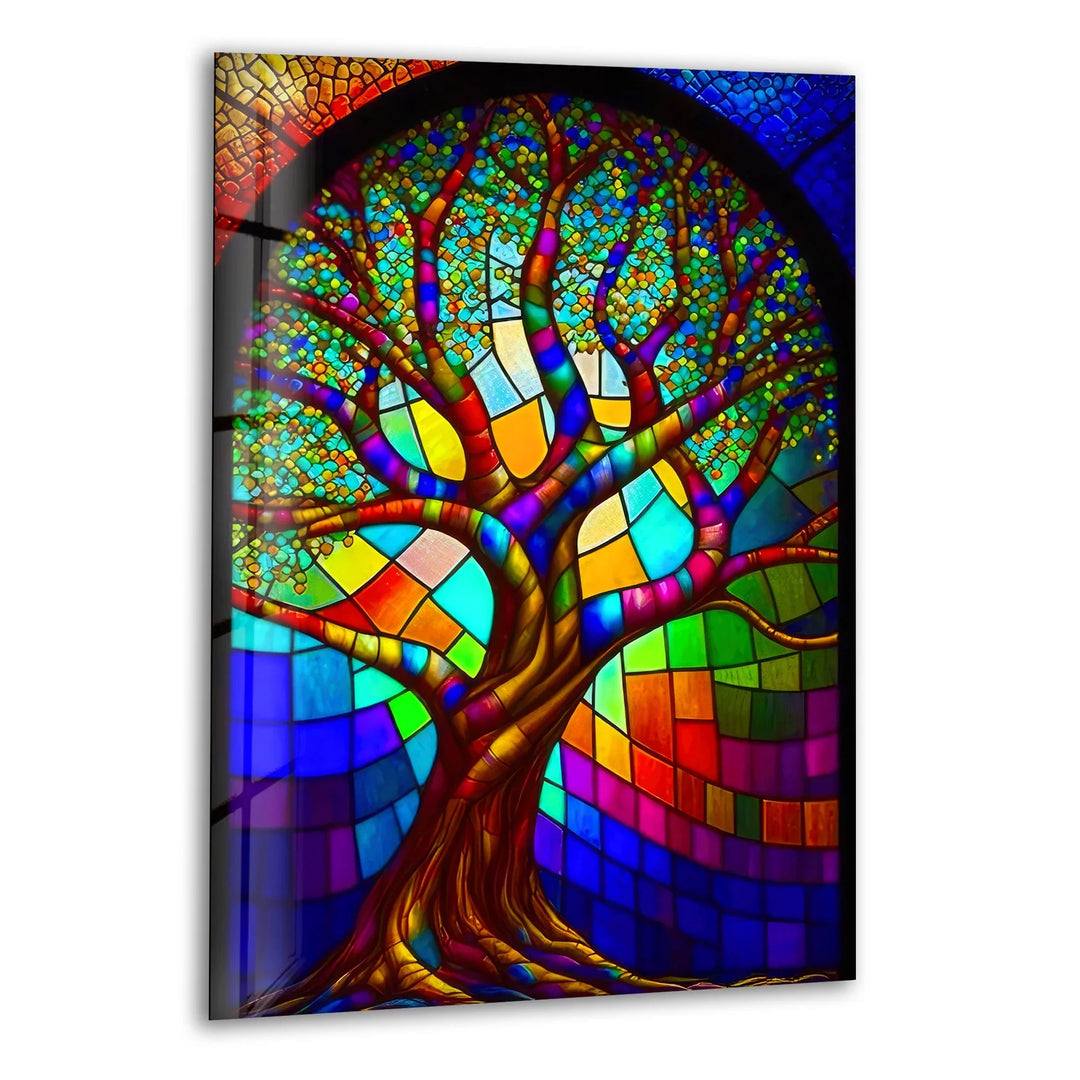
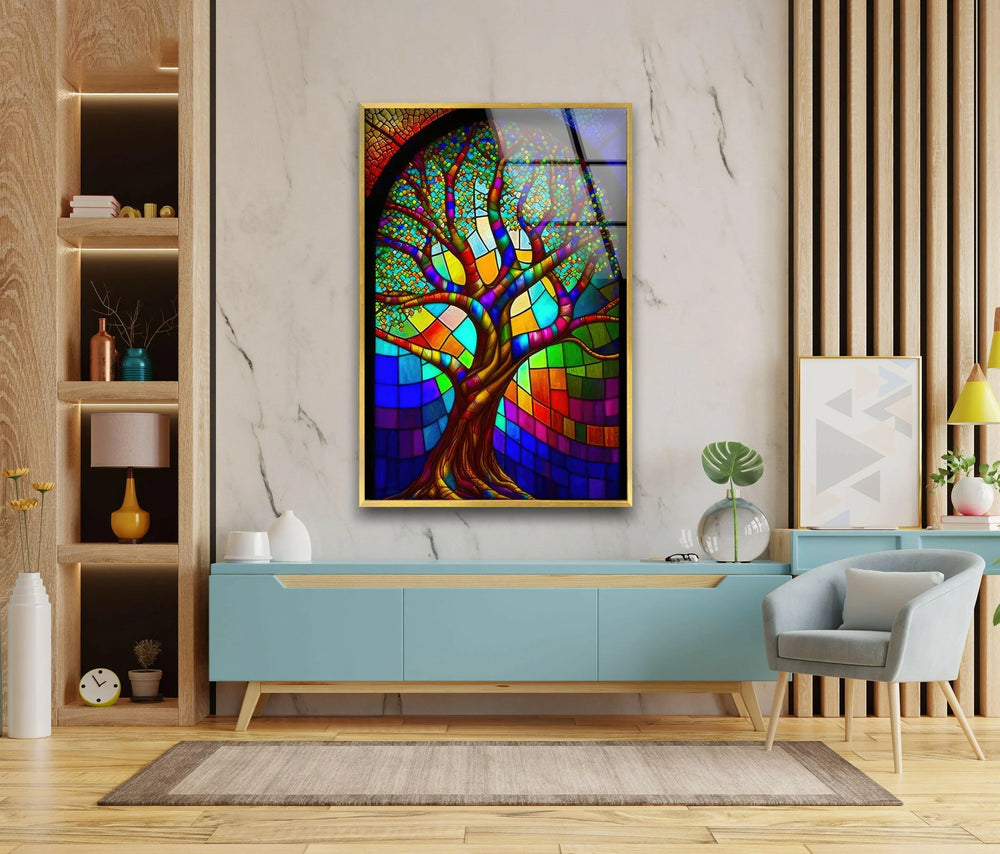
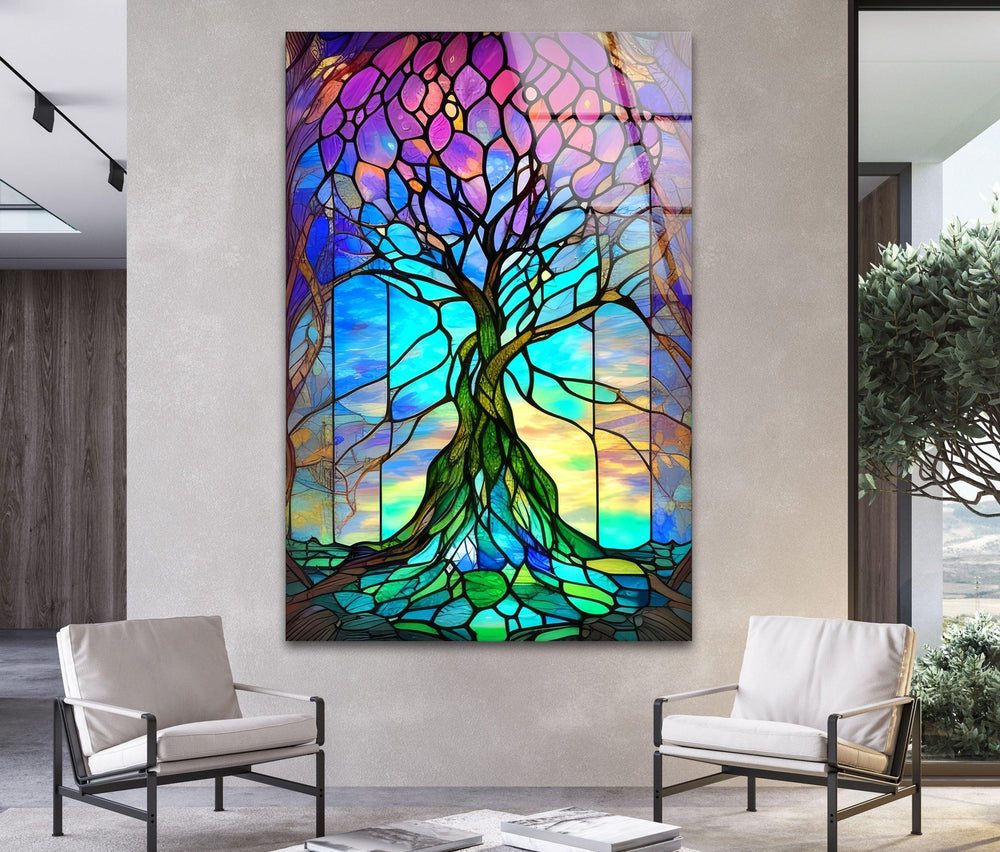
The rigid structure of tempered glass demands serious hardware rather than simple friction hangers. Securing structural decor in shared family environments requires applying the same rigorous anchoring principles used in pediatric rooms. You migrate your heavier pieces outward into common spaces once the nursery requires softer, Oeko-Tex certified cotton tapestries. When selecting Tree With a Lot of Branches Glass Wall Art as a living room focal point, the intricate fractal patterns mimic natural biophilic geometry proven to reduce cognitive fatigue in high-traffic zones. Drive OOK 50-pound professional picture hangers directly into your interior Douglas fir wall studs to ensure your framed installations never shift during daily activity.

Install Toggler Snaptoggle heavy-duty anchors rated for a minimum 50-pound static load when hanging substantial glass pieces above a primary headboard. Color temperature profoundly impacts spatial perception in private retreats. Incorporating Stained Gnarled Tree Glass Wall Art acts as a structural focal point for bedroom retreats where deep amber and indigo hues ground a Scandinavian minimalist master suite. Munsell color theory dictates that low-value, high-chroma blues decrease resting heart rates and lower blood pressure. The dense pigmentation trapped behind the glass pane serves a specific physiological function beyond mere aesthetics.

Air Quality And Chemical Thresholds
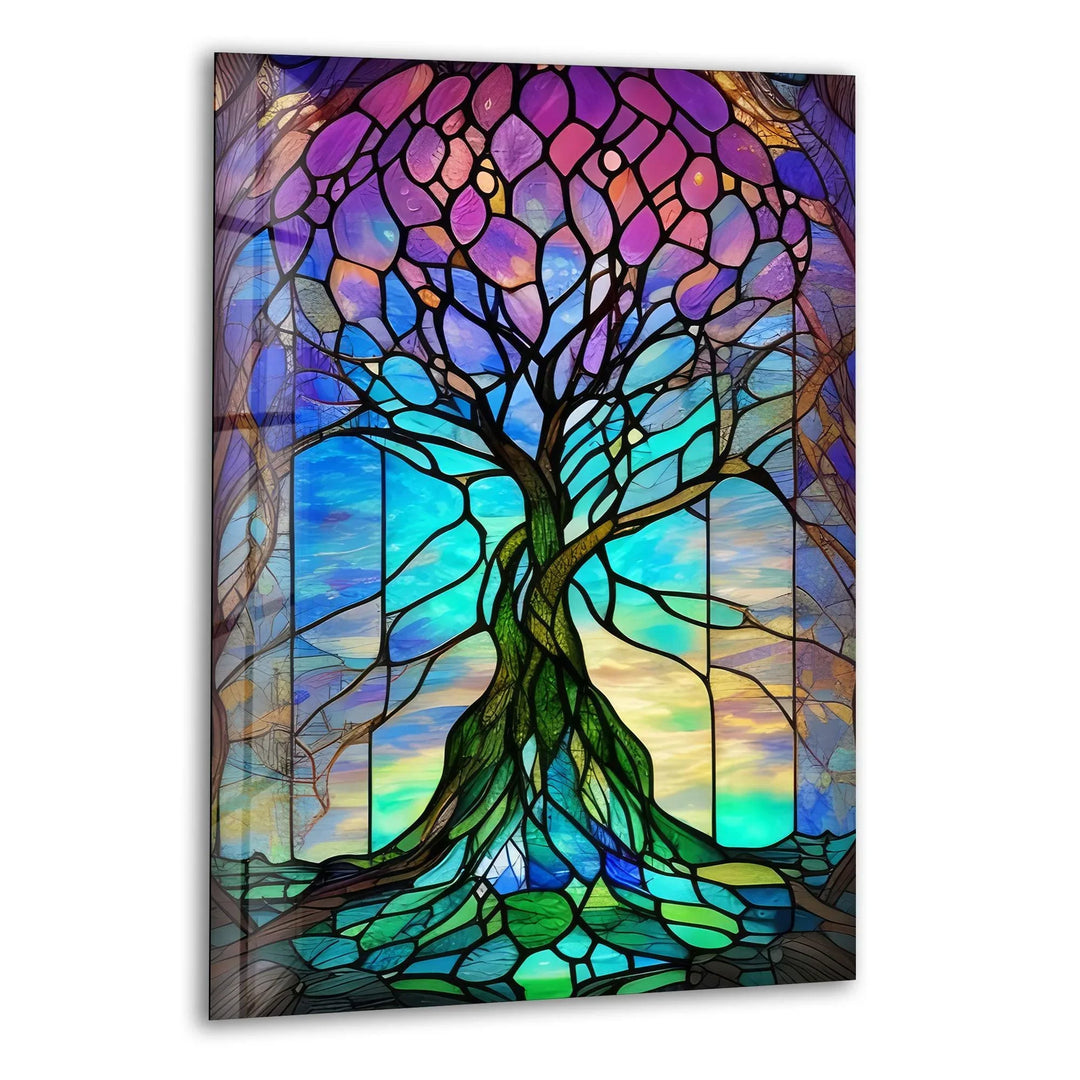
Request the Safety Data Sheet (SDS) for any printed decor and reject any product exceeding the 220-microgram volatile organic compound threshold. Safe indoor air quality relies on verifying specific chemical emission numbers before bringing printed materials into enclosed living quarters. The Environmental Protection Agency reports that indoor residential air routinely measures two to five times more polluted than exterior environments. Solvent-based CMYK commercial printing inks release airborne compounds for months. GREENGUARD Gold certification restricts Total Volatile Organic Compounds to a strict maximum of 220 micrograms per cubic meter. This represents a 55 percent reduction compared to standard industrial limits. When exploring modern arboreal designs, material composition dictates safety. Pieces like the Fantastic Giant Tree Glass Wall Art provide an alternative solution for high-sensitivity spaces. The frameless edge-to-edge tempered glass surface eliminates MDF (Medium Density Fiberboard) composite wood frames entirely, stripping away the primary source of secondary formaldehyde off-gassing. Furthermore, extending the four-inch gravity corridor behind these frameless glass panels guarantees that even a structural anchor failure causes the tempered panel to plummet securely behind the crib framework rather than into the sleep area.

Implementing Dual-Point Installation Mechanics
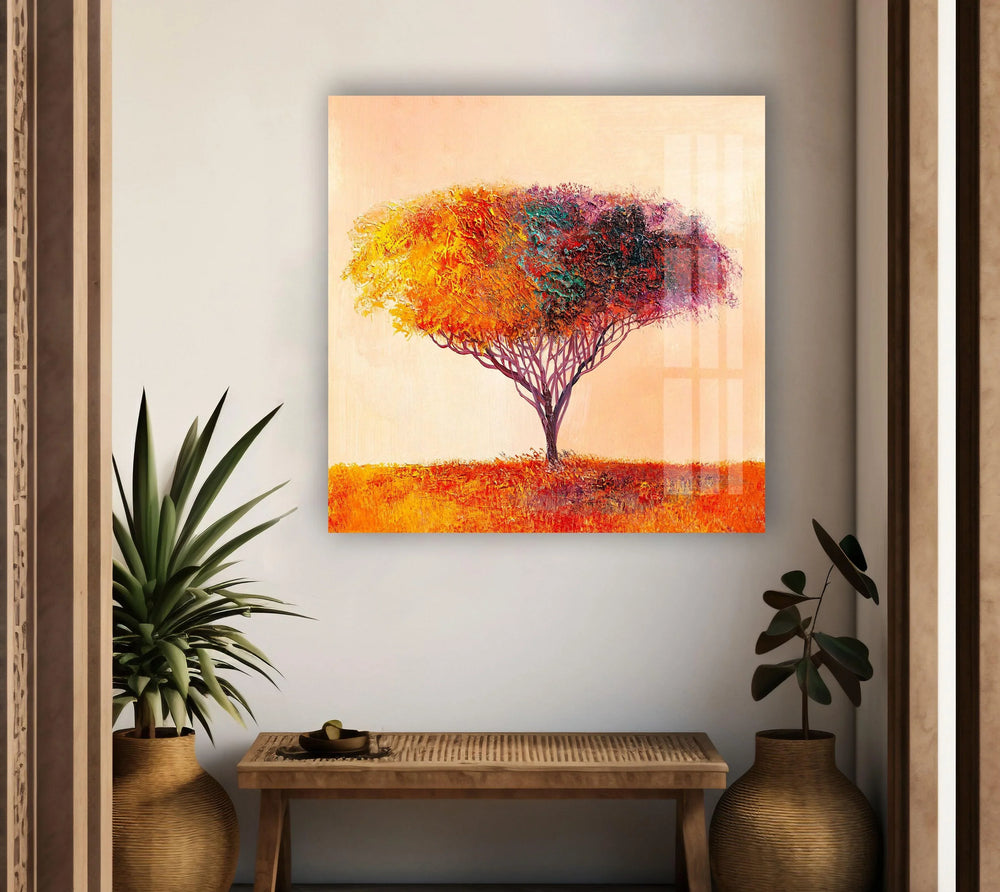
The correct approach mechanically locks the art to the drywall at three separate tension points. Eliminating the risk of swinging decor demands a dual-point attachment system on every frame in the house. Relying on a wire-strung single top-mounted wire nail allows frames to pendulum freely when doors slam or small hands reach upward. Standard adhesive strips degrade rapidly under fluctuating nursery humidity levels and cyclic temperature shifts. Utilize a Hercules Hook stud-mounted fastener for the primary top load bearing. Next, apply commercial-grade 3M Command picture hanging strips directly to the lower two corners of the frame backing. Warm 600-nanometer light wavelengths promote melatonin production in young children facing evening transitions. Displaying Orange Sunset with Life of Tree Glass Wall Art in a transitional hallway leading to the bedrooms capitalizes on this biological response. The dual-anchor method keeps such rigid, glass-based pieces firmly static against the plaster. Press the bottom corners of your newly mounted frame firmly against the drywall for precisely 30 seconds to compress the EVA foam core and fully activate the pressure-sensitive adhesive.

Refusing to compromise on that four-inch gap guarantees the physical room remains safe while the visual space thrives. True nursery safety requires rejecting the binary choice between blank walls and hazardous traditional framing. By combining mechanical anchoring, verified chemical thresholds, and the strategic geometry of a four-inch spatial drop zone, you create a stimulating visual environment that remains structurally uncompromised. The aesthetic development of your child benefits directly from exposure to fractal leaf patterns, rich textures, and high-contrast Pantone color fields safely positioned within their expanding field of view. Approach your next installation not as a simple decoration task, but as an exercise in domestic structural engineering aligned with ASTM International safety standards. Maintaining this precise four-inch gravity corridor as your infant transitions into a toddler bed ensures any future framed additions slide harmlessly to the baseboards, permanently future-proofing your interior architecture against mechanical failure. Carefully vet the technical specifications of your chosen materials and seek out tree wall art that explicitly accommodates robust dual-point mounting.