

The Three-Piece Wall Art Rule Parents Follow And Why It Fails
Nursery wall art placement and palette must invert standard adult interior design rules—like 57-inch heights and calming pastels—to serve infant visual neuroscience and cognitive development. Nursery design begins with Benjamin Moore paint swatches and Newton crib sheets, but the most important developmental decision happens on the drywall. You stand under the fluorescent lights of a custom frame shop, staring at three canvases while holding a 25-foot Stanley tape measure, determining the exact dimensions your baby room requires. The choices you make regarding a set of three wall art canvases require strict adherence to spatial geometry. These dimensions directly affect visual tracking and physical safety. While interior design dictates specific proportions for standard rooms, a child environment demands a complete reversal of conventional hanging principles. Nursery wall decor serves infant cognitive mechanics rather than adult aesthetic preferences.
Why The Adult Gallery Height Standard Fails Infants
Position a frameless 40cm by 60cm giclee canvas on 300gsm archival cotton paper exactly 12 to 18 inches from the floor in the Montessori nido zone. The standard gallery height of 57 inches on-center fails infants entirely. While it dictates the placement of three-piece art arrangements in living spaces, three-panel layouts on dining room walls, and triptych displays along staircases, it creates a visual void in the nursery. An infant lying on a Lovevery movement mat cannot physically see a botanical lithograph hung five feet high. Montessori educators consistently recommend lowering visual elements directly to the child level. This 12-to-18-inch placement aligns the artwork directly within the horizontal field of view of an infant. It eliminates cervical spine strain while building spatial awareness. Measure exactly 15 inches from the floorboard to anchor the center point of your floor-level art arrangement.
The Muted Nursery Fallacy
True developmental design requires deliberately clashing with muted walls to force visual engagement. Soft pastel aesthetics actively hinder newborn visual development. Popular interior design favors muted blush, sage, and oatmeal palettes to establish a calm environment. Visual neuroscience studies show infants are born with highly underdeveloped color vision in the Munsell color system. A pale watercolor rabbit canvas offers zero cognitive engagement for babies under three months old. A newborn brain requires bold boundaries. By abandoning the adult preference for calming pastels and instead hanging high-chroma geometric patterns at eye level, you actively support infant visual neuroscience and optic nerve development.
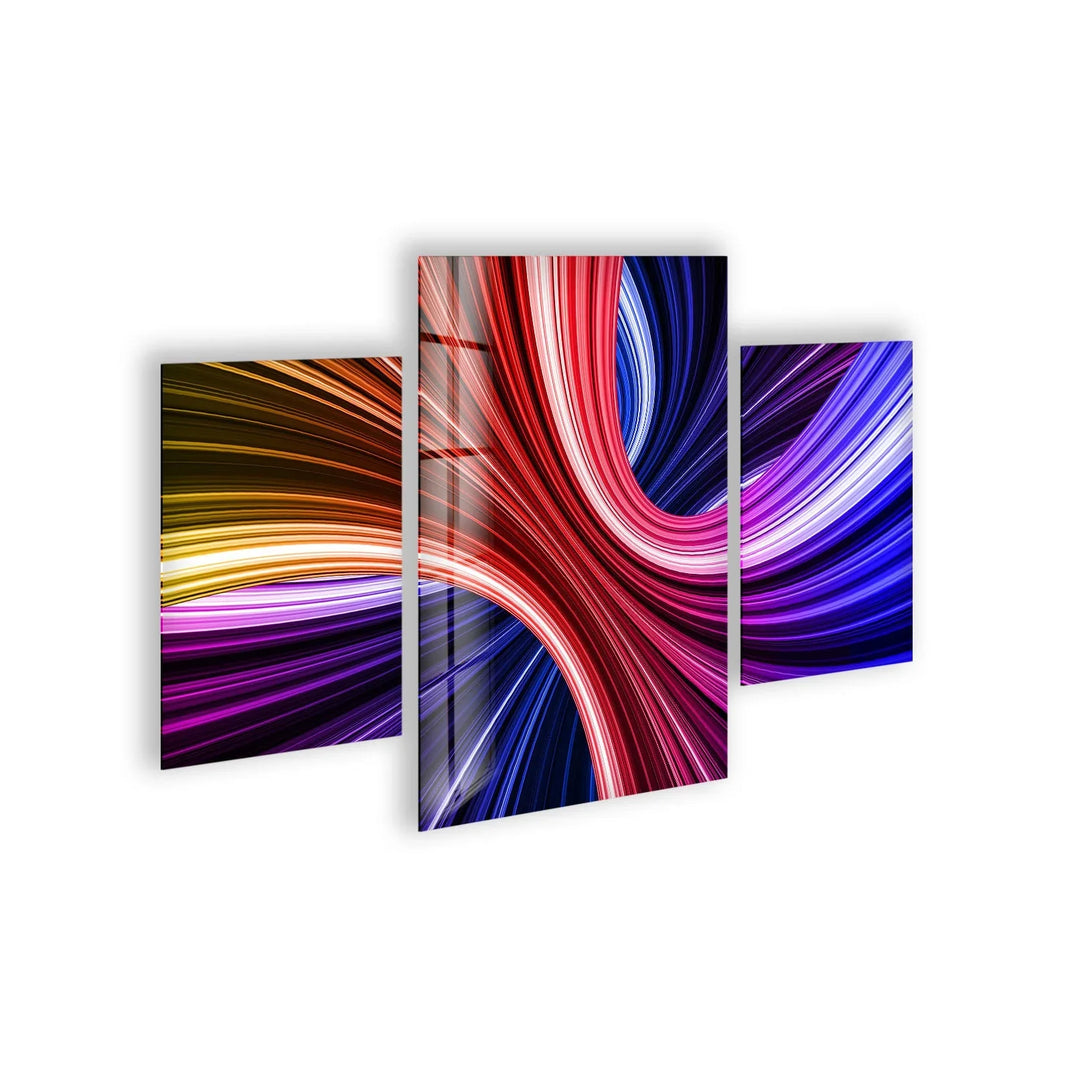
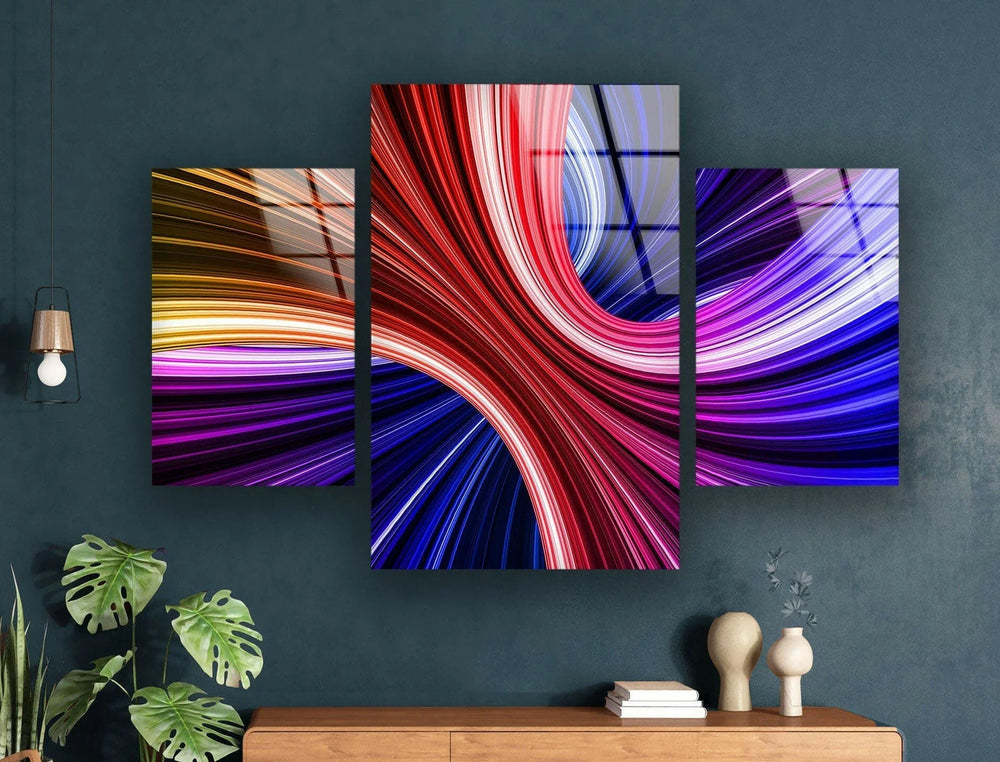
The deep saturation of the Colorful Stained Spiral Geometric Glass Wall Art provides the exact high-chroma primary forms required to stimulate an infant visual cortex.

Select artwork with stark contrasting edges and deeply saturated primary colors like cobalt blue (hex #0047AB) and alizarin crimson rather than matching your pale Farrow & Ball wall paint.
Eliminate Severe Physical Hazards
Use stretched giclee canvas on lightweight pine stretcher bars instead of traditional wooden frames and glass glazing to eliminate severe physical hazards in a child environment. Consumer Product Safety Commission (CPSC) organizations consistently report thousands of emergency-room-treated injuries associated with nursery products annually. Heavy solid oak frames weighing over 2kg fall during seismic events or active toddler play. Do not use standard braided steel picture wire. Braided steel wire acts as a pendulum. Educators recommend securing these prints using heavy-duty adhesive strips.
- Clean the drywall with 70% isopropyl alcohol to ensure maximum adhesive contact.
- Press the 16-pound heavy-duty 3M Command strips into both bottom corners of the pine stretcher bars.
- Hold the entire canvas flush against the wall for exactly 30 seconds.
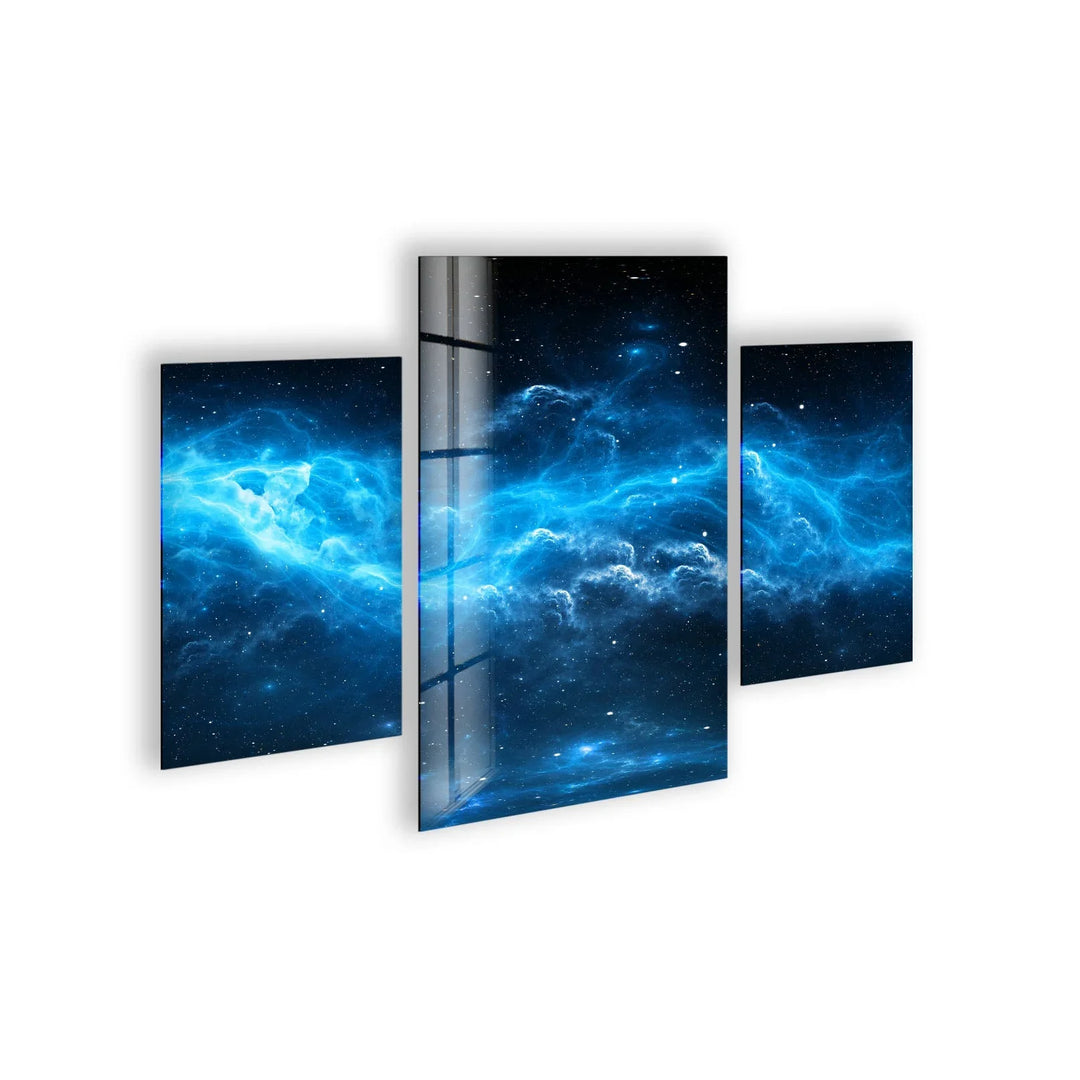
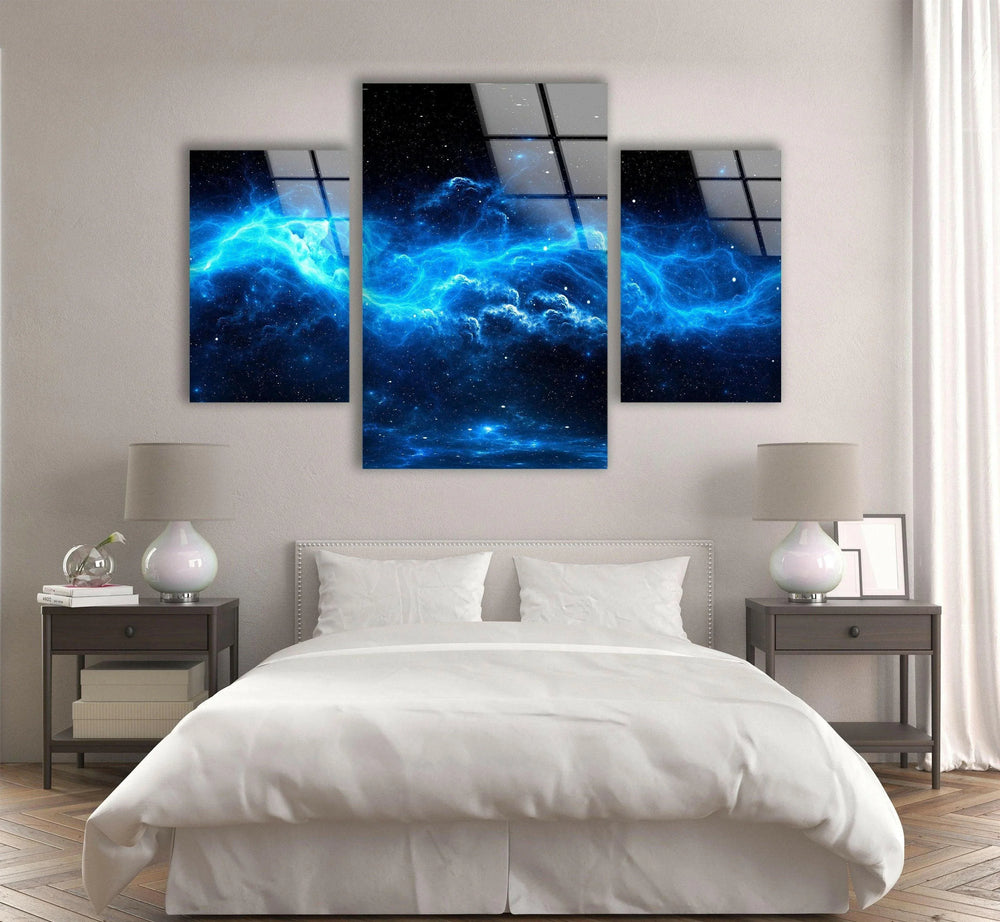
The geometric lines of the Blue Fractal Leaves Abstract Glass Wall Art anchor the eye effectively, provided you print this specific Munsell 10B blue pattern on lightweight 400gsm cotton canvas rather than actual tempered glass for child safety.

Apply double-sided 16-pound heavy-duty 3M Command strips to the bottom corners of every frame to lock them flush against the drywall.
Spacing Triptychs For Smooth Pursuit
To facilitate smooth pursuit across a triptych, maintain a strict 2.5-inch horizontal interval between panels. Precise horizontal spacing dictates whether a baby tracks images or loses focus entirely. Developmental optometry research shows horizontal visual tracking breaks down if sequential images are separated by more than 3 inches. A wider gap forces the developing eye to reset via saccadic jumps. Spacing closer than 2 inches merges the images into a single visual block. A separation of exactly 2.5 inches bridges the developmental gap naturally. Avoid the poor proportions of a cheap three-piece polyester canvas set from a big-box store. Precision ensures visual success.
The repeating structural lines of the Colorful Neon Fractal Abstract Glass Wall Art guide the developing optic nerve continuously across the triptych when spaced correctly.

Cut a block of scrap MDF wood to exactly 2.5 inches wide and use it as a physical spacer between your polyester canvas panels during installation.
Calculations For Crib Clearance Zones
Mount the bottom edge of your canvases at least 12 to 15 inches above the top rail of the wooden crib to prevent reach injuries. Artwork placed near a sleeping area requires specific vertical clearances. Infants pull themselves up to a standing position by six months. Pediatric safety guidelines indicate an upward standing reach extends 30 inches from a standard-sized crib mattress. Hanging any object within this zone creates a direct pulling hazard. Measure the top rail of the wooden crib. Standard crib safety guidelines mandate this rail sits at least 26 inches above the mattress. This placement keeps the installation 36 to 40 inches above the mattress surface. Sourcing an imported three-panel artwork set from Canada or a triptych collection curated in New Zealand requires the exact same mathematical rigor.
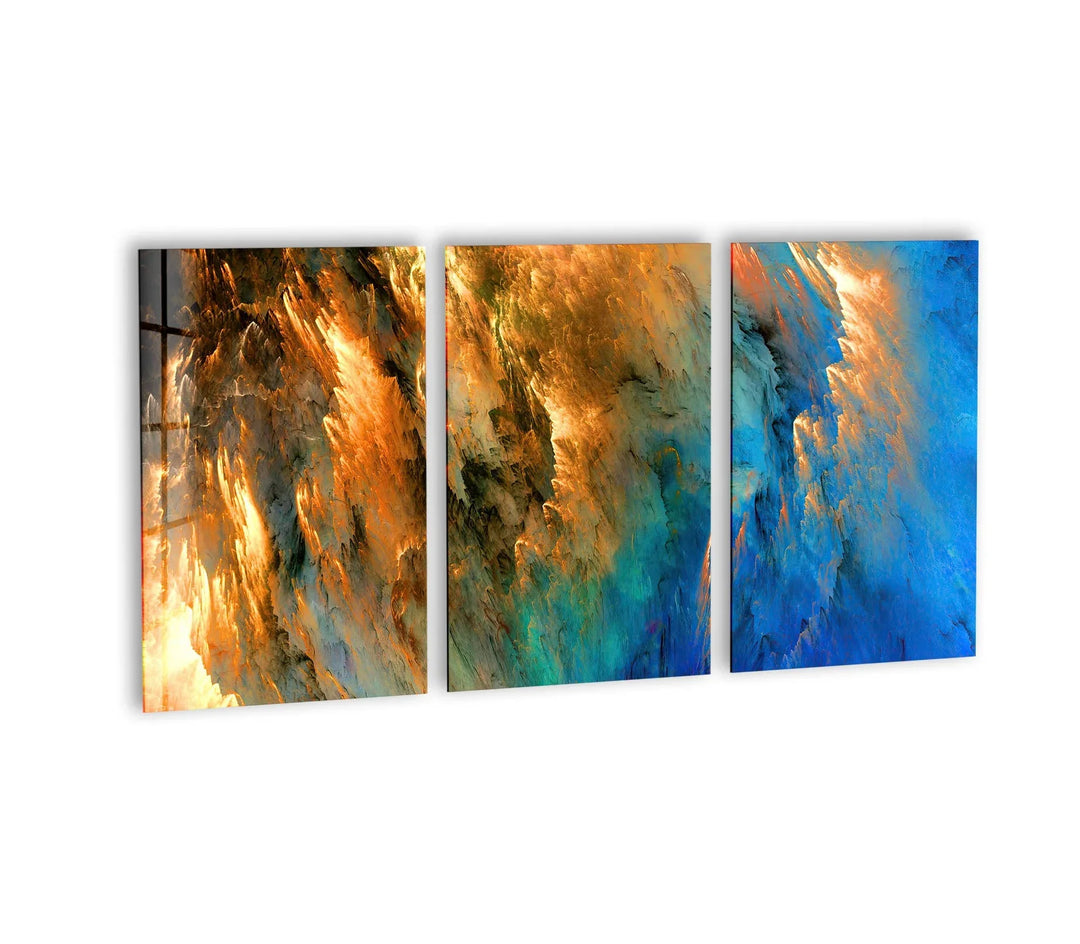
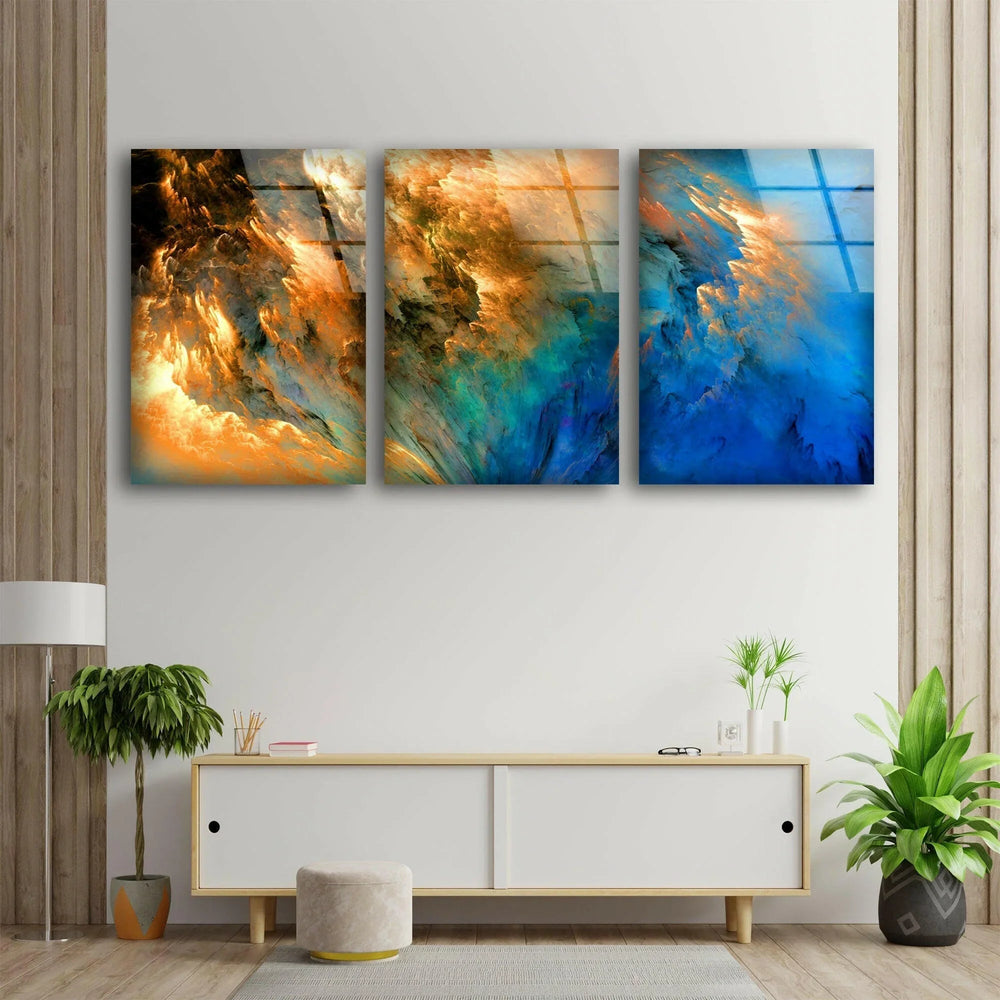
The Orange & Green Abstract Glass Wall Art provides bright chromatic contrast for older babies when hung safely above the 40-inch boundary.

Measure 40 inches vertically from the standard-sized crib mattress support and mark this point with blue Scotch painter's tape as your absolute lowest hanging boundary.
A framed three-piece art installation operates as the first cognitive tool your child encounters. Inverting standard adult interior design rules to prioritize infant cognitive mechanics transforms passive nursery walls into active neurodevelopmental tools. Whether installing three-panel artwork in adult bedrooms or outfitting a dedicated Montessori nursery, the physics of sight remain constant. By hanging pieces based on developmental mechanics rather than standard interior design rules, you guarantee your baby actively engages with their spatial environment. Ensure you make the correct structural choices today by reviewing the precise options in our complete three-piece wall art collection.