

The Tiger Wall Art Gift Shopper Rule That Always Fails
Selecting predator wall art based on the recipient's daily cognitive load—specifically using high-saturation photorealism to trigger restorative fascination—always outperforms matching pigments to upholstery. Choosing art for someone else fails because buyers match the recipient's Pantone color swatches instead of their neurological fatigue. They agree on the Hans Wegner GE290 mid-century modern teak seating in ten minutes but spend three months arguing over the blank Gyproc drywall above the Knoll Florence credenza. As a gift shopper navigating this stalemate, the pressure feels entirely aesthetic. In reality, choosing a striking tiger wall art print requires matching the recipient's mental exhaustion levels over long-term occupancy. Selecting artwork means more than identifying preferred pigments like Pantone 151 C cadmium orange or following a general Bauhaus interior design trend. This superficial approach fails. Introducing a dominant Panthera tigris motif into a residential space permanently alters the room's psychological baseline. The specific visual density of the piece dictates how the eye travels across the room, how the brain processes ambient light, and how the central nervous system responds to the environment. Art is an active spatial participant.
The defining factor in this transaction is whether the recipient's daily professional routine demands restorative fascination or a low-stimulus visual pause, not whether the couple likes Panthera tigris tigris (Bengal tigers). A 100cm by 150cm acrylic Golden Fluid portrait on 400GSM cotton canvas forces the human visual cortex into an immediate reaction. This focal point ramps up the sympathetic nervous system or cues a parasympathetic wind-down. Understanding this biological mechanism bypasses the ongoing aesthetic argument entirely. You provide a piece that functions as a precise architectural tool rather than mere residential decoration. Gifting a prominent wall canvas requires an analytical evaluation of the recipient's dopamine and cortisol sensory diet.
Why High-Saturation Photorealism Lowers Mental Fatigue
Photorealistic, high-saturation imagery provides an immediate path for the brain to follow, reducing mental fatigue through a psychological mechanism called restorative fascination. Environmental psychologist Dr. Sally Augustin documents this vibrancy paradox in long-term residential occupancy. Standard design logic incorrectly dictates that high-chroma art causes stress. In reality, highly complex, hyper-detailed images give the brain specific, easy-to-digest visual data, proving that matching art to cognitive load reduces top-down cognitive processing by up to 20 percent compared to interpreting Rothko-style abstract color fields. When a professional spends ten hours managing logistical crises at a Fortune 500 firm like Goldman Sachs, their visual cortex craves absolute clarity. A Canon EF 100mm f/2.8L macro-lens portrait of an Amur tiger delivers this precise neurological relief. Crisp rendering of vibrissae (whiskers) and shadow gives the tired mind an effortless path to follow.
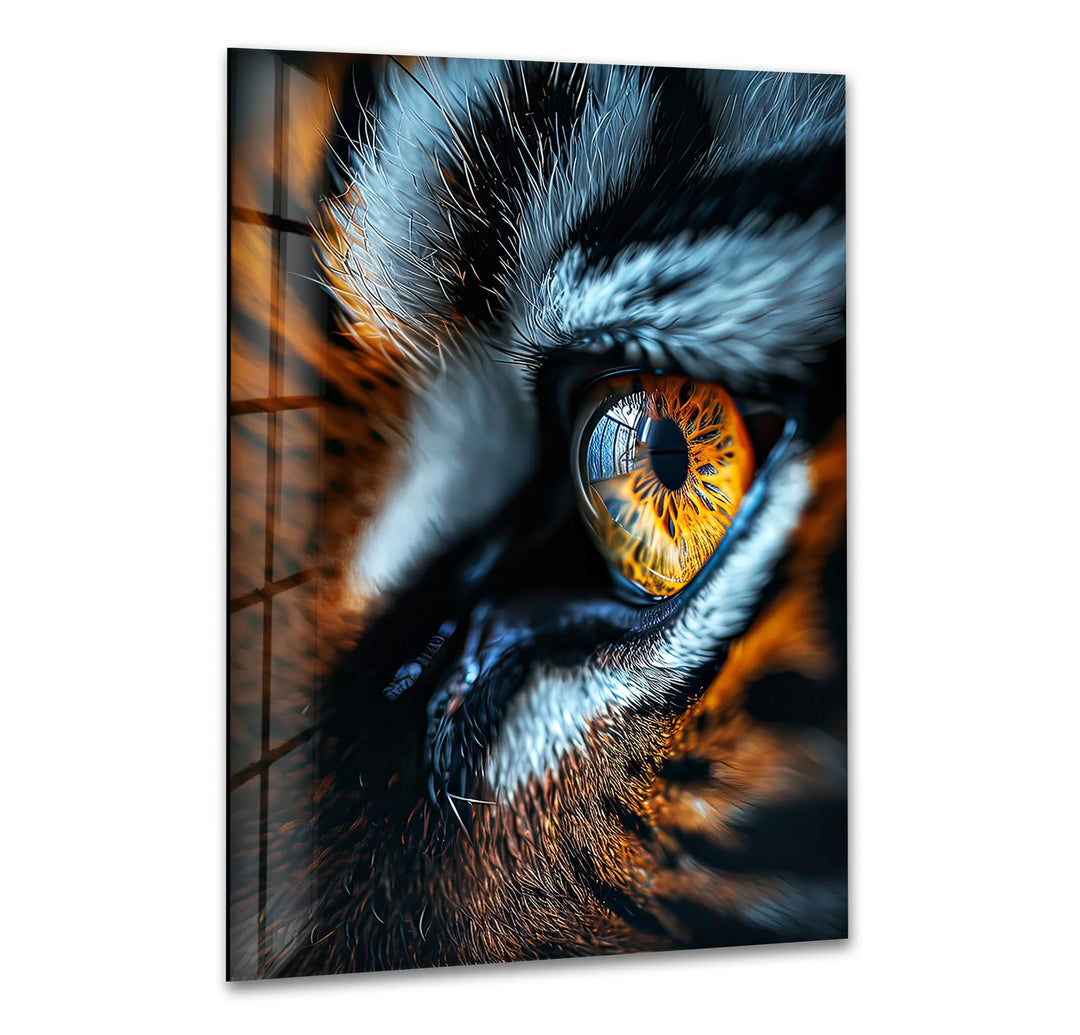
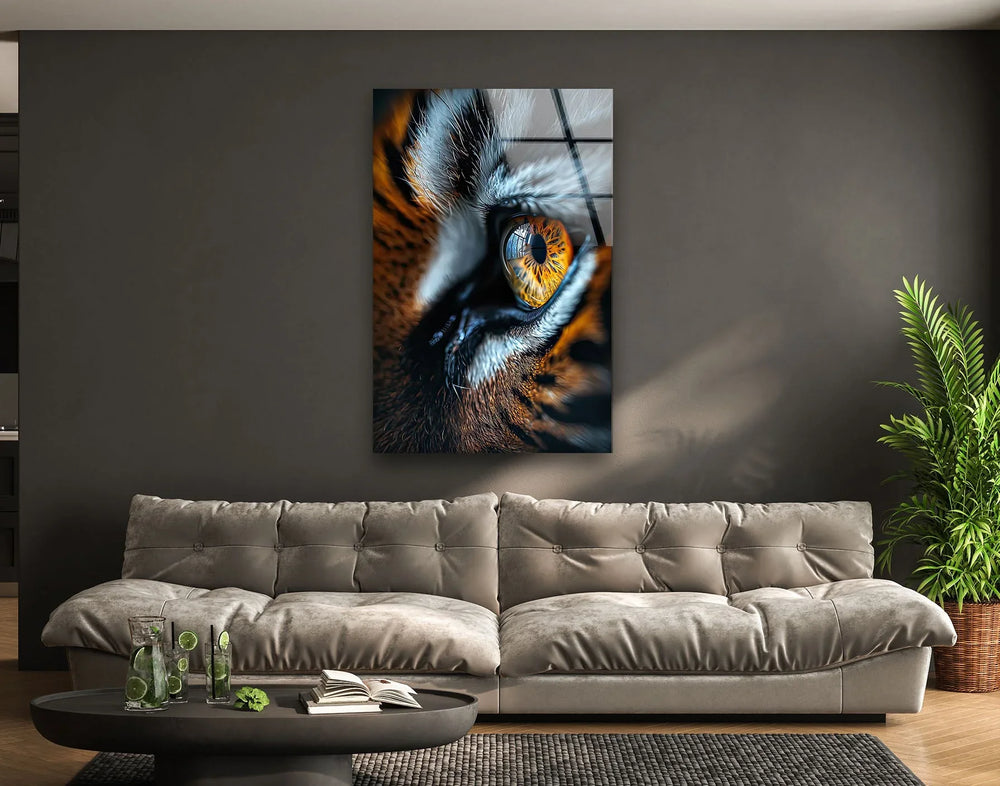
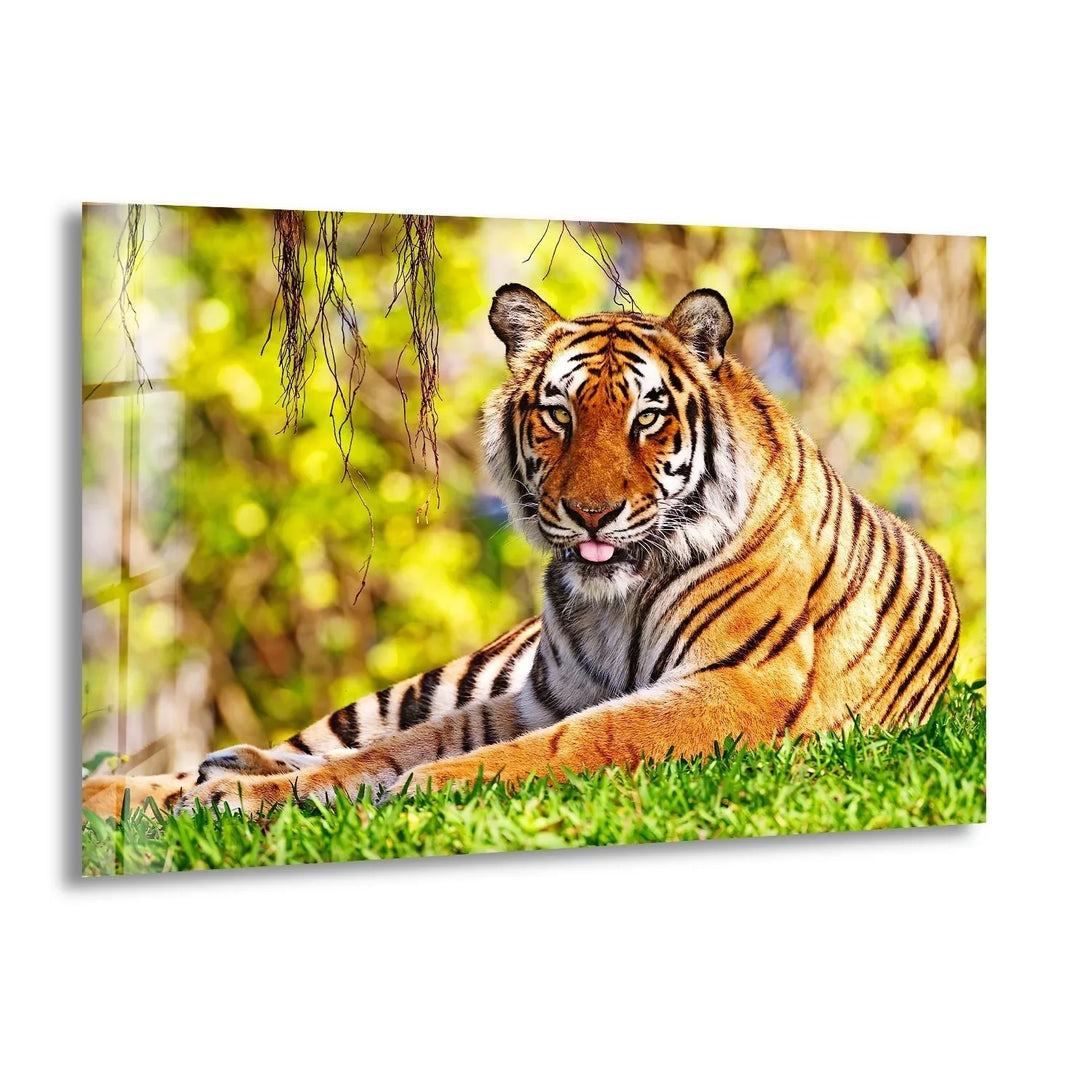
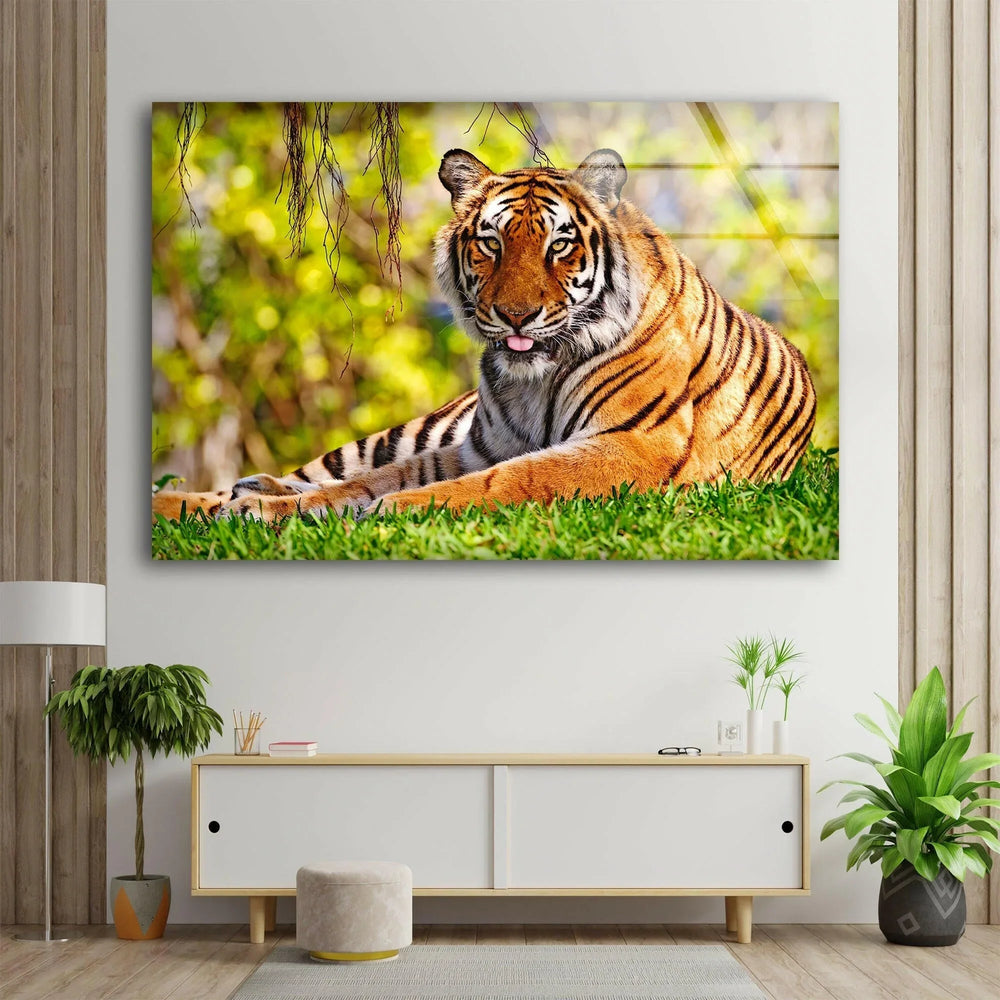
According to eye-tracking research published in Frontiers in Psychology, high-saturation focal points attract the human foveal gaze 2.4 times faster than monochromatic greyscale imagery. Within a standard 60-30-10 interior room color layout, a photorealistic apex predator claims exactly 15 to 20 percent of the visual weight, even while physically occupying only 5 percent of the architectural wall surface area. Clinical studies on chromotherapy by Dr. Morton Walker prove that exposure to vibrant orange hues, specifically those in the 590 to 620 nm Munsell wavelength range, increases human pulse rates by 8 to 10 percent. This biological stimulation triggers active engagement and blocks circadian afternoon lethargy. You observe this precise physiological effect in the Wild Tiger Stare Wall Art: Fierce Jungle Predator Glass Print Decor. Epson UltraChrome HD pigments command the room instantly. The intense binocular gaze from the animal creates a rigid visual anchor that stops the eye from wandering aimlessly around a stark Walter Gropius-inspired Bauhaus living space.

When gifting this specific photorealistic style, calculate the exact saturation shift. If the art contains three vibrant pigments like Cinnabar vermilion, Yellow Ochre, and Cobalt teal, the recipient must treat it as the 30 percent secondary room color block to eliminate visual clutter. Advise them to remove competing bright textiles, such as highly saturated Schumacher velvet throw pillows, replacing them with muted neutrals like Sherwin-Williams Agreeable Gray. Installation height dictates optical success. Hang the geometric centre point at exactly 145cm from the hardwood floor, equalling the standard standing eye level for adult humans. Position the Philips Hue track lighting to hit the piece at a 45-degree angle, eliminating specular reflection on the tempered museum glass surface. This targeted lighting angle maximizes the deep melanistic contrast of the tiger stripes without washing out the high-chroma orange pigments. Treat the art as a hardwired structural light fixture.
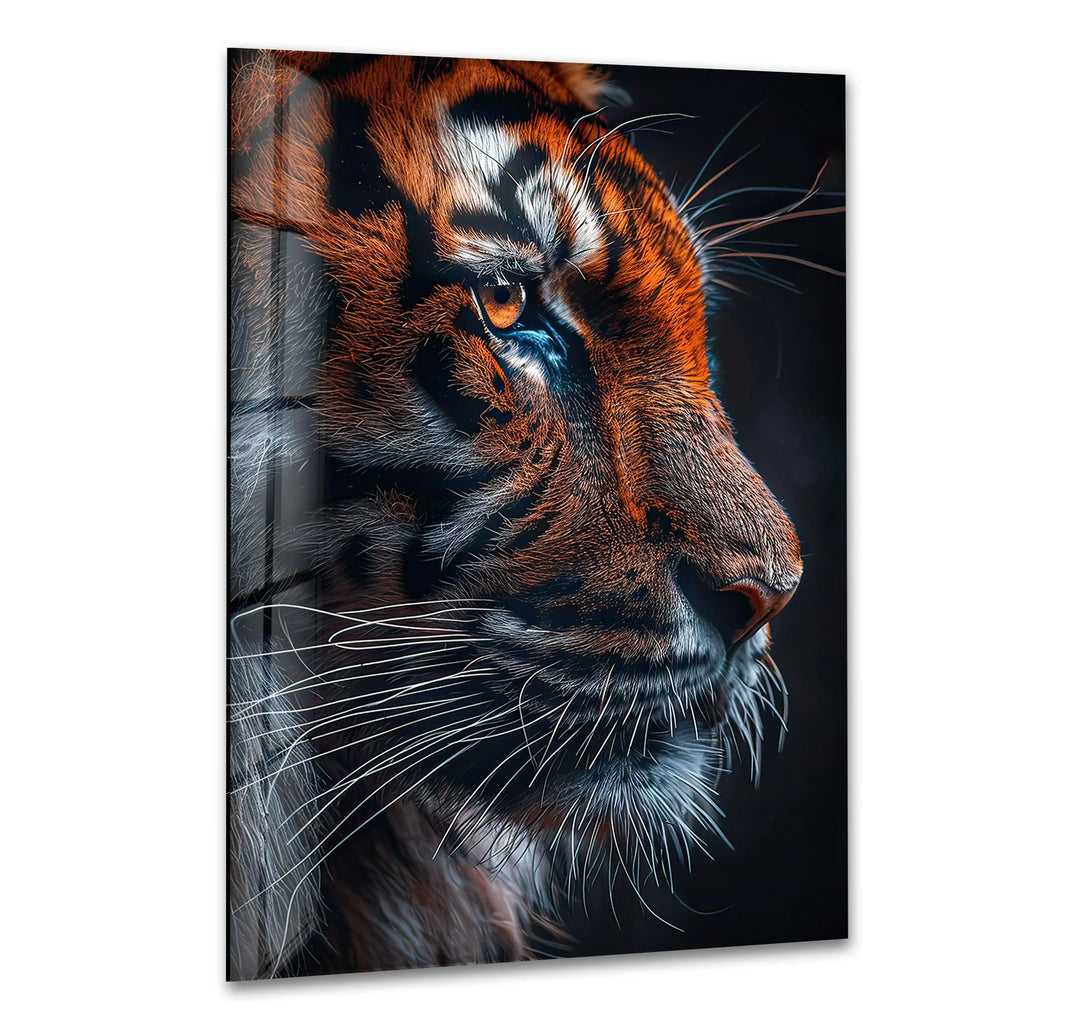
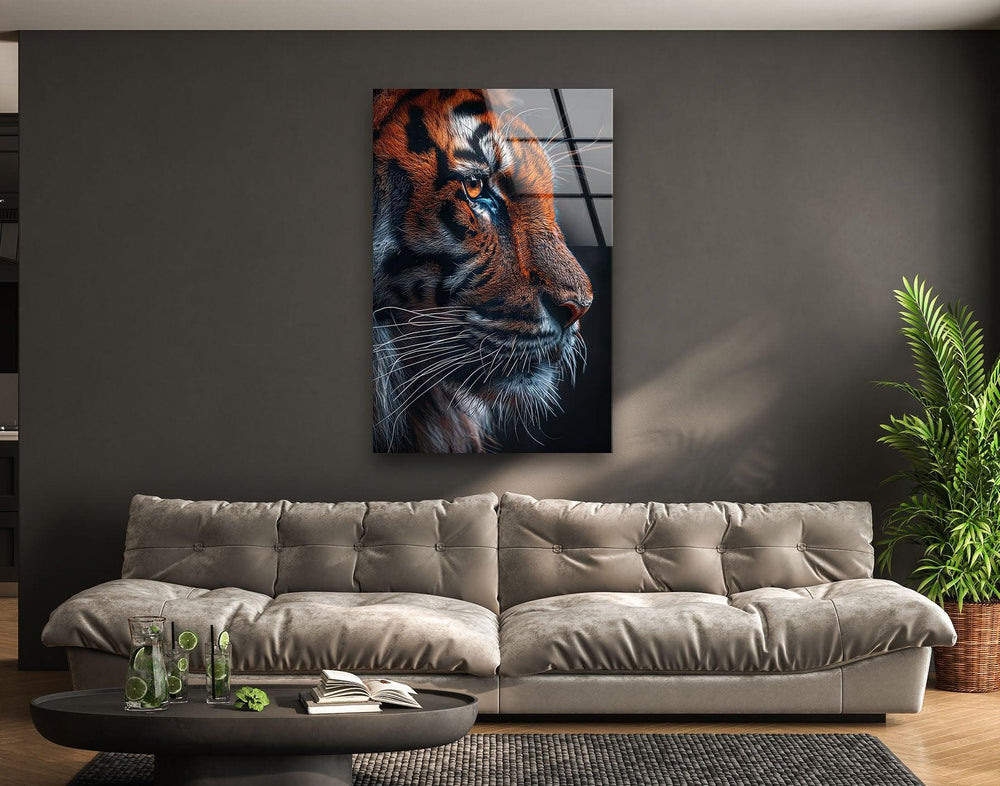
Another highly effective application of this high-saturation rule is the Tiger Face Wall Art: Fierce Jungle Animal Glass Print for Bold Decor. By isolating the Sumatran tiger's face, the cropped macro image maximizes continuous 590 nm wavelength exposure while eliminating botanical background distraction. This tight compositional framing serves as an impenetrable central focal anchor above a limestone fireplace mantle.

The Psychological Function of Desaturated Negative Space
Environments heavily weighted with minimalist negative space lower systolic blood pressure in residential occupants by an average of 5.2 mmHg. Desaturated, ink-wash styles utilize carbon-based Matsuyoshi sumi inks and empty canvas to anchor a Japandi minimalist residential layout. Sumi-e master Kazuaki Tanahashi states that a traditional ink-wash acts as a kinetic record of a moment rather than a literal picture, providing a deliberate visual pause against busy steel architectural lines. A desaturated piece functions primarily through the Japanese spatial concept of Ma, or intentional negative space. This biological blood pressure response occurs because the human visual cortex completely bypasses processing dense chromatic wavelength data. The brain rests.
Feng Shui educator Anjie Cho notes that the tiger represents a dominant Zhen Wood element in traditional spatial design. While fiery depictions inject aggressive Yang energy that overwhelms a primary bedroom sleeping area, an ink-wash rendering offers the tiger's subtle breath. It delivers the essence of power without triggering the literal amygdala biological threat response. This precise energetic balance makes a piece like the Siberian Tiger Glass Wall Art the correct choice for restorative sanctuaries. The artwork functions as structural tiger wall art black and white decor. Proper mounting strategy dictates this subtlety. When scaling the Ma, the surrounding negative space of the Sherwin-Williams Alabaster wall must remain at least 25 percent larger than the active artwork dimensions. Generous bordering forces the piece to breathe.

Avoid chromatic misalignment at all costs. Desaturated carbon-blacks look visually dirty against warm bases like yellow-ochre linen textiles or Chesterfield brown leather upholstery. Install these cool-toned prints exclusively in rooms with true neutral bases, specifically Benjamin Moore Coventry Gray, slate blues, or crisp Farrow & Ball All White architecture. The clean ink requires a stark background to maintain its sophisticated edge. For buyers seeking tiger wall art large enough to cover an entire formal mahogany dining room wall, this desaturated approach completely prevents the room from feeling claustrophobic. Echoing the 60 percent dominant room colour within the art's negative canvas space dissolves the physical boundary between the piece and the architecture.
| Design Factor | High-Saturation Photorealism | Desaturated Negative Space |
|---|---|---|
| Cognitive Processing Route | Triggers restorative fascination. Requires minimal top-down cognitive interpretation, making it the optimal choice for immediate visual recovery after high-stress analytical tasks. The visual cortex follows the literal path of the painted fur. | Requires active, top-down interpretation of form. Increases subtle cognitive load but rewards long-term, sustained viewing in low-stress, meditative environments. The brain actively fills in the missing negative space. |
| Physiological Impact | Increases human pulse rates by 8 to 10 percent through direct exposure to 590-620 nm wavelength orange pigments. Stimulates active physical energy and encourages social interaction. | Lowers resting systolic blood pressure by an average of 5.2 mmHg by minimizing chromatic noise. Maximizes visual rest areas, promoting deep parasympathetic recovery. |
| Visual Weight Allocation | Functions heavily as the 30 percent secondary color in standard interior design frameworks. Claims up to 20 percent of a room's visual weight regardless of its exact physical dimensions. | Reinforces the 60 percent dominant color base. Blends cleanly into the existing architectural volume without aggressively commanding attention from adjacent furniture. |
| Material Surface Pairing | Requires smooth, Farrow & Ball matte-painted wall surfaces to prevent sensory texture overload. This allows the intricate photorealistic details to project forward without competing against background shadows. | Thrives against highly textured substrates like Schumacher grasscloth or exposed structural brick, where the clean lines of the ink wash provide sharp, defining structural contrast. |
Matching Cognitive Load to Textural Baselines
Base your final gifting decision strictly on the recipient's daily professional stress intensity and their room's textural baseline. Designer Kelly Wearstler argues that maximalist art requires a minimalist frame, while minimalist art requires a maximalist soul. Texture overload destroys spatial harmony. Placing a standard 400 GSM heavy-weave giclée canvas against a high-texture wall, such as Schumacher raw grasscloth or Chicago exposed industrial brick, guarantees severe visual noise. The heavy canvas fights the wall for dominance, generating an exhausting neurological environment. Optium Museum Acrylic glass prints solve this dilemma completely. They offer a sleek, non-porous surface that cleanly contrasts heavy architectural textures. This material shift updates a traditional tiger wall art painting into a precise architectural element. It bounces ambient light, adding calculated perceived depth to flat Gyproc drywall.
If the recipient handles high-intensity daily stress, a complex hyper-realistic image provides superior cognitive relief compared to minimalist abstract art. The visual cortex latches onto the vivid rendering of the Panthera tigris fur and high-contrast hex code #FFBF00 amber eyes, instantly shutting down persistent analytical looping. Determining this exact cognitive load requirement forms the true metric of a successful gift. For a bold, high-energy environment, install the Electric Roar Tiger Wall Art: Neon Wild Animal Glass Print Decor. The vibrant LED-style neon accents provide immediate foveal focal anchoring. Conversely, if they operate in a chaotic physical workspace and require a home sensory buffer, default to the desaturated Kazuaki Tanahashi-inspired negative space pieces.

Your selection fundamentally dictates how the recipient's home operates on a neurological level. Providing a large focal point carries massive architectural responsibility. You install a permanent visual anchor that dictates Philips Hue lighting requirements and room colour balancing for decades. Whether the recipient lives in a compact Mayfair London flat or requires expansive tiger wall art australia delivery for a Sydney penthouse, this decision controls how their space functions physically. I mandate observing a room's Kelvin color temperature natural shadows at exactly 4 PM before finalizing the scale. Ultimately, selecting predator wall art based on the recipient's daily cognitive load to trigger restorative fascination—rather than matching upholstery swatches—transforms a basic gift into a permanent neurological sanctuary. Always align the artwork's structural visual density with the recipient's daily mental fatigue levels before finalising any tiger wall art for living room installations.