

So wählen Sie Wandbilder für große Wände aus: Der vollständige Leitfaden
Auf eine riesige, leere Wand oder eine hohe Decke zu starren, kann überwältigend wirken. Dieser leere vertikale Raum scheint alles zu verschlingen, was du aufhängst, lässt dich frustriert zurück und dein Zimmer fühlt sich unvollständig an. Wenn Sie jemals ein Kunstwerk aufgehängt haben, das Sie für ein "großes" Kunstwerk hielten, nur um einen Schritt zurückzutreten und festzustellen, dass es wie eine Briefmarke an Ihrer Wand aussieht, sind Sie nicht allein. Die Wahl von Wandkunst für hohe Decken und weitläufige Wände erfordert einen völlig anderen Ansatz als die Dekoration von standardmäßigen 8-Fuß-Räumen.
Die gute Nachricht? Mit der richtigen Größenstrategie, Platzierungstechniken und Designprinzipien können Sie diese einschüchternden architektonischen Elemente in beeindruckende Blickpunkte verwandeln. Dieser umfassende Leitfaden führt Sie durch alles, was Sie über die Auswahl, Größenbestimmung und Anordnung von Wandkunst für groß angelegte Räume wissen müssen – unterstützt von Innenarchitekturprinzipien und realen Kundenpräferenzen aus Tausenden von Installationen.
Skalierung verstehen: Warum Größe wichtiger ist, als du denkst
Der größte Fehler, den Menschen beim Dekorieren von Räumen mit hoher Decke oder großen Wänden machen, ist, Kunst zu wählen, die zu klein ist. Was im Geschäft oder online substanziell wirkt, kann vollständig verschwinden, wenn es an einer 3,5 Meter hohen Wand oder unter einer gewölbten Decke platziert wird. Das Verständnis des richtigen Maßstabs ist die Grundlage für erfolgreiche großflächige Dekoration.
Die 2/3-Regel: Deine Größengrundlage
Innenarchitekten verlassen sich auf ein einfaches, aber kraftvolles Prinzip: Ihre Wandgestaltung sollte 60–75 % der verfügbaren Wandfläche oder die Breite der darunterliegenden Möbel einnehmen. Für ein Sofa mit einer Breite von 84 Zoll sieht man Kunst, die mindestens 50-63 Zoll spannt. An einer kahlen Wand von 3 Metern Breite braucht man Stücke, die zusammen 2,1 bis 2,5 Meter breit sind.
Das mag anfangs übertrieben wirken – die meisten Menschen neigen dazu, kleiner zu gehen –, aber ein richtiger Maßstab sorgt für visuelle Balance und verhindert, dass deine Kunst verloren oder unbedeutend wirkt.
Deckenhöhenrichtlinien
Unterschiedliche Deckenhöhen erfordern unterschiedliche Mindestgrößen der Kunstwerke:
Standarddecken (8–9 Fuß): Man kann mit herkömmlichen Größen arbeiten, aber alles über einem Kingsize-Bett oder einem großen Sofa sollte mindestens 30x40 Zoll oder größer sein.
Hohe Decken (3-3,5 Meter): Hier musst du größer denken. Die Mindestmaße sollten für einzelne Teile bei 40x60 Zoll beginnen. Alles Kleinere erzeugt einen unangenehmen "schwebenden" Effekt, der den Raum unfertig wirken lässt.
Gewölbte oder doppelt hohe Decken (12+ Fuß): Du befindest dich im Bereich des Statement-Stücks. Suchen Sie nach Kunstwerken, die 60x80 Zoll oder größer missen, oder ziehen Sie Mehrfachinstallationen in Betracht, die zusammen 2,5 bis 3 Meter groß sein können.

Stöbern Sie in unserer Sammlung großer Wandkunst.
Orientierung ist wichtig: horizontal, vertikal oder rund?
Die Form deiner Wandkunst beeinflusst dramatisch, wie sie mit deinem Raum interagiert. Jede Ausrichtung erfüllt in hochgedeckten Räumen einen anderen Zweck.
Vertikale Stücke: Betonung der Höhe
Vertikale oder porträtorientierte Kunst lenkt den Blick nach oben und ist ideal für:
- Schmale Wandabschnitte zwischen Fenstern oder Türen
- Bereiche, in denen man die Deckenhochkeit betonen möchte
- Bereiche, die Kamine oder architektonische Merkmale flankieren,
- Flure und Eingänge mit hohen Decken
Vertikale Stücke mit den Maßen 27x43 Zoll oder 32x48 Zoll funktionieren hervorragend in hochgedeckten Räumen, da sie eine visuelle Brücke zwischen Möbel und Decke schaffen, ohne unangenehme Lücken zu hinterlassen.

Stöbern Sie in unserer Vertikalen Wandkunst-Sammlung.
Horizontale Stücke: Füllbreite
Horizontale oder landschaftsorientierte Kunst ist Ihre erste Wahl für:
- Über Sofas, Betten und Konsolentische
- Breite, weitläufige Wände, die visuelle Erdeung brauchen
- Ein Gefühl von Geräumigkeit in Räumen mit hohen Decken schaffen
- Ausbalancierung vertikaler architektonischer Elemente
Die beliebtesten horizontalen Größen für große Wände sind 43x27 Zoll, 48x32 Zoll und 50x33,5 Zoll. Für wirklich weitläufige Wände sollten Sie bis zu 59x39 Zoll oder sogar 70x43 Zoll in Betracht ziehen.

Stöbern Sie in unserer Sammlung von horizontalen Wandkunstwerken.
Panoramaformate: Maximale Wirkung
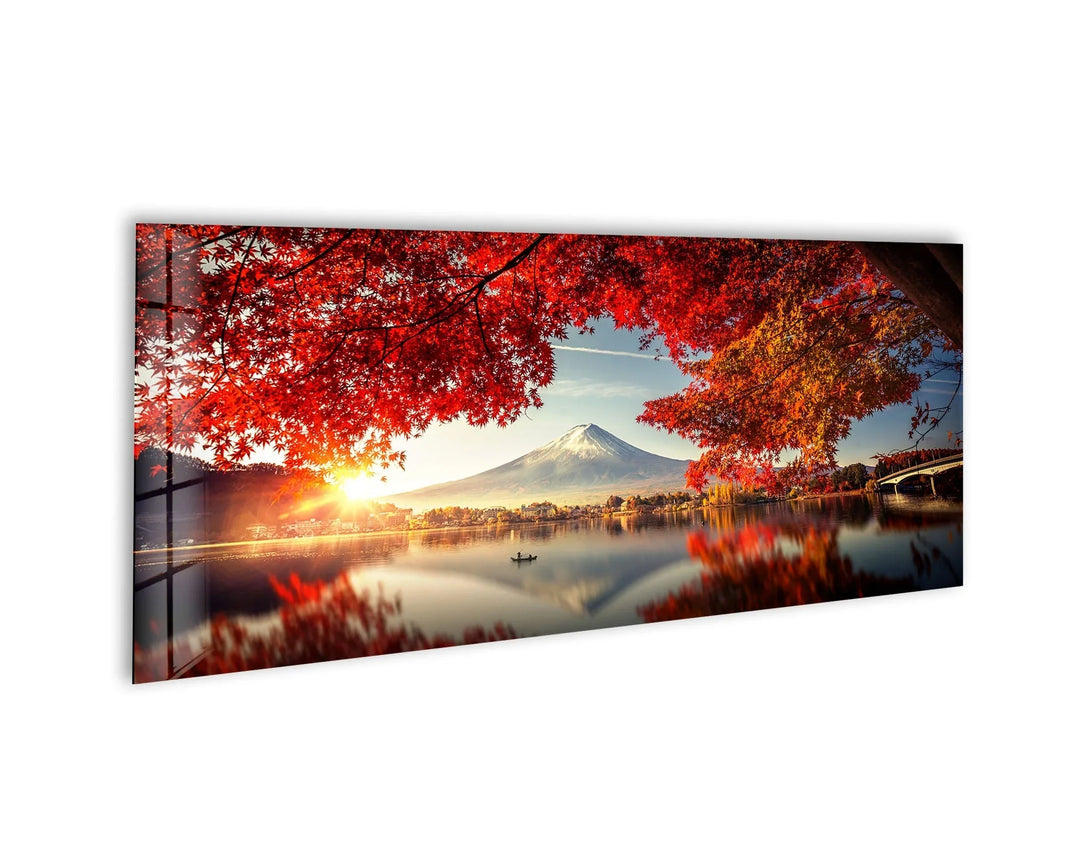
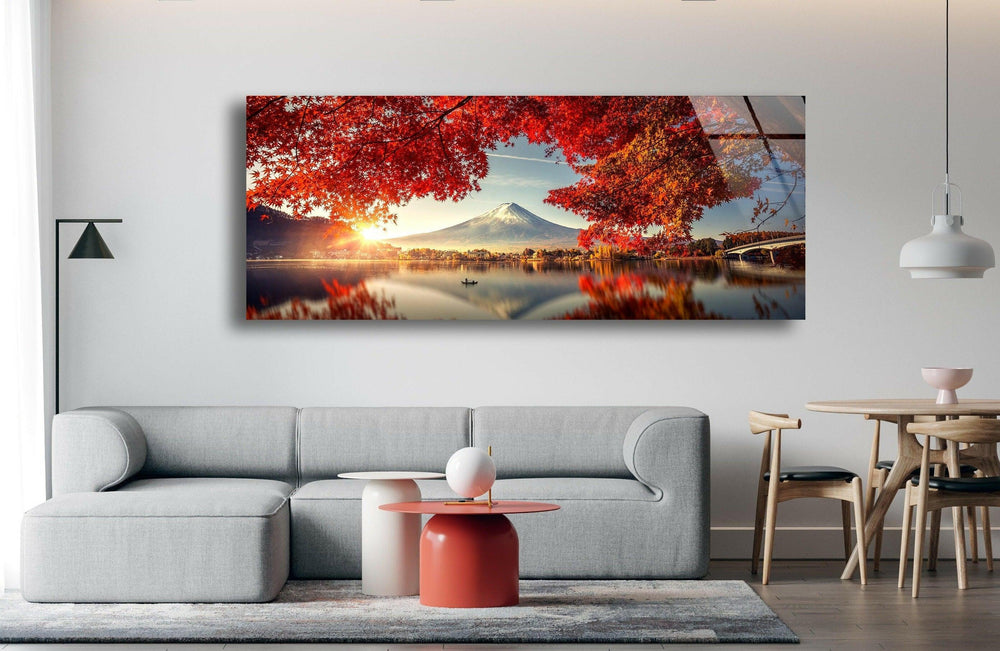
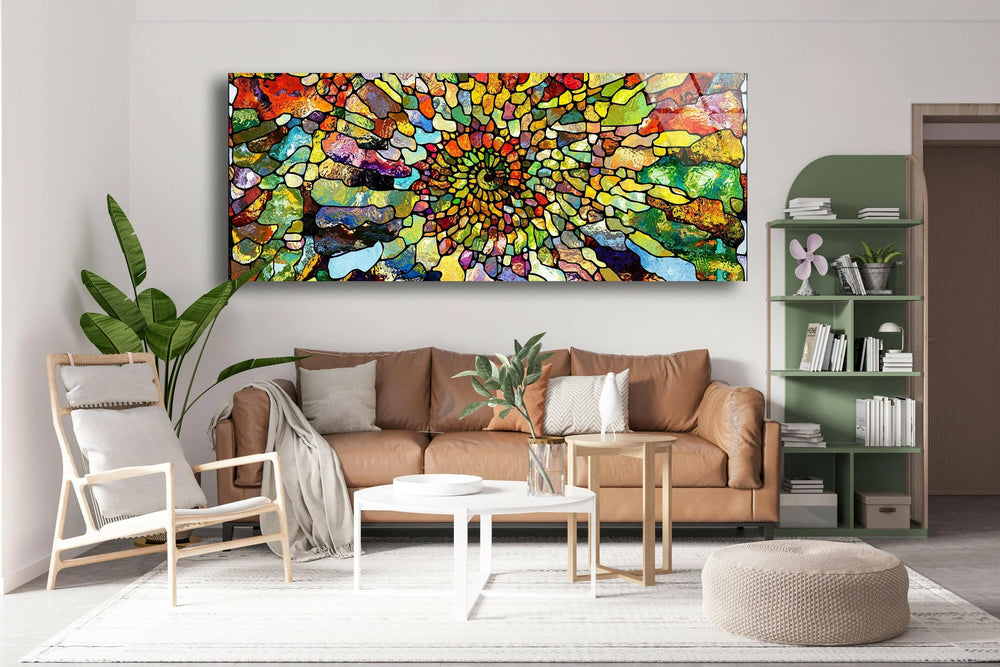
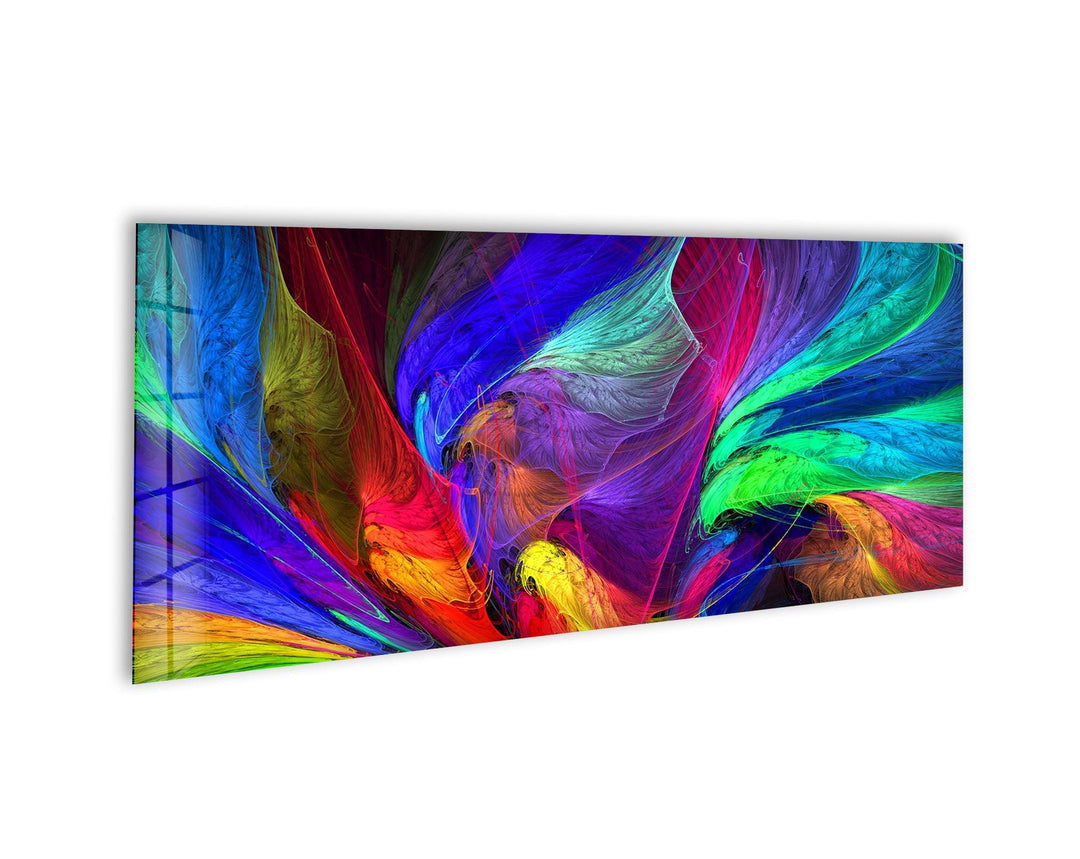
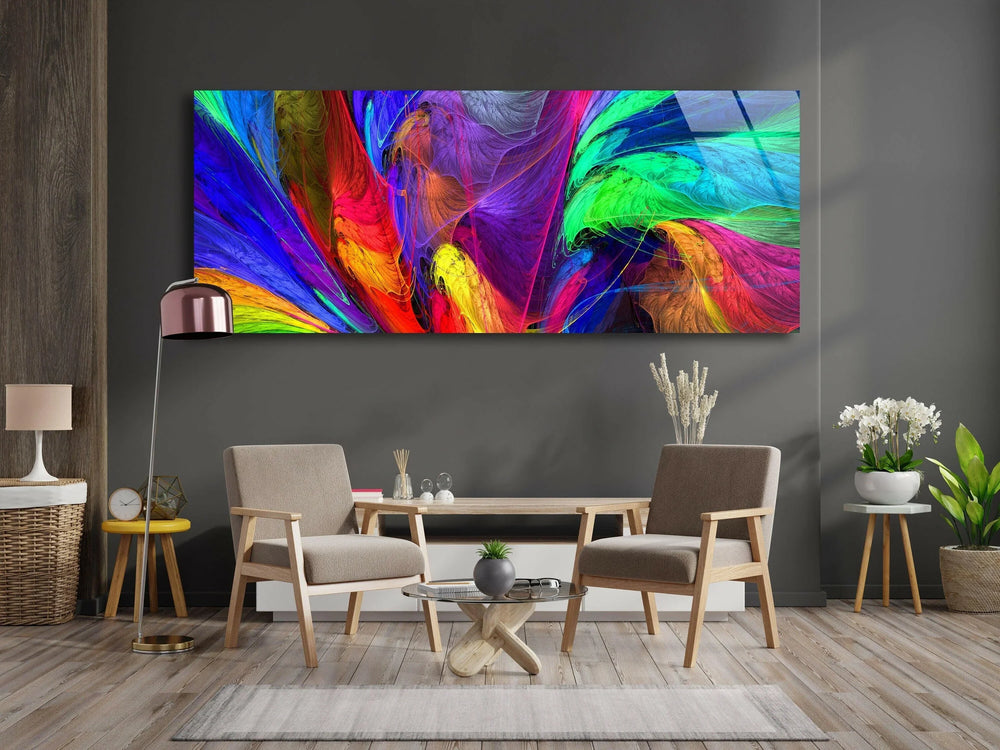
Panoramastücke (typischerweise 2:1- oder 3:1-Verhältnisse) sind dramatische Lösungen für sehr breite Wände. Größen wie 71x28 Zoll oder 59x23,6 Zoll erzeugen filmische Wirkung und halten dabei eine handhabbare Höhe.

Stöbern Sie in unserer Panaromic-Wandkunst-Sammlung.
Runde Teile: Das Rechteck brechen
Kreisrunde Kunst bietet eine erfrischende Alternative zu rechteckigen Formaten, erfordert jedoch sorgfältige Überlegung in hochgedeckten Räumen. Runde Stücke können "schwimmen" wirken, wenn sie nicht richtig verankert sind, daher funktionieren sie am besten:
- In der Galerie Wandkompositionen mit anderen Formen
- Über runden Möbeln (Esstische, runde Ottomane)
- In Paaren oder Sätzen, um visuelles Gewicht zu erzeugen
- Bei großzügiger Größe (mindestens 24 Zoll Durchmesser, 31,5 Zoll ideal für große Räume)

Stöbern Sie in unserer Sammlung von Round Wall Art.
Platzierungsprinzipien: Wo man Kunst in hochgedeckten Räumen aufhängen kann
Zu wissen, wo man seine Kunst platziert, ist genauso wichtig wie die richtige Größe zu wählen. Die traditionelle Regel des "57-Zoll-Mittelpunkts" muss für hohe Decken angepasst werden.
Die modifizierte Augenhöhenregel
In Standardräumen befinden sich Kunstzentren in 57–60 Zoll Höhe – durchschnittliche Augenhöhe in Galerien. In hochgedeckten Räumen kann das jedoch unangenehme Lücken zwischen deinem Kunstwerk und der Decke schaffen, sodass das Werk so aussieht, als würde es einsinken.
Für hohe Decken (10–12 Fuß): Erhöhe den Mittelpunkt auf 60–65 Zoll und passe sie je nach Möbelverhältnissen und Blickwinkeln an.
Für doppelt hohe Decken: Betrachten Sie mehrere Betrachtungsperspektiven. Wenn es einen Balkon oder eine Treppe im zweiten Stock gibt, achte darauf, dass die Kunst von beiden Ebenen aus ausgewogen wirkt.
Die Möbelbeziehung
Wenn Sie Kunst über Möbeln aufhängen, halten Sie 15–30 cm Abstand zwischen der Oberseite des Möbels und dem unteren Rand des Kunstwerks. Das schafft eine visuelle Verbindung ohne Überfüllung.
Wichtige Regel: Ihr Kunstwerk sollte mindestens 50–75 % der darunterliegenden Möbelbreite umfassen. Ein 84-Zoll-Sofa braucht Kunst, die mindestens 42-63 Zoll breit ist.
Vertikalen Raum füllen, ohne zu hoch zu gehen
In Räumen mit 12+ Fuß hohen Decken gibt es oft einen erheblichen Abstand zwischen richtig platzierter Kunst und der Decke. Das ist normal und tatsächlich wünschenswert – es verhindert den "an der Decke klebenden Look". Wenn sich die Lücke zu groß anfühlt, überlege:
Vertikales Stapeln: Hänge zwei Stücke vertikal auf, wobei ein Abstand von 3–6 Zoll dazwischen bleibt.
Geschichteter Ansatz: Fügen Sie architektonische Elemente wie Bilderleisten oder dekorative Zierleisten hinzu.
Übergroße Einzelteile: Größer gehen, als du denkst – ein 60x80-Zoll-Stück kann die Lücke wunderschön überbrücken.
Single Statement Piece vs. Gallery Wall: Welcher Ansatz?
Große Wände bieten zwei Hauptstrategien: ein dramatisches Statement-Werk oder eine kuratierte Galeriewand. Jeder hat unterschiedliche Vorteile.
Der Statement-Piece-Ansatz
Am besten für:
- Minimalistische oder moderne Innenräume
- Räume, in denen man einen klaren Blickwinkel haben möchte
- Räume mit architektonischen Merkmalen, mit denen man nicht konkurrieren möchte
- Belebte Räume, die eine visuelle Einfachheit brauchen
Größe für Wirkung: In hochgedeckten Räumen sollte Ihr Statement-Stück wirklich überdimensioniert sein. Denken Sie an 48x32 Zoll als Ausgangspunkt, mit einer Skalierung von bis zu 59x39 Zoll oder sogar 70x43 Zoll für sehr große Wände.

Stöbern Sie in unserer Sammlung asymmetrischer Wandkunst.
Die Galeriewand-Strategie
Am besten für:
- Eklektische oder traditionelle Innenräume
- Räume, in denen du mehrere Themen oder Erinnerungen darstellen möchtest
- Budgetbewusste Dekoration (mehrere mittelgroße Stücke vs. ein riesiges Stück)
- Persönlichkeit und visuelles Interesse hinzufügen
Kompositionsarten für große Wände:
Rasterlayout: 6–9 Stücke identischer oder ähnlicher Größe, die in perfekten Reihen angeordnet sind. Das funktioniert in modernen Räumen wunderbar und schafft Ordnung an weitläufigen Wänden. Verwenden Sie gleichmäßige Abstände (5–7,5 cm zwischen den Teilen) und identische Rahmen für maximale Wirkung.
Salonstil: Kombinieren Sie verschiedene Größen und Ausrichtungen in einer organischen Anordnung. Beginne mit deinem größten Stück leicht versetzt und baue dann mit immer kleineren Teilen darum herum. Dieser Ansatz wirkt gefasst und persönlich.
Focal Point + Satelliten: Ein großes zentrales Stück (40x60 Zoll oder ähnlich), umgeben von 4–8 kleineren Teilen (12x16 bis 20x24 Zoll). Das verschafft Ihnen einen klaren Blickwinkel, während Sie gleichzeitig einen beträchtlichen Wandraum füllen.
Horizontale Linie: Für sehr hohe Wände sollte man eine breite, aber relativ niedrige Komposition schaffen. Stelle 5–7 Teile in einem horizontalen Band an, das 2,5 bis 3 Meter breit, aber nur 9–1,2 Meter hoch ist. Das erdet den Raum und verhindert den "Climb the Wall"-Effekt.

Stöbern Sie in unserer 2-teiligen Wandkunst-Sammlung.
Farbe, Kontrast und visuelles Gewicht
In hochgedeckten Räumen muss deine Kunst härter arbeiten, um Aufmerksamkeit zu erregen. Farbe und Kontrast werden zu entscheidenden Werkzeugen.
Hochkontrast für hohe Sichtbarkeit
Kunst mit starkem Kontrast zwischen hellen und dunklen Elementen bleibt aus großen Räumen sichtbar und eindrucksvoll. Dezente, kontrastarme Stücke können im Hintergrund verblassen, wenn sie an hohen Wänden hängen.
Effektive Kombinationen:
- Schwarzweißfotografie oder Grafik
- Tiefes Blau gegen Weiß oder Creme
- Goldene oder metallische Akzente auf dunklen Hintergründen
- Lebendige Farben vor neutralen Hintergründen
Farbtemperatur und Raumbalance
Kühle Farben (Blau, Grün, Lila): Sich visuell zurückziehen, was sie ideal macht, um Tiefe an großen Wänden zu erzeugen. Ozeanszenen, abstrakte Blautöne und kühl getönte Landschaften lassen weitläufige Wände weniger überwältigend wirken.
Warme Farben (Rot, Orange, Gold): Visuell voranschreiten, Energie und Wärme erzeugen. Verwenden Sie warmtönige Kunst, um entfernte Wände "näher" zu bringen oder große, kalte Räume zu beleben.

Schauen Sie sich unsere Wandkunst an, die sowohl warme als auch kühle Farben zeigt.
Visuelles Gewicht und Balance
Große Stücke benötigen ausreichend visuelles Gewicht, um einen Raum zu verankern. Dies stammt von:
- Größe: Offensichtlich, aber entscheidend – größere Teile haben mehr Gewicht
- Farbsättigung: Kräftige, gesättigte Farben wirken schwerer als Pastellfarben
- Komplexität: Detaillierte, überladene Kompositionen wirken schwerwiegender als minimalistische
- Rahmenpräsenz: Kräftige Rahmen verleihen visuelles Gewicht (obwohl rahmenlose Glaskunst moderne Eleganz bietet)
Multi-Panel- und Set-Lösungen
Manchmal ist die beste Lösung für eine große Wand nicht ein Stück – sondern ein koordiniertes Bühnenbild.
Diptychen und Triptychen
Zweiteilige (Diptychon) oder Dreiteilige (Triptychon) Sets ermöglichen es, einen beträchtlichen Wandraum zu füllen und dabei die visuelle Kohärenz zu bewahren. Ein dreiteiliges Set, bei dem jedes Panel 27x43 Zoll misst, erzeugt eine Gesamtanzeige von etwa 81 Zoll Breite – perfekt für große Wände.
Abstand: Halten Sie 2–4 Zoll Abstand zwischen den Paneelen. Zu nah fühlt sich eng an; Zu weit auseinander bricht die visuelle Verbindung.

Stöbern Sie in unserer 5-teiligen Wandkunst-Sammlung.
Koordinierte Sammlungen
Ein anderer Ansatz ist die Auswahl mehrerer Stücke aus demselben Thema oder Künstler, die zusammenarbeiten, ohne explizit als Set gestaltet zu sein. Zum Beispiel bilden drei verschiedene Ozeanszenen in komplementären Größen eine kohärente Küstengaleriewand.

Stöbern Sie in unserer Sammlung von 3-teiligen Wandkunst.
Besondere Überlegungen für Glasbilder
Glaswandkunst bietet einzigartige Vorteile für Hochdecken- und Großwandräume, die traditionelle Leinwände oder gerahmte Drucke nicht erreichen können.
Lichtwechselwirkung
Glaskunst interagiert mit natürlichem und künstlichem Licht auf eine Weise, die großen Räumen Dimension und Leben verleiht. Die reflektierenden und durchscheinenden Eigenschaften von Glas sorgen für subtile Veränderungen im Erscheinungsbild im Laufe des Tages, sodass die Kunst selbst in ständigen Räumen visuell interessant bleibt.
In hochgedeckten Räumen mit großen Fenstern kann Glaskunst Licht wunderschön einfangen und reflektieren, was einen fast leuchtenden Effekt erzeugt, der den Blick nach oben zieht.
Moderne, schlanke Ästhetik
Die rahmenlose oder minimalistische Präsentation der Glaskunst trägt zu einem klaren, zeitgenössischen Look bei, der visuelle Unordnung verhindert – besonders wichtig in großen Räumen, in denen schwere Rahmen überwältigend wirken können, wenn sie an Galeriewänden vervielfacht werden.
Haltbarkeit im großen Maßstab
Große Stücke müssen ihrer Umgebung standhalten. Glaskunst ist besser gegen Verblassen, Feuchtigkeit und Verschleiß resistent als Leinwand, was sie ideal für stark frequentierte Bereiche, Räume mit Feuchtigkeitsschwankungen oder Räume mit erheblicher natürlicher Lichteinstrahlung macht.
Tiefe ohne Volumen
Glasdrucktechniken erzeugen bemerkenswerte Tiefe und Farbsättigung, ohne die physische Masse traditioneller gerahmter Kunst. Dies ist besonders wertvoll bei großen Installationen, bei denen maximale visuelle Wirkung mit minimalem physischem Eindringen in den Raum angestrebt wird.
Häufige Fehler, die man vermeiden sollte
Selbst mit den besten Absichten stolpern die meisten Menschen beim Dekorieren großer Räume durch bestimmte Fallstricke.
Fehler #1: Kunst wählen, die zu klein ist
Das ist der größte Fehler. Was in Ihren Händen oder auf einer Website solide aussieht, wirkt an einer 3,5 Meter hohen Wand wahrscheinlich winzig. Im Zweifel gehen Sie größer. Man kann immer verkleinern, aber unterdimensionierte Kunst ist ohne Ersatz nicht zu beheben.
Fehler #2: Zu hoch hängen
Nur weil du hohe Decken hast, heißt das nicht, dass deine Kunst nahe an der Decke sein sollte. Behalte das Prinzip der modifizierten Augenhöhe (60-65 Zoll zur Mitte) und akzeptiere, dass über deinem Kunstwerk Platz ist. Das ist beabsichtigt und richtig.
Fehler #3: Möbelbeziehungen ignorieren
Kunst schwebt nicht isoliert – sie bezieht sich auf die darunterliegenden Möbel. Ein 40-Zoll-Stück über einem 90-Zoll-Sofa wirkt verloren und losgelöst. Berücksichtigen Sie immer das Verhältnis von Möbel zu Kunst.
Fehler #4: Inkonsistenter Abstand in den Galeriewänden
Zufällige, ungleichmäßige Abstände zwischen den Teilen sorgen für visuelles Chaos. Halten Sie gleich Abstände von 5–7,5 cm zwischen allen Stücken in einer Galeriewand für einen polierten, bewussten Look.
Fehler #5: Zu viele Stile mischen
In großen Räumen wird die visuelle Kohäsion noch wichtiger. Moderne abstrakte Werke mit traditionellen Landschaften und popkultureller Grafik zu mischen, kann in kleinen, eklektischen Räumen funktionieren, fühlt sich aber an großen Wänden oft chaotisch an. Wählen Sie ein zusammenhängendes Thema oder einen einheitlichen Stil.
Fehler #6: Beleuchtung vergessen
Große Kunstwerke in hochgedeckten Räumen leiden oft unter schlechter Beleuchtung. Natürliches Licht erreicht die oberen Wände möglicherweise nicht, und herkömmliche Raumbeleuchtung beleuchtet die Kunst möglicherweise nicht überzeugend. Planen Sie für Bilderscheinwerfer, Schienebeleuchtung oder verstellbare Leuchten.
Budgetfreundliche Strategien für große Räume
Das Auffüllen großer Wände muss Ihr Budget nicht entziehen. Strategische Ansätze können zu günstigen Preisen wirkungsvolle Ergebnisse erzielen.
Strategie #1: Beginne mit einem großen Ankerstück
Anstatt zu versuchen, sofort eine ganze Wand zu füllen, investieren Sie in ein richtig dimensioniertes Statement-Stück. Du kannst später immer noch komplementäre Teile hinzufügen, aber mit der richtigen Skala zu beginnen, verhindert das Problem mit "zu klein".

Stöbern Sie in unserer Sammlung dekorativer Wandkunst.
Strategie #2: Baue im Laufe der Zeit eine Galeriewand
Galeriewände müssen nicht in einem einzigen Kauf fertiggestellt werden. Fang mit 3-4 Stücken an und vergrößere die Sammlung, wenn das Budget es zulässt. Das gibt dir auch Zeit, Stücke zu finden, die du wirklich liebst, anstatt dich mit "gut genug" zufriedenzugeben, um schnell den Raum zu füllen.
Strategie #3: Größen strategisch mischen
Die Kombination eines größeren Stücks (40x60 Zoll) mit mehreren kleineren Stücken (12x16 bis 20x24 Zoll) kostet weniger als mehrere große Stücke und füllt dennoch erheblichen Platz. Die Größenvielfalt sorgt auch für visuelles Interesse.
Strategie #4: Betrachten Sie Multi-Panel-Sets
Ein dreiteiliges Set, bei dem jedes Panel 20x30 Zoll groß ist, erzeugt ein 60 Zoll breites Display für weniger als ein einzelnes 60-Zoll-Teil. Die visuelle Wirkung ist vergleichbar, aber der Preis ist zugänglicher.

Stöbern Sie in unserer 2-teiligen Wandkunst-Sammlung.
Strategie #5: Priorisieren Sie hochfrequente, gut sichtbare Wände
Du musst nicht jede Wand in einem Raum mit hoher Decke füllen. Konzentrieren Sie Ihr Budget auf die Wände, die Sie am häufigsten sehen – die, die zu Ihrem Sofa zeigt, die Eingangswand, die Gäste zuerst sehen, oder die Wand, die vom Esstisch aus sichtbar ist.
Beleuchtung deiner großformatigen Kunst
Richtige Beleuchtung verwandelt gute Kunst in großartige Kunst, besonders in hochgedeckten Räumen, in denen natürliches Licht möglicherweise nicht hineinfällt.
Bildlichter
Direkt über dem Kunstwerk montiert, liefern Bildlichter eine fokussierte Beleuchtung. Für große Werke benötigen Sie möglicherweise Lampen auf beiden Seiten oder eine längere Lichtleiste, die die gesamte Breite des Kunstwerks abdeckt.
Gleisbeleuchtung
Verstellbare Schienensysteme ermöglichen es, das Licht genau dorthin zu lenken, wo es nötig ist. Diese Flexibilität ist wertvoll in Räumen mit mehreren Kunstwerken oder wenn Sie die Kunst saisonal wechseln.
Einbauleuchten
Wenn Sie bauen oder renovieren, erzeugen eingebaute Lichter, die die Wand reinigen, eine galerieähnliche Beleuchtung. Stellen Sie sie 24-36 Zoll von der Wand entfernt für optimalen Effekt.
LED-Streifenbeleuchtung
Für einen modernen Ansatz erzeugen LED-Streifen hinter dem Kunstwerk einen dezenten Leuchteffekt. Dies funktioniert besonders gut bei Glaskunst und erzeugt ein fast hinterleuchtetes Erscheinungsbild.
Abschließende Gedanken: Vertraue der Waage
Die wichtigste Erkenntnis aus diesem Leitfaden ist diese: In Räumen mit hoher Decke und großen Wänden ist größer fast immer besser. Das Stück, das sich im Laden neben ihm "zu groß" anfühlt, wird wahrscheinlich perfekt proportioniert an der Wand sein.
Vertraue den Maßen, halte dich an die 2/3-Regel und hab keine Angst, mutig zu werden. Große Räume erfordern selbstbewusste Designentscheidungen. Ein richtig maßstabsgetreues Wandkunstwerk füllt nicht nur den Raum – es verwandelt ihn und schafft Fokuspunkte, die Ihren Raum verankern und Ihren persönlichen Stil widerspiegeln.
Egal, ob Sie ein einzelnes dramatisches Statement-Stück, eine sorgfältig kuratierte Galeriewand oder eine mehrteilige Installation wählen – der Schlüssel ist, sich auf angemessene Maßstäbe zu verpflichten. Ihre hohen Decken und weiten Wände sind keine Designherausforderungen – sie bieten Chancen, eine wirklich beeindruckende visuelle Wirkung zu erzielen, die in Standardräumen einfach nicht möglich ist.
Beginne mit einer Wand, wende diese Prinzipien an und erlebe den Unterschied, den richtig skalierte Kunst macht. Du wirst große Räume nie wieder auf dieselbe Weise betrachten.