

Single vs Multiple Pieces: The Asymmetrical Mirror Decision
In 4-metre by 4-metre Organic Modern living spaces, breaking a single reflection into a staggered cluster limits visual noise far better than a massive, unyielding pane. Maintaining exactly 7.5 centimetres of horizontal negative space between fragmented 4mm HD float glass panels forces the human brain to read them as a single architectural unit, converting a harsh direct beam reflector into a multi-angled ambient diffuser. When planning a layout above a 210cm Forest Green cotton-velvet sofa, choosing an asymmetrical wall mirror requires deciding between a high-efficiency directional beam reflector and a multi-angled ambient diffuser. A unified 140cm reflective surface achieves a 90 percent Specular Light Reflectance Value, acting as a direct focal beam. Splitting that same span into a multi-piece configuration deliberately reduces uninterrupted surface area by roughly 21 percent. You choose between a monolithic focal anchor and a fragmented optical diffuser.
Anchoring Through Singular Mass
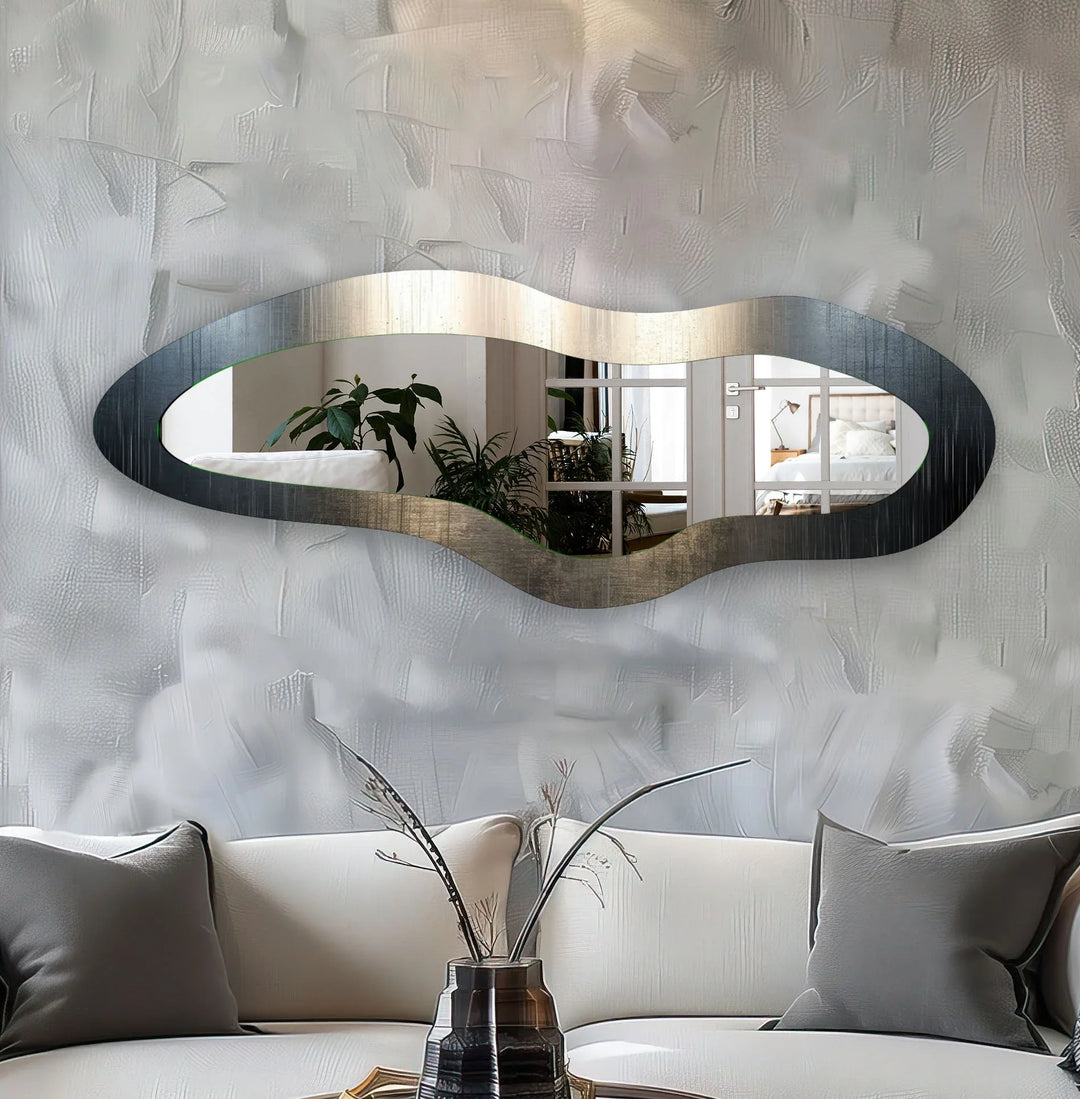
A single asymmetrical wall mirror, scaled large enough to span two-thirds of a standard 210cm seating area, establishes a dominant focal anchor that maximizes direct natural light bounce. High-clarity 5mm silver-backed float glass mirrors capture incoming daylight and project it deep into the shadowy corners of north-facing rooms. Oversized asymmetrical mirrors, such as 120cm wide pebble-shaped glass panes, act as grounding architectural features in Scandinavian-inspired living rooms. A singular fluid form softens the rigid lines of a mid-century modern walnut sofa. This creates a confident focal point. Human observers process this single organic element in exactly 180 milliseconds, delivering immediate visual impact without generating cognitive fatigue.
Mounting precision dictates the success of a monolithic piece. Hang the optical center at exactly 145cm from the finished hardwood floor. Keep the lowest point of the frame 15cm to 20cm above the highest edge of a linen sofa backrest. This establishes an unbroken visual connection without crowding seated guests. Orient the widest, most curved reflective lobe toward the primary natural light window at a 30-to-45-degree bounce trajectory. The Red Large Wall Mirror demonstrates this principle effectively. Its bold, continuous ruby-red border provides strong focal weight that commands a 3-metre wide matte-white plaster wall, capturing full-room depth in a single glance.

Mounting a dense, heavy-framed brass asymmetrical wall mirror horizontally over a low-slung bouclé sectional creates extreme top-heavy visual weight. Single mirrors possess this specific spatial liability. This monolithic mass destroys the relaxed equilibrium central to Organic Modernism design principles. In compact 10-square-metre rooms, a single large glass pane creates an unyielding direct reflection of opposing room clutter or harsh LED television glare, immediately doubling the visual density of an already crowded space.
Fragmented Designs Scatter Light
A staggered three-piece cluster acts as a faceted optical diffuser. Dividing a reflective surface into a multi-piece asymmetrical wall mirror set utilizes interstitial negative space to scatter ambient light softly while masking opposing room clutter. Conventional design advice dictates that spaces under 12 square metres require the largest uninterrupted mirror possible to generate false depth. This outdated rule ignores the reality of compact urban living. By breaking the reflection into distinct vertical frameless glass panels interspersed with Farrow & Ball matte interior wall paint, the setup scatters incoming daylight across multiple micro-vectors. This method completely avoids duplicating visual noise.
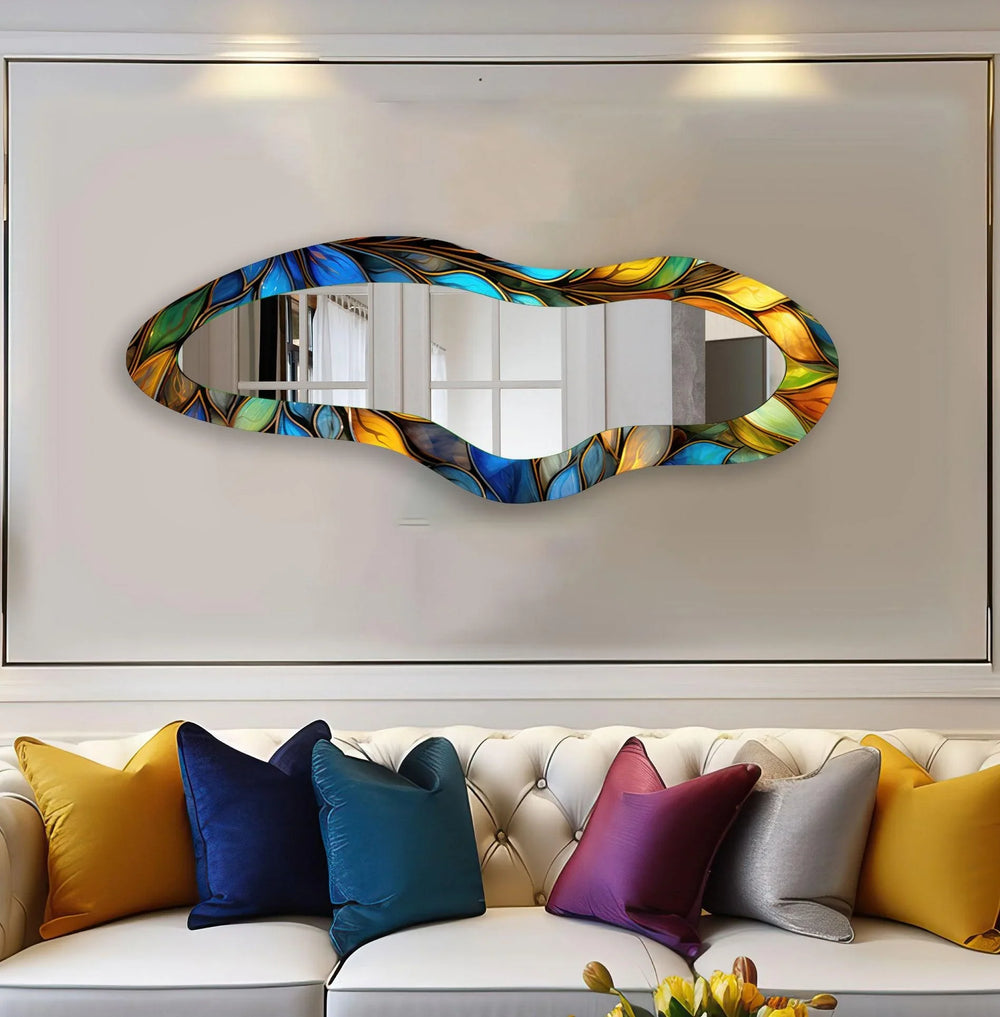
True multi-piece setups distribute visual weight across a broader focal field, requiring 340 milliseconds for cognitive assembly and reducing perceived spatial density above a seating area by exactly 28 percent. Gallery curators dictate that multi-piece arrangements succeed only through strict visual proximity. Implementing exactly 7.5 centimetres of interstitial negative space between fragmented glass panes commands the human optical system to process them as a single unified entity, transforming a focused beam reflector into a multi-angled ambient diffuser. Expanding these horizontal gaps beyond 15cm breaks the Gestalt Law of Closure. Observers stop reading the composition as a unified entity and perceive three isolated glass shards instead. A piece like the Color Mosaic Asymmetric Oval Living Room Wall Mirror mimics this fragmented light scattering within a single border.

Calculate a cluster composition using the two-thirds scale rule. For a standard 210cm modular velvet sofa, specify one primary panel at 60cm wide, paired with secondary panels measuring 35cm and 38cm. Space the frameless silver-backed mirrors exactly 7.5cm apart horizontally. The total outer bounding box hits precisely 148cm. Stagger the highest vertical glass pane closest to the primary south-facing window. Incoming UV light strikes the primary glass panel and cascades across the lower panels via multi-angle ambient scattering.
| Spatial Factor | Monolithic Single Mirror | Three-Piece Staggered Cluster |
|---|---|---|
| Cognitive Processing Time | 180 milliseconds (immediate anchoring) | 340 milliseconds (extended visual engagement) |
| Light Reflectance Behavior | High-efficiency directional beam bounce | Multi-angled ambient light scattering |
| Clutter Exposure Dynamics | High fidelity reflection of opposing walls | Fragmented masking via painted wall gaps |
| Ideal Seating Pairing | Standard 85cm backrest heavy sofas | Low-slung bouclé sectionals |
How To Make The Final Selection
Splitting a reflective glass span into a three-piece configuration limits cognitive overload in 15-square-metre room layouts, shifting the object's function from a harsh direct reflector to a subtle ambient light diffuser. Room dimensions and ambient light levels dictate whether you require the directional beam of a monolithic surface or the soft diffusion of a staggered cluster. Proportion plays a critical architectural role in these Organic Modernism interiors.
In 25-square-metre rooms featuring clean sightlines and abundant space, install a large asymmetrical wall mirror configuration to serve as a singular architectural anchor. The Dark Green Abstract Aesthetic Wall Mirror anchors 3-metre high-ceilinged rooms with precision. This continuous emerald-tinted border holds the eye steady against expansive blank gallery-white walls, providing architectural grounding where built-in timber features are absent.

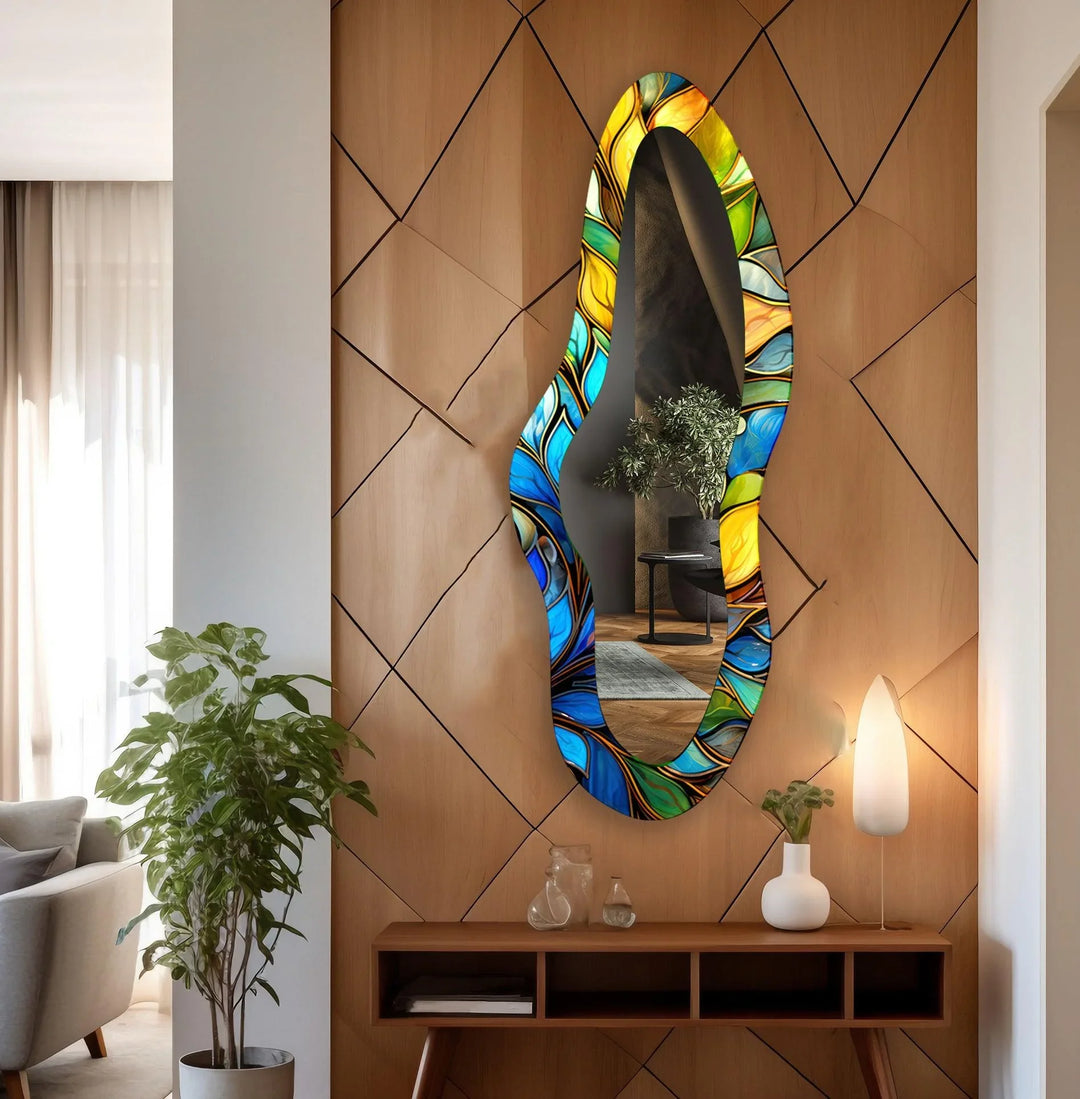
For narrow spaces lacking deep sightlines, deploy a small asymmetrical wall mirror cluster. Preserving a strict 7.5-centimetre horizontal negative space gap across fragmented glass segments compels the human brain to register a continuous architectural unit, permanently altering the object from a harsh direct beam reflector into a room-softening ambient diffuser. Pair a low-profile linen loveseat with a delicate multi-piece setup or an ultra-slim single piece like the Abstract Blue And Gold Wall Mirror. The slender brass edge provides necessary visual relief against dense charcoal wall paint. Measure the available natural light from adjacent sash windows. Calculate the exact seating width in centimetres. Base the final hardware choice on these geometric constraints to ensure the asymmetrical wall mirror shapes the light rather than overwhelming the 12-square-metre room.