

Cuando la impresión parece perdida: Planificación presupuestaria para el arte del baloncesto
La planificación presupuestaria eficaz para el arte en entornos de fitness de alta intensidad requiere calcular el costo por pulgada cuadrada protegida del impacto visual total. Un lienzo giclée estándar de 30x40 pulgadas, montado sobre bastidor, que flota de forma extraña sobre un banco de pesas de Rogue Fitness, representa un fallo de cálculo arquitectónico, no una falta de gusto estético. Los diseñadores novatos asignan fondos basándose únicamente en el precio de venta al público de la obra de arte. Al buscar proveedores Cuadros de baloncesto para paredEstablecer primero esta métrica de costo por pulgada cuadrada evita costosos errores de escala en espacios deportivos específicos.
Calculando el verdadero coste de tu huella visual.
Evaluar su presupuesto desde la perspectiva de una huella visual protegida requiere calcular el costo por pulgada cuadrada protegida, comparando el precio base de $0.167 del lienzo expuesto con el precio adicional de $0.200 de las rejillas modulares protegidas con acrílico. Un solo lienzo giclée de 30x40 pulgadas con bastidor cuesta menos inicialmente, pero requiere un gasto significativo en reemplazos con el tiempo en un entorno de gimnasio de alta intensidad en un garaje. El diseño de interiores convencional dicta que un solo lienzo giclée de 30x40 pulgadas con bastidor es la opción óptima para espacios activos. Una mezcla de polialgodón de 400 g/m² tensada sobre pino secado al horno produce un precio base económico de $0.167 por pulgada cuadrada. Esta regla estándar falla en un diseño de fitness doméstico. El lienzo tensado carece de una barrera frontal rígida de acrílico fundido de 3 mm. El material de polialgodón crudo es altamente susceptible a quemaduras por fricción irreversibles, manchas de sudor y abolladuras por la caída de discos de parachoques Eleiko. Una barra olímpica de 20 kilos que se cae al suelo arruina al instante una inversión de 200 dólares.
Por el contrario, una cuadrícula de 2x2 con cuatro impresiones de pigmento de archivo de 11x14 pulgadas, impresas con tintas Epson UltraChrome HD, ofrece una durabilidad modular. Ubicada detrás de acrílico fundido irrompible de 3 mm dentro de marcos de MDF (tablero de fibra de densidad media), esta configuración requiere $190 en materiales. El área impresa en bruto es exactamente de 616 pulgadas cuadradas, lo que equivale a $0.308 por pulgada cuadrada. Con los espacios adecuados de 5 cm entre marcos, la cuadrícula cubre un límite físico de pared de 28x34 pulgadas. Esto reduce el costo efectivo de anclaje visual a $0.200 por pulgada cuadrada. Usted paga un pequeño sobreprecio del 20% en la percepción de la huella para obtener una protección completa. Si ocurre algún percance, reemplace una sola impresión de archivo de $35 en lugar de toda la instalación. Esta estrategia de cuadrícula protege su inversión a largo plazo.
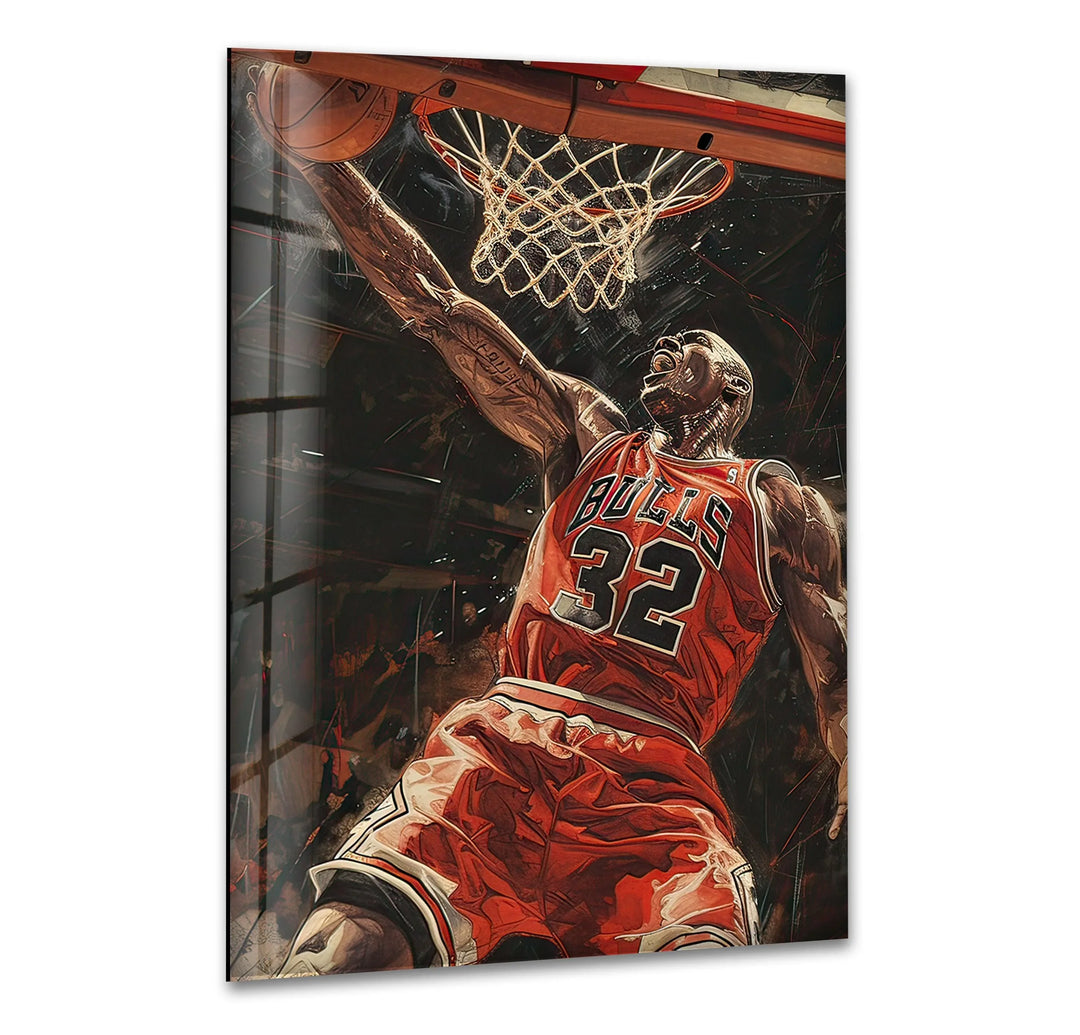
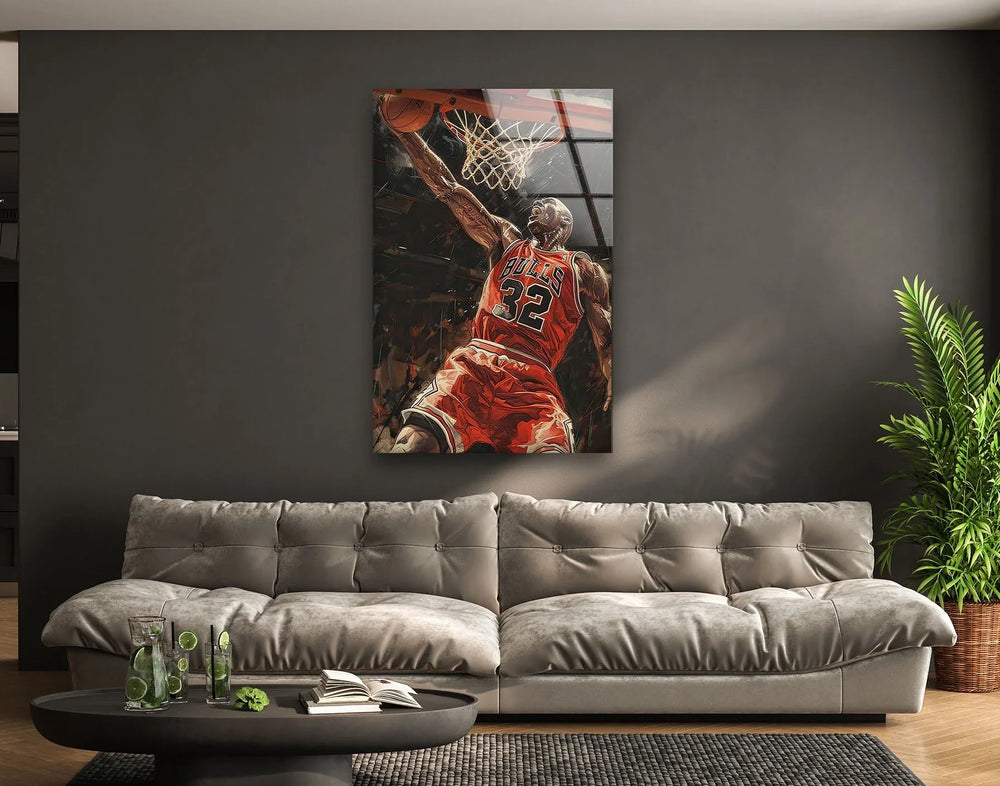
Integrando el Baloncesto de Kobe Bryant Arte En Vidrio Para Pared Este tipo de rejilla de MDF crea un punto focal definido. El contraste cromático del dorado de Los Angeles Lakers sobre el barniz acrílico protector de 3 mm dirige la mirada hacia el interior, estableciendo un centro de gravedad firme para la habitación. Planifique sus compras midiendo primero el perímetro de la pared de yeso.

Cómo la humedad determina la selección de materiales.
Los riesgos ambientales en los espacios de fitness exigen superficies de acrílico fundido irrompible de 3 mm y respaldos de poliestireno sellados sobre fibras de algodón orgánico expuestas. Los gimnasios domésticos experimentan cambios bruscos de humedad relativa de entre el 40 y el 60 por ciento durante los entrenamientos HIIT intensos. Estudios de conservación del Museo Smithsonian confirman que las fluctuaciones de humedad provocan que las fibras de lona de algodón sin protección se expandan y contraigan. Esta pérdida permanente de tensión produce un hundimiento severo en 18 meses. Las directrices estándar del Instituto Americano para la Conservación destacan riesgos similares para los bastidores de pino secados al horno. La madera de pino y la lona de algodón se hinchan a ritmos diferentes. El daño estructural resultante es permanente.
Este ciclo continuo de humedad provoca arrugas en la tela y grietas en las capas rígidas de tinta giclée. El vidrio de sílice estándar para marcos de fotos de interior también es problemático, ya que representa un grave riesgo para la seguridad. Un impacto a alta velocidad con una banda elástica de látex rompe instantáneamente el vidrio de sílice estándar, proyectando fragmentos peligrosos sobre la alfombrilla de espuma EVA. Reemplace los vidrios estándar con acrílico fundido resistente a los rayos UV de 2 mm o 3 mm. Esta alternativa acrílica específica ofrece 17 veces la resistencia al impacto del vidrio de sílice tradicional. Identifique las zonas de humedad localizadas cerca de las rejillas de ventilación del sistema de climatización para evitar la degradación del material.
Piezas como la Las grandes cosas nacen del trabajo duro. Arte En Vidrio Para Pared Utilice materiales de vidrio templado de alta calidad, diseñados específicamente para resistir los microclimas volátiles de los gimnasios caseros. La superficie sólida y templada impide que la humedad localizada alcance por completo la capa de pigmento Epson. Siempre pegue una lámina delgada de lámina de poliéster Mylar sin ácido en la parte posterior de los marcos de MDF poroso para bloquear la transpiración.

Las matemáticas espaciales detrás de las holguras de los equipos
La colocación precisa requiere anclar la obra de arte estrictamente a la maquinaria de acero que se encuentra debajo, utilizando proporciones arquitectónicas establecidas. Un verdadero punto de referencia visual da solidez a la distribución del espacio. Los principios de diseño de interiores dictan que el arte mural ocupe exactamente entre el 60 y el 75 por ciento del ancho del equipo principal que se encuentra debajo. Un rack de potencia Rogue Fitness estándar de 120 cm requiere un contrapeso visual de 80 a 90 cm para evitar que la habitación se sienta desproporcionada. Ya sea que cree una instalación artística informal para una habitación o un estudio comercial de CrossFit, la lógica espacial es la misma. Siga una secuencia de alineación vertical estricta para lograr una simetría proporcional.
- Localice la línea central horizontal de su equipo principal utilizando un nivel láser de líneas cruzadas Bosch.
- Marque la altura estándar de los ojos exactamente a 145 cm del suelo de goma a lo largo de esa línea central.
- Ajuste la obra de arte verticalmente para mantener una separación óptima de 15 a 25 cm entre el borde inferior del marco y la parte superior del banco o estante de acero.
El Zapatillas Lebron Arte En Vidrio Para Pared Es la opción correcta al reflejar la amplia base de un soporte para mancuernas REP Fitness que se encuentra debajo. Esta orientación horizontal refuerza de forma natural la línea de referencia horizontal de la habitación. Coloque su obra de arte con un nivel láser Bosch para asegurarse de que el límite exterior permanezca estrictamente paralelo al suelo de goma.

Calibración de sistemas de redes modulares
Agrupar varias piezas pequeñas requiere medidas de separación exactas para mantener un punto focal unificado. Separar cuatro marcos de MDF de 11x14 pulgadas a más de 8 cm rompe por completo la conexión visual. Una separación mayor a 8 cm crea una estética fragmentada. El ojo humano los percibe como elementos desconectados y flotantes, en lugar de un ancla arquitectónica singular. Esta fragmentación arruina la estrategia de huella visual calculada. Es fundamental mantener la separación estrictamente entre 4 cm y 6 cm para conservar la cohesión visual en toda la cuadrícula.
Calibra estas distancias en el suelo antes de taladrar agujeros en el panel de yeso. Coloca las piezas planas y usa una cinta métrica Stanley para separar los bordes exteriores del marco exactamente 5 cm. Seleccionar diseños con iconografía de baloncesto de Michael Jordan, como las siluetas Nike Air Jordan 1, crea una estética de galería muy disciplinada cuando se agrupan de forma compacta. Este enfoque modular se adapta fácilmente al arte de baloncesto configurado para la habitación de una niña en espacios deportivos juveniles dedicados. Instalar arte enmarcado en espacios infantiles requiere la misma estricta adhesión al espaciado de 5 cm y a los protocolos de seguridad del acrílico fundido.
Incluyendo el Baloncesto Kobe Bryant Arte En Vidrio Para Pared Junto con impresiones tipográficas minimalistas, se crea una disposición de galería muy deliberada. El fondo monocromático de alto contraste del retrato evita la saturación visual cuando se agrupa con otros marcos de MDF negros. Use 3M Utilice cinta adhesiva de baja adherencia para delimitar todo el perímetro rectangular de 71,1 x 86,4 cm en la placa de yeso antes de colocar los anclajes metálicos para placas de yeso.

La planificación presupuestaria adecuada para el arte del fitness depende completamente de comparar el impacto visual protegido con la vida útil física de los materiales. Anticipar las exigencias físicas del espacio requiere calcular el costo por pulgada cuadrada protegida para garantizar que su elemento visual resista microclimas cambiantes. Desde exigir acrílico fundido de 3 mm para resistencia al impacto hasta ejecutar la proporción de ancho del 60 por ciento sobre un rack de potencia, estas restricciones técnicas garantizan que su inversión financiera resista el uso diario. Comprar impresiones sin tratar no funciona; diseñar elementos arquitectónicos equilibra toda la habitación. Mida los límites disponibles de su pared de yeso para determinar las proporciones exactas requeridas antes de seleccionar piezas de un Cuadros de baloncesto para pared recopilación.