

Quand le silence s'installe dans les chambres : Choisir une décoration murale chrétienne pour les nids vides
Une œuvre d'art en coton d'archivage de 300 g/m², soigneusement positionnée, sert d'ancrage physiologique et régule activement le système nerveux central, abaissant instantanément le taux de cortisol dans une maison désormais silencieuse. Les murs nus, qui offraient autrefois une clarté minimaliste au milieu du rythme effréné de la vie familiale, amplifient maintenant le calme absolu. La transition vers cette phase du nid vide exige un réaménagement délibéré de l'espace. Accrocher une œuvre texturée toile murale chrétienne Le fait de s'asseoir sur un canapé bas en lin belge ne vise pas à combler un vide. Cela affirme une intention claire.
Pendant des années, cette absence délibérée de décorations semblait une contrainte nécessaire. Désormais, la maison est silencieuse, et ces surfaces en stuc vénitien brut créent une atmosphère étrange et troublante. Une estampe d'art, judicieusement placée, sert de point d'ancrage visuel. Il ne s'agit pas ici de décorer une pièce vide, mais d'instaurer un nouveau rythme, empreint de réflexion, au sein d'un minimalisme chaleureux.
Comment l'ancrage spatial régule la physiologie
Contempler des œuvres d'art aux teintes peu saturées, appartenant au système de couleurs Munsell, comme une estampe architecturale monochrome, réduit les marqueurs de stress systémique et stabilise les environnements nouvellement apaisés. Les recherches en psychologie environnementale démontrent régulièrement cette réalité biologique. Les personnes qui contemplent des compositions intentionnelles ressentent une baisse immédiate du cortisol, ce qui prouve que cet ancrage visuel régule activement le système nerveux et diminue les marqueurs biologiques du stress. Les designers minimalistes chaleureux utilisent la sobriété spatiale comme une forme de confort. Il est essentiel de fixer le regard. Accrochez une œuvre imposante de 80 cm x 120 cm à exactement 145 cm du sol, au centre vertical. Cette règle des 145 cm, standard dans les musées, aligne parfaitement la composition avec le regard d'un adulte.
Considérez le poids visuel de Croix triomphantes, art mural religieux en noir et blancLa palette monochrome à fort contraste fonctionne précisément parce que les tons désaturés de charbon et d'ivoire éliminent la fatigue visuelle due à l'éblouissement. L'application de la règle des deux tiers pour l'ancrage du meuble garantit que cette toile occupe exactement 60 à 75 % de la surface d'un buffet bas en noyer américain. Fixez le bord inférieur précisément à 15 cm au-dessus de la surface du bois. Cette géométrie précise structure instantanément l'espace vide.

Repenser le placement des œuvres d'art importantes
Utilisez la théorie de la restauration de l'attention en positionnant art mural chrétien destiné au salon Des alcôves dans des couloirs étroits. Placer des estampes typographiques au centre de zones de passage intense crée une sollicitation cognitive constante au lieu d'un moment de calme et de sérénité. La sagesse populaire préconise de placer les Écritures dans les zones les plus visibles du salon pour en proclamer haut et fort le message. Cette approche contredit les besoins psychologiques d'une personne dont le nid est vide. On s'éloigne ainsi de l'effort intense que représente une prise en charge active. Une grande toile centrale de 100 cm x 150 cm agit comme un rappel constant, stimulant sans cesse l'esprit. Accrochez un subtil croquis au fusain à une hauteur légèrement supérieure, à 165 cm, dans un couloir. Laissez une estampe encadrée plus petite reposer discrètement sur une console basse en travertin italien dans un coin lecture privé. Un tel emplacement induit un état de douce fascination. Les résidents s'imprègnent du message de manière fortuite, au gré de leurs déplacements quotidiens.
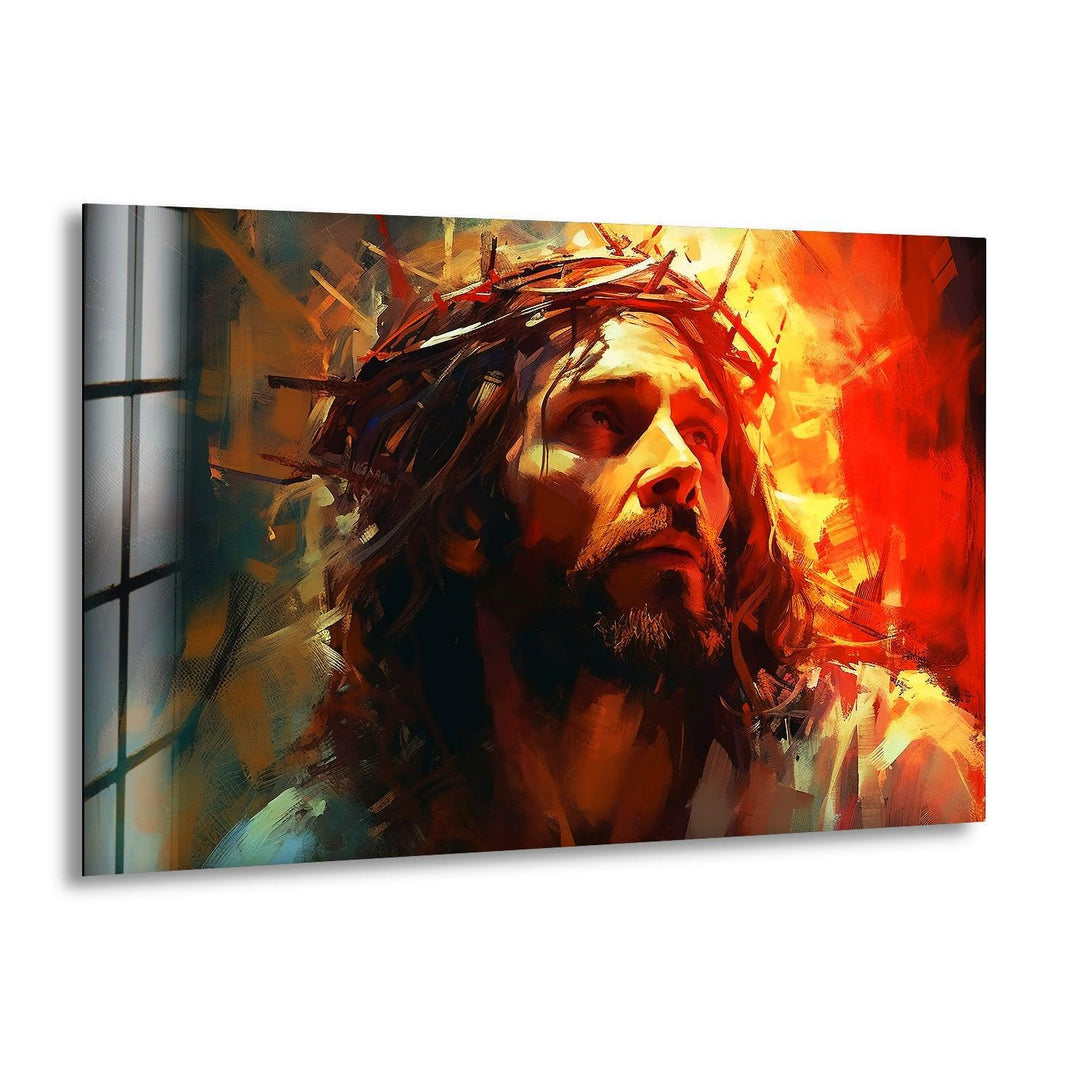
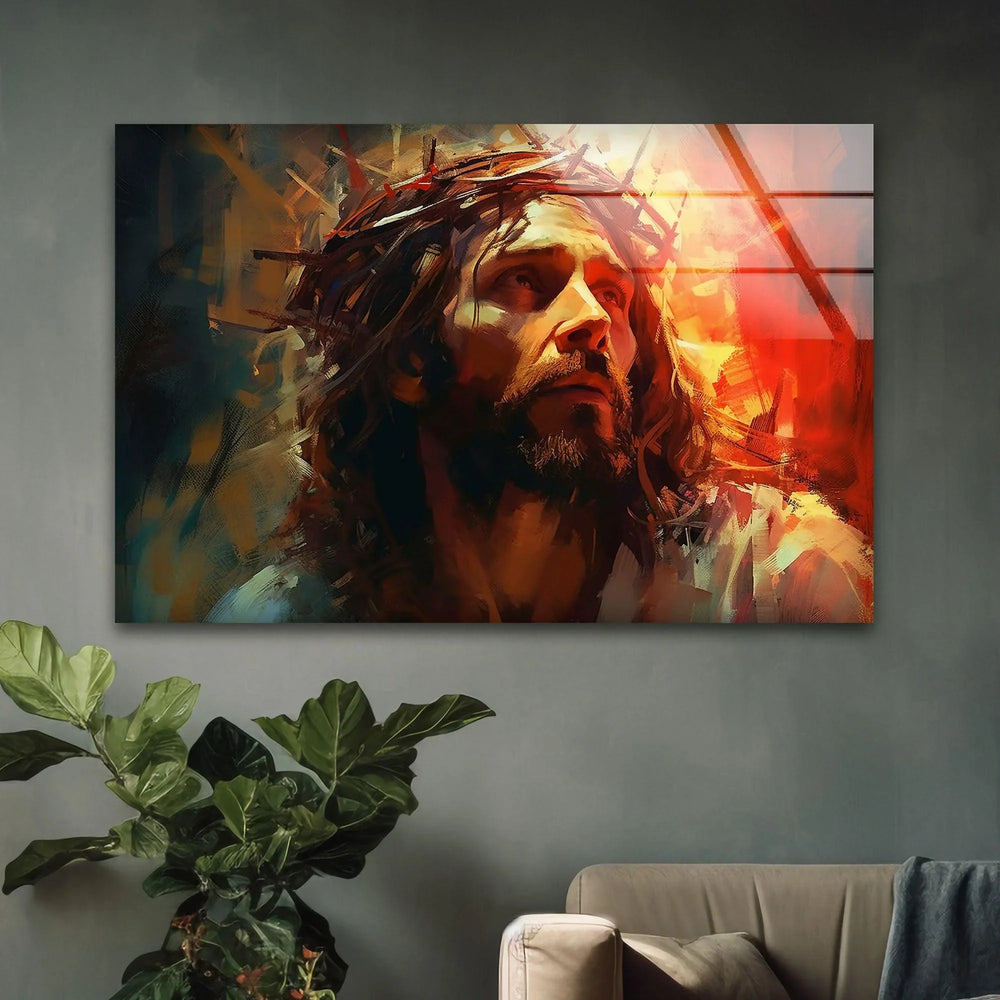
La surface lumineuse de Portrait à l'huile de Jésus Art Mural En Verre Cette pièce en verre trempé lisse apporte une texture contrastante à un minimalisme chaleureux. Placée dans une niche peu profonde d'un couloir, elle permet à la lumière du soleil de l'après-midi de se refléter sur sa surface. Conservez précisément 50 cm de mur en plâtre nu autour du cadre. Cet espace généreux invite à une pause visuelle apaisante. Associez cette conception spatiale à des éléments organiques et tactiles. Un simple bol bas en travertin, posé sous l'œuvre, offre un contraste visuel avec le verre lisse. Cette combinaison réfléchie ancre durablement l'atmosphère sereine.

Sélection de matériaux pour un apaisement visuel
Choisir des encres pigmentaires d'archivage et du papier chiffon de coton Hahnemühle sans acide garantit la pérennité de votre esthétique pendant des décennies, sans dégradation visuelle. Les impressions bon marché produites en masse avec des encres à base de colorants sur du papier à base de pâte de bois se décolorent en seulement cinq à dix ans. Ces alternatives de qualité inférieure ne constituent pas un ancrage durable pour votre patrimoine. Les véritables impressions giclées d'archivage sur toile 100 % coton résistent au jaunissement dû aux UV pendant deux siècles. Évitez les fonds rustiques très vieillis ou les laminés synthétiques brillants. Les revêtements brillants reflètent la lumière ambiante, ce qui peut engendrer une légère anxiété neurologique par surcharge visuelle. Privilégiez les finitions entièrement mates et les tons naturels doux, comme la teinte Munsell 10BG ou le sable chaud (hexadécimal #D8C3A5) . Le choix de ces palettes spécifiques répond directement aux bouleversements liés au syndrome du nid vide. Les bons matériaux contribuent à un bien-être optimal.
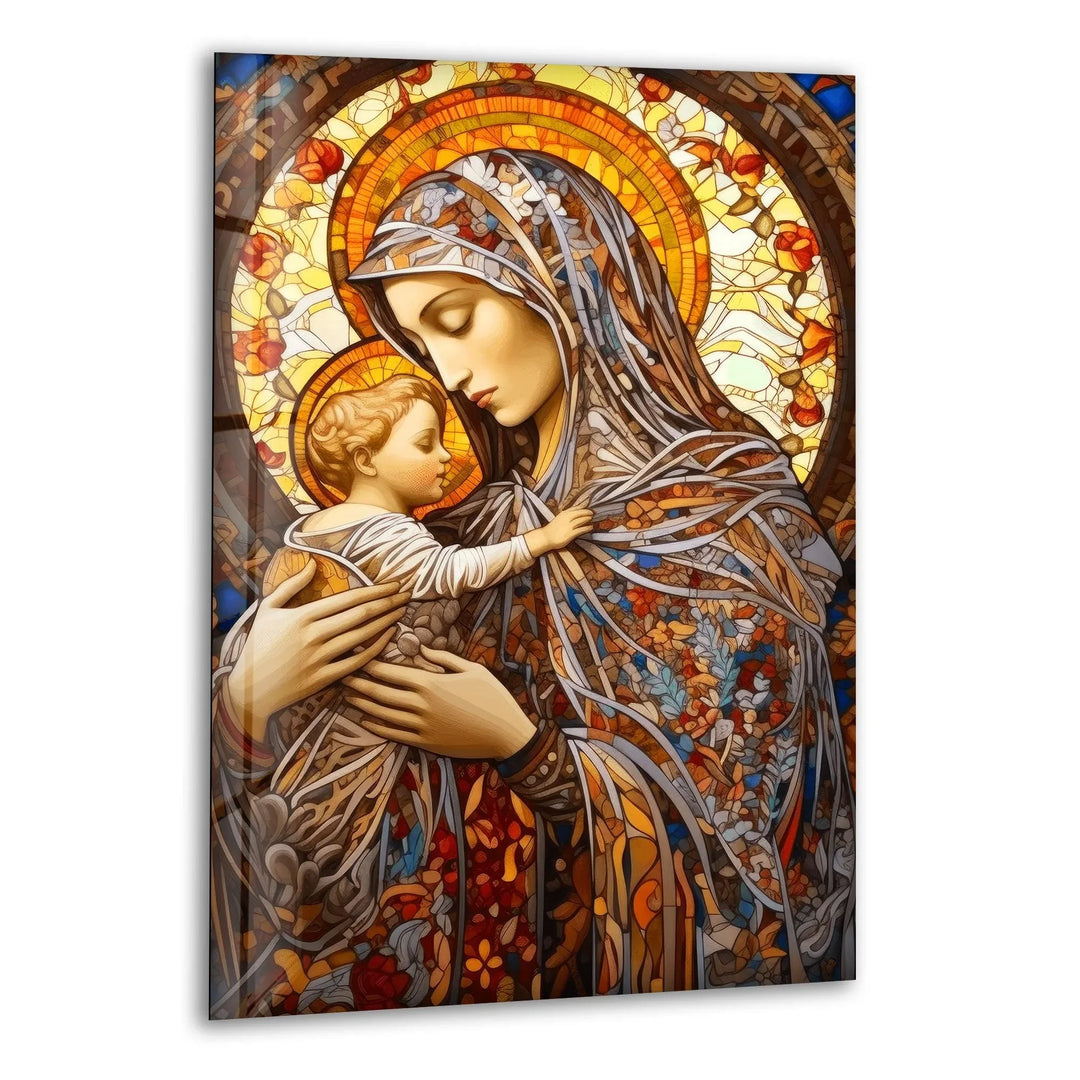
Les propriétés visuelles de Simon Cyrène aide Jésus Art Mural En Verre Rompre les lignes rigides et linéaires typiques de l'architecture moderne en acier et en verre. Les bords biseautés sans cadre atténuent la dureté acoustique d'un espace peu meublé. L'œuvre agit comme un doux murmure visuel plutôt que comme une présence imposante. Placez-la près d'une fenêtre orientée à l'est, où la lumière directe du matin caresse son contour. Créer votre nouvelle réalité exige cette même exigence de qualité. Vous ne choisissez plus vos objets en fonction de leur résistance aux jeunes enfants. Concevez avant tout pour votre propre bien-être.

Le soleil de fin d'après-midi caresse le bord texturé de la toile de lin mate de 300 g/m², projetant une longue ombre douce sur le mur en plâtre vénitien et transformant l'espace négatif en une matière physique tangible à part entière.
Un nid vide n'est pas un espace sans âme où l'on cherche à se distraire. L'architecture de la maison semble simplement s'arrêter. Les murs nus ne sont plus un rempart indispensable contre le tumulte d'une maison animée. Des œuvres d'art aux couleurs douces, judicieusement placées, agissent comme un ancrage physiologique qui régule activement le système nerveux, réduisant durablement le taux de cortisol et vous permettant ainsi de vous connecter pleinement au calme du moment présent. Vous avez désormais la liberté absolue de créer un espace qui ait du sens. En choisissant des dimensions précises, en respectant l'espace vide et en privilégiant les matériaux mats de qualité archive Hahnemühle, vous façonnez un environnement qui respire avec vous. Apprivoiser le calme de vos matins commence par des choix conscients, comme en témoigne notre sélection de impressions d'art mural chrétiennes subtiles une ressource fondamentale pour votre transition.