

Au-delà de la décoration : L'art de l'escalade en montagne pour stimuler la concentration cognitive
Placer une œuvre d'art destinée à un spectateur debout dans une pièce où l'on est toujours assis fragmente instantanément son attention. Redimensionner des œuvres d'art art mural axé sur la montagne Un champ de vision aligné sur votre position assise, plutôt qu'avec une grille architecturale, préserve activement la capacité cognitive. Nous aménageons régulièrement des espaces de travail à domicile optimisés pour un objectif grand angle 14 mm Sony G-Master, privilégiant une symétrie verticale rigide à l'ergonomie. Lorsqu'un intérieur paraît très stylé sur Instagram mais s'avère épuisant à vivre, le problème est structurel. Le cerveau humain interprète ce décalage ergonomique comme un problème spatial à résoudre, ce qui épuise l'énergie neuronale nécessaire au travail en profondeur dans le cortex préfrontal.
Le coût cognitif de la photographie hyperréaliste
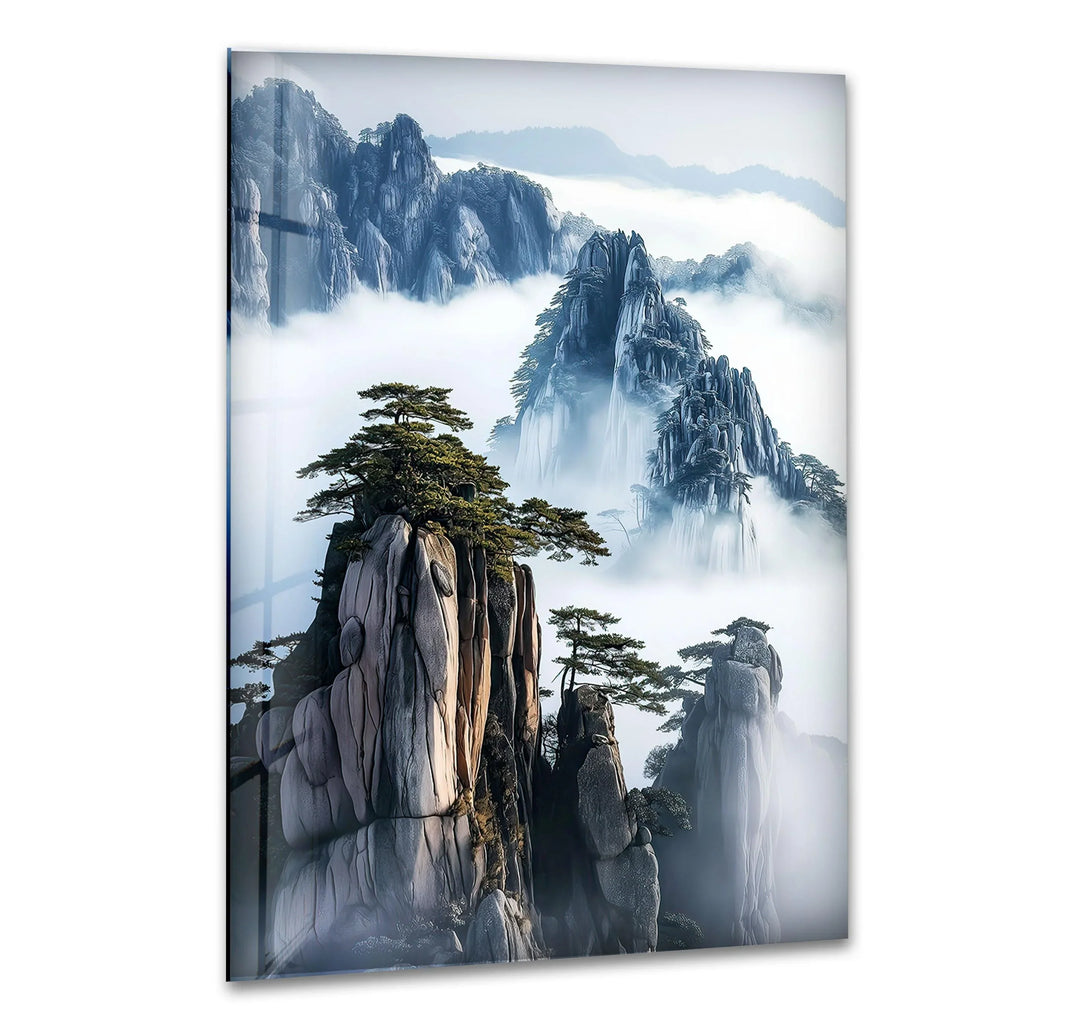
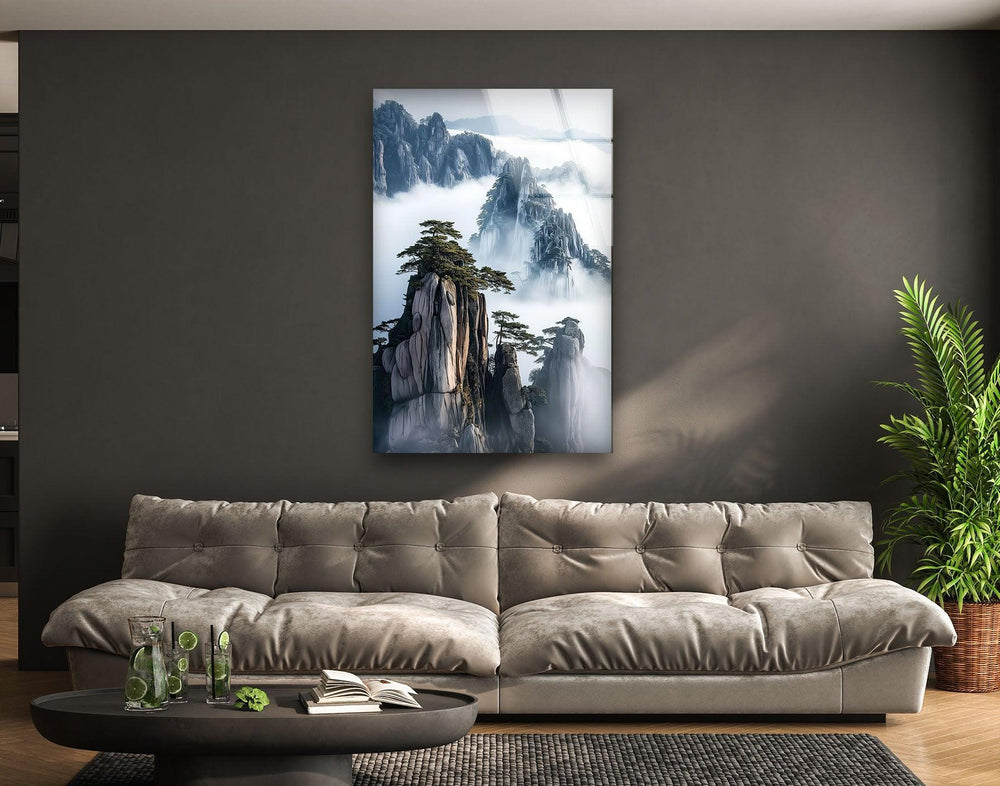
Il est préférable de privilégier les aquarelles abstraites sur papier Arches 300 g/m² pressé à froid. Les photographies de paysages littérales haute définition (61 mégapixels) induisent une fatigue cognitive en activant des voies neuronales analytiques, ce qui limite l'application des principes de conception biophilique de Stephen Kellert. Les photographies très détaillées de pics acérés comme le Cervin et de denses forêts de pins tordus fascinent intensément l'esprit conscient. Inconsciemment, le cerveau commence à cartographier des sentiers ou à scanner la topographie. Les dégradés doux, les courbes biomorphiques et les palettes désaturées dans le spectre vert-bleu froid de Munsell 10BG permettent aux réseaux de l'attention exécutive de se reposer complètement. N'ayant pas à décoder un chemin précis, l'esprit bascule plus rapidement vers une attention involontaire. Impression sur verre brumeuse de Misty Mountain Il fonctionne précisément ici parce que sa perspective atmosphérique dense et ses teintes gris-bleu Munsell atténuées réduisent la quantité d'informations visuelles que le cortex préfrontal doit traiter.

En limitant les lignes géométriques nettes et contrastées, cette composition agit comme un tampon cognitif fonctionnel. Des scènes brumeuses stylisées des Alpes suisses, imprimées sur une toile de coton de 400 g/m², superposées à des photographies de forêt ultra-détaillées, contribuent à prévenir la fatigue mentale dans les environnements de travail stressants.
Calculez les dimensions exactes de votre toile
Pour éviter ce syndrome de la toile flottante, appliquez la règle des deux tiers pour une position assise optimale. Un bureau assis-debout Herman Miller Jarvis de 152 centimètres nécessite une toile panoramique de 101 centimètres de large pour créer un point d'ancrage fonctionnel. L'électroencéphalographie (EEG) clinique le confirme : adapter vos points d'ancrage visuels à une trajectoire de 111 centimètres à hauteur des yeux en position assise réduit considérablement la charge de traitement visuel, préservant ainsi votre capacité cognitive pour la résolution de problèmes complexes. Dans les enquêtes auprès des consommateurs sur l'esthétique intérieure, 73 % des répondants citent des dimensions inadaptées par rapport au mobilier comme principale source d'insatisfaction spatiale. Ce décalage sollicite fortement le cortex préfrontal. L'œil humain subit une dérive visuelle lorsqu'il tente de se concentrer sur une petite impression de 30 cm sur 45 cm centrée sur une grande surface de plâtre blanc pur Sherwin-Williams. Une toile de montagne grand format couvrant 60 à 75 % de la largeur du bureau satisfait aux exigences biophiliques d'étendue et de cohérence.
- Mesurez la largeur latérale totale du plateau de votre bureau en chêne massif ou en noyer noir certifié FSC.
- Multipliez cette mesure précise par 0, 66 pour trouver la largeur cible de votre toile panoramique.
- Choisissez un cadre en aluminium mat Dibond ou en toile dont la dimension calculée se situe strictement à trois centimètres près.
Trouvez une toile représentant un paysage alpin qui corresponde à ces proportions ergonomiques précises avant de finaliser l'aménagement de votre bureau.
Pourquoi les normes muséales ne s'adaptent pas à l'espace de travail
Ajustez immédiatement la hauteur. Accrocher une estampe à la hauteur standard de 145 centimètres (au centre) , comme au musée Guggenheim, directement derrière un bureau, est la garantie de douleurs cervicales et d'une attention dispersée. Les galeries conçoivent leurs espaces pour le visiteur debout. Or, nous appliquons aveuglément ce critère aux salles où nous sommes exclusivement assis. Si vous accrochez un paysage panoramique selon les normes des galeries d'art contemporain, un écran d'ordinateur Apple Studio Display 4K de 27 pouces masque le tiers inférieur de la composition. Cela vous oblige à étendre vos cervicales (C1-C7) pour voir l'horizon. Mesurez la hauteur de vos yeux en position assise : elle se situe précisément entre 111 et 122 centimètres du sol. Édition en verre Foggy Misty Mountain Elle s'avère très efficace pour cette application grâce à ses couches atmosphériques profondes qui attirent le regard vers le bas, à l'intérieur de la composition, plutôt que vers le haut, en direction du bord supérieur du cadre.

Installez vos impressions de montagne encadrées en bois de frêne certifié FSC de manière à ce que le point central se situe précisément entre 127 et 137 centimètres du sol.
Gestion de l'éclairage périphérique et des reflets de surface
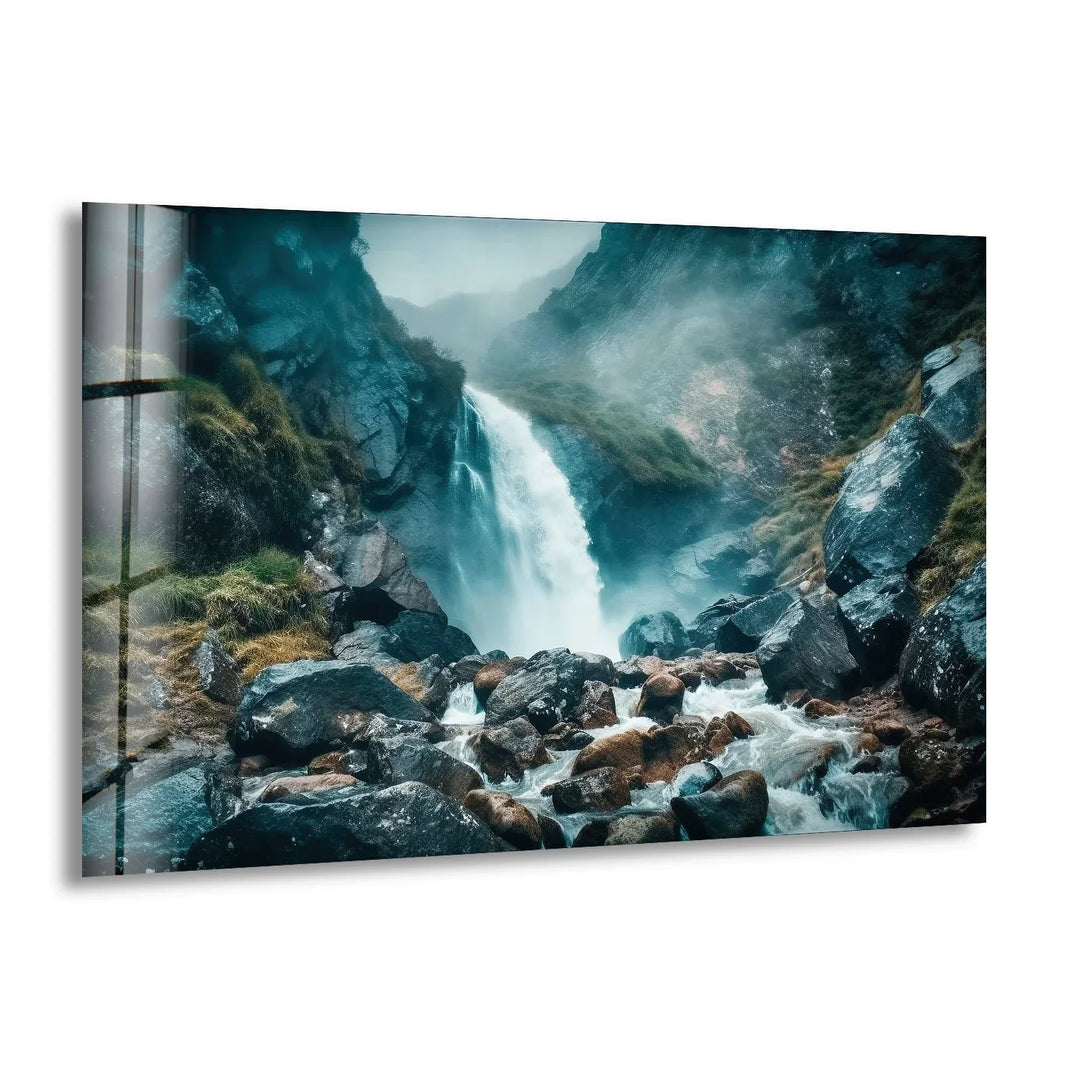
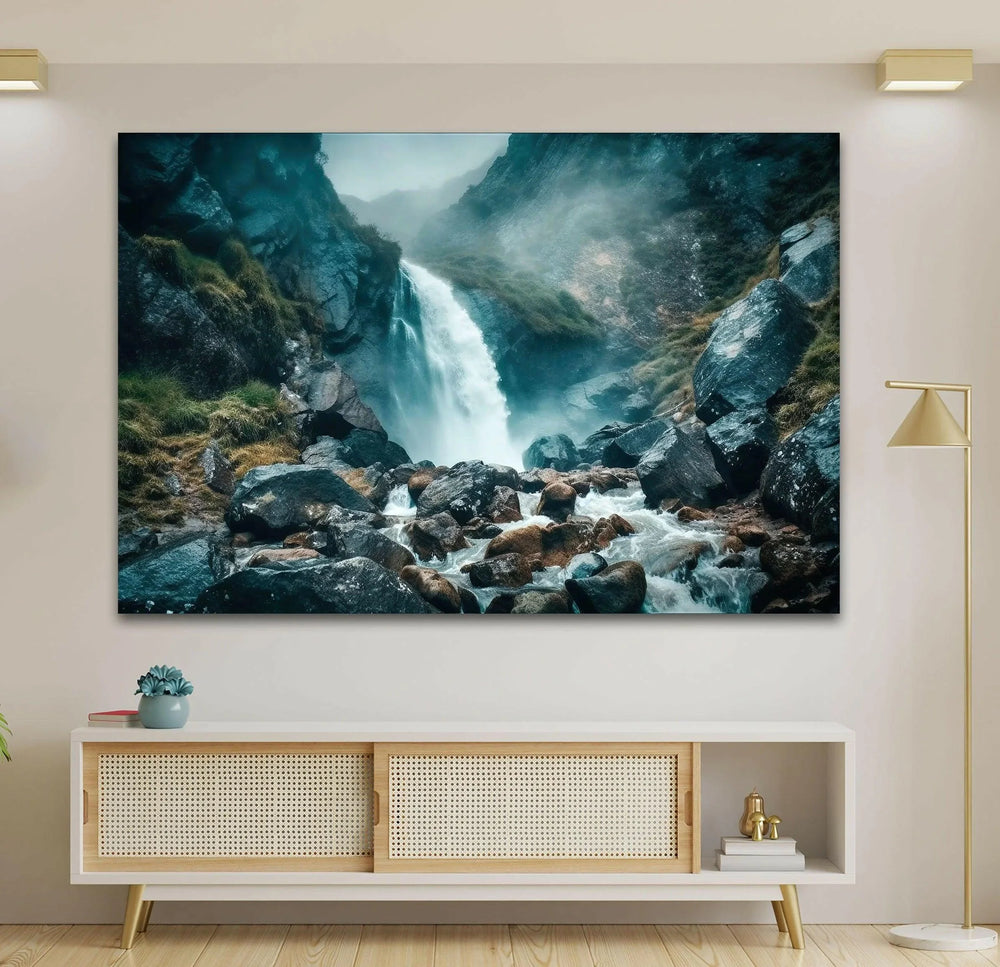
Vous devez utiliser une finition tendue sur châssis, du papier d'archivage Hahnemühle sans acide ou un verre antireflet Tru Vue de qualité muséale. Les surfaces réfléchissantes situées dans un cône latéral de 60 degrés autour de votre écran OLED principal perturbent les réseaux attentionnels involontaires nécessaires à la récupération mentale. La théorie de la restauration de l'attention de Kaplan, en psychologie environnementale, démontre que l'observation d'une scène naturelle pendant seulement 40 secondes lors d'une micro-pause permet de restaurer l'attention et de réduire les erreurs ultérieures. Ce processus de douce fascination est brutalement interrompu par les reflets sur l'image. Le verre brillant reflète la lumière des écrans LED et les éclairages ambiants, provoquant une fatigue visuelle rapide. Paysage de verre des montagnes et du lac Jasna Il offre un excellent point focal lorsqu'il est positionné sur un mur latéral, conservant ses tons bleu-vert froids et désaturés dans votre vision périphérique tout en évitant les reflets directs de l'écran.

Orientez les luminaires latéraux Philips Hue de manière à préserver une texture de surface mate et uniforme, loin de l'œuvre d'art.
Concevoir un espace uniquement pour son potentiel photographique crée un environnement hostile au concept de travail en profondeur de Cal Newport. Lorsque vous configurez les dimensions physiques de votre environnement pour le corps humain assis plutôt que pour l'objectif de l'appareil photo, votre espace cesse de consommer votre bande passante cognitive et commence au contraire à la soutenir activement. Aligner le centre de votre œuvre d'art précisément avec votre ligne de vision crée une réserve immédiate et passive d'énergie neuronale. Les recherches en neuroesthétique de l'University College London montrent systématiquement que le traitement des motifs fractals à haute fréquence (dimension 1, 3 à 1, 5) présents dans les scènes naturelles requiert beaucoup moins d'énergie neuronale que les géométries rigides de l'architecture urbaine. Un rapport spatial précis et une ligne de vision ergonomique sont plus importants que le sujet lui-même. Appliquez ces principes ergonomiques spécifiques pour retrouver votre concentration, en utilisant notre collection d'œuvres d'art inspirées par la montagne, soigneusement sélectionnées comme point de départ.