

Maîtriser les agencements asymétriques : l'élément manquant dans l'art urbain
Calculer l'espace négatif fixe avant de choisir une estampe évite que les collections asymétriques ne se transforment en un fouillis chaotique. Définir d'abord votre grille structurelle de 6, 35 cm (2, 5 pouces) garantit que chaque panneau semble placé intentionnellement. Déballer une réplique de fresque murale en béton brut de 91, 4 x 61 cm (36 x 24 pouces) de l'East Side Gallery et la placer contre un mur de briques apparentes d'un loft donne l'impression que l'œuvre est engloutie par l'immensité du plâtre brut. Commander du coton d'archivage de 300 g/m². Photo Sur Toile Mesurer les écarts structurels avant de les évaluer est une approche rétrograde. Constituer une collection soigneusement sélectionnée de pièces historiques de rue de Berlin exige le strict respect des règles de proximité plutôt que la simple intuition visuelle.
L'intervalle de proximité gestaltiste
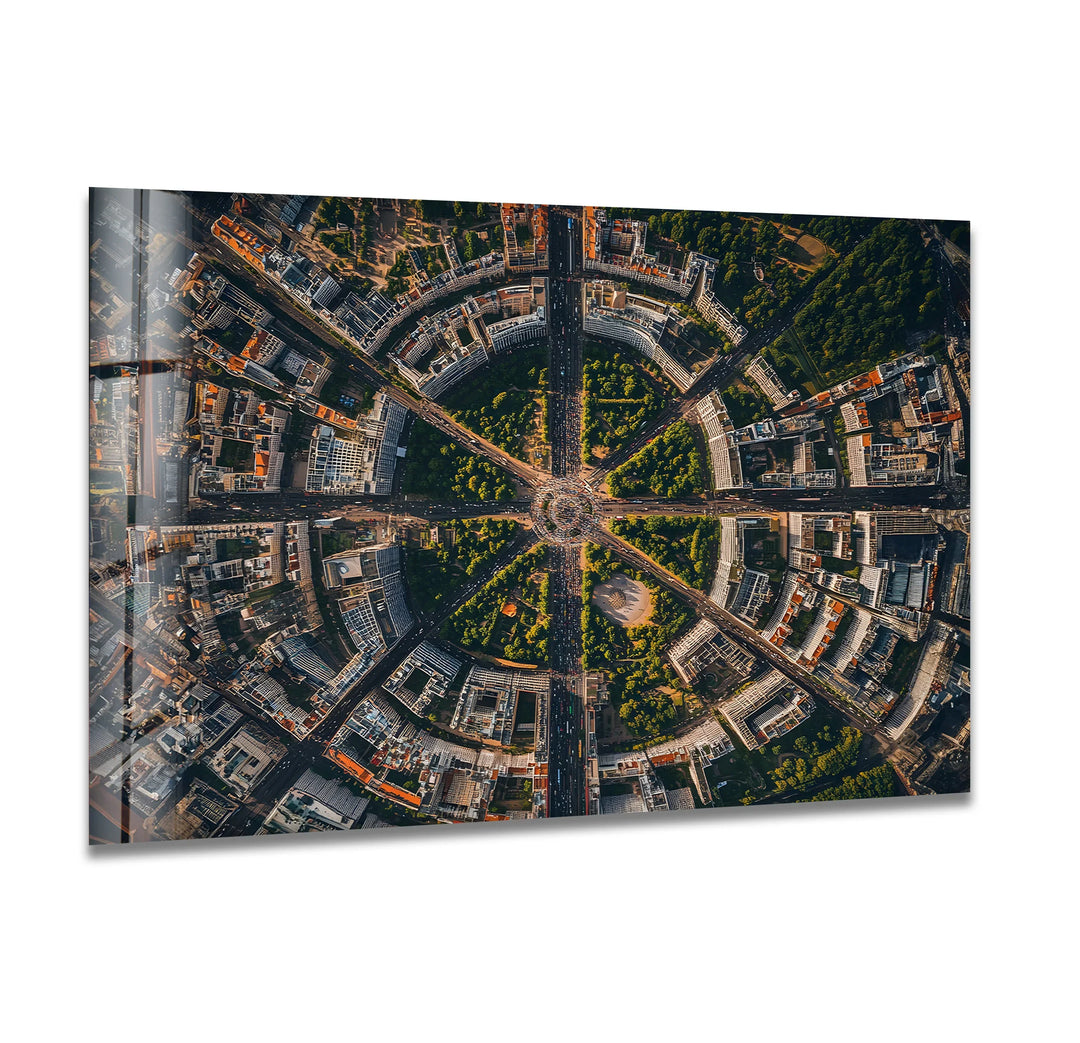
Le maintien d'un espacement rigide de 6, 35 cm (2, 5 pouces) entre les cadres permet de synthétiser plusieurs panneaux de street art asymétriques en un seul objet visuel cohérent. Les recherches de l'Institut Max Planck sur le traitement visuel montrent systématiquement qu'un espacement irrégulier dans les ensembles d'œuvres d'art augmente la charge cognitive de 40 %. Le regard du spectateur se détourne plus rapidement lorsque les marges varient de manière dynamique, car le cortex visuel peine à reconnaître les formes. Les principes fondamentaux de la psychologie de la forme (Gestalt) stipulent que le cerveau humain utilise la loi de proximité pour regrouper les éléments proches en une masse structurelle unique. Définissez cette marge négative précise sur l'ensemble de votre composition avant de prendre en compte les dimensions des panneaux (45, 7 x 61 cm ou 61 x 91, 4 cm) . Un espacement interne supérieur à 10, 24 cm (4 pouces) déclenche un phénomène de dérive asymétrique qui détache instantanément les impressions individuelles. Une œuvre dense comme… Vue de rue de Berlin Art Mural En Verre exige un regroupement visuel serré pour transmettre son récit urbain. Ses textures de graffiti chaotiques sont mises en valeur par des contours architecturaux stricts. Découpez des cales en carton ondulé rigide de 6, 35 cm (2, 5 pouces) exactement pour aligner les espaces verticaux et horizontaux lors du montage.

Comment calculer le ratio d'ancrage des meubles
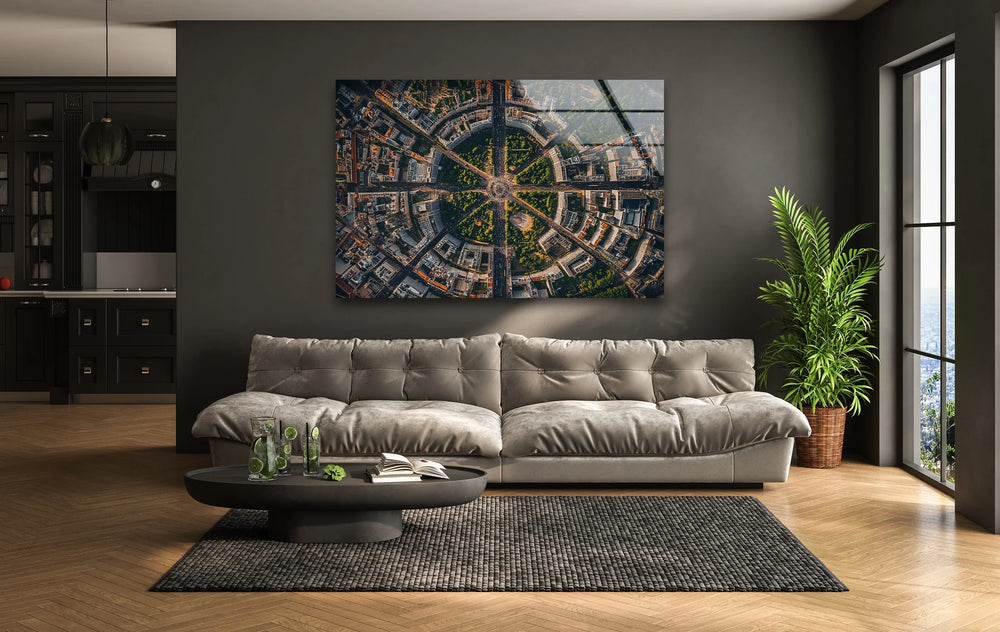
Pour un ancrage visuel optimal, une composition asymétrique doit occuper précisément 60 à 75 % de la largeur du meuble situé directement en dessous. Calculer cette base structurelle et définir une grille d'espace négatif de 6, 35 cm (2, 5 pouces) avant même d'acheter une seule impression garantit que les agencements asymétriques ne se transforment jamais en un fouillis visuel incohérent. Les décorateurs d'intérieur formés au Bauhaus privilégient un espacement serré et uniforme pour transformer des cadres disparates en une installation structurelle cohérente. Les hauts plafonds des lofts, de 3 à 4, 25 mètres (10 à 14 pieds) , rendent obsolète la règle standard de 145 cm (57 pouces) utilisée dans les galeries d'art. Pour ancrer correctement une fresque historique au-dessus d'un canapé en cuir Florence Knoll standard de 213 cm (84 pouces) de profondeur, suivez cette séquence mathématique :
- Calculez la largeur totale du canapé et trouvez 66 % pour déterminer la largeur cible de la galerie de 55 pouces.
- Repérez et marquez le centre mathématique de la plaque de plâtre de type X à exactement 60 pouces du sol pour établir le centroïde visuel.
- Déterminez la limite inférieure absolue des panneaux inférieurs en mesurant six à huit pouces vers le haut à partir du bord supérieur du dossier du canapé.
Cette technique garantit un ancrage visuel permanent. Les profonds dégradés ambrés dans le Coucher de soleil à Berlin Art Mural En Verre Créez un bloc de couleur intense qui structure la partie inférieure d'une composition imposante. Les tons chauds de l'orange Munsell ancrent naturellement les parties supérieures. Mesurez votre buffet en noyer vintage ou votre canapé moderne dominant et calculez les deux tiers de sa largeur pour définir votre limite horizontale extérieure maximale.

Pourquoi les ferrures flottantes empêchent l'effondrement de la maçonnerie
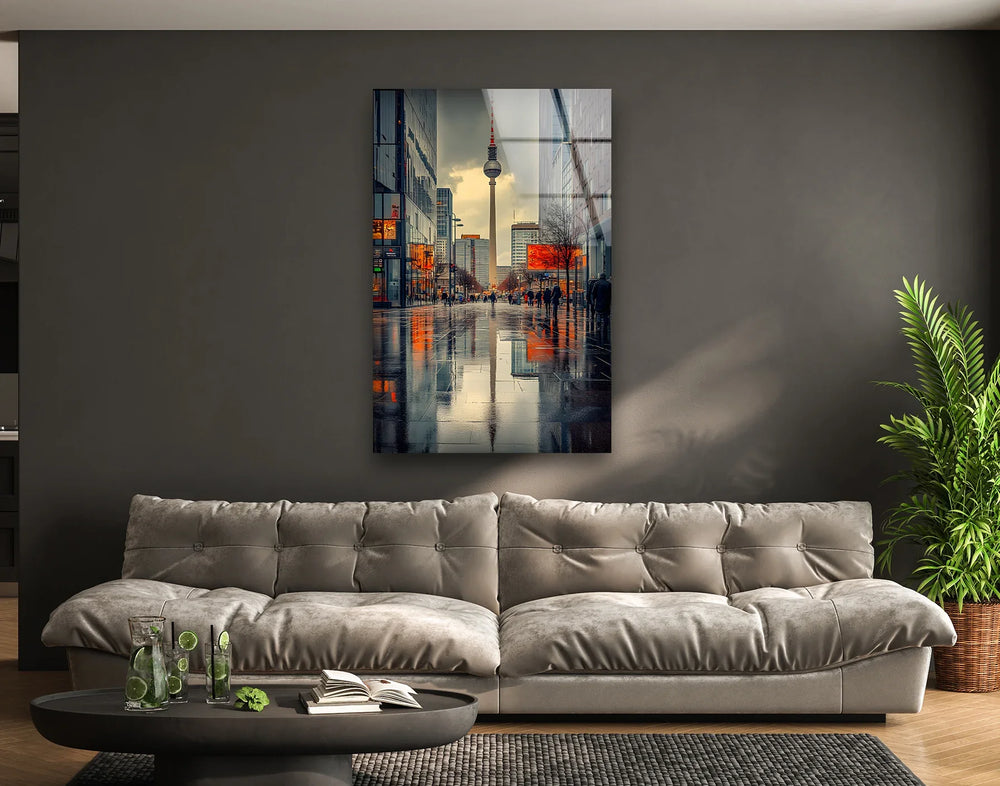
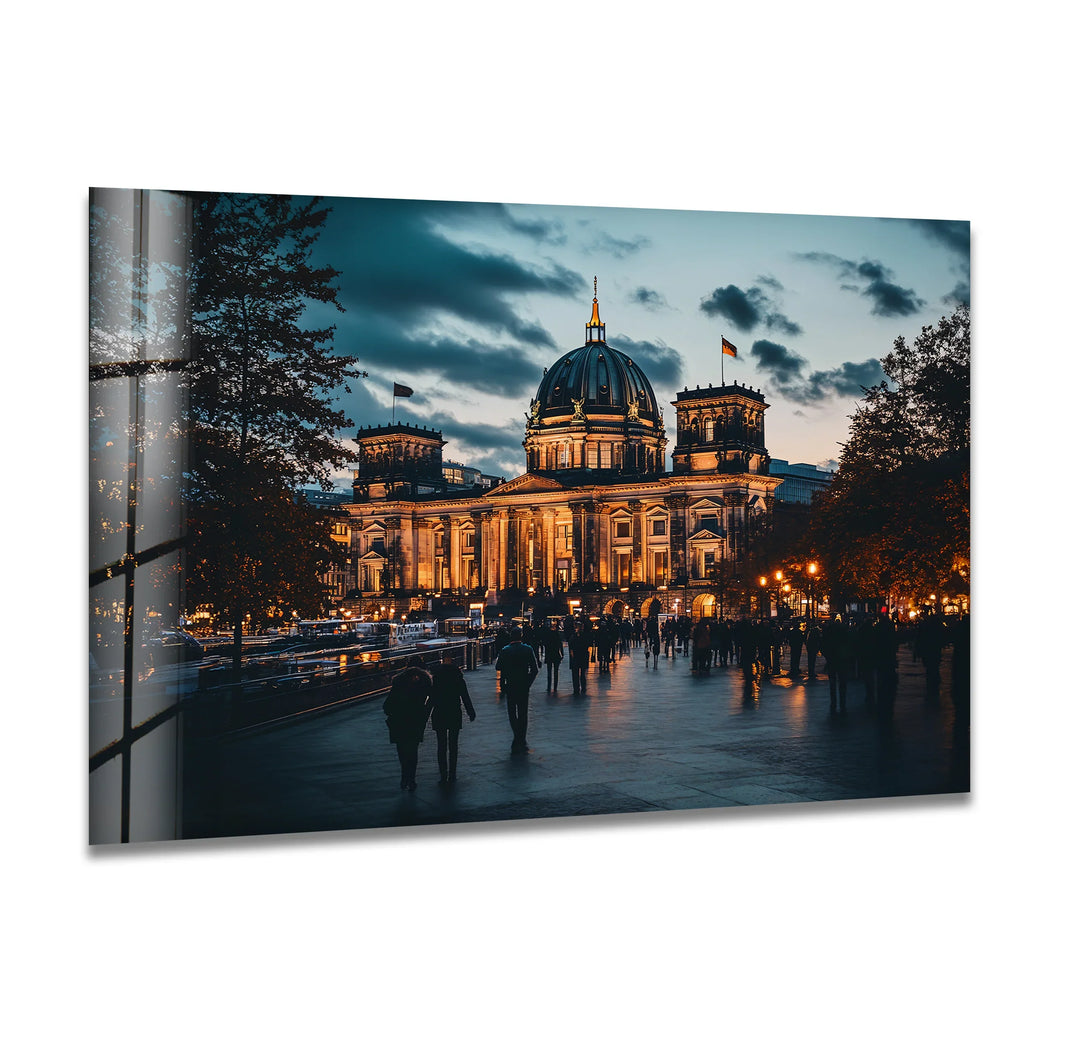
Le montage à fleur de fines impressions sur Dibond aluminium contre de la brique texturée provoque un effet d'affaissement visuel, nécessitant un sous-cadre encastré de 1, 9 cm pour créer des ombres portées bien définies. Les normes architecturales imposent l'utilisation d'œuvres d'art sur Dibond sans cadre dans les espaces industriels bruts. L'utilisation de bandes adhésives plates sur la brique apparente très texturée de Chicago masque l'œuvre dans les joints de mortier profonds, la privant ainsi de sa présence physique. Fixez solidement des rails encastrés en aluminium de 18 mm à 5 cm des bords extérieurs de l'impression. Ceci crée un espace de 1, 9 cm avec le béton brut coulé, projetant des ombres nettes qui encadrent les œuvres historiques sans bordures physiques. Un panneau composite standard en Dibond aluminium de 3 mm avec une âme en polyéthylène noir pèse exactement 3, 8 kg par mètre carré. Les grands panneaux de street art de 91 x 61 cm exercent une force verticale de seulement 2, 1 kg. Cette légèreté et cette intégrité structurelle vous permettent de suspendre le Nuit berlinoise Art Mural En Verre À partir d'un enduit non armé, sans fixations murales robustes, les tons indigo profonds du ciel nocturne contrastent fortement avec le fond de briques claires une fois lissés correctement. Installez solidement les éléments de votre ossature pour garantir une ligne d'ombre permanente de 19 mm (0, 75 pouce) sur la brique apparente.

La disruption stratégique remplace la précision muséale
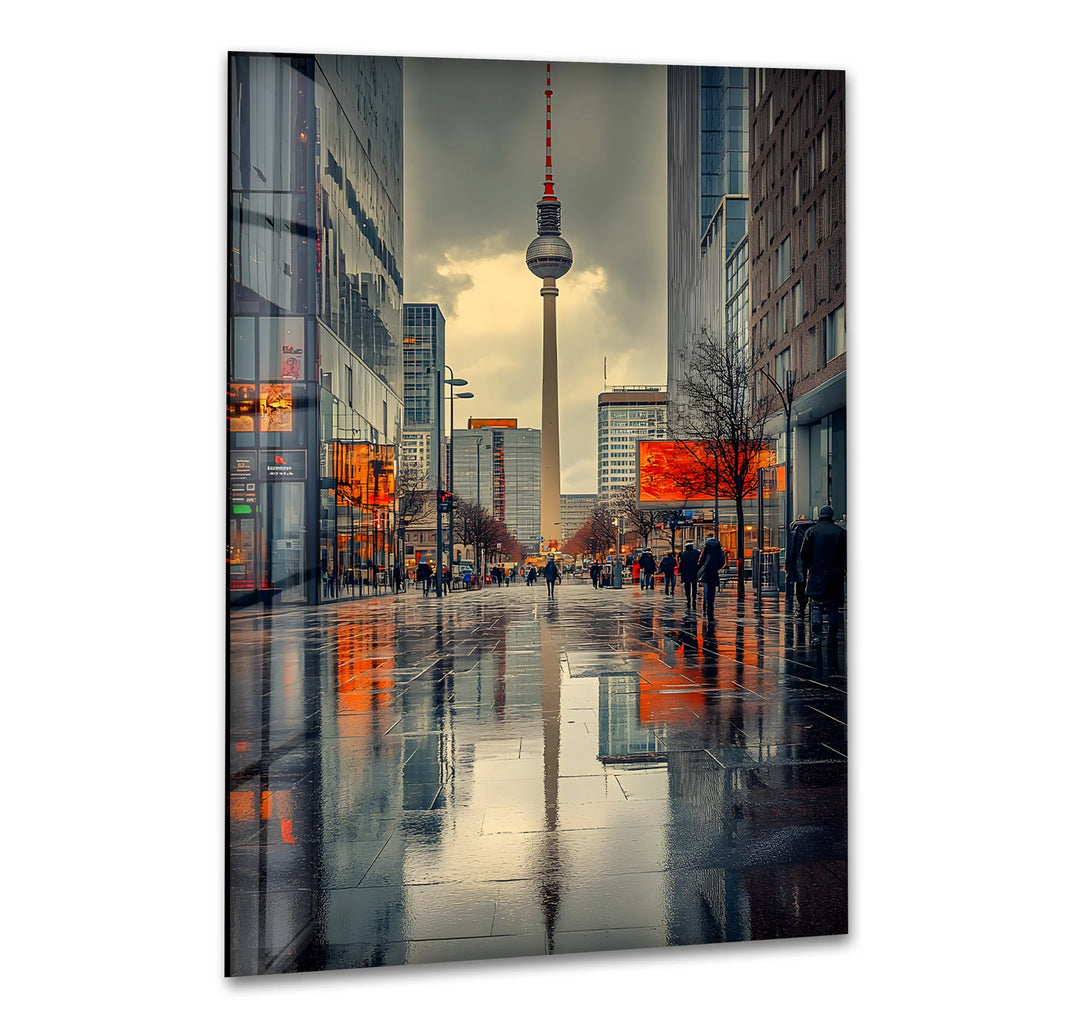
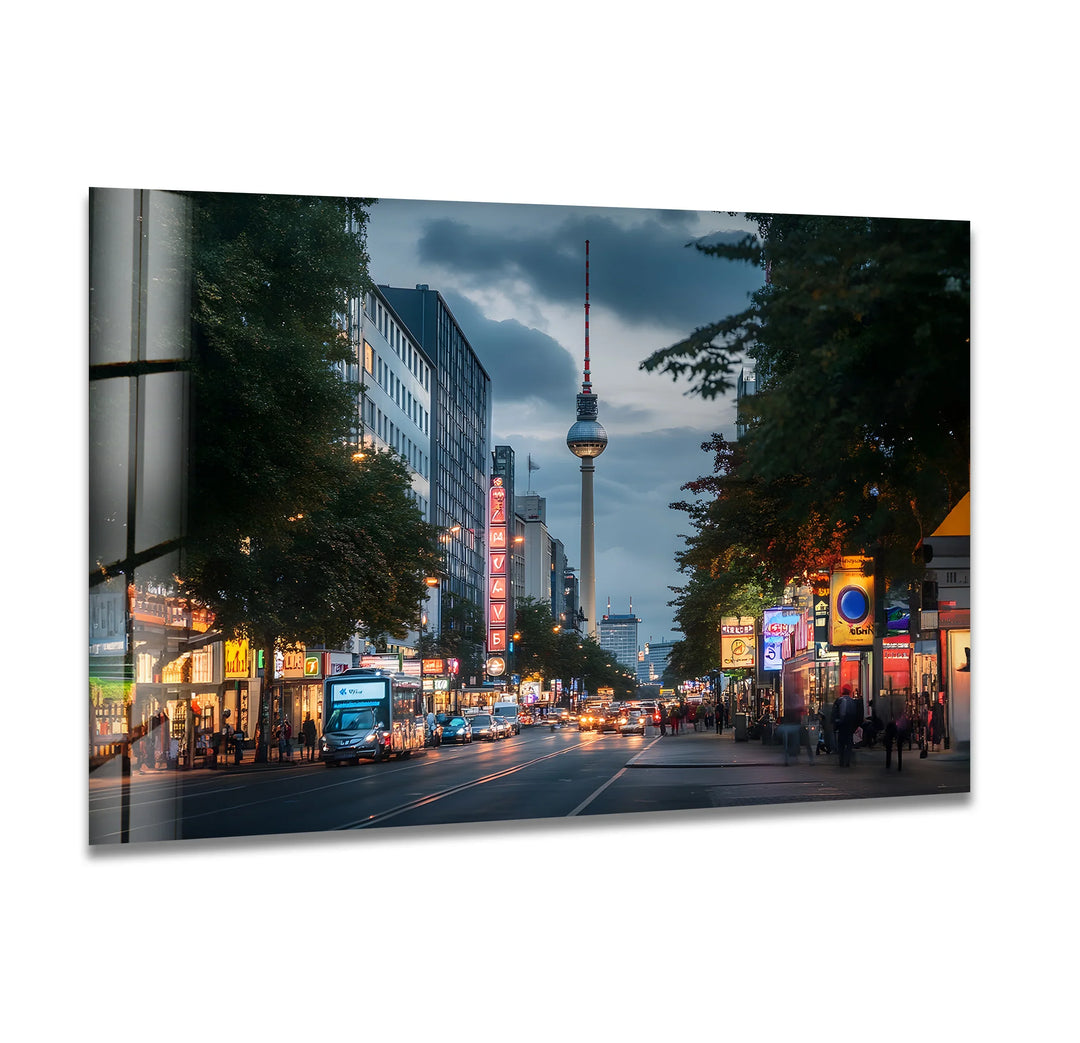
Introduire une inclinaison délibérée de deux degrés ou un léger chevauchement dans une composition asymétrique rend mieux hommage à la nature subversive du street art de Kreuzberg qu'un alignement rigide. La méthodologie traditionnelle des Beaux-Arts exige un alignement mathématiquement exact de tous les panneaux. Appliquer une précision stérile aux graffitis bruts et aux fresques politiques berlinoises aseptise leur énergie contre-culturelle. Les décorateurs d'intérieur d'avant-garde privilégient plutôt le principe du décollage contrôlé. Cette méthode consiste à accrocher délibérément un panneau d'aluminium de 45 x 30 cm avec une légère inclinaison ou à superposer physiquement une impression acrylique de 30 x 20 cm sur une impression plus grande, de quelques millimètres. La tension visuelle ainsi créée imite les affiches collées superposées que l'on trouve à l'East Side Gallery ou les célèbres fresques de Thierry Noir. Berlin City Night Art Mural En Verre Elle constitue un point d'ancrage idéal pour ce traitement. Les perspectives panoramiques éclairées au néon attirent naturellement le regard. Un léger chevauchement avec un panneau adjacent plus petit crée une profondeur intentionnelle. Superposez votre plus petite impression acrylique de 1, 25 cm exactement pour créer une profondeur sans compromettre la structure globale.

Honorer l'espace urbain par les mathématiques
Concevoir votre installation à partir de l'espace négatif garantit que votre collection urbaine domine l'espace architectural au lieu d'y être absorbée. Établir une grille d'espace négatif fixe de 6, 35 cm (2, 5 pouces) avant même de choisir une seule pièce est la méthode infaillible pour éviter que des agencements asymétriques ne se transforment en un fouillis visuel chaotique. Le véritable impact d'un mur soigneusement agencé repose sur la rigueur mathématique qui sous-tend l'imagerie rebelle des graffitis de Kreuzberg. Les articles de design d'intérieur classiques sur le Mur de Berlin, optimisés pour le référencement naturel, se concentrent uniquement sur l'histoire, ignorant l'intense effort cognitif nécessaire pour appréhender une esthétique urbaine aussi complexe dans un cadre domestique. Appliquer ces règles de syntaxe spatiale spécifiques respecte la gravité physique des fresques murales originales. Construisez votre grille de base de 6, 35 cm (2, 5 pouces) avant même de considérer une seule image. S'appuyer sur un cadre mathématique rigoureux vous permet de positionner avec assurance vos supports en béton choisis. art de rue berlinois collection.