

Quand les ombres tombent : Installation d'une galerie d'art mural sur le thème du football
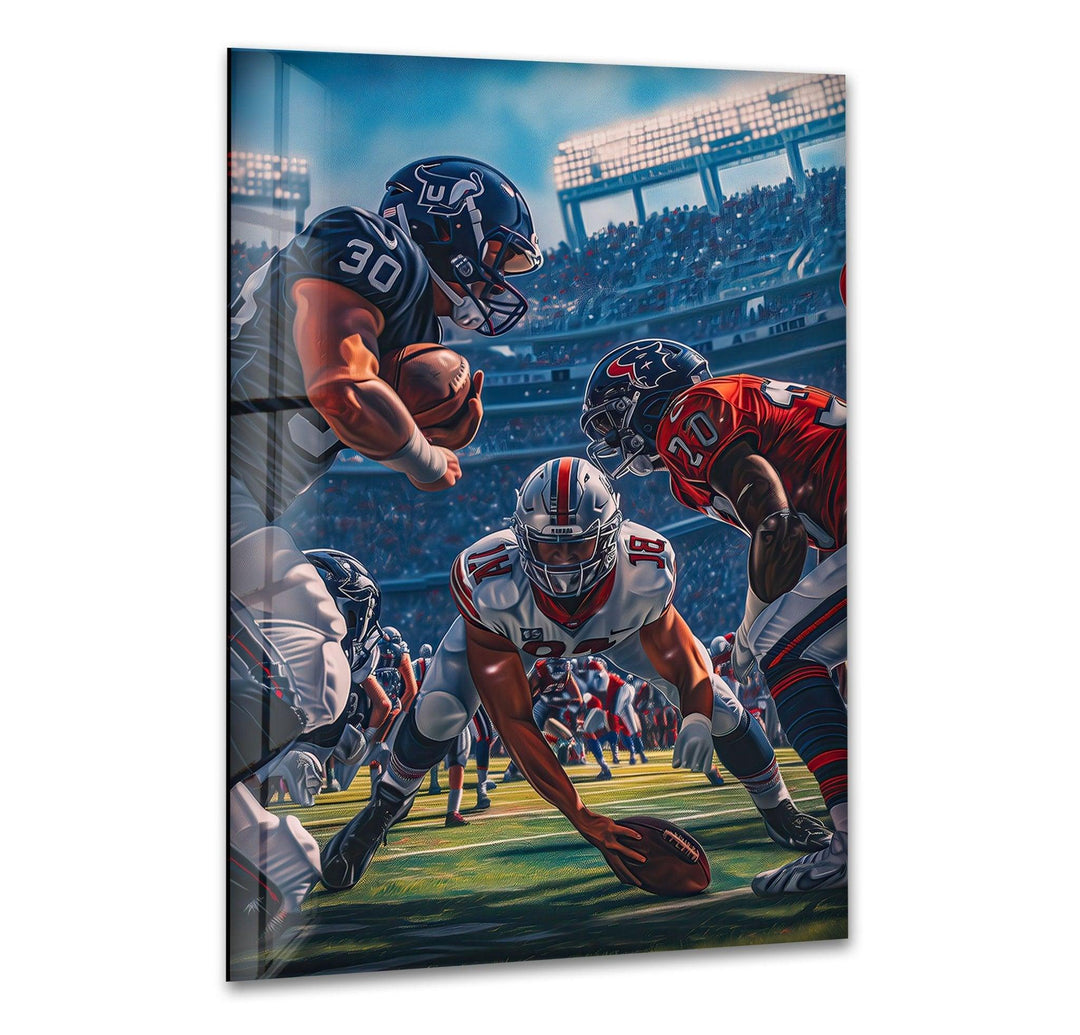
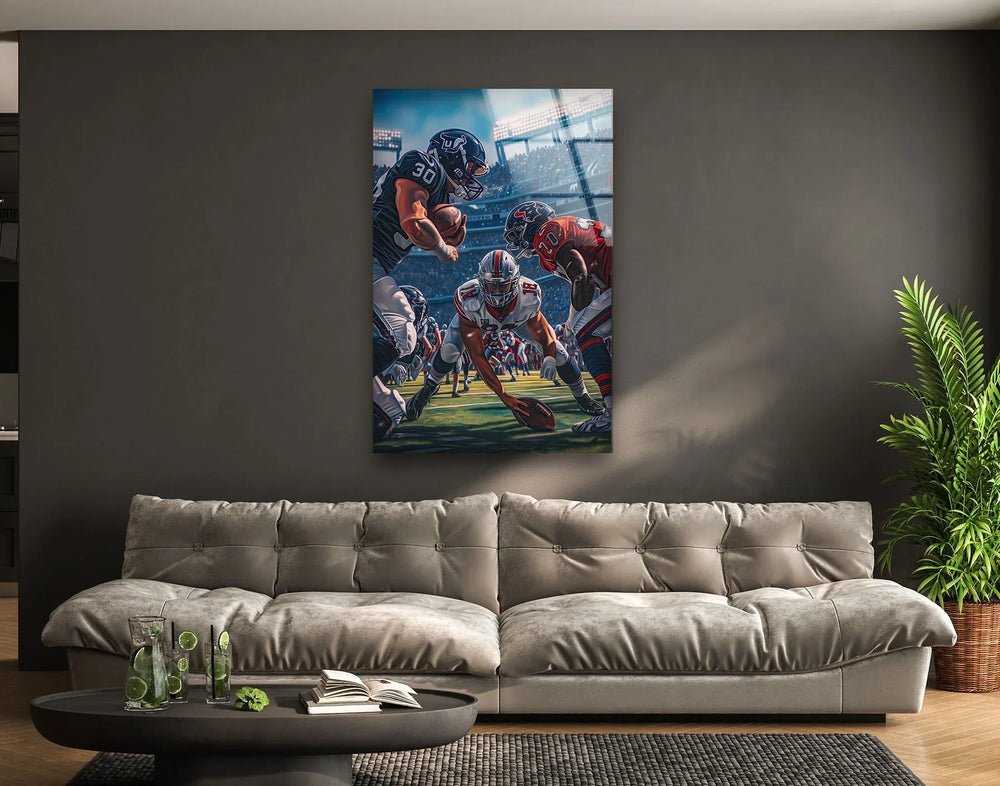
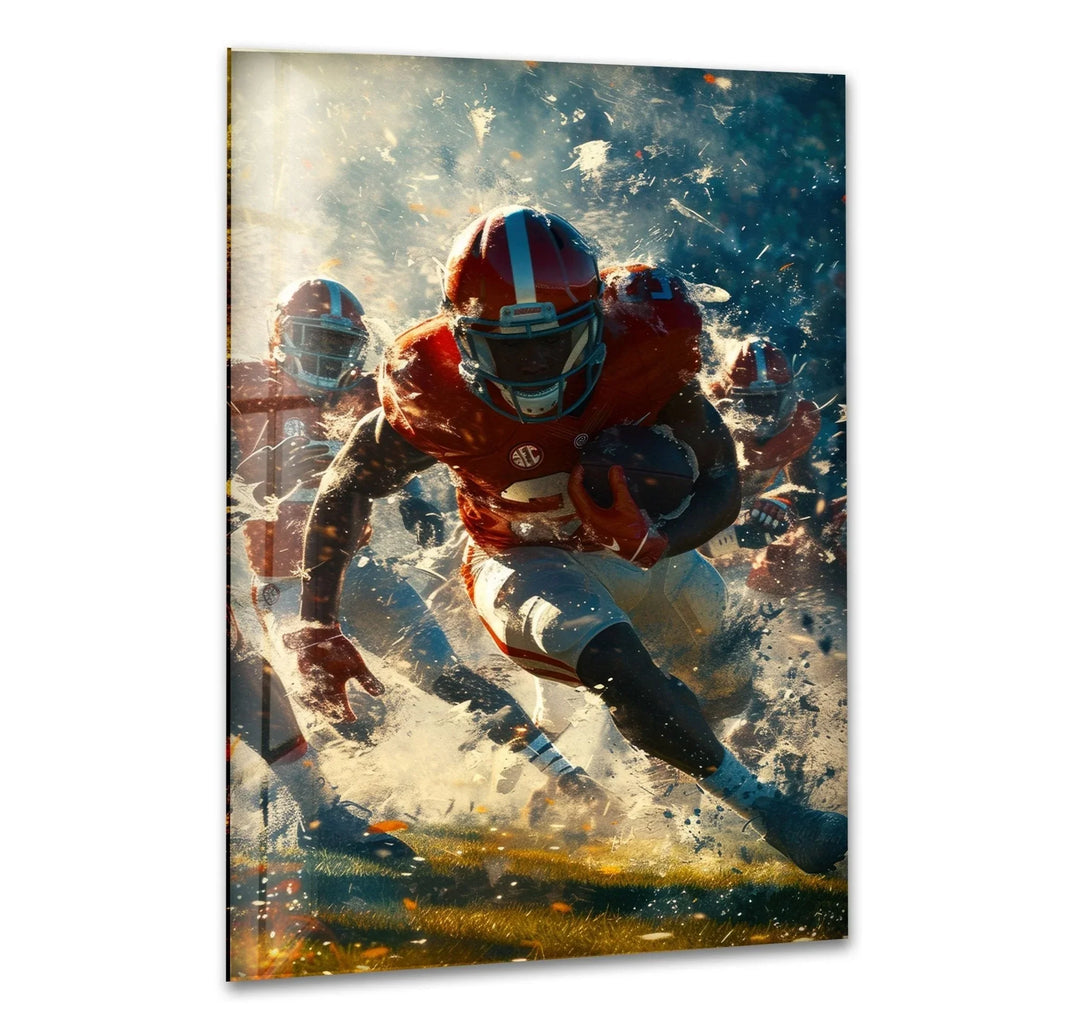
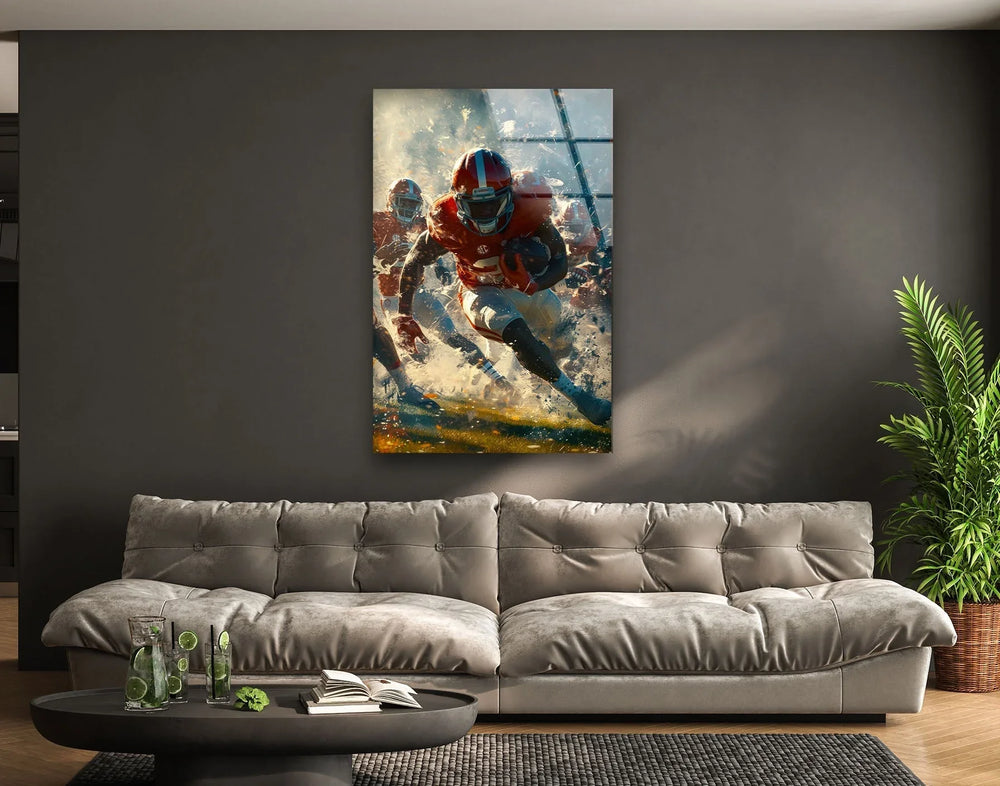
Le plus efficace art mural de football L'agencement est entièrement conçu pour l'obscurité. Les principes classiques de décoration intérieure préconisent de privilégier un éclairage naturel maximal pour la mise en valeur des images. Pourtant, apprécier des lithographies botaniques du XIXe siècle ou des estampes sportives sépia encadrées d'aluminium extrudé noir mat sous le soleil de midi, c'est ignorer la véritable fonction d'une pièce la nuit. La valeur structurelle du verre flotté trempé de 4 mm et des impressions monochromes à contraste élevé se révèle lorsque la lumière ambiante diminue. Les ombres réfléchies structurent l'espace. En calculant une géométrie spatiale précise plutôt qu'en se contentant de recouvrir des plaques de plâtre vierges, ces éléments manipulent les reflets en faible luminosité pour redéfinir votre environnement.
Abaisser l'ensemble de votre collection sous le niveau de la ligne de mire standard crée une compression visuelle délibérée qui donne aux plafonds victoriens de 3 mètres une impression d'espace infiniment plus vaste. Les manuels de design classiques préconisent de remplir les grands volumes verticaux avec des compositions imposantes. Cette approche détruit l'échelle. Les architectes minimalistes prônent un agencement bas et ultra-compact pour résoudre ce problème de géométrie spatiale. En centrant une disposition asymétrique de ces reproductions de souvenirs de la NFL à exactement 120 à 125 cm au-dessus du sol en béton poli, vous forcez le regard du spectateur à se baisser. Laisser l'immense surface de briques communes de Chicago récupérées ou de charpentes apparentes en sapin de Douglas entièrement vide crée un vide structurel. Le plafond culminant à 4, 5 mètres paraît soudain d'une immensité incontestable. Des collections regroupées de manière compacte confèrent un poids structurel significatif à une pièce autrement vide.
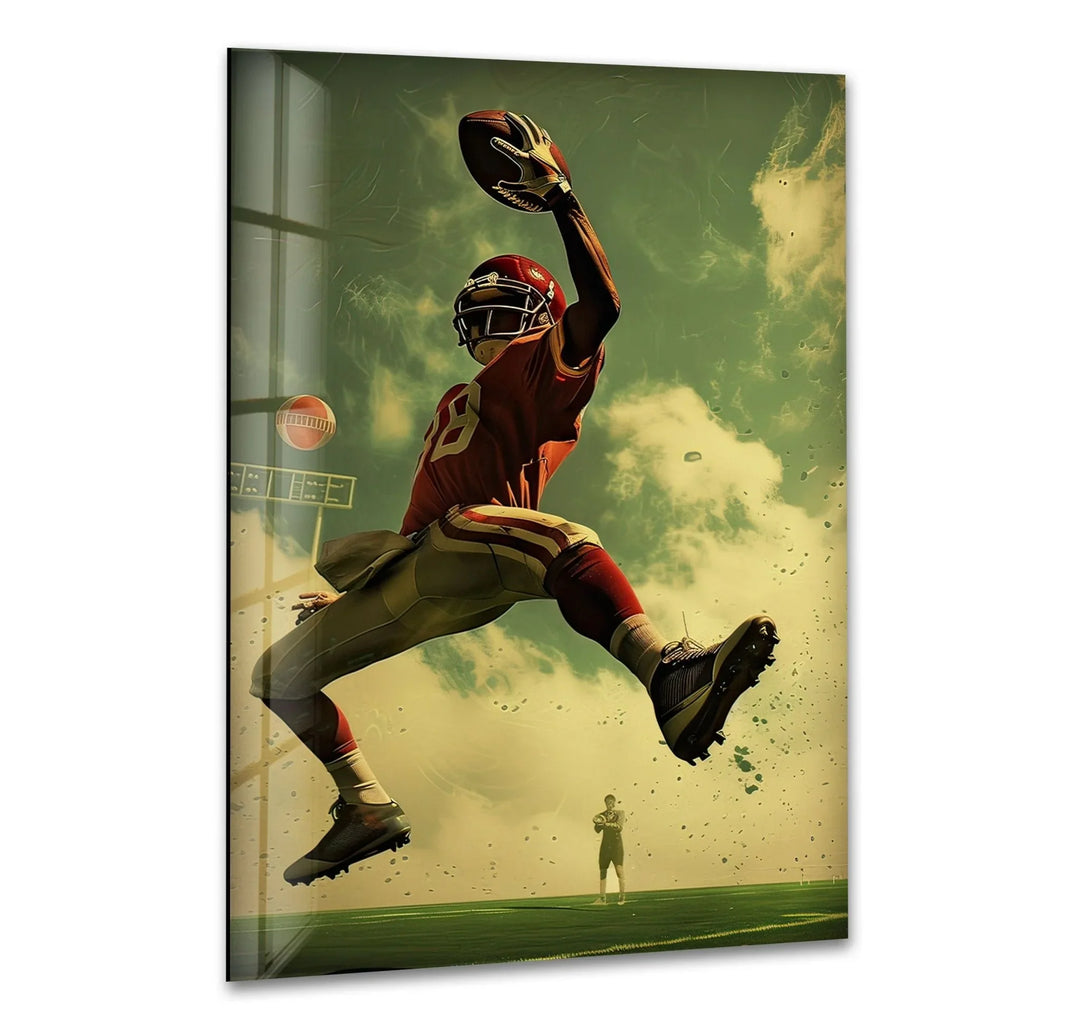
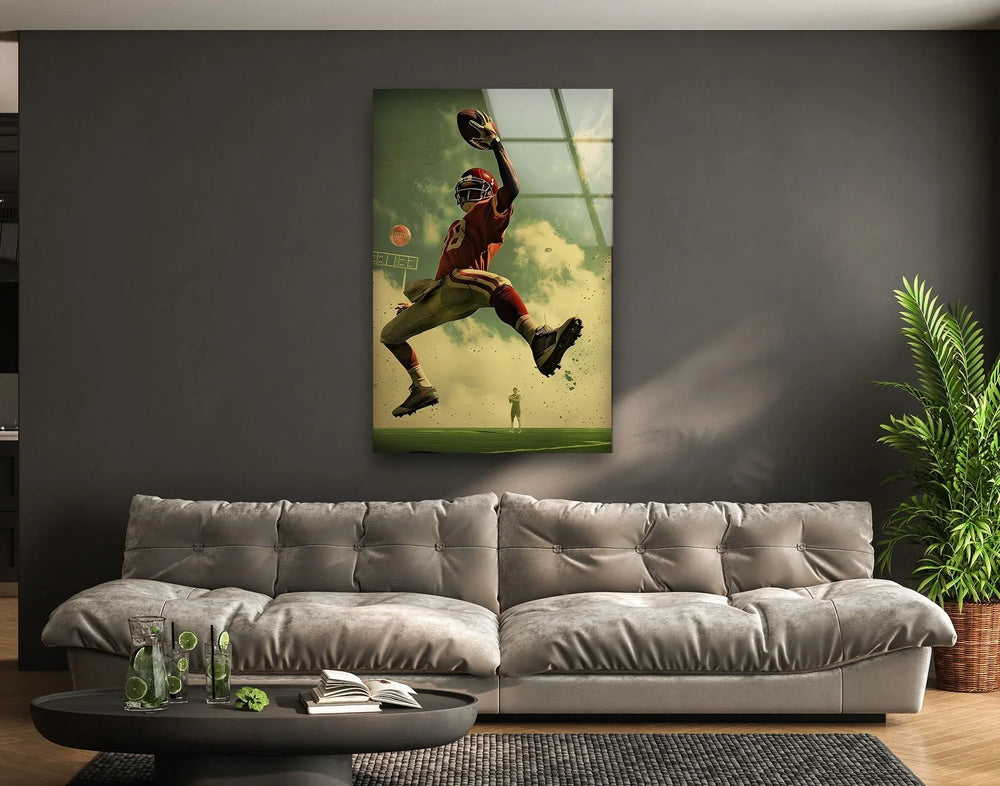
Placer le Football américain néon Art Mural En Verre Dans cet environnement exigu et faiblement éclairé, l'œuvre ancre l'espace grâce à son contraste interne qui simule la profondeur sur les murs couleur anthracite Down Pipe de Farrow & Ball. Les teintes néon cyan et magenta éclatantes, incrustées dans la surface de silice, captent la lumière des réverbères filtrant à travers les rideaux de lin belge. Elle devient ainsi un point d'ancrage visuel. Ces compositions sont réussies lorsque les pièces semblent avoir été collectionnées au fil du temps, plutôt que de provenir d'une seule et même production. L'alliance de la finition brillante de cette impression néon moderne avec la texture mate de la toile de coton 300 g/m² prévient la fatigue visuelle.

Pourquoi l'espacement dérivé du nombre d'or contrôle les ombres ambiantes
Pour des cadres de 20 cm de large contenant des tirages souvenirs de la NFL, diviser la largeur du cadre par le carré du nombre d'or impose un espacement obligatoire de 7, 5 cm entre tous les cadres adjacents. Le calcul précis de ces espacements à l'aide du nombre d'or détermine la façon dont les ombres se projettent entre les objets lorsque la lumière du soir se déplace sur votre mur. Accrocher aléatoirement des objets sportifs destinés à des chambres d'enfants meublées IKEA crée un désordre visuel. Une précision mathématique est indispensable. Pour adapter une composition à un loft industriel de 3, 65 m de large à Tribeca, calculez l'enveloppe dorée. Le cadre doit couvrir 61, 8 % de la largeur disponible, soit une largeur de 2, 26 m. Diviser cette largeur par 1, 618 donne une hauteur d'enveloppe verticale mathématiquement équilibrée de 1, 40 m. Optimiser la présentation pour une luminosité de 20 lux en soirée tire parti de ces espacements calculés mathématiquement, transformant les ombres elles-mêmes en piliers structurants de 7, 5 cm qui soutiennent l'ensemble de la composition visuelle.
L'espacement des composants asymétriques exige le respect rigoureux de cet axe de 7, 6 cm (3 pouces) afin de préserver l'harmonie visuelle. Lors de l'utilisation de cadres de tailles et d'orientations différentes, un espacement constant et régulier évite tout désordre spatial. Cette règle s'applique lors du positionnement des éléments. Football américain sous la pluie Art Mural En VerreLes bleus désaturés Pantone 541 C et la texture de pluie battante de cette œuvre absorbent la lumière ambiante différemment des graphismes vectoriels en acrylique brillant. L'insertion d'un bloc sur mesure de 7, 6 cm de contreplaqué de bouleau de la Baltique poncé entre cette estampe atmosphérique et ses cadres voisins crée un gabarit physique précis. Les ombres projetées dans ces creux de 7, 6 cm confèrent un rythme structurel à l'ensemble.

Calcul du delta biologique au niveau de l'œil
Les bases de données anthropométriques indiquent que la hauteur médiane des yeux d'un adulte debout est de 157 cm (61, 7 pouces) , ce qui prouve que la règle classique des 145 cm (57 pouces) pour la ligne des yeux se situe exactement 12 cm (4, 7 pouces) en dessous de la ligne biologique du regard. La règle classique d'accrochage dans les musées est donc inadaptée à l'anatomie humaine, à moins d'ajuster l'axe en fonction de la taille réelle des personnes debout. La pratique courante consiste à mesurer 145 cm (57 pouces) à partir du sol, à enfoncer un clou Hillman en acier plaqué laiton de 5 cm (2 pouces) dans une plaque de plâtre de 1, 6 cm (5/8 pouce) d'épaisseur, et à considérer le travail comme terminé. Or, comme le câble de suspension en acier inoxydable tressé se trouve plusieurs centimètres en dessous du support supérieur, le centre de l'œuvre est nettement plus bas que le niveau des yeux. Une œuvre mal positionnée rompt l'équilibre visuel de la pièce. Il est impossible de l'ignorer.
Pour corriger cet affaissement, il faut définir les limites par rapport au repère au sol à l'aide de calculs simples. Prenez la hauteur de votre enveloppe (55 pouces) , divisez-la par deux pour obtenir 27, 5 pouces, et calculez les marges supérieure et inférieure. Le bord supérieur de votre pièce la plus haute doit se situer exactement à 84, 5 pouces. Le bord inférieur de votre cadre le plus bas doit se trouver à 29, 5 pouces du sol. À l'intérieur de cette grille précise, Style CR7 Art Mural En Verre Son placement précis est indispensable car sa palette de couleurs métallisées, or Pantone 871 C et noir profond, reflète la douce lumière des lampadaires en laiton arqués de 2700 K situés à proximité. En plaçant son centre géométrique exact à l'axe visuel naturel de 157 cm (61, 7 pouces) , le point focal se trouve aligné avec le regard droit devant soi. La pièce paraît instantanément équilibrée.

Lorsque les agencements symétriques nécessitent un éclairage tamisé
La mise en place d'une structure rigide en grille 4x4 repose sur les réflexions en faible luminosité pour adoucir les contours abrupts d'un espacement uniforme. La lumière du jour révèle chaque millimètre de désalignement dans les présentoirs de photographies sportives 35 mm, notamment dans les intérieurs victoriens des maisons mitoyennes britanniques. Les ombres du soir apportent la correction nécessaire.
La géométrie nette du bord en verre trempé sans cadre disparaît lorsque les ampoules halogènes faiblissent, ne laissant apparaître qu'un rectangle de couleur suspendu, flottant contre le plâtre.
Ce Maillot de Ronaldinho Art Mural En Verre Exploitant les propriétés réfléchissantes de sa face en verre flotté trempé de 4 mm sans cadre, ce luminaire capte la lumière déclinante. Les pigments jaunes et verts éclatants de CBF interagissent avec la température de 3 000 kelvins des variateurs résidentiels standard. Le positionnement précis de la grille transforme le mur en un véritable piège à lumière. C'est vous qui créez l'ambiance.

Concevoir un espace pour une lumière ambiante de 15 lux en soirée vous fait passer d'une simple décoration à une maîtrise structurelle, garantissant ainsi que vos œuvres d'art s'imposent dans l'espace plutôt que de disparaître au coucher du soleil. La puissance architecturale d'une galerie de style salon bien conçue se révèle pleinement lorsque la lumière du jour quitte la pièce. Ces ombres profondes et ces espaces soigneusement calculés établissent une géométrie spatiale qui ancre votre environnement physique dans l'obscurité. Cela exige une précision calculée. Créer un agencement intentionnel et mathématiquement équilibré fait toute la différence entre remplir un simple mur blanc et définir l'espace. L'application de ces principes spatiaux modifie fondamentalement la perception de votre environnement, ce qui devient évident lors de la découverte de l'ensemble de l'exposition. art mural de football collection.