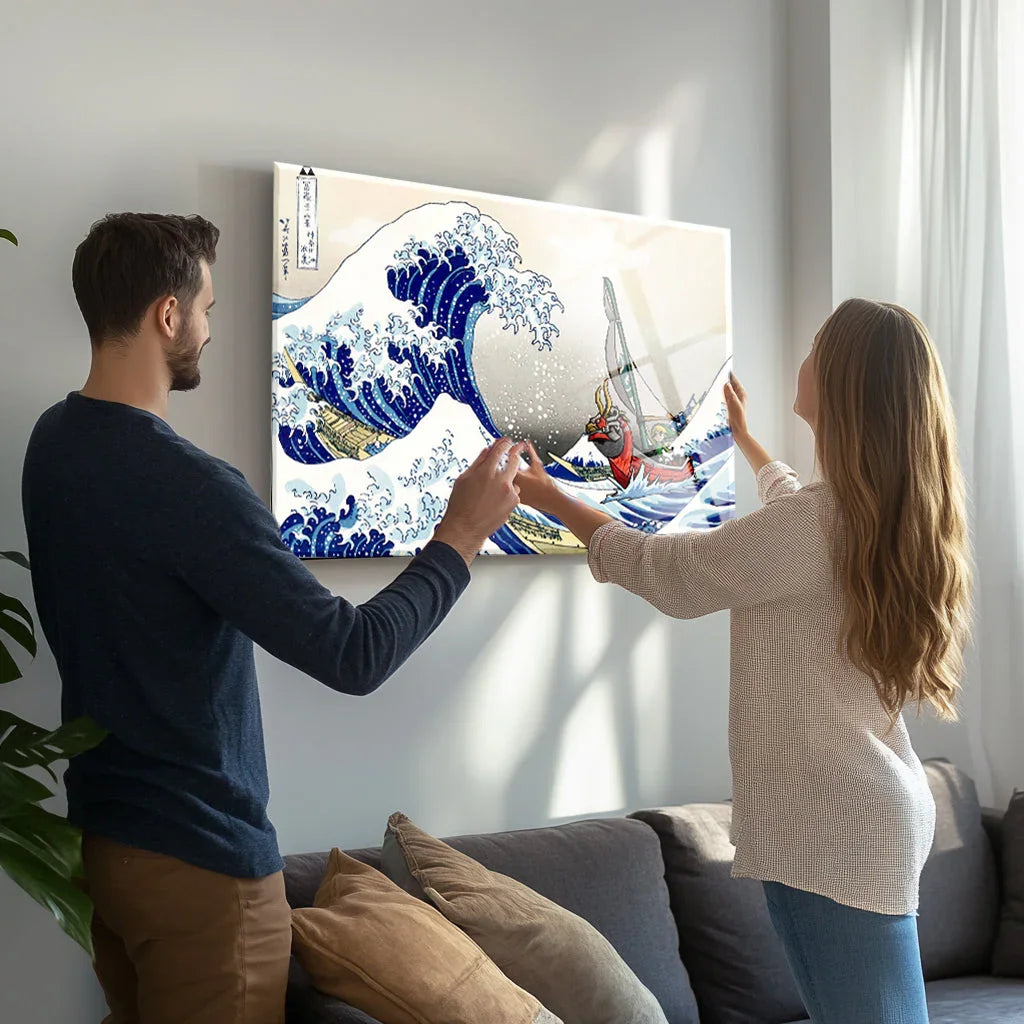


Why Coastal Wall Layouts Need a Strict Geometric Grid
Mapping the collective geometric bounding box of a framed collection as a single unified 54x30-inch architectural envelope before plotting individual centers is the only guaranteed way to prevent artwork from floating awkwardly against Benjamin Moore Chantilly Lace matte drywall. Placed individually, even heavily curated vintage 1920s nautical lithographs fail to anchor a room. Proper layout construction demands calculating a unified perimeter for your coastal wave art before plotting a single frame center. Measure the 80-inch Knoll velvet sofa clearance and map the room dimensions first. This mathematical foresight creates the difference between an amateur cluster and a cohesive architectural installation.
Defining the Geometric Envelope
Grounding a clustered arrangement requires establishing a strict 54-inch by 30-inch visual perimeter. Determine your overarching gallery boundary through strict calculation before lifting an Estwing 16 oz steel hammer. Hanging a Monstera deliciosa botanical lithograph or 35mm Ansel Adams ocean photograph in an asymmetrical pattern so its individual center hits the 57-inch axis creates a highly disjointed sightline that destroys the room's visual weight distribution. Interior design professionals consistently advocate for collective massing. They insist on keeping six to eight inches of space between the top of the 80-inch Knoll velvet sofa and the bottom of the lowest artwork. This foundational step is non-negotiable for professional results.
- Multiply your 80-inch Knoll velvet sofa width by 0.67 to find the targeted horizontal span of 54 inches.
- Apply the 6-to-8-inch clearance rule above a standard 33-inch-tall backrest to place the lowest frames at 40 inches off the floor.
- Align the mathematical center of this combined 54-inch wide group to the 57-inch standing eye-level axis to establish a total vertical envelope of 30 inches.
Measure the exact geometric center of your planned configuration on the floor with a Stanley FatMax tape measure before striking the Benjamin Moore Chantilly Lace matte drywall.
Strict Rules for Asymmetrical Balance
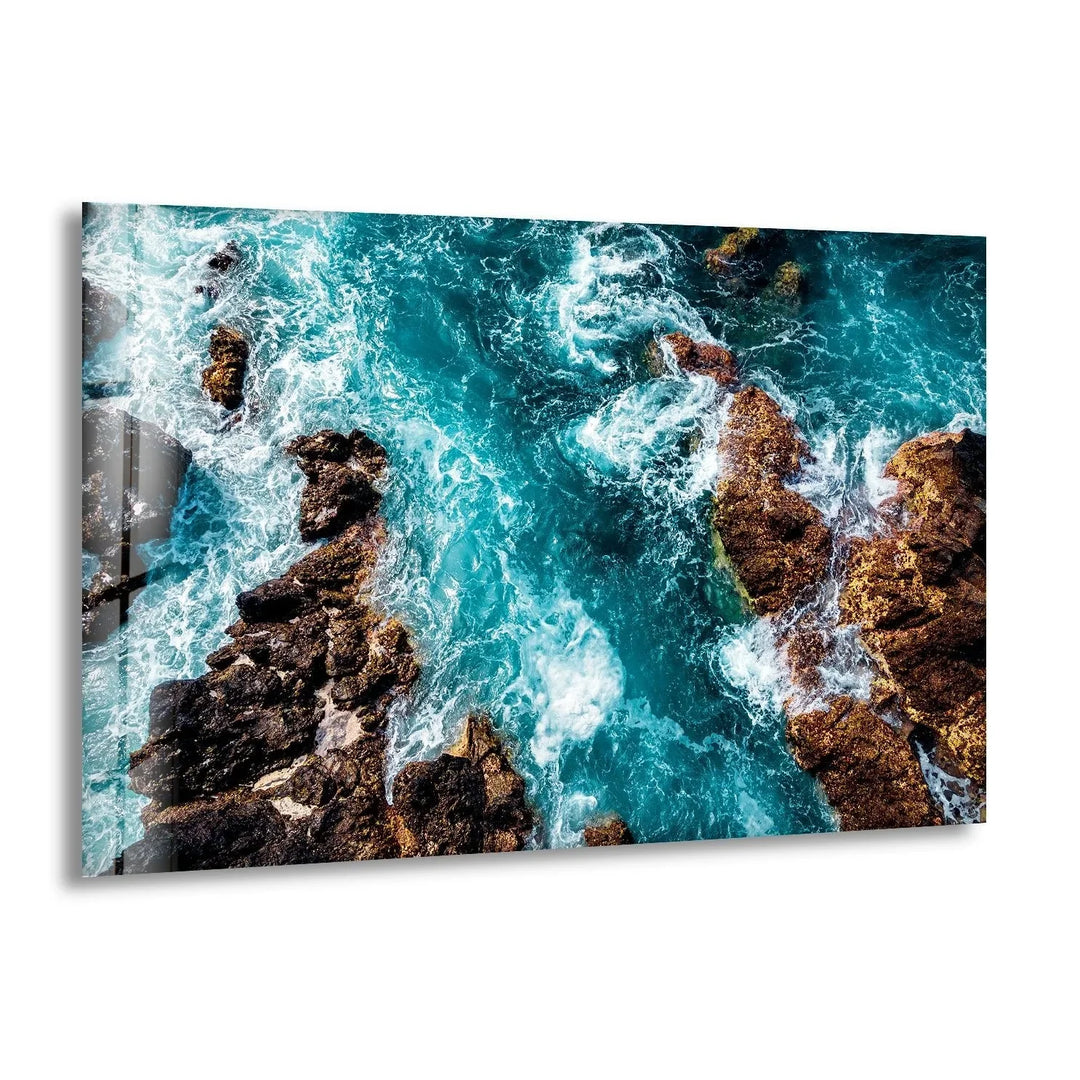
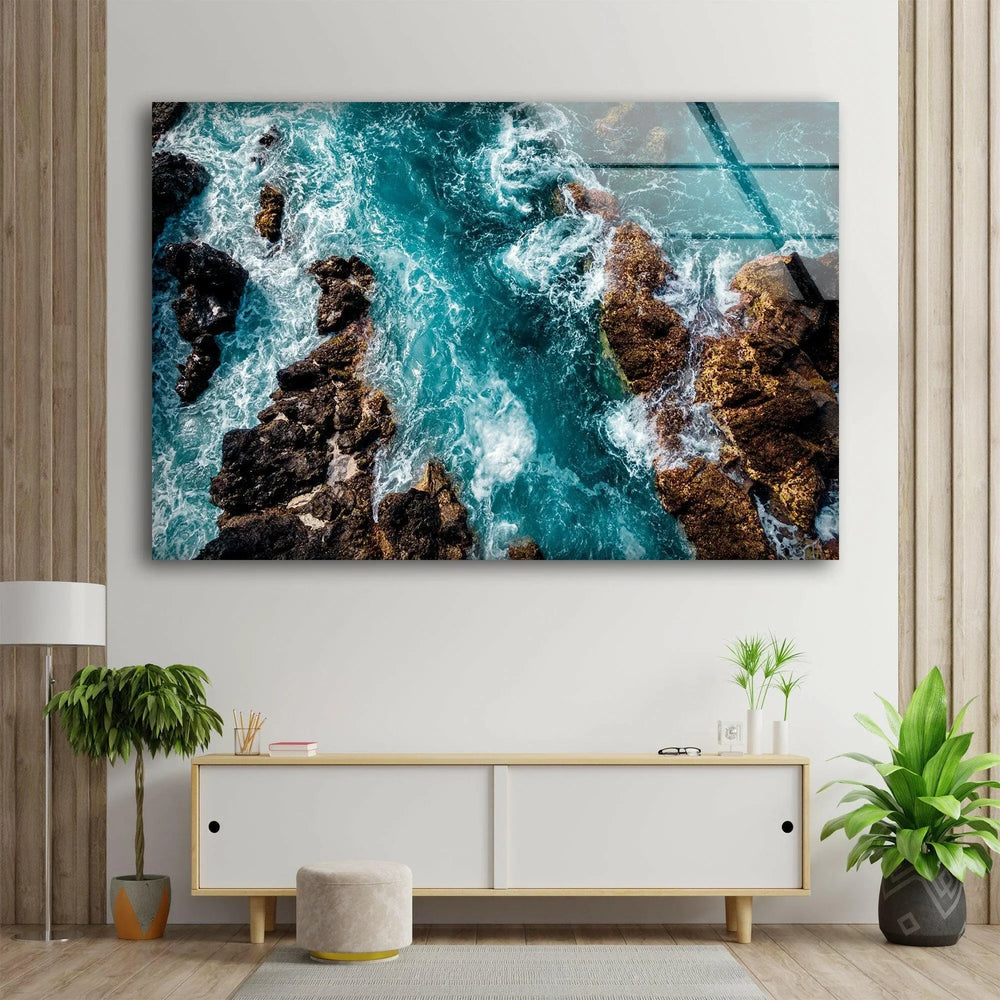
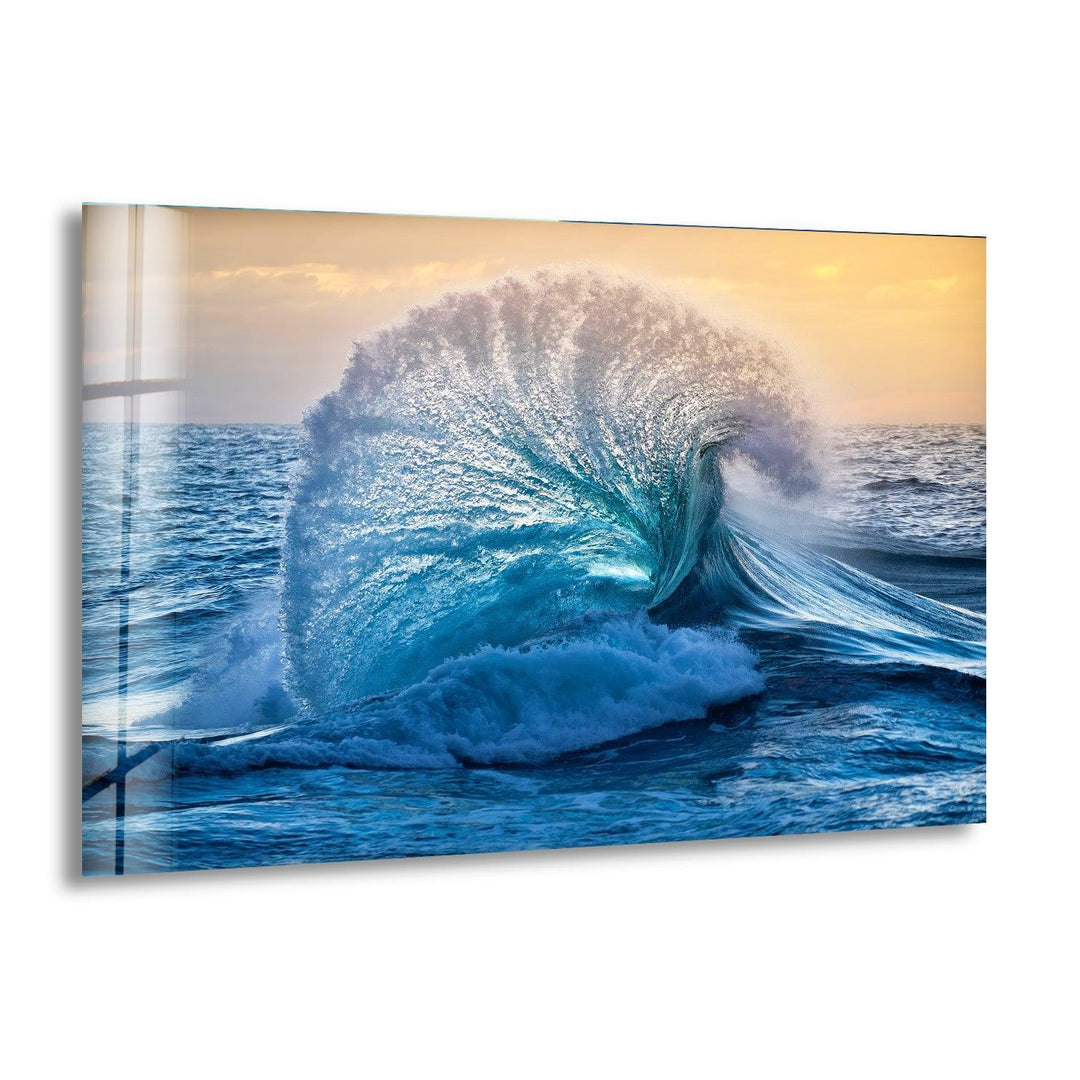
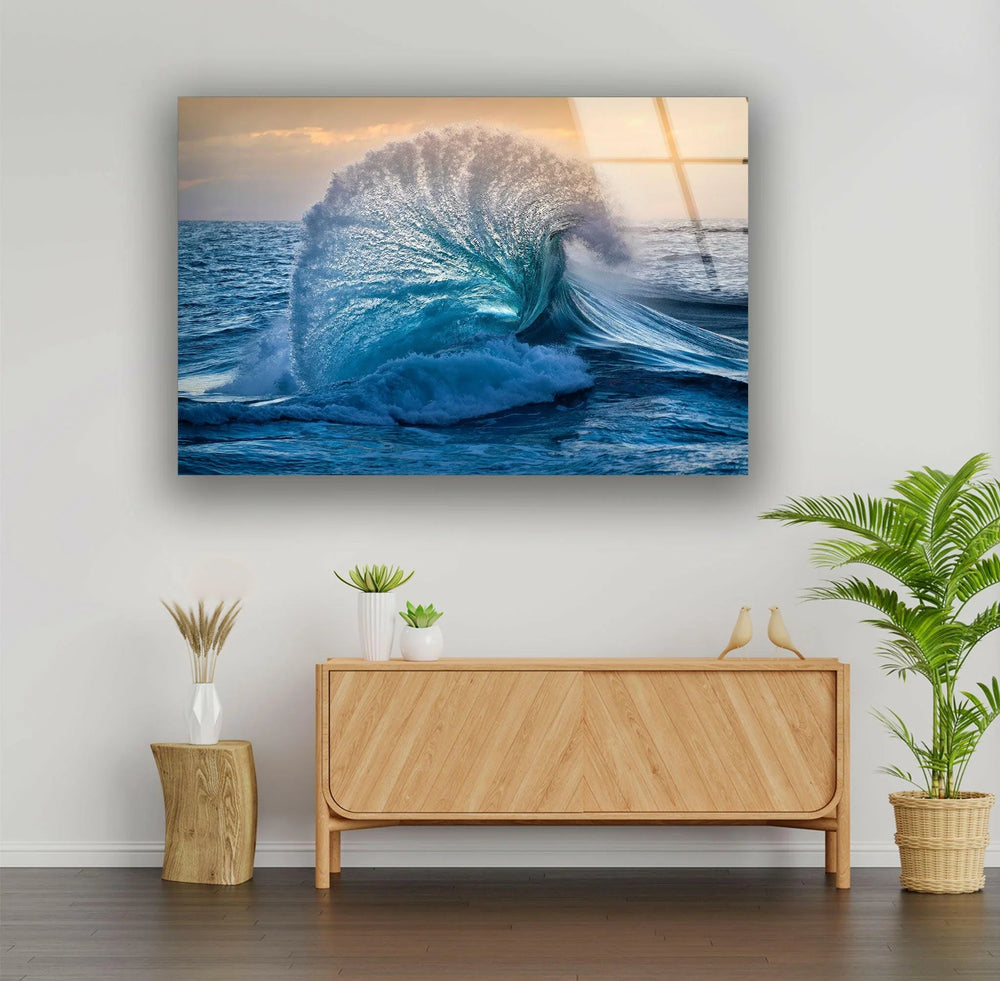
Establish a 22-inch wide vertical hero frame on the left third of your layout space. Structuring an organic layout depends on maintaining a rigid three-inch spacing standard between one primary anchor and multiple secondary frames. This spatial discipline ensures cohesion when mixing diverse materials like 300gsm woven Belgian linen canvases and Fujifilm Crystal Archive smooth photographic paper. A tactile three-dimensional Baltic birch coastal print or a specialized resin-poured sculptural ocean installation requires the exact same spacing parameters as a flat 310gsm Hahnemühle matte cotton rag print. We specify archival pigment prints framed with Tru Vue Optium Museum Acrylic glass to maintain clarity. Standard reflective glass creates harsh glare from Flos IC T1 brass table lamps and adjacent floor-to-ceiling Andersen E-Series windows. Obscured details break the carefully planned visual rhythm. Integrating a piece like the Luxury Ocean Wave Abstract Wall Art: Gold & Blue Statement Canvas grounds the arrangement. Those deep short-wavelength blue hues, measuring between 450 and 490 nm, actively reduce autonomic stress markers.

Calculations for Dual-Axis Hooks
Drive your 50-pound Floreat picture hooks exactly 70 inches from the floor to accommodate a standard 30-inch tall hero frame. Precise brass D-ring installation relies on a standardized mathematical offset formula rather than visual estimation. Guessing nail locations leads to uneven gaps and compromised structural integrity. Whether hanging a heavy reclaimed teak coastal carving or a lightweight brushed aluminum ocean panel, the center-point math remains identical. Using the Striped Surfboard Wall Art: A Coastal Decor Statement as your primary vertical focus requires calculating the specific wire drop. Treating the entire gallery configuration as one singular calculated 54x30-inch mass before plotting individual centers, rather than disparate frames, ensures these calculations securely anchor the entire 54-inch wide installation grid.

- Identify the 57-inch central axis and add half the frame height to determine the unadjusted top edge location.
- Measure the exact drop from the taut hanging wire to the top edge of the Roma Moulding frame profile.
- Subtract that two-inch wire drop measurement from your intended top edge coordinate to mark the exact drywall puncture point.
Fractal Patterns Actively Lower Physiological Stress
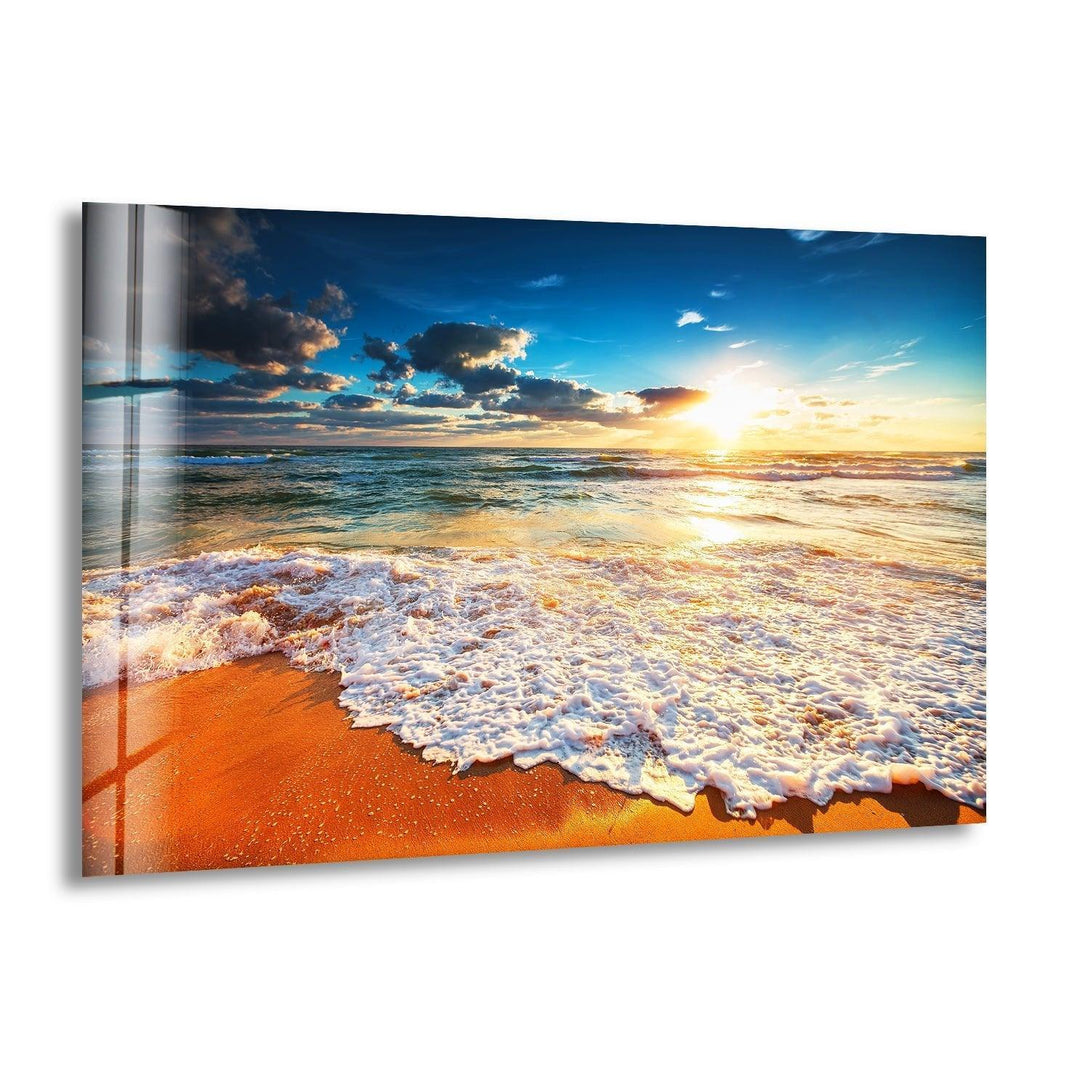
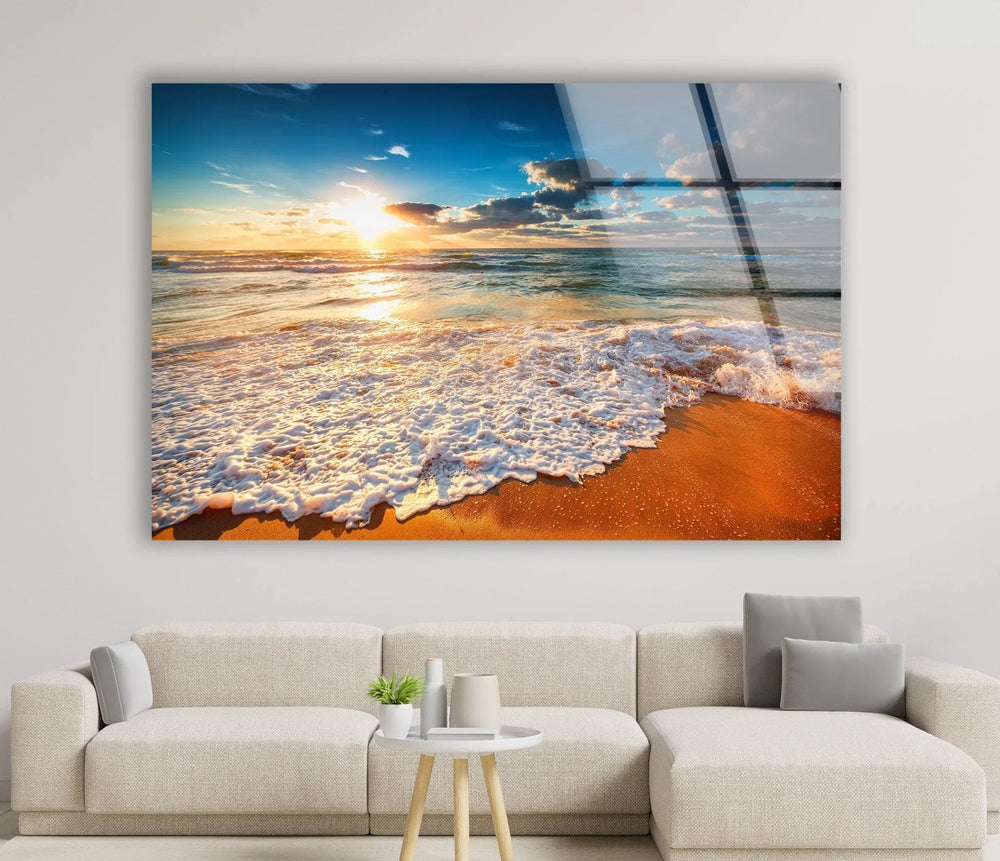
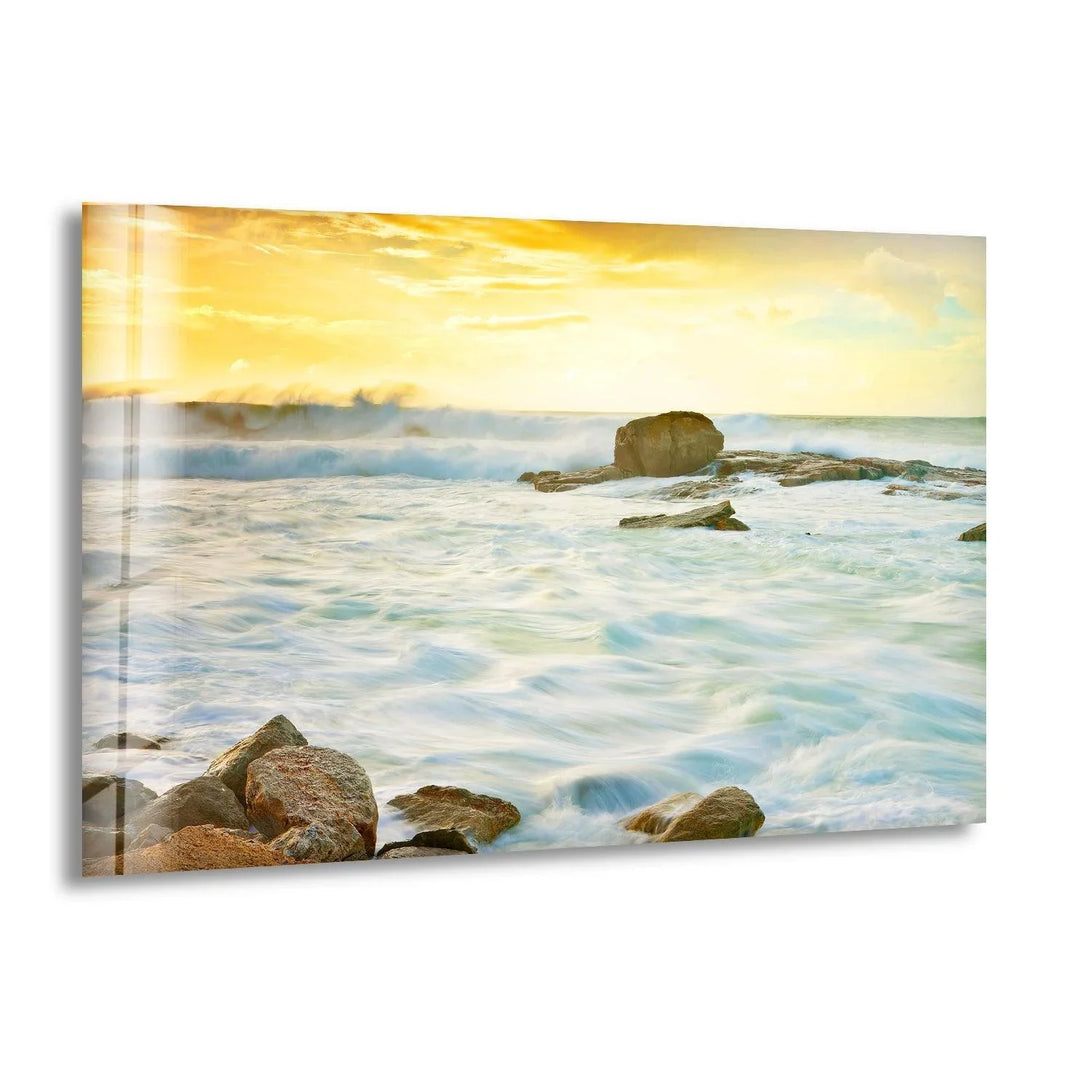
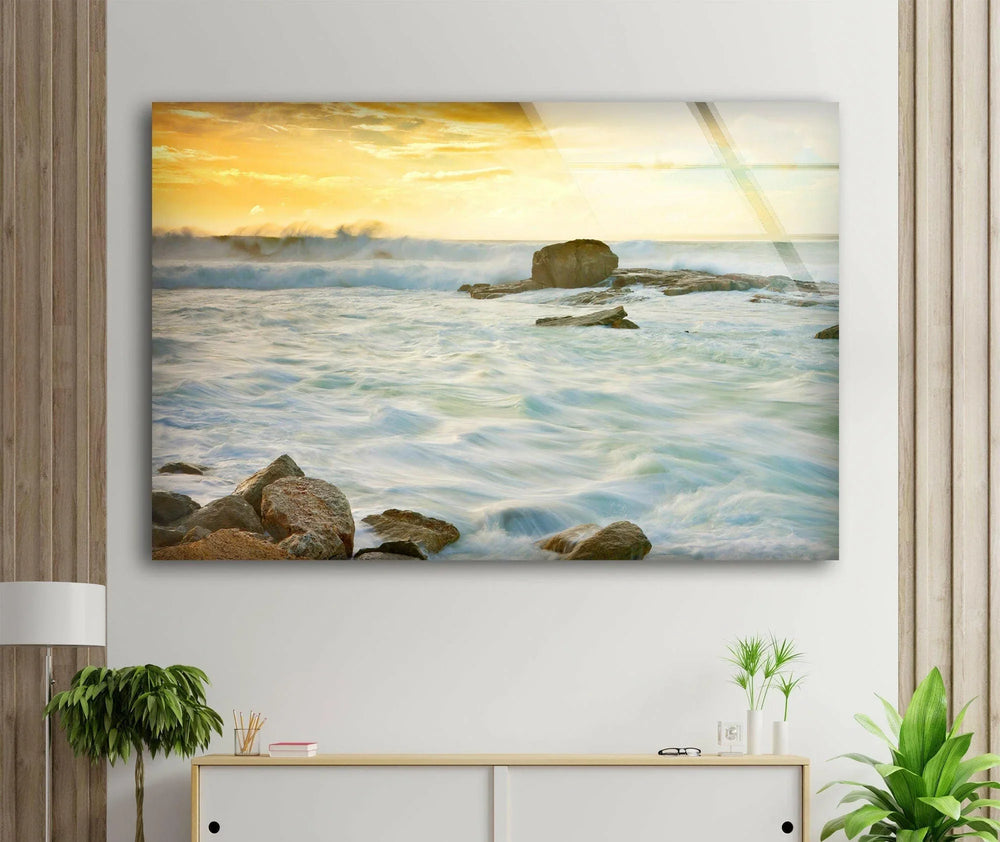
Peer-reviewed physics research demonstrates that viewing natural statistical fractals reduces mental fatigue by up to 60 percent. Exposure to mid-range visual complexity, like the repeating peaks of Pacific Ocean swells at Mavericks, directly triggers rapid autonomic nervous system calming. These organic shapes possess a specific D-value between 1.3 and 1.5. Fluid crests of coastal swells naturally exhibit this precise mathematical ratio. Munsell Color System psychology studies canvassing thousands of respondents declare deep navy blue (Munsell 5PB 2/4) the most relaxing hue for human processing. Selecting the Sunset with Big Waves Glass Wall Art integrates these exact biophilic design cues. Clinical experts confirm that biological responses to nature imagery actively promote healthy sleep patterns.

Introduce these D-value fractal patterns through various mediums, including a bronze dimensional coastal sculpture or a customized digital topographic file routed via a 5-axis CNC router. Abstract geometric interpretations, similar to a modular interlocking Lego Architecture brick build, provide this required textural complexity. Install deep blue biophilic artwork in high-stress urban transit areas to replicate impulse-mitigation metrics observed in Tokyo Shinjuku and London Waterloo metropolitan railway stations.
Mastery of the Micro-Scale Offset
Align an ultra-dense 18-inch to 24-inch wide clustered arrangement strictly with the left armrest of your seating while leaving the remaining wall completely bare. Violating traditional sizing proportions through intentional negative space creates superior architectural tension in minimal interiors. Standard Bauhaus design manuals dictate that pieces must span two-thirds of the furniture width to ground the space. Progressive contemporary designers actively reject this outdated rule. They draw inspiration from the Japanese concept of "Ma", prioritizing intentional emptiness across expansive 12-foot gallery wall segments. Matching the scale of the B&B Italia Camaleonda modular sofa beneath creates a predictable, architecturally stagnant room. Dynamic asymmetry emerges by packing a highly dense cluster of artwork into a heavily constrained area instead. The Storm Rider Surfboard Wall Art serves as an aggressive focal point for this clustering technique.

Deliberate emptiness draws the eye far more effectively to calming Hasselblad medium-format ocean photography, changing a standard decor arrangement into a MoMA-caliber installation curated with archival Epson UltraChrome PRO12 inks. It commands immediate attention through stark silence.
Executing an asymmetrical gallery demands rigorous spatial discipline and a clear understanding of neuroaesthetic principles. Constructing an arrangement anchored by exact geometric boundaries activates the Attention Restoration Theory formalized by Kaplan and Kaplan's environmental psychologists. Combining archival pigment prints on matte 310gsm Hahnemühle cotton rag paper with the 6-to-8-inch furniture clearance rule ensures maximum visual authority. The true secret lies in calculating a collection's overarching geometric boundary as a single, unified 54x30-inch architectural envelope before plotting individual centers, rather than mapping a collection of disparate frames. Applying these strict mathematical boundaries to your next piece of coastal wave art ensures every frame commands the visual weight of a bespoke gallery installation.