

Why Your Budget Planning Fails With Thematic Glass Wall Art
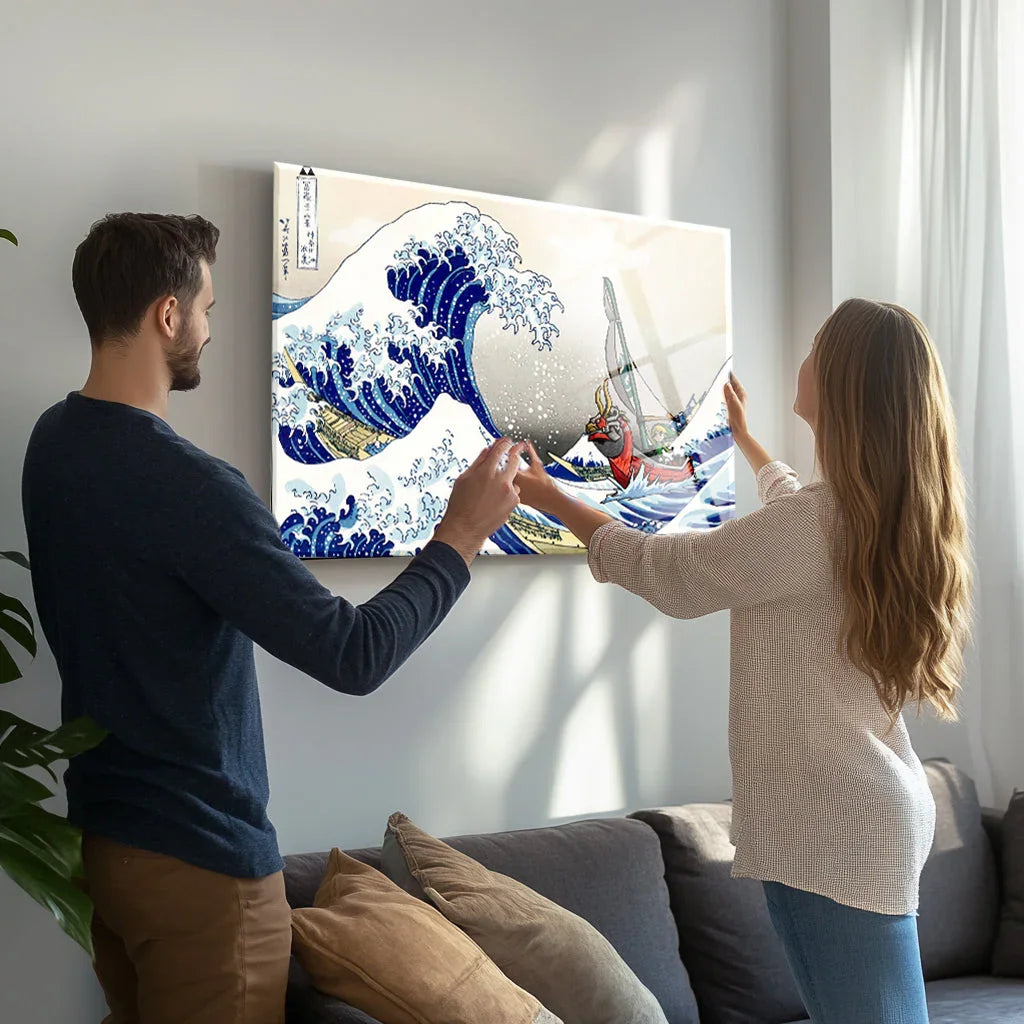
Effective budget planning for large-scale gallery installations starts with calculating the structural cost per square foot, entirely discarding the printed image's visual dimensions. A flat 24-pound tempered glass panel commands architectural space in a way a lightweight 400gsm cotton canvas never will, demanding you plan your budget around material density rather than wall area. Too often, buyers assign capital solely to the outer measurements of a piece, ignoring the silica substrate completely. Evaluating thematic glass wall art collections requires strict math, because aesthetics inevitably follow physics. When you understand the economics of industrial glass fabrication, buying incorrectly sized pieces stops. The true discrepancy between an image viewed on an Apple Studio Display and a heavy physical object mounted against Sherwin-Williams Alabaster drywall comes down to optical weight. Flat canvas reads as temporary. Thick 4mm float glass feels permanent. Calculate your material density budget before ever measuring your room's negative space.
Material Substrates Control Financial Scale
Financial scale scales directly with the chosen medium. Calculating the base cost per square foot establishes the true threshold for your art installation. A museum-quality giclée print on 300gsm 100 percent cotton rag paper paired with custom FSC-certified walnut framing costs between $70 and $150 per square foot. The strict requirement for a 2-inch acid-free Crescent alpha-cellulose mat border and 99 percent UV-blocking Tru Vue conservation acrylic adds 50 to 70 percent to the base printing cost. This structural framing requirement ensures a certified lifespan of a century without color degradation. Direct UV-printed 4mm tempered float glass wall art costs between $15 and $40 per square foot for ready-to-hang panels. When you isolate material costs per square foot, a frameless structural piece inherently shifts capital away from secondary framing systems into the primary artwork itself. Consider a 12-square-foot focal wall piece measuring 36 by 48 inches. The 4mm tempered glass application totals $180 to $480. Conversely, the framed giclée demands a budget of $840 to $1,800.
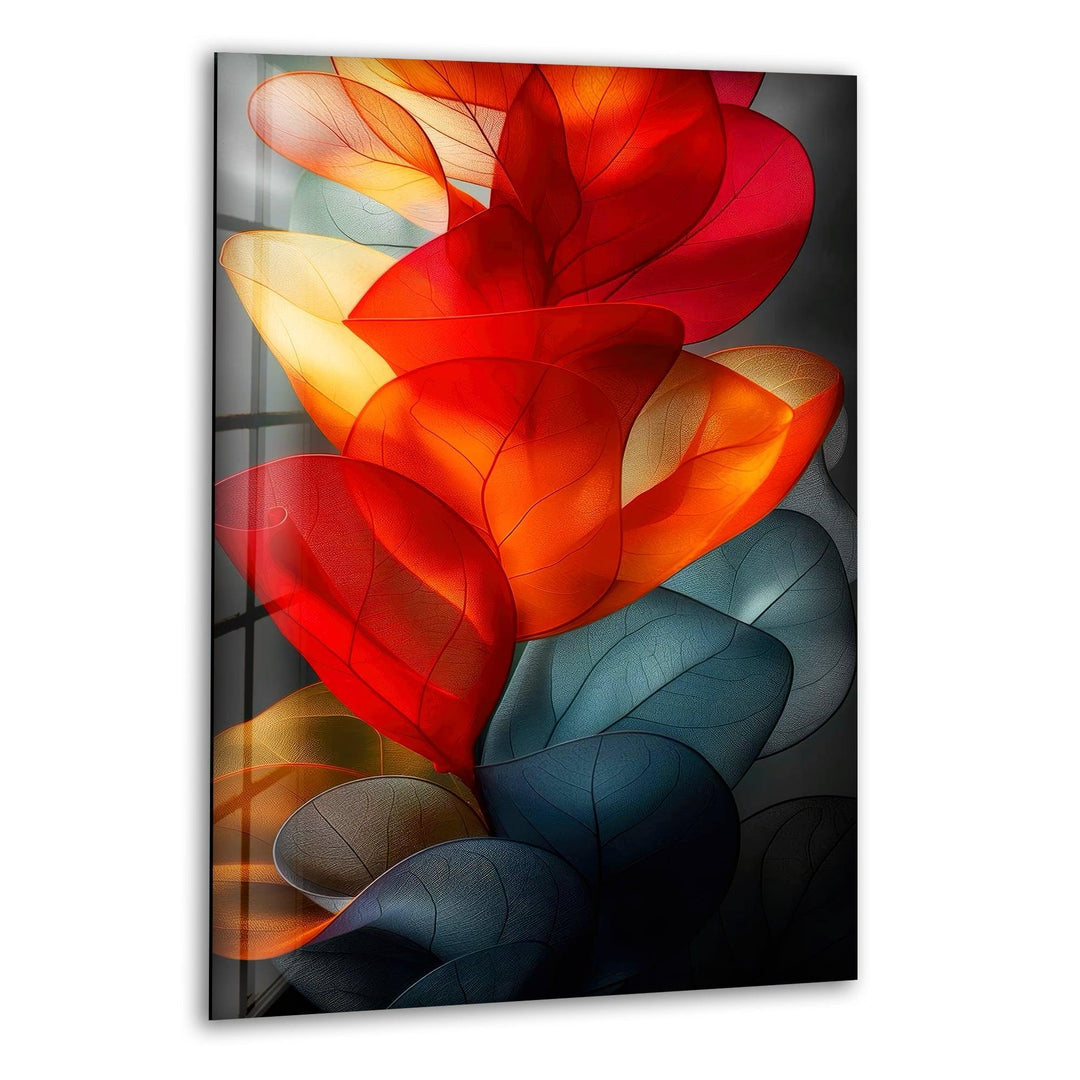
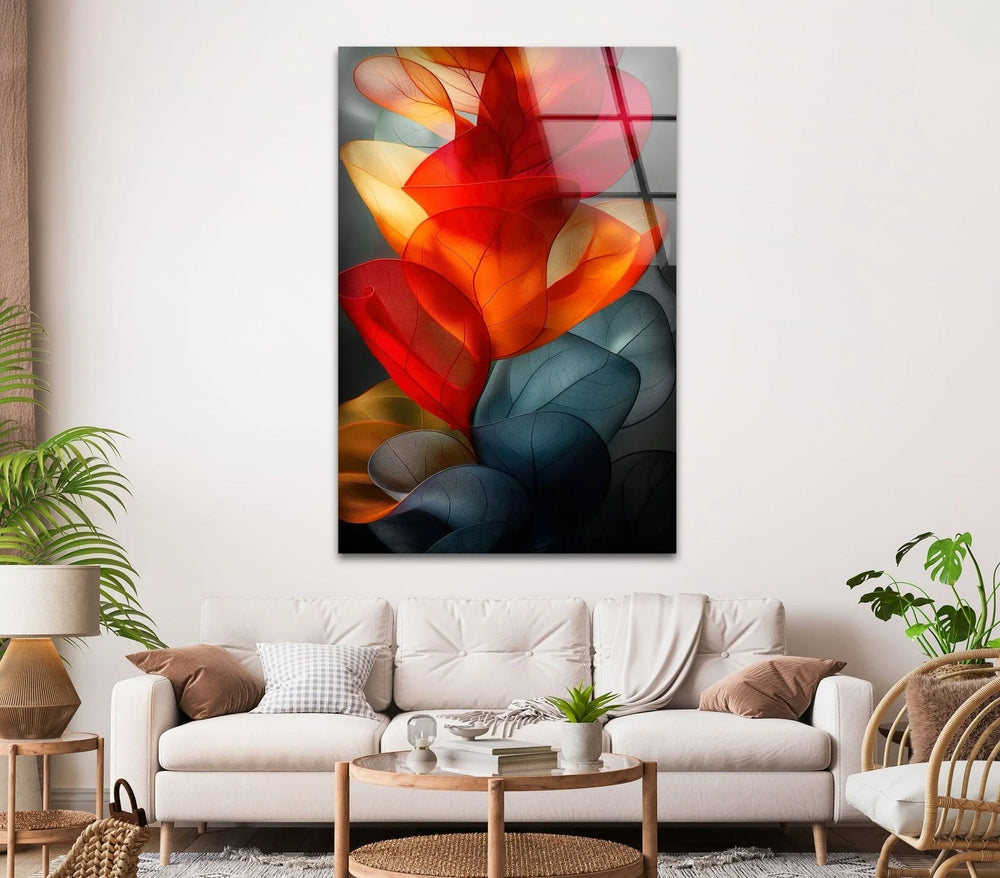
For high-traffic modern residences, direct UV-printed 4mm tempered float glass mounted on 304-grade standoffs functions better than museum-framed paper giclée prints. Classic interior design orthodoxy asserts that Hahnemühle rag-paper giclée prints under custom glazing represent the highest tier of fine-art curation. Those traditional pieces remain highly vulnerable in open-plan contemporary homes. Ambient humidity fluctuations near Sub-Zero equipped open kitchens, Carrier HVAC vents, and Andersen patio doors cause natural paper fibers to absorb moisture. This absorption leads to print cockling and framing off-gassing inside closed Roma Mouldings. Tempered float glass provides a non-porous, hydrophobic, and scratch-resistant alternative. It entirely eliminates the need for delicate matting or expensive protective Optium acrylic upgrades. An industrial edge of stainless steel creates a floating architectural profile requiring zero environmental climate control. Maintenance simply involves Sprayway ammonia-free foaming glass cleaner. The dense silica material effortlessly survives. A crimson-focused piece like an abstract red floral glass installation permanently anchors a formal dining room space. Red pigmentation resists fading under direct southern-exposure UV rays while rejecting moisture from nearby culinary heat sources. High-contrast reds engage visual anchoring, drawing the eye away from stainless steel Wolf ranges toward the designated dining zone.

Multiply your desired width and height in inches, divide by 144 to find square footage, and multiply by $35 to establish a baseline budget for Starphire tempered float glass.
How Hardware Requirements Reshape Allocation
Hardware actively creates the aesthetic. Structural mounting systems dictate the mechanical safety and ambient presence of large panels. Heavy 4mm tempered float glass weighs approximately 2.0 pounds per square foot, which represents nearly double the unit weight of an unframed Moab Entrada rag paper or canvas print. Securing a 24-pound glass focal piece requires 304-grade stainless steel standoff mounts. Budgeting for material density instead of visual dimensions means accounting for these specific hardware costs, which run $12 to $35 per four-piece set, breaking down to $3 to $8.75 per anchor point. Conversely, heavy-duty extruded aluminum French cleat systems for heavy framed giclée prints run $15 to $45 per linear foot. Such Z-bar brackets provide structural support for up to 300 pounds per linear foot when anchored firmly into Douglas fir wall studs. An architectural shadow gap requires a 1.75-to-2.0-inch standoff projection from the drywall. Shallow flush-mounts under 1.0 inch cause unframed silica art panels to optically dissolve into pale Farrow & Ball walls under ambient Philips Hue LED ceiling illumination. You must create depth mechanically.
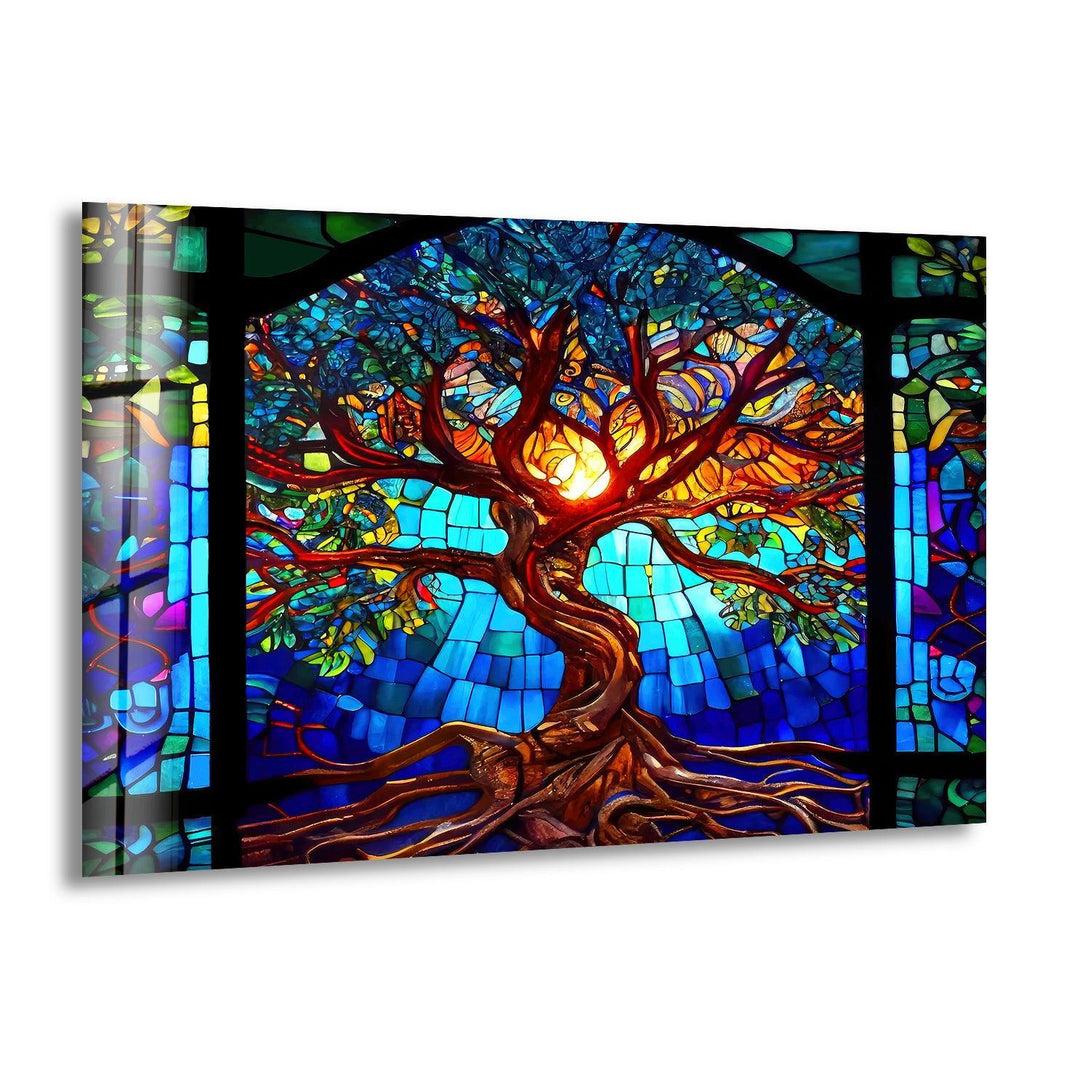
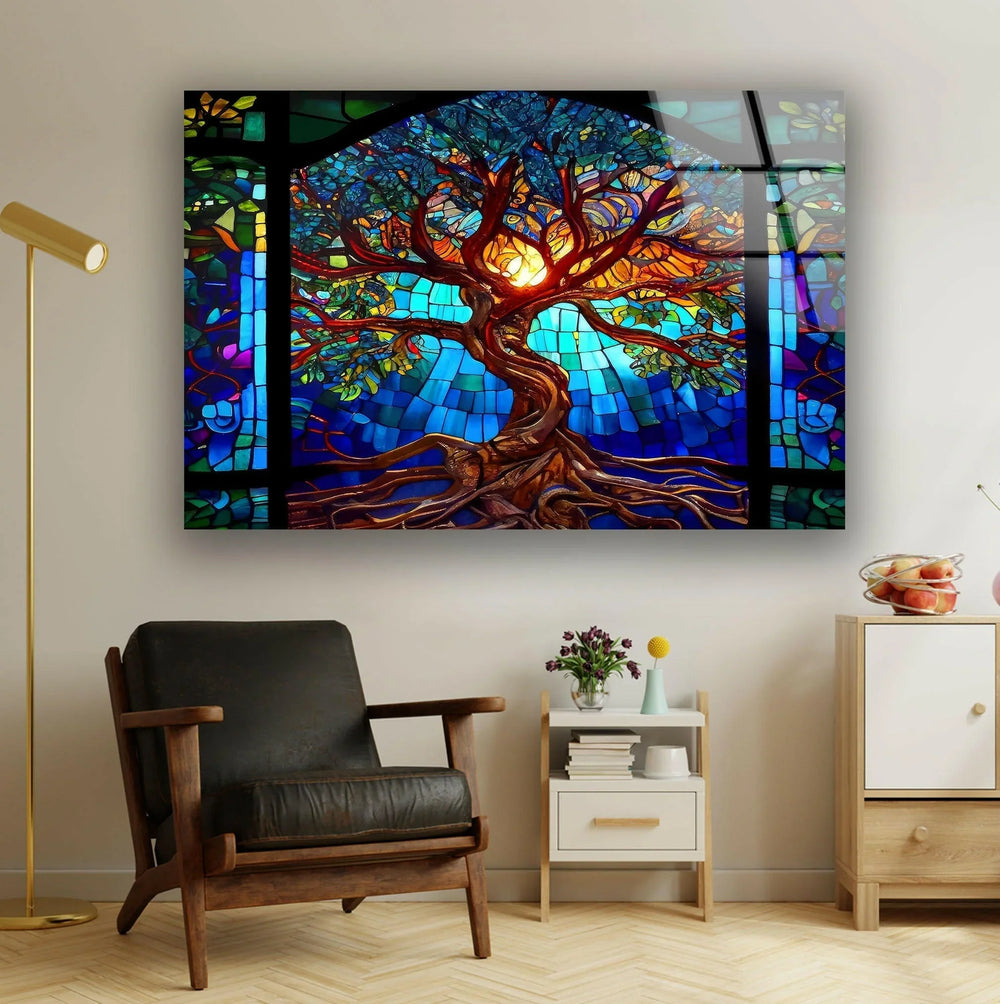
A defined standoff shadow pocket establishes a distinct architectural anchor in the room. This negative space creates a hard boundary. Shadow frames the artwork instead of solid Appalachian oak or brushed aluminum, aligning directly with Bauhaus minimalist modernism principles. A complex nature-inspired composition, such as a mosaic design featuring an old tree, requires a deep standoff mount. The 2-inch projection casts a harsh outline behind the intricate geometric patterns, anchoring the composition physically to the architecture of your Herman Miller furnished living room. Such shading acts as a dark matte. Pushing the silica away from the plaster gives the flat surface unexpected volumetric presence. Without physical projection, the mosaic pattern flattens against the wall, losing its spatial authority entirely. Account for the mount cost during your initial financial mapping because hardware fundamentally alters how the human brain processes artwork scale.

Specify 25mm diameter CRL 304-grade stainless steel standoffs with a 38mm barrel length for any glass panel exceeding 12 square feet to guarantee adequate shadow casting.
Calculating Light Geometry for Visual Depth
Positioning glossy silica surfaces requires specific incident glare calibration to maintain visual depth. High-gloss materials react aggressively to direct overhead Halo architectural track lighting, reflecting bulb filaments back at the viewer in disruptive white hot-spots. Hang the vertical center of the artwork at exactly 145cm from the white oak finished floor. That measurement represents the standard Guggenheim gallery standing eye level for adults. When installing reflective mediums, map overhead directional lighting to hit the panel precisely. Recessed Lutron 2700K LED spots must strike the glass at an angle greater than 45 degrees relative to the viewer's line of sight. Strict geometry prevents specular reflection from blowing out high-contrast image details. Light always behaves in predictable lines. A shallow angle turns a dark print into an unreadable white mirror. You must control the trajectory.
Proper lighting calculation ensures the deep blacks and saturated hues remain visible from all seating positions in a room. Wildlife portraiture that heavily utilizes negative space, like a black and gold lion printed on glass, relies entirely on the stark contrast between Vivera carbon black pigmentation and metallic yellow hues. A direct 30-degree light angle ruins the metallic sheen in a pool of white glare, destroying the visual tension of the portrait. Bouncing light correctly off the 4mm tempered float glass preserves the rich saturation of the UV-cured ink beneath the surface. Glare limits vanish. In spaces featuring dominant natural daylight from floor-to-ceiling Marvin architectural southern exposures, mount the piece on an opposing partition where ambient daylight skims the surface laterally. Lateral lighting heavily emphasizes the 4mm thickness of the polished glass edge without obscuring the printed image behind it.

Measure the horizontal distance from your recessed WAC Lighting fixture to the wall, adjusting the fixture gimbal to ensure the light beam strikes the 145cm center mark at a 45-degree angle.
Avoiding Critical Installation Failures
Mechanical failure occurs when installers substitute proper load-bearing anchors for Loctite cyanoacrylate adhesives or 3M VHB double-sided acrylic tapes. Heavy 4mm float glass possesses a completely smooth, non-porous backing. Foam mounting tapes degrade rapidly under ambient thermal expansion and seasonal humidity changes. Standard Hillman plastic drywall plugs easily shear under sustained heavy loads. Such shearing risks impact damage that causes tempered panels to shatter into small granular pieces. Never trust adhesive backings. Always utilize mechanical mounting systems like CRL edge-grip stainless standoffs or a solid aluminum bottom J-channel with top retaining clips. When installing custom-framed giclée prints, omitting rear 3M Bumpon rubber clearance bumpers on French-cleated frames causes the bottom to rest flat against the wall. That resting position creates a 5-to-15-degree forward pitch. The severe slope guarantees awkward optical distortion and uneven wall shadows. Your presentation suffers instantly.
Flatness guarantees optical accuracy. Marine photography, particularly an underwater blue octopus printed on glass, demands strict parallel alignment to the USG Sheetrock drywall. Deep blue ocean gradients require even illumination to read as three-dimensional water space, which a pitched angle heavily distorts. Cool tones, specifically desaturated blues mimicking Munsell hue 10B, lower the resting heart rate of observers only when presented without warped reflections. When installing an OOK aluminum Z-bar bracket system instead of standoffs, follow a strict sequence to ensure structural safety.
- Cut the extruded aluminum French cleat to exactly 75 to 80 percent of the custom frame total width using a Lenox metal hacksaw.
- Fasten the wall bracket using three 2.5-inch number 8 SPAX zinc-coated wood screws directly into the 16-inch center wooden studs.
- Install 0.25-inch thick self-adhesive 3M polyurethane bumper spacers on the two bottom rear corners of the frame to hold the artwork at a zero-degree pitch.

Install Snaptoggle heavy-duty steel toggle bolts capable of holding 50 pounds per point whenever attaching standoffs directly into 5/8-inch USG drywall without stud access.
Building your budget around material density rather than printed visual dimensions safeguards your capital against structural and aesthetic failure. Prioritizing structural material budgets over superficial aesthetics yields a collection that physically withstands the specific environment it occupies. When you calculate the unit weight of Starphire 4mm tempered float glass, the cost of CRL 304-grade stainless steel standoffs, and the geometric angle of your Lutron 2700K lighting, you engineer a room that functions flawlessly. Art placement requires absolute precision, not a decorative guessing game. Solid financial planning for interior design relies entirely on hard data, mechanical reality, and structural physics. You protect your investment by mastering the physical substrates that form it. Establishing this rigorously mathematical approach to your architectural interior budget happens naturally while evaluating material-dense options within thematic glass wall art collections.