

When Bare Walls Disorient: The Chicago Wall Art Decision
A single sweeping horizon line, especially when hyper-scaled as an architectural print, overrides the brain's perception of confined square footage. A 60-square-meter downsized condominium feels suffocating and temporary, whereas another identical unit feels expansive and permanently grounded. The difference lies entirely in where the eye rests.
Sitting in a newly acquired 80-square-meter apartment surrounded by carefully edited Baker Furniture mahogany heirlooms brings unexpected challenges. The morning light spills across a bare Benjamin Moore Chantilly Lace wall, casting sharp shadows over a transitional Belgian linen sofa. For years, you preserved bare walls as a conscious minimalist choice, appreciating the austerity. Now, the silence of the empty plaster feels different. It lacks weight. The spatial transition from a sprawling 300-square-meter family estate to this compact urban footprint triggers a quiet disorientation. Environmental psychology research from the Journal of Environmental Psychology consistently shows that older adults experience acute place-identity disruption when downsizing. The environment demands a structural bridge to reality. Finding the exact piece of wall art featuring the Chicago skyline becomes an exercise in psychological grounding rather than mere decoration.
How Architectural Anchors Stabilize Compact Layouts
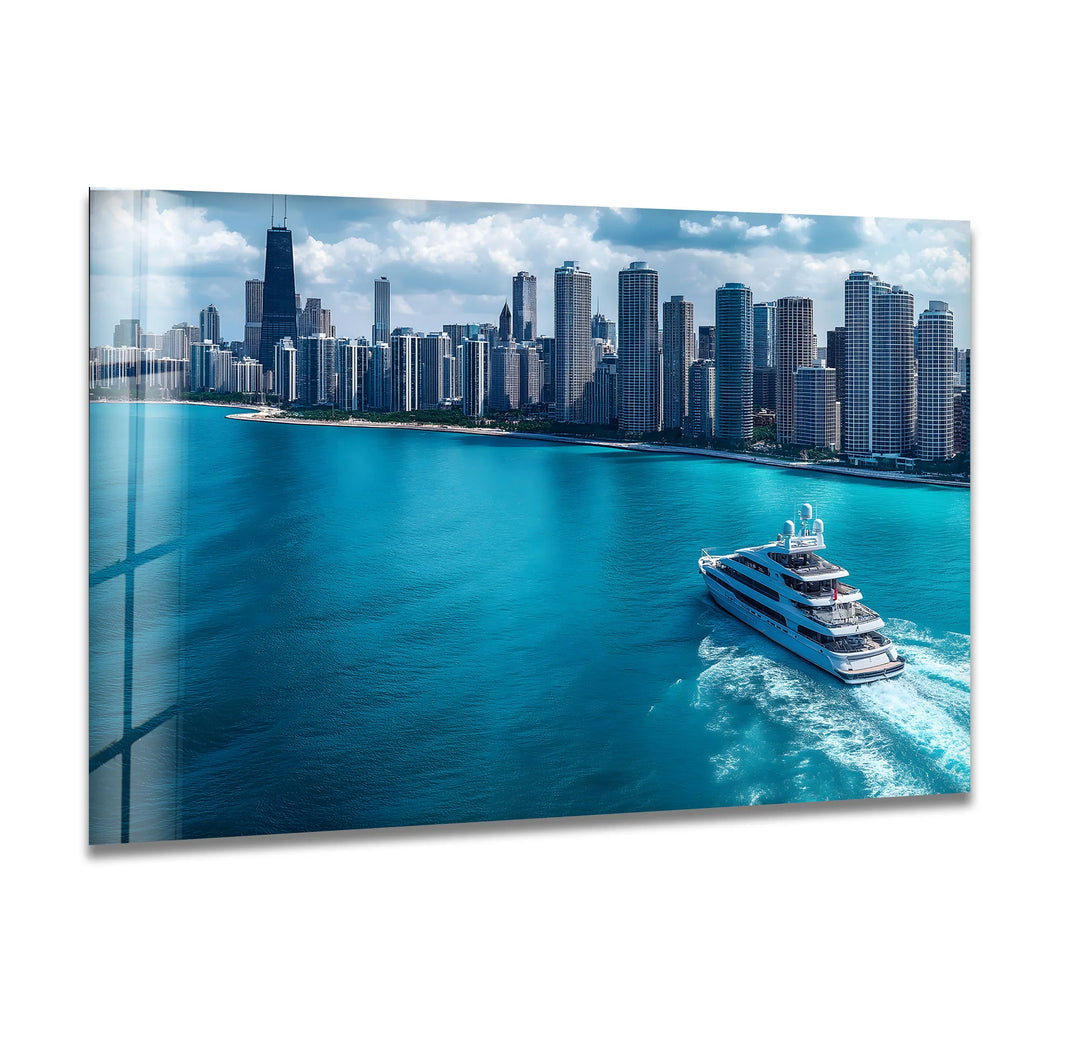
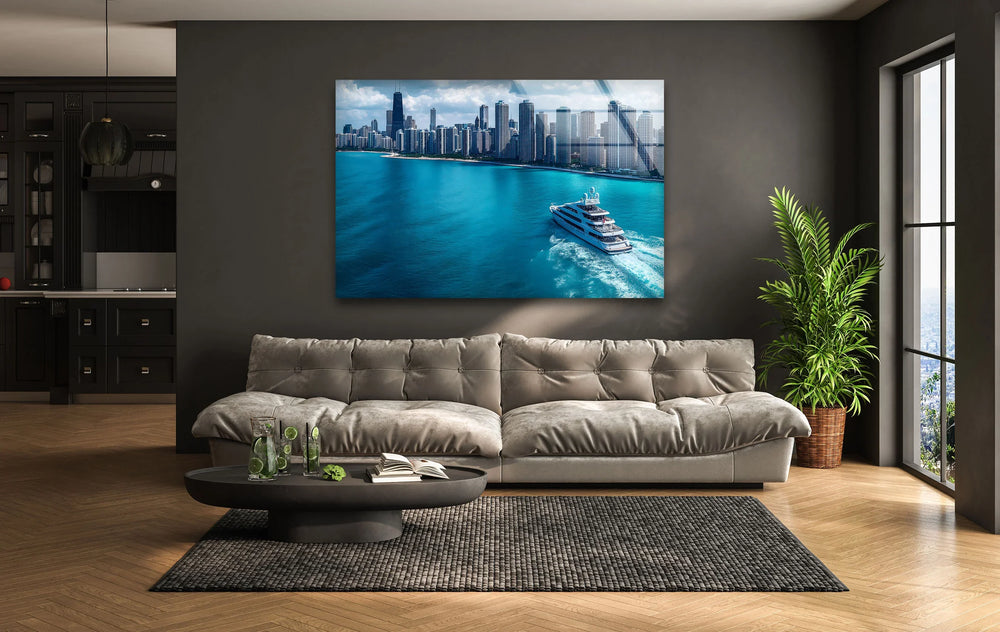
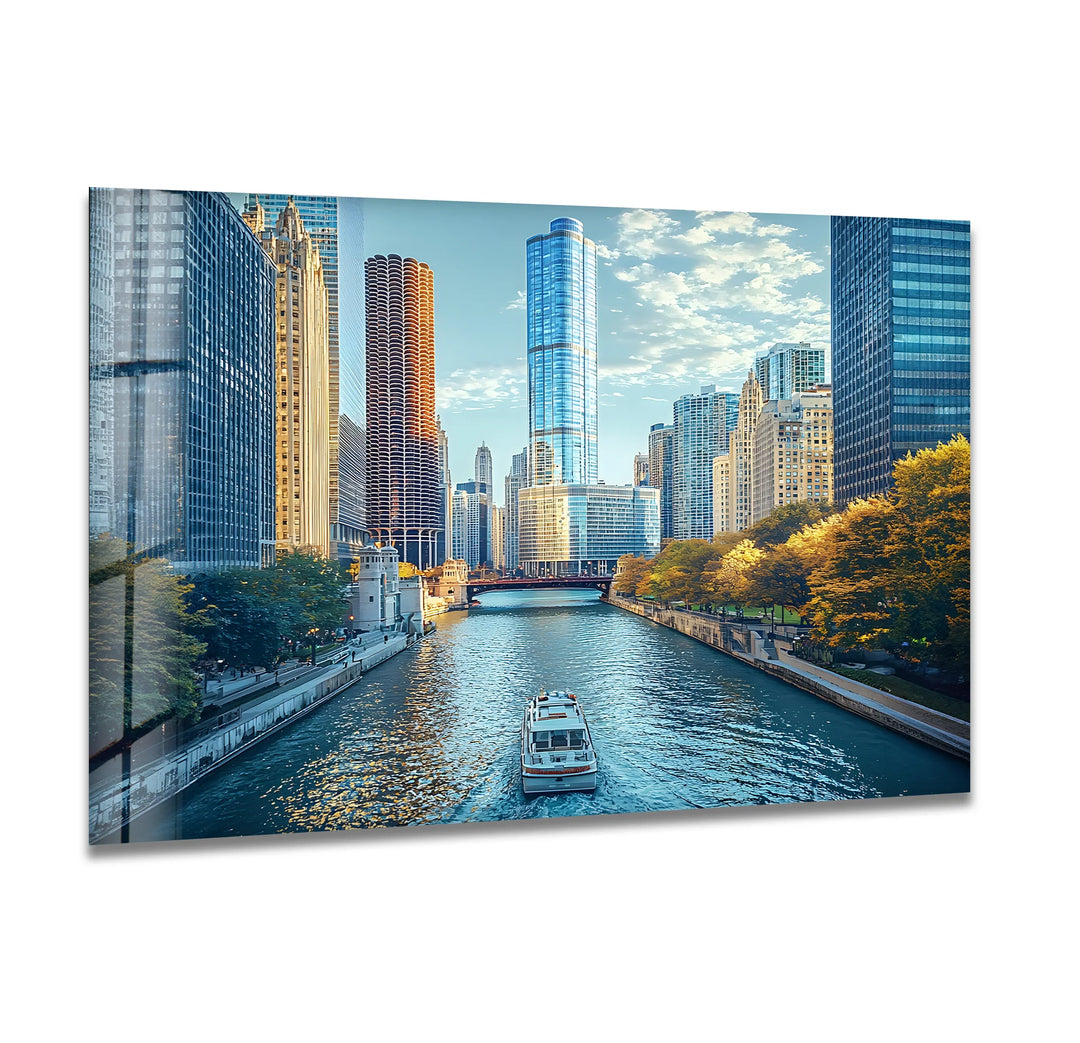
Establishing a singular architectural focal point mathematically lowers ambient stress and mitigates place-identity disruption during residential downsizing. When moving into a smaller footprint, the instinct pushes people to squeeze decades of memories into the new constraints. Without planning, downsizers instinctively populate walls with a high concentration of 5x7 silver frames and miscellany. This creates intense visual noise. In environmental psychology, this overstimulation keeps the brain's Default Mode Network highly active, amplifying transition-related stress. You need visual rest, and a single 120cm x 180cm large-format piece provides that stillness far better than a scattered gallery wall. Transitional design acts as a spatial bridge for downsizers. It blends antique cherry wood heirlooms with contemporary steel-and-glass urban architecture. Professional interior designers from the American Society of Interior Designers (ASID) view transitional design as a palate cleanser focused on defining space and place. To ground these evolving spaces, you anchor traditional pieces with crisp architectural geometry. A piece like the Chicago City Lake View Glass Wall Art introduces sweeping municipal lines that cut through the softness of traditional tufted upholstery. The cool blue-gray tones in the Munsell 10B range of Lake Michigan mimic an open window. This high-contrast focal point immediately stops floating eye fatigue.

The Case For Violating Spatial Proportion Rules
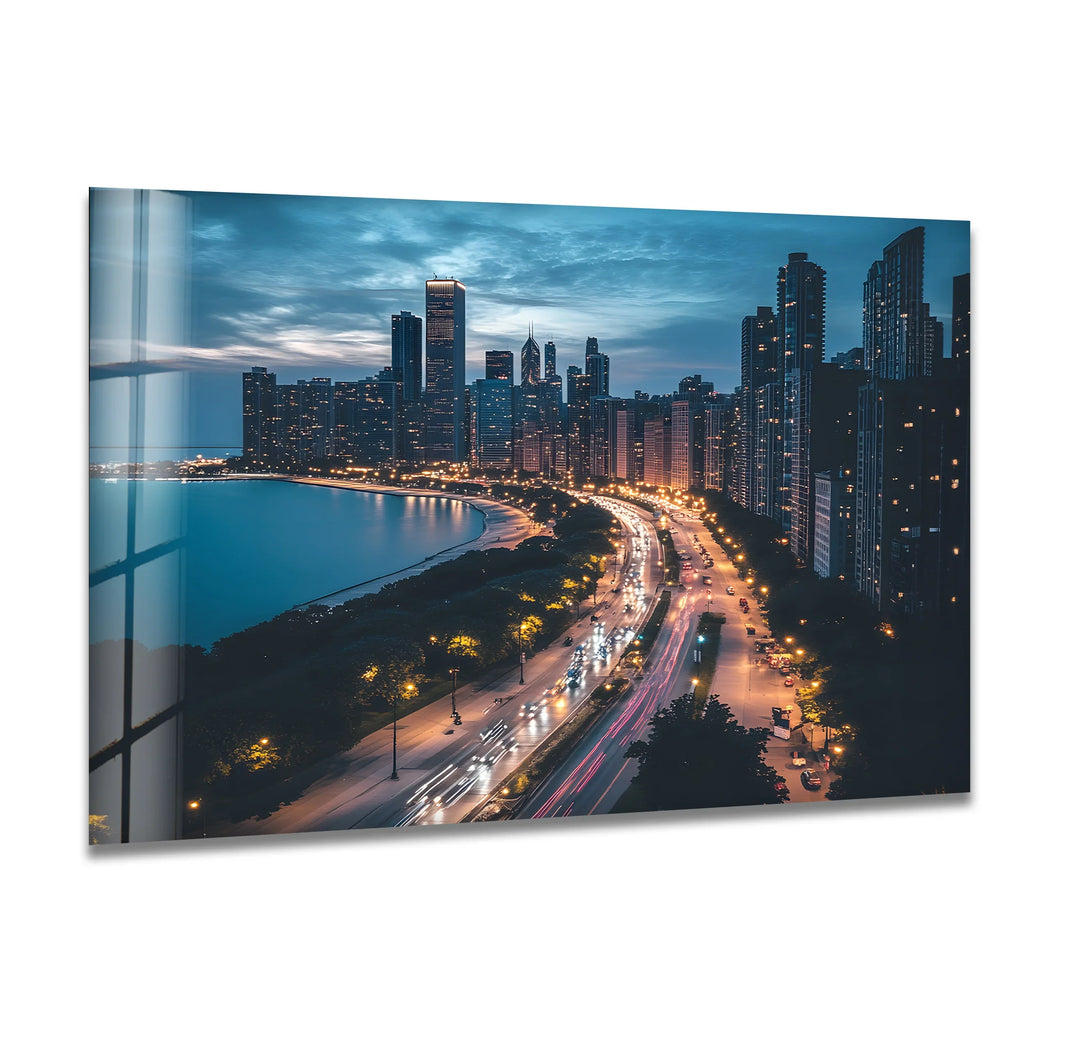
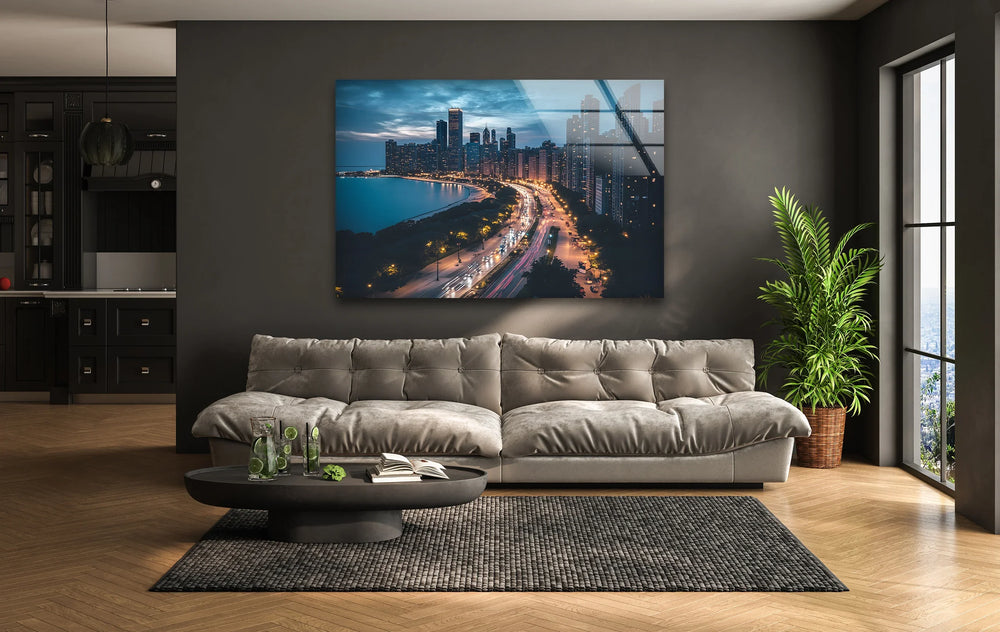
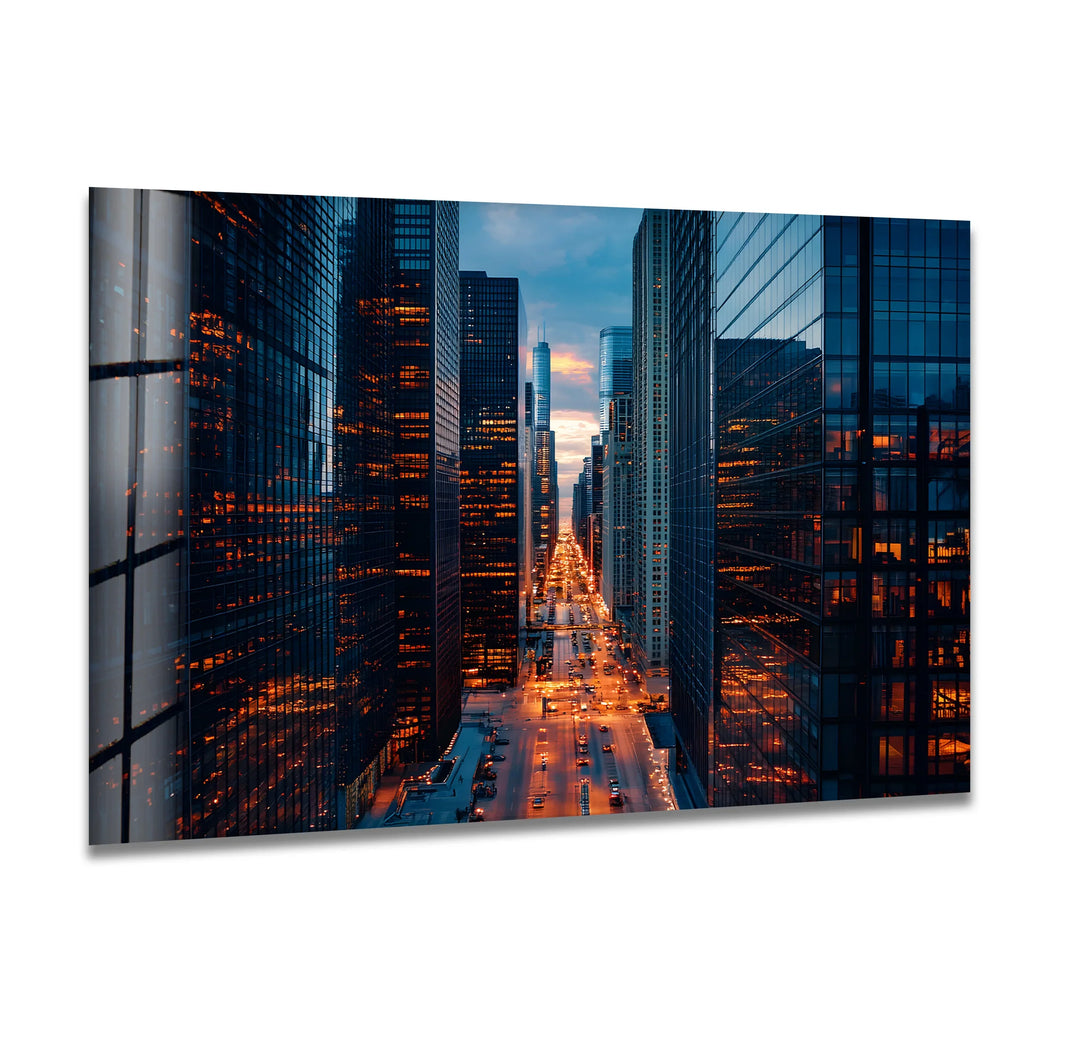
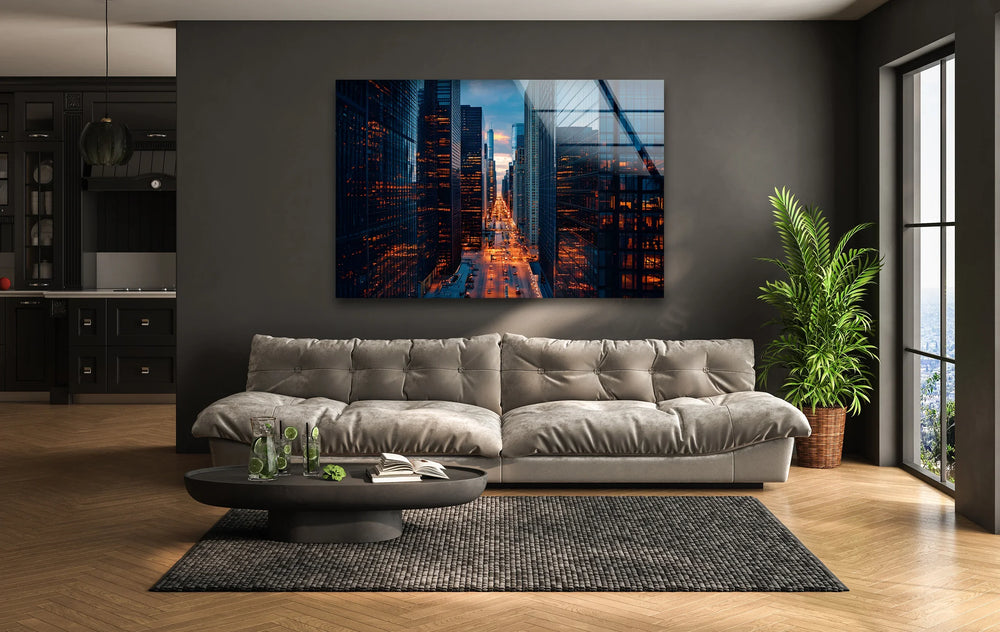
Deliberately hyper-scaling large prints to cover 85 percent of a wall dissolves physical boundaries and expands perceived room volume. Conventional interior design strictly dictates the 4/7 wall-to-art ratio. This traditional mathematics states that a frame should span exactly 57.14 percent of a blank wall's horizontal width. Failing to cross a 50 percent wall-occupancy threshold noticeably shifts visual horizon perception. The brain works harder to map the room. Artwork under 100cm floats awkwardly. In compact urban spaces, sticking to this modest proportion inadvertently emphasizes the physical drywall boundaries of the downsized room. You must break the rule. Adopt the contrarian hyper-scale approach, because stretching a sweeping horizon line beyond standard framing boundaries actively overrides the brain's spatial processing cortex, effectively deleting the perception of confined square footage. Choose a panoramic piece like the Chicago Skyline Glass Wall Art. Scale it to a massive 6/7ths ratio. Pushing the frame to cover nearly the entire wall creates a powerful optical illusion. Glowing amber and deep obsidian tones of the night skyline stretch across your peripheral vision. You replace claustrophobia with a sprawling cityscape vista. For horizontal spaces, the Chicago City Buildings Glass Wall Art performs a similar function. The repetitive vertical geometry of the Willis Tower and John Hancock Center pulls the eye upward, mimicking the expansive feeling of standing outdoors on Wacker Drive.


Positioning Heavy Frames Over Transitional Furniture
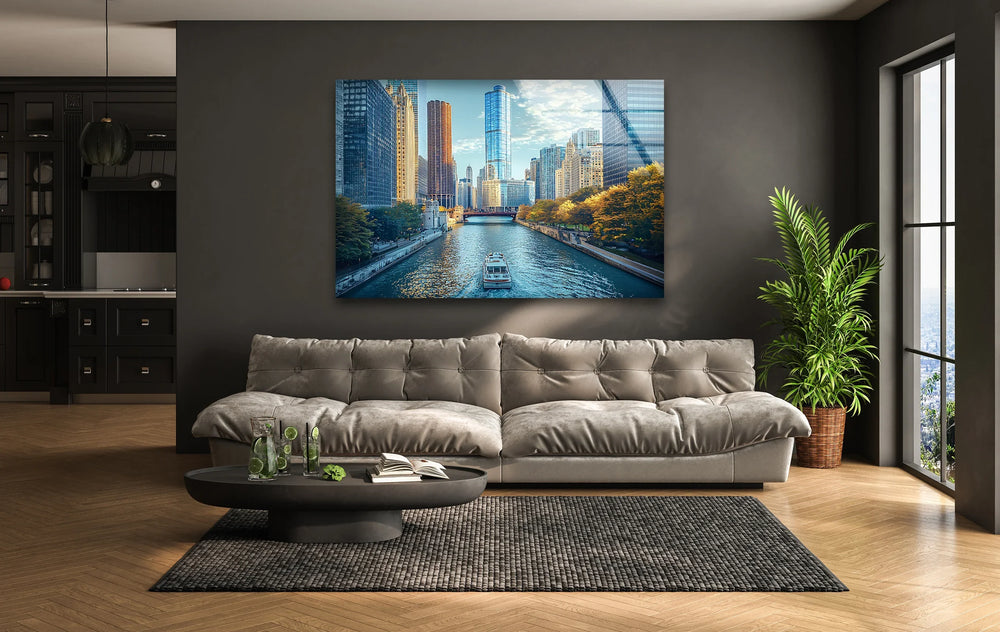
Suspending thick architectural prints exactly 20 centimeters above a sofa establishes a unified anchor plane that grounds the entire room architecture. The physical placement of the frame dictates how your mind interprets the structure of the room. Hanging a piece too high isolates it from the floor plan. If you position a 300gsm Hahnemühle giclée print on a completely blank wall, hang it so the exact vertical center sits at 145 centimeters from the floor. This represents the standard adult standing eye level. When mounting above a transitional Chesterfield sofa, ignore the eye-level rule completely. Position the bottom edge of the frame exactly 20 to 25 centimeters above the upholstery line. Total horizontal span of the framed art must equal exactly two-thirds to three-quarters the width of the sofa beneath it. A 210-centimeter sofa requires a configuration spanning at least 140 centimeters. The Chicago City Midnight Glass Wall Art excels in this specific alignment. Deep ink densities and stark shadows of the midnight architectural photography weigh down the room. Pair it with a 7.5-centimeter off-white crescent rag mat and a sleek 1.9-centimeter deep-profile walnut frame. Matte cotton paper absorbs the harsh 4000K overhead LED lighting, ensuring its texture feels substantial.

The faint scent of aged walnut framing mingles with the cold, smooth surface of archival museum glass, projecting a quiet permanence against the soft Belgian linen sofa.
Resolving the cognitive disorientation of a spatial transition requires more than just unpacking boxes. The downsized urban apartment needs a manufactured horizon line to feel like home. Ultimately, commanding a wall with a hyper-scaled, unbroken horizon line is the definitive architectural intervention that overrides the brain's perception of confined square footage. Expansive 120cm x 180cm architectural imagery acts as this stabilizing force, changing a boxed-in footprint into an open vantage point. Ground your new reality by finding the precise piece to anchor your sightline within our curated selection of Chicago architectural prints.