

Banksy Wall Art: Bringing Street Art Rebellion Into Your Home
The mysterious artist who turned city walls into canvases has become one of the most influential figures in contemporary art. Banksy's work, once considered vandalism, now commands millions at auction and adorns homes worldwide. But what makes this anonymous street artist's work so compelling that people want it in their living rooms, offices, and bedrooms?
This guide explores Banksy's art, his most iconic pieces, and how his rebellious spirit translates beautifully into home decor. Whether you're a longtime admirer or just discovering his work, you'll learn why Banksy-inspired wall art has become a staple of modern interior design and how to choose the perfect piece for your space.
Who Is Banksy?
Banksy is an England-based street artist whose identity remains one of art's greatest mysteries. Active since the early 1990s, he's believed to have originated from Bristol, UK, though his real name and face have never been confirmed. This anonymity isn't just a gimmick; it's integral to his art and message.
Working under cover of darkness, Banksy creates stenciled graffiti that appears overnight on buildings, bridges, and walls around the world. His pieces combine dark humor with serious social commentary, addressing themes like war, capitalism, freedom, and human rights. The fact that you might wake up to find a Banksy on your neighborhood wall adds to the mystique and impact of his work.
What sets Banksy apart from other street artists is his ability to communicate complex ideas through simple, striking imagery. A child reaching for a heart-shaped balloon becomes a meditation on hope and loss. A protester throwing flowers instead of bombs transforms into a powerful anti-war statement. This visual clarity makes his work instantly recognizable and deeply resonant.
Despite his underground origins, Banksy has achieved mainstream recognition while maintaining his outsider status. He's pulled off elaborate stunts, like shredding his own artwork moments after it sold for over a million dollars at auction. He's created entire installations, including the dystopian theme park "Dismaland." Yet he's never revealed his identity, never given a traditional interview, and continues to create unauthorized street art.
This combination of accessibility, mystery, and meaningful messaging explains why Banksy's work has transcended street art to become a cultural phenomenon that people want to live with every day.
Banksy's Art Style and Technique
Understanding Banksy's technique helps explain both the look of his art and why it translates so well to home decor.
The Stencil Method
Banksy primarily uses stencil graffiti, a technique that involves cutting designs into cardboard or acetate sheets, then spray-painting through the cutouts. This method offers several advantages for a street artist working illegally. Stencils allow for quick application, which is crucial when you're painting on public property without permission. They also enable precise reproduction, so Banksy can create the same image in multiple locations or refine a design over time.
The stencil technique creates Banksy's signature aesthetic: bold, high-contrast images with clean edges and minimal detail. Most pieces use just two or three colors, often black silhouettes against white or colored backgrounds. This simplicity isn't a limitation but a strength. The stark imagery cuts through visual noise and delivers its message instantly.
Visual Language
Banksy's compositions are masterfully simple. He often juxtaposes unexpected elements to create irony or contradiction. Police officers kissing. A maid lifting wallpaper to reveal a tropical paradise. Rats carrying protest signs. These surprising combinations force viewers to pause and reconsider their assumptions.
His color palette tends toward monochrome with strategic pops of color. A little girl in black and white reaches for a bright red, heart-shaped balloon. This selective use of color draws the eye and emphasizes the emotional core of the piece.
Themes and Messages
Banksy's work consistently challenges authority, questions capitalism, and advocates for the powerless. He critiques war, consumerism, surveillance, and social inequality. Yet his approach is rarely preachy. Instead, he uses wit, irony, and visual cleverness to make his points. A viewer might smile at the humor before the deeper message sinks in.
This combination of accessible imagery and layered meaning makes Banksy's work endlessly interesting. You can appreciate a piece aesthetically while also engaging with its social commentary, or simply enjoy the visual impact without diving into the politics.
Iconic Banksy Works and Their Meanings
Let's explore the pieces that have defined Banksy's career and continue to resonate with audiences worldwide.
Girl with Balloon
Perhaps Banksy's most recognized work, "Girl with Balloon" shows a young girl reaching toward a red, heart-shaped balloon floating just beyond her grasp. Created in 2002, this deceptively simple image has become a symbol of hope, love, and loss.
The piece's power lies in its ambiguity. Is the girl releasing the balloon or trying to catch it? Has she just lost something precious, or is she letting it go freely? This openness to interpretation allows viewers to project their own experiences and emotions onto the work.
The image gained even more fame in 2018 when a framed version self-destructed moments after selling at Sotheby's for $1.4 million. The artwork, retitled "Love is in the Bin," became even more valuable, perfectly embodying Banksy's critique of the art market.

Shop Girl with Balloon Glass Wall Art →
Flower Thrower (Love is in the Air)
This 2003 piece depicts a masked protester in the act of throwing something, but instead of a Molotov cocktail or rock, he's hurling a bouquet of flowers. The figure's aggressive stance contrasts sharply with the peaceful gesture, creating a powerful statement about choosing love over violence.
Originally appearing on a wall in Jerusalem, the image has become an international symbol of peaceful protest and resistance. It suggests that the most radical act might not be violence but rather choosing compassion and beauty in the face of conflict.
The piece resonates particularly strongly in today's world, where protests and social movements continue to shape our cultural landscape. It's a reminder that rebellion doesn't require destruction.

Shop Flower Thrower Glass Wall Art →
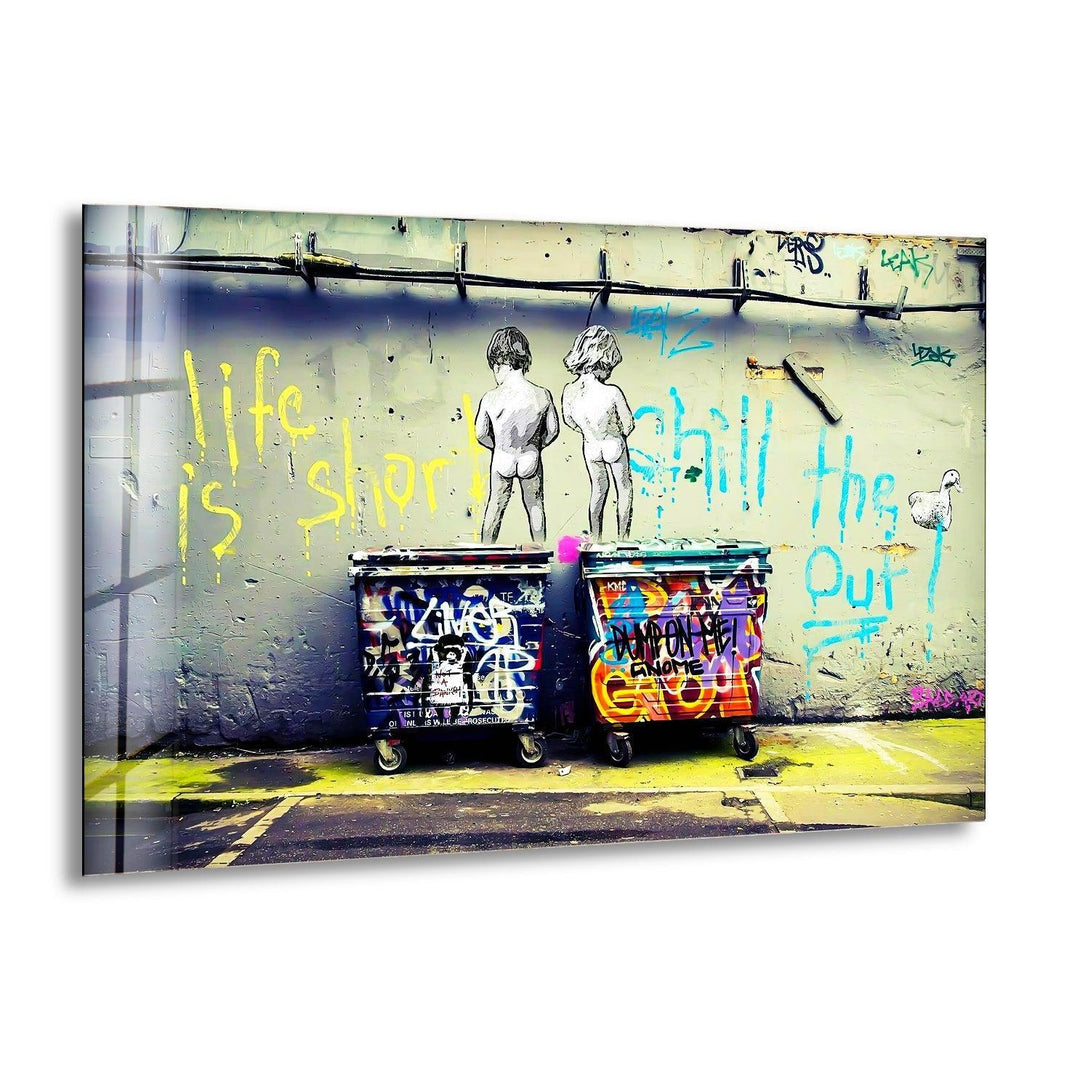
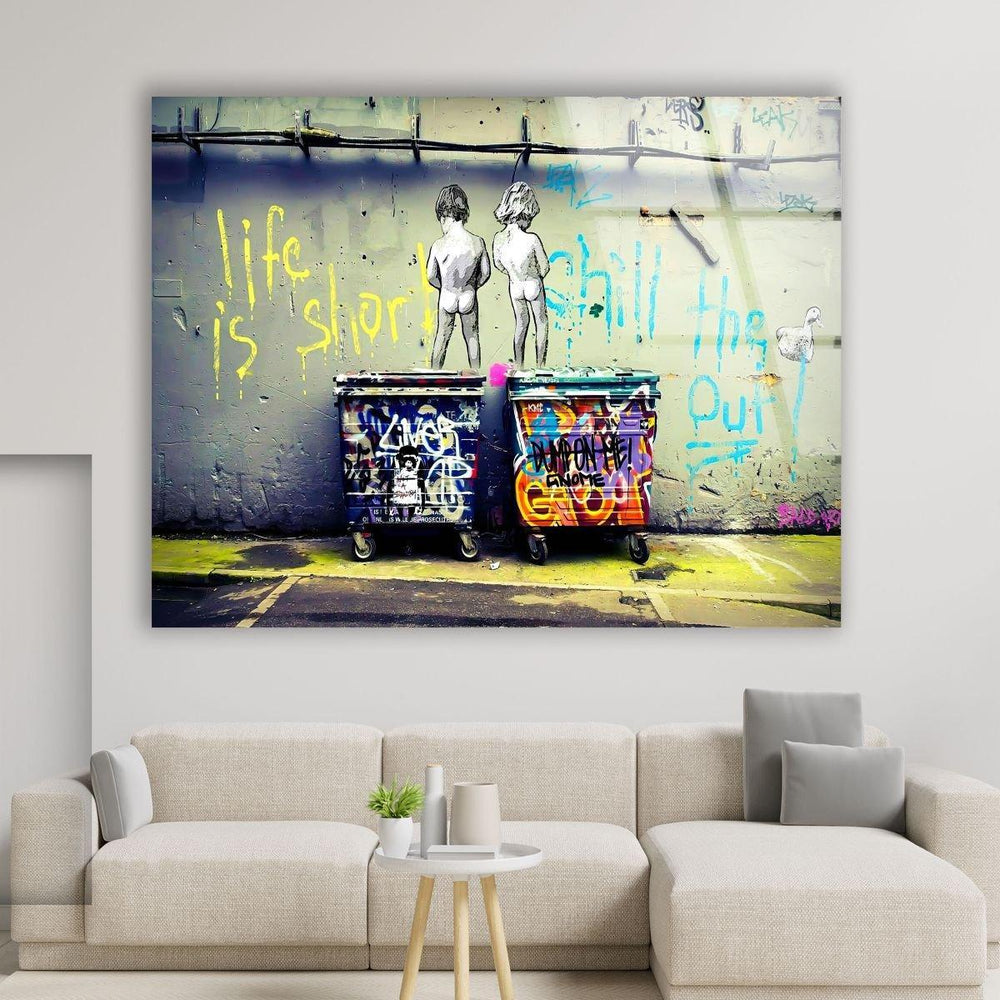
Life is Short, Chill the Duck Out
This piece features the phrase "Life is Short, Chill the Duck Out" in Banksy's characteristic stenciled lettering. The message is straightforward but profound: don't waste your limited time on earth being stressed, angry, or caught up in trivial concerns.
What makes this work particularly appealing for home decor is its motivational quality. Unlike some of Banksy's more politically charged pieces, this one offers a daily reminder to maintain perspective and not sweat the small stuff. It's rebellious in its own way, encouraging viewers to reject the pressure and anxiety of modern life.

Shop Life is Short Glass Wall Art →
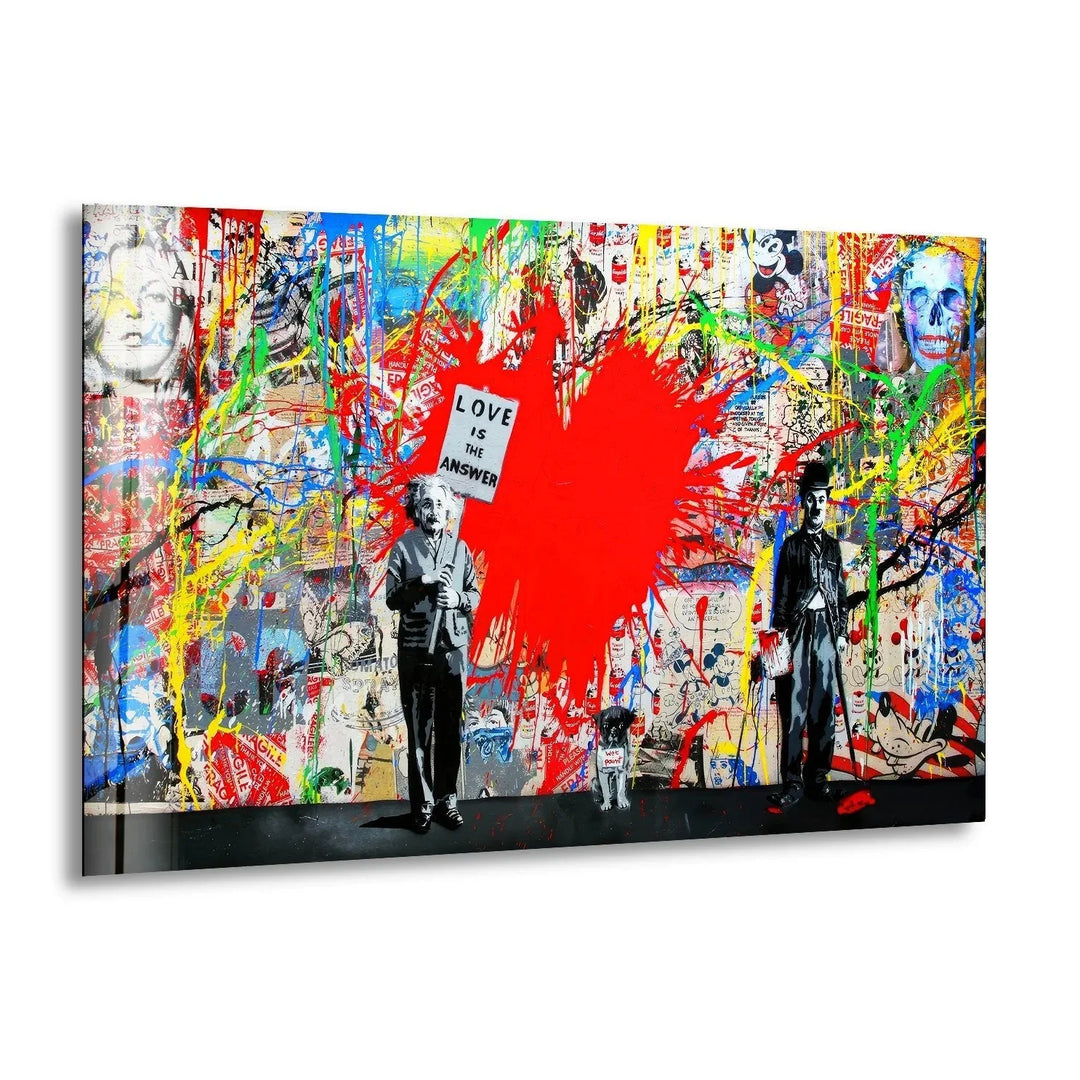
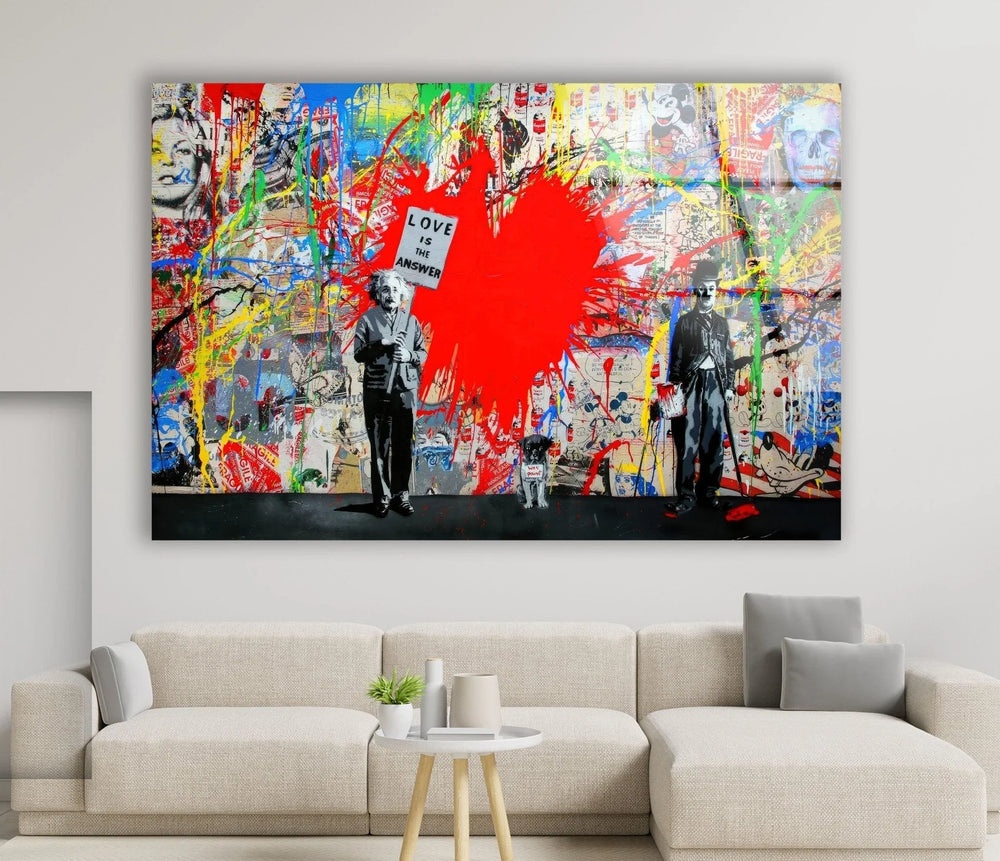
Einstein with "Love is the Answer"
Banksy's portrait of Albert Einstein holding a sign reading "Love is the Answer" combines intellectual authority with a simple, universal message. By putting these words in the mouth (or hands) of one of history's greatest minds, Banksy elevates a sentiment that might otherwise seem trite.
The piece suggests that even the most brilliant scientific mind recognized that human connection and compassion matter more than equations or theories. It's both playful and profound, making it perfect for home offices, studies, or anywhere you want to inspire thoughtful reflection.

Shop Einstein with Love is the Answer Glass Wall Art →
The Monkey Series
Banksy frequently uses primates in his work, often as stand-ins for humans. His monkey pieces range from humorous to thought-provoking. The "DJ Monkey" shows a chimp wearing headphones, lost in music. The "Three Wise Monkeys" offers a twist on the classic "see no evil, hear no evil, speak no evil" motif.
These pieces work beautifully in home settings because they're accessible and engaging without being heavy-handed. They add personality and wit to a space while still carrying Banksy's signature social commentary about human behavior, conformity, and society.

Shop DJ Monkey Hedphones Glass Wall Art →
The Cultural Impact of Banksy
Banksy's influence extends far beyond the art world. He's fundamentally changed how we think about street art, public space, and the relationship between art and commerce.
Before Banksy, graffiti was largely dismissed as vandalism. While street art had its admirers, it wasn't taken seriously by mainstream culture or the art establishment. Banksy helped bridge that gap, proving that art created illegally on public walls could be as meaningful, valuable, and culturally significant as work created in studios and sold in galleries.
His anonymity challenges our celebrity-obsessed culture. In an age where artists often become brands and personalities matter as much as work, Banksy insists that the art should speak for itself. His identity remains unknown not because he's shy but because revealing it would undermine his message and his ability to continue working.
Banksy has also questioned the art market itself. By shredding his own work at auction, creating free public installations, and giving away pieces, he's highlighted the absurdity of art as commodity while simultaneously becoming one of the most commercially successful artists alive. This contradiction is very much intentional.
For a new generation of artists, Banksy proved that you don't need permission, credentials, or gallery representation to make an impact. His success has inspired countless street artists worldwide and helped establish street art as a legitimate and respected art form.
Why Banksy Art Works in Home Decor
Banksy's transition from illegal street art to sought-after home decor might seem contradictory, but several factors make his work ideal for residential spaces.
Timeless Yet Contemporary
Banksy's aesthetic is thoroughly modern, yet his themes are timeless. A piece purchased today won't look dated in five or ten years because the underlying messages about humanity, society, and power remain relevant. The clean, graphic style also ages well, unlike trend-driven decor that quickly feels stale.
Conversation Starter Quality
Banksy art naturally sparks discussion. Guests notice it, recognize it, and want to talk about it. Whether they're admiring the artistry, debating the message, or sharing their own interpretations, Banksy pieces create engagement in a way that purely decorative art often doesn't.
Minimalist Aesthetic
The bold, simple compositions work beautifully in modern interiors. Banksy's predominantly monochrome palette means his pieces coordinate with virtually any color scheme. They provide visual impact without clashing with existing decor, making them remarkably versatile.
Intellectual Depth
Unlike art that's merely "pretty," Banksy's work offers layers of meaning. This depth prevents the pieces from becoming visual wallpaper. You can live with a Banksy for years and still discover new nuances or find fresh relevance as your own life and the world around you change.
Accessible Rebellion
Banksy allows homeowners to express a rebellious, anti-establishment streak in a socially acceptable way. You're not actually spray-painting buildings, but you're aligning yourself with an artist who challenges authority and questions the status quo. It's rebellion that fits comfortably in a living room.
Styling Banksy Art in Your Home
Once you've chosen your Banksy piece, proper styling ensures it makes the maximum impact.
Color Coordination
Banksy's predominantly black and white aesthetic offers tremendous flexibility. These pieces work with virtually any color palette, serving as neutral anchors that tie together bolder colors in your space.
For monochrome or neutral rooms, Banksy art adds visual interest without introducing color chaos. The strong graphics provide the "pop" that all-neutral spaces need to avoid feeling flat.
If your room features bold colors, Banksy's monochrome work provides visual rest. The eye can appreciate the colorful elements of your space, then return to the calm simplicity of the black and white art.
Some Banksy pieces include selective color, like the red balloon in "Girl with Balloon." These accent colors can be echoed in throw pillows, rugs, or other accessories to create cohesion.
Glass Wall Art Advantages
Our Banksy collection features glass wall art, which offers specific benefits for these iconic designs. Glass printing delivers exceptional color depth and contrast, making the blacks truly black and the whites crisp and clean. This clarity is crucial for Banksy's graphic style.
Glass is also incredibly durable. Unlike canvas that can sag or fade, glass maintains its appearance for years. The smooth surface resists dust and cleans easily with a damp cloth, making it ideal for high-traffic areas or homes with children and pets.
The frameless, modern aesthetic of glass wall art complements Banksy's street art origins. There's a rawness and immediacy to the presentation that feels authentic to the artist's guerrilla approach.
Lighting Considerations
Proper lighting transforms good wall art into great wall art. For Banksy pieces, consider these approaches:
Spotlights or picture lights create drama and draw attention to the artwork. Position them to avoid glare on the glass surface. Angled from above works well.
Natural light can be beautiful but watch for direct sunlight, which can create glare. If your Banksy piece will receive direct sun, consider window treatments that diffuse the light during peak hours.
Ambient lighting from table or floor lamps can highlight nearby Banksy art while creating a warm, inviting atmosphere. This works particularly well in living rooms and bedrooms.
Complementary Decor
Banksy art pairs beautifully with industrial and urban design elements. Exposed brick, concrete, metal fixtures, and raw wood complement the street art aesthetic. However, don't feel limited to industrial style. Banksy's work is versatile enough to enhance minimalist, modern, eclectic, and even traditional spaces.
Keep surrounding decor relatively simple. Banksy's bold graphics make a statement on their own and don't need to compete with busy patterns or excessive decoration. Let the art be the focal point.
Our Banksy Glass Wall Art Collection
Our curated collection features 50+ iconic Banksy designs, each available in multiple sizes and formats to suit any space and budget.

Size Options:
- Small formats: 10" round, 12"x12" square (starting at $69.99)
- Medium formats: 20"x14" to 30"x30" ($99.99 to $294.99)
- Large formats: 40"x40" to 70"x43" ($294.99 to $649.99)
Format Choices:
- Horizontal pieces for above sofas, beds, and consoles
- Square pieces for balanced, modern presentations
- Round pieces for unique, eye-catching displays
Every piece in our collection is printed on premium glass using advanced UV printing technology. This ensures vibrant, accurate colors that won't fade over time. The glass surface is easy to clean and maintain, and the frameless presentation gives each piece a modern, gallery-quality appearance.
Explore our complete Banksy Wall Art collection →
Bringing Banksy Home
Banksy's journey from anonymous vandal to cultural icon is remarkable, but perhaps even more interesting is how his rebellious street art has found a comfortable home in living rooms, offices, and bedrooms worldwide.
This isn't a contradiction. Banksy's work has always been about accessibility and communication. He creates art in public spaces specifically so everyone can experience it, not just gallery-goers or collectors. Bringing his imagery into your home continues that democratic spirit.
When you hang Banksy-inspired art in your space, you're not just decorating. You're making a statement about your values, your sense of humor, and your willingness to question the status quo. You're choosing art with meaning over art that simply matches your sofa.

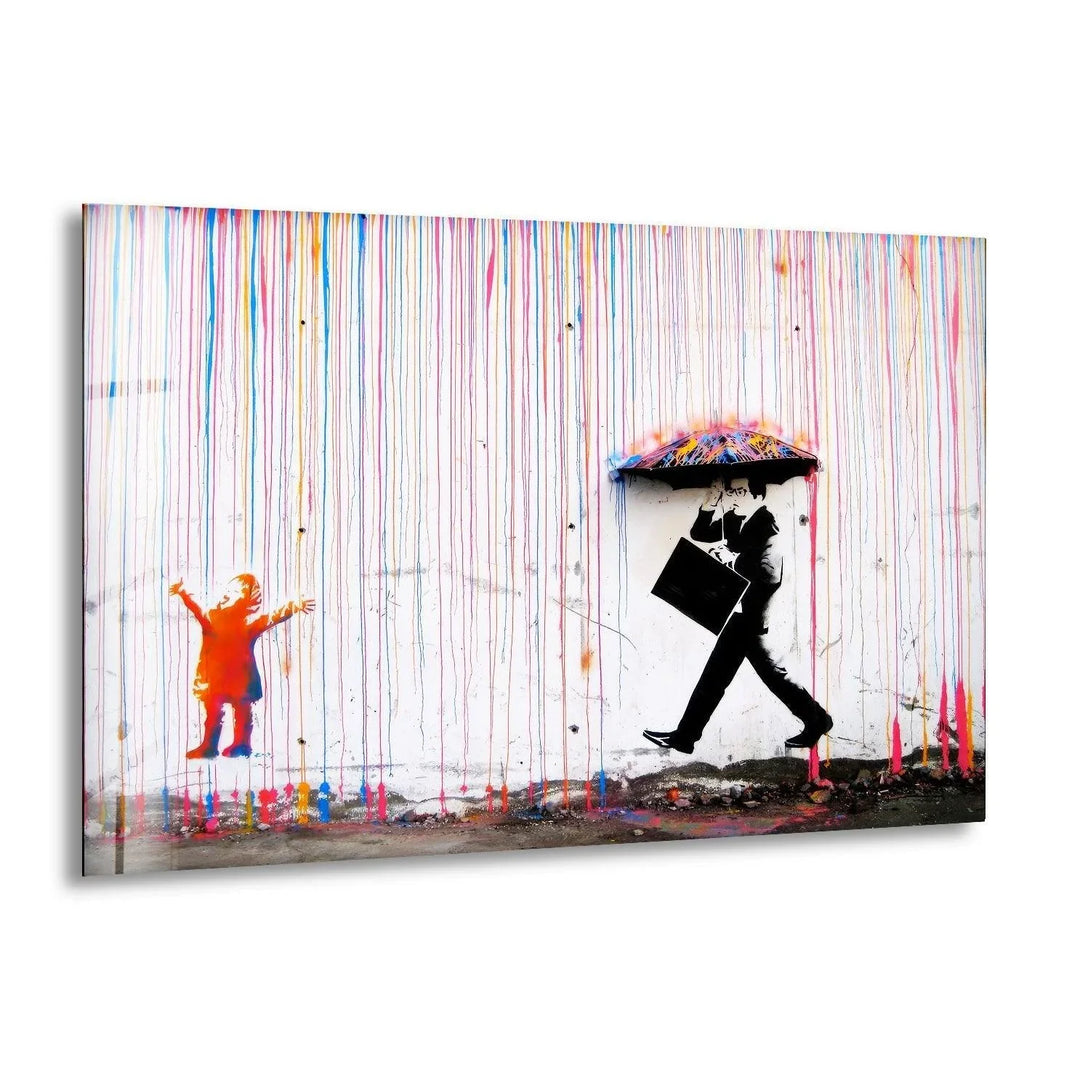
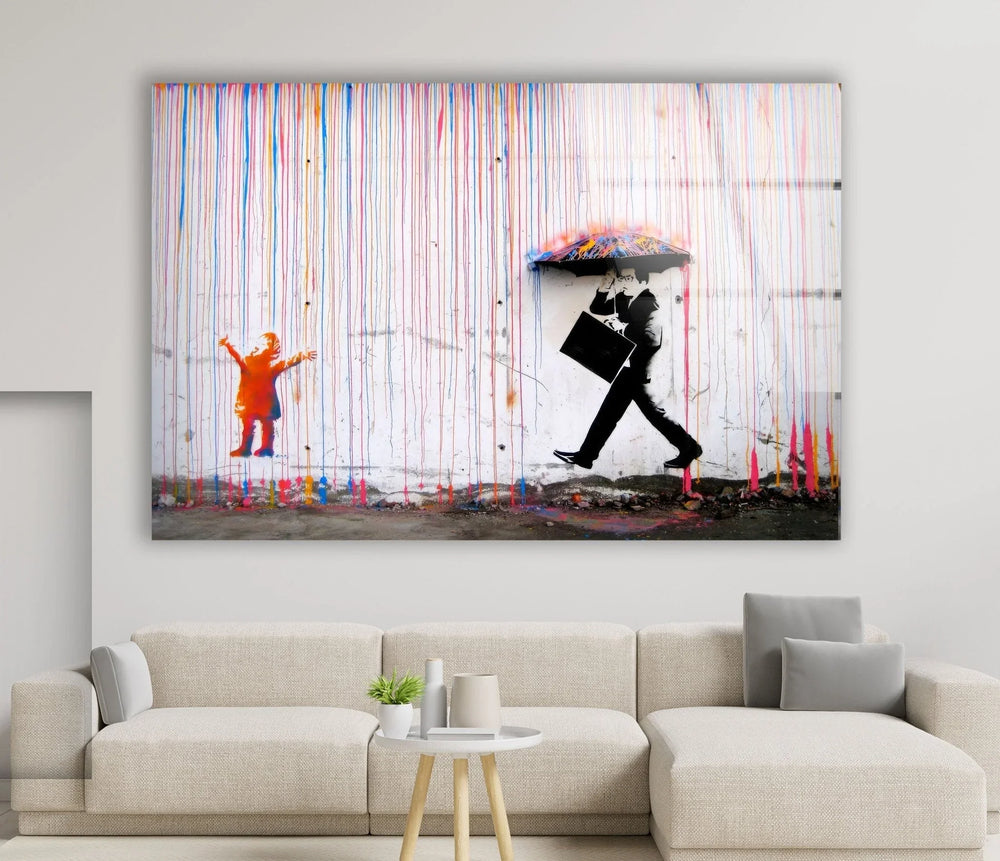
Shop Umbrella Man Glass Wall Art →
Whether you're drawn to the hope in "Girl with Balloon," the peaceful rebellion of "Flower Thrower," or the straightforward wisdom of "Life is Short," there's a Banksy piece that speaks to you. And unlike the street pieces that might be painted over or removed at any time, the art in your home is yours to enjoy for as long as you choose.