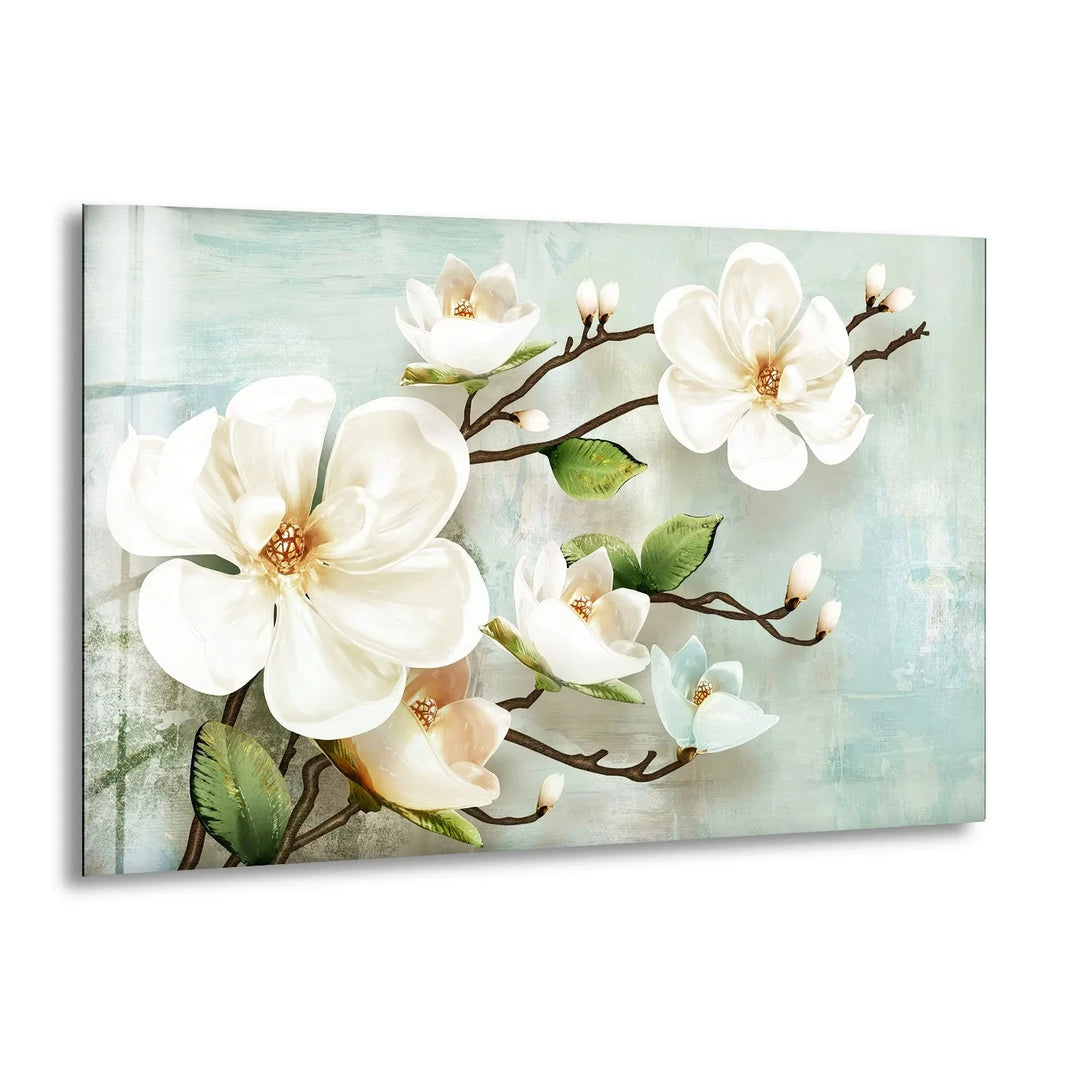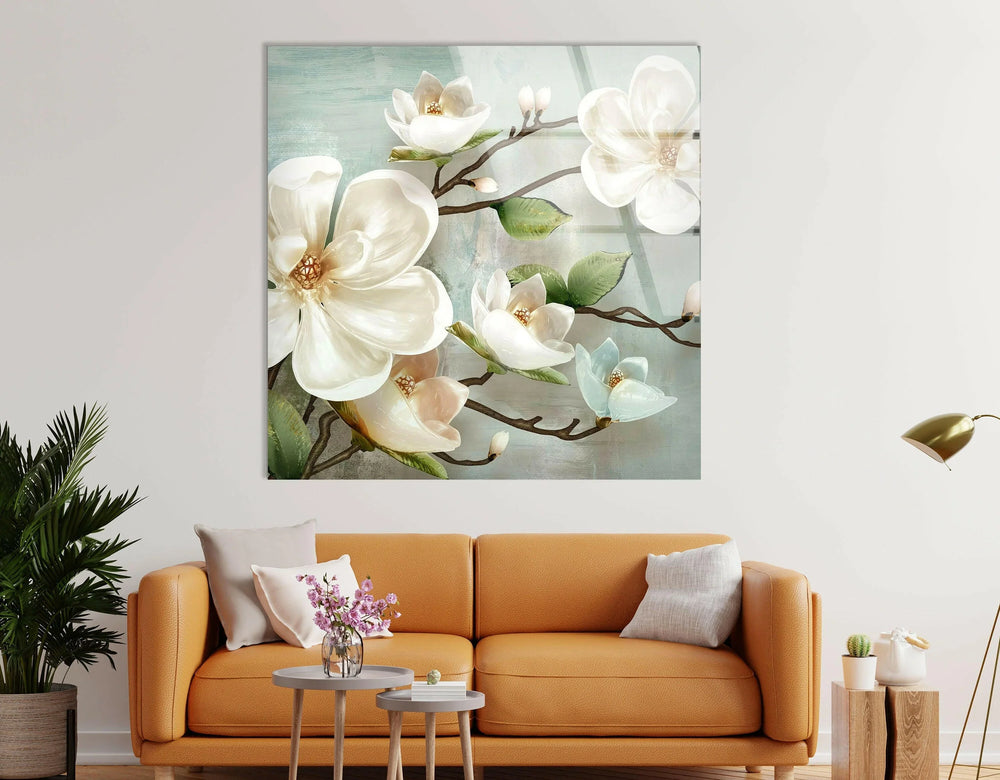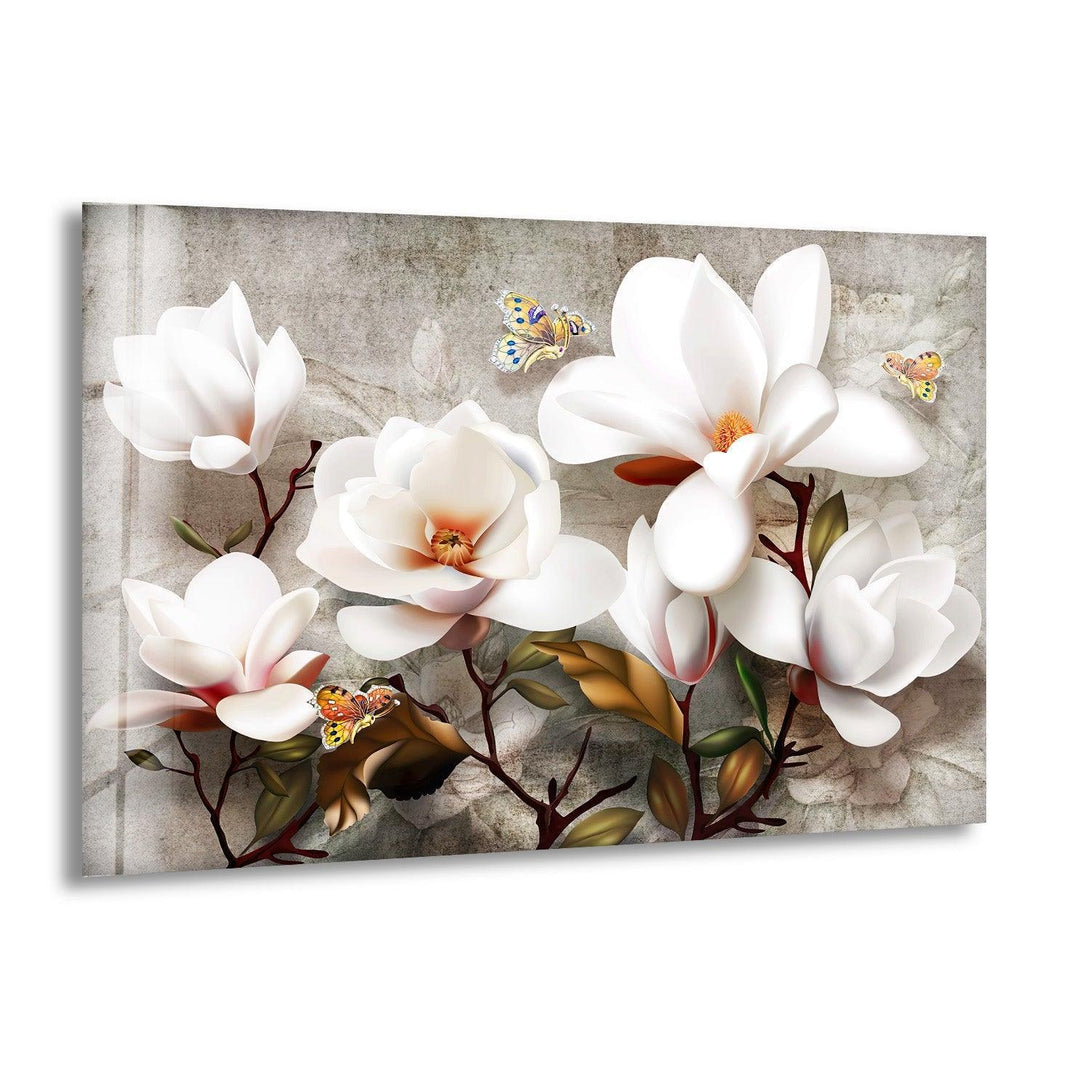


L'effet du soir : l'encadrement architectural de l'art du magnolia
L'architecture physique d'un cadre profond influence la manière dont l'art botanique ancre la psychologie humaine et réduit le stress dans des environnements peu éclairés (moins de 20 lux) . Un cadre sur mesure de 5 cm (2 pouces) exerce son plus grand impact psychologique bien après le crépuscule. L'encadrement standard part du principe erroné qu'il met uniquement en valeur une lithographie botanique sur papier coton d'archivage de 300 g/m² en plein jour, alors que l'architecture physique d'un cadre détermine en réalité comment l'œuvre d'art structure une pièce dans l'obscurité. Une moulure profonde en noyer réduit activement les réponses au stress dans les environnements peu éclairés en créant une limite à fort contraste. Dans les galeries comme la Tate Modern, juste avant la fermeture, les visiteurs s'attardent, ignorant les comptoirs de vente, à photographier les ombres profondes qui se dessinent sur le bord d'une moulure en bois brut. Cette réaction physiologique est une réalité mesurable. Des recherches en psychologie environnementale publiées dans le Journal of Interior Design démontrent de façon constante qu'un seuil de 45 % de couverture de surface en bois dans une pièce réduit l'activation du système nerveux sympathique. Cela diminue activement la pression artérielle diastolique de 4 à 6 mmHg. Un cadre massif et profond en chêne blanc certifié FSC entoure pièces murales à thème magnolia offre un point d'ancrage structurel et tactile que les yeux humains recherchent désespérément lorsque la lumière ambiante de la pièce tombe à 20 lux.
Mesurer le vide
Pour éviter la fatigue cognitive lorsque la lumière de la pièce faiblit, le passe-partout en chiffon de coton Bainbridge à quatre plis doit être exactement 1, 618 fois plus large que la face visible du cadre en bois. Les principes d'encadrement établis stipulent que le nombre d'or définit la hiérarchie structurelle entre la moulure en bois, le passe-partout en coton et l'illustration intérieure de magnolia de Pierre-Joseph Redouté. Associer une face en chêne blanc scié à plat de 3, 8 cm (1, 5 pouce) à un passe-partout en chiffon de coton de même largeur crée un effet de cible concentrique perturbant. Dans la faible lumière d'un bureau en soirée éclairé par une ampoule Edison de 40 watts, l'œil humain ne parvient pas à établir une hiérarchie de mise au point entre ces bandes égales. Cette confusion visuelle induit un stress autonome immédiat. Les micro-ajustements des muscles oculaires neutralisent la restauration parasympathique apportée par le sujet du Magnolia grandiflora. Calculer une transition nette et apaisante nécessite d'associer ce même cadre de 3, 8 cm (1, 5 pouce) à une bordure de passe-partout de 6, 1 cm (2, 4 pouces) .
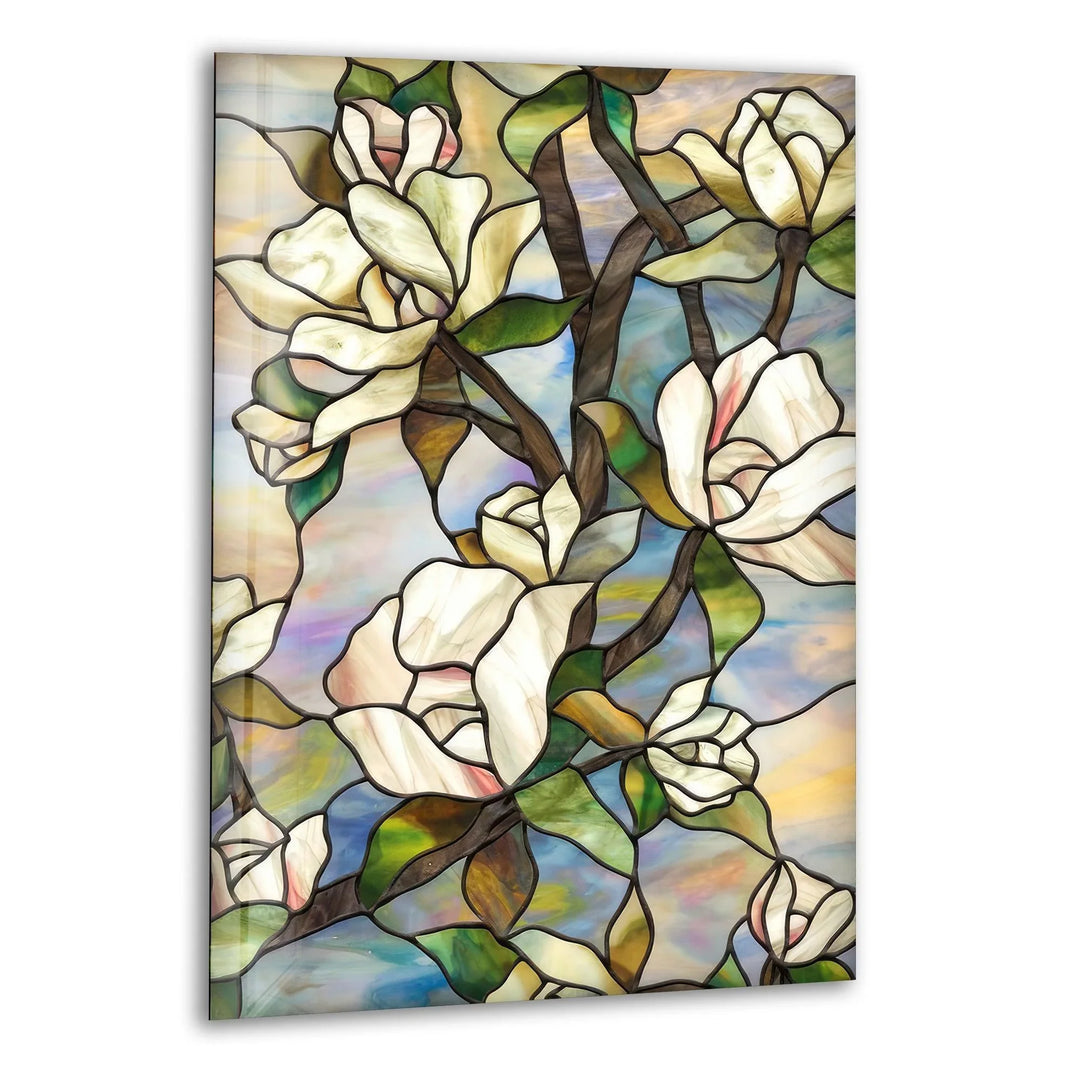
La composition verticale de toile Magnolia Sérénité Il est nécessaire de lester délibérément la partie inférieure du passe-partout pour contrer l'illusion d'optique de la gravité. Puisque le spectateur perçoit automatiquement le centre optique d'une œuvre 10 % plus haut que sa réalité géométrique, des bordures égales donnent l'impression que la toile glisse vers le bas sous la douce lumière d'une lampe de lecture à incandescence de 2700 K. Conservez des bordures supérieures et latérales de 6, 35 cm (2, 5 pouces) et multipliez cette mesure par 1, 618 pour obtenir une bordure inférieure de 10, 16 cm (4 pouces) . Pour une impression florale Giclée de 20 x 25, 4 cm (8 x 10 pouces) , l'ouverture totale idéale du cadre est de 834 cm² (130 pouces carrés) . La texture blanche titane des fleurs, d'une netteté remarquable, s'ancre visuellement dans cet espace inférieur élargi. Cet ancrage mathématique instaure une profonde impression de sécurité visuelle.

Pourquoi les boîtes d'ombre sont plus performantes que les passe-partout traditionnels
Les cadres caissons de 7, 6 cm d'épaisseur, sans passe-partout et profondément encastrés, offrent des bienfaits biophiliques bien supérieurs aux passe-partout classiques en papier alpha-cellulose, en assurant un contact direct avec le chêne blanc brut des Appalaches. Les principes de design conventionnels exigent que les tirages Giclée d'archivage soient réalisés avec de larges passe-partout en papier neutre et sans acide afin de créer l'espace nécessaire à la respiration de l'œuvre. Le passe-partout traditionnel agit comme une barrière académique, encadrant la nature comme un spécimen soigneusement sélectionné, destiné à être observé à distance. En supprimant complètement le passe-partout et en faisant flotter la toile au cœur d'un caisson caisson de 7, 6 cm d'épaisseur, non verni, on obtient des résultats physiologiques supérieurs. Cette configuration structurelle précise imite directement les conditions spatiales de Refuge et de Perspective décrites dans les principes de design biophilique de Stephen Kellert. La structure organique et à grain ouvert du bois encadre l'œuvre d'art comme une profonde fenêtre architecturale. Lorsque la lumière du jour décline, la profondeur physique d'une boîte d'ombre de 3 pouces détermine la façon dont l'œuvre ancre la psychologie humaine, captant les ombres ambiantes de 20 lux pour abaisser activement le rythme cardiaque et offrir une intense richesse sensorielle.
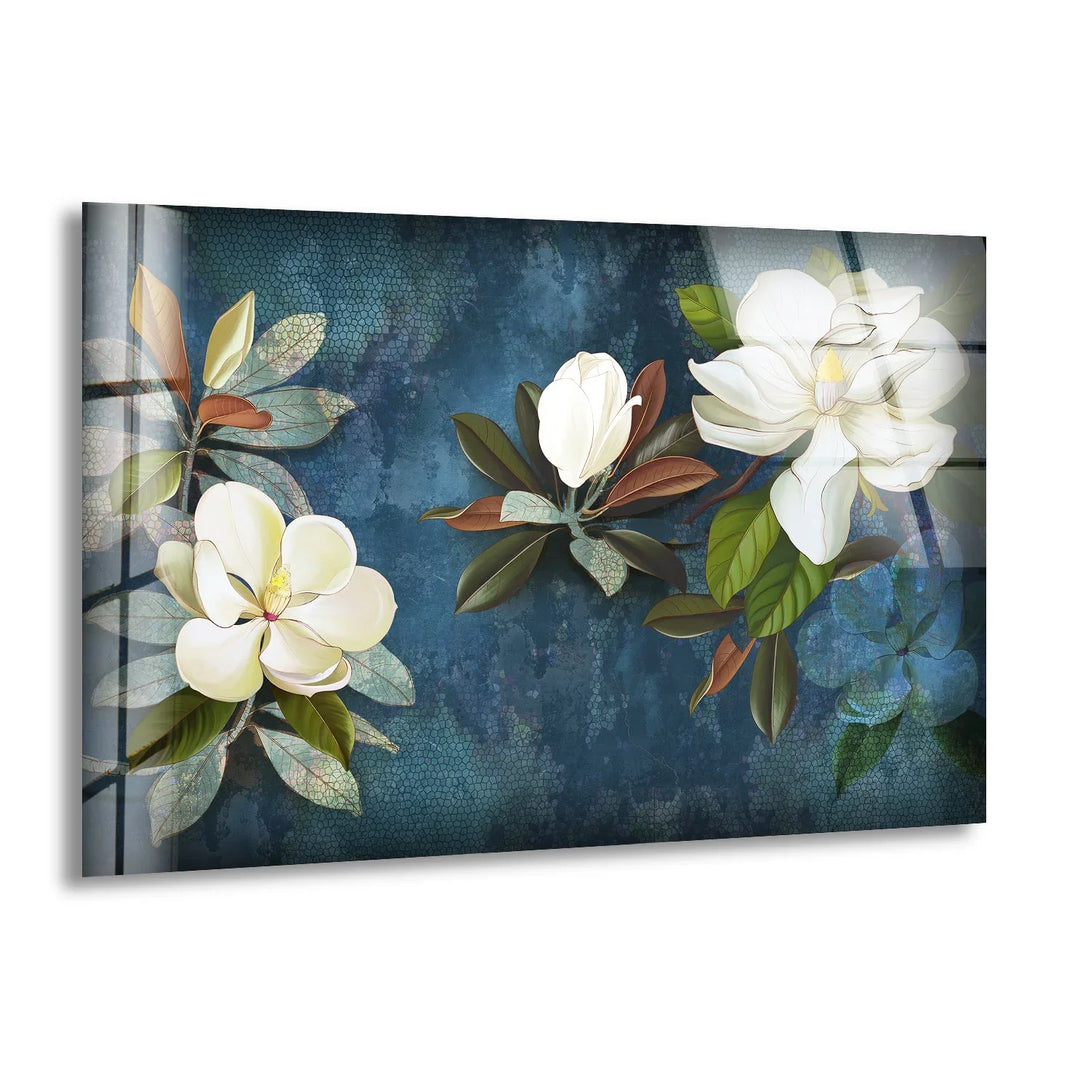
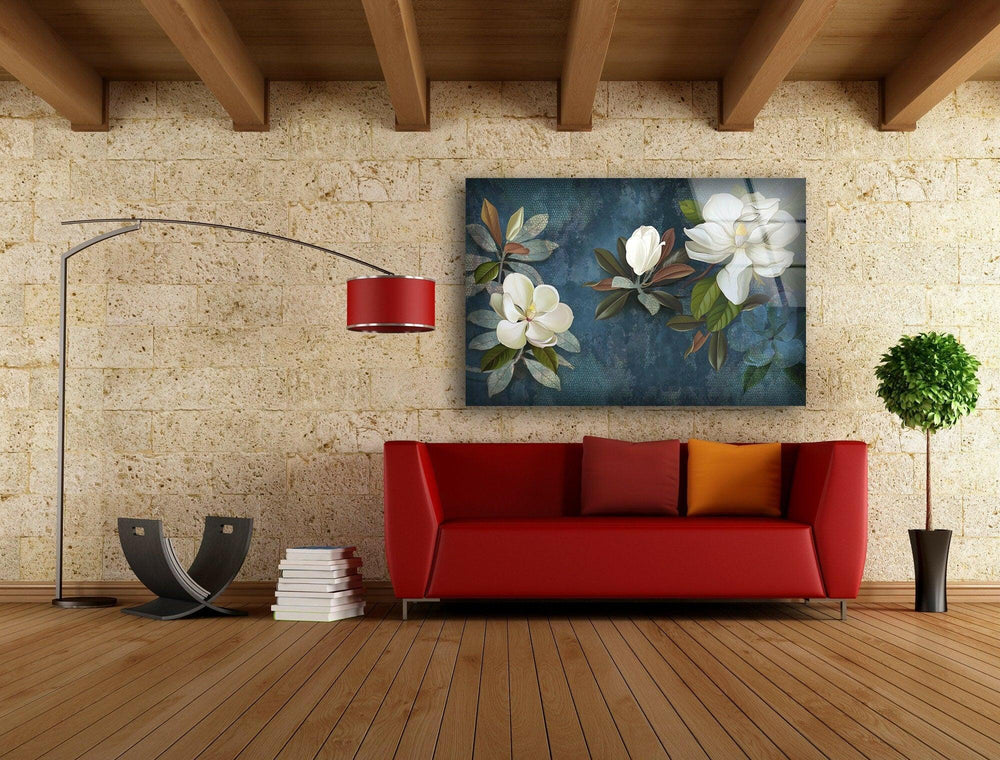
La profondeur architecturale de la boîte d'ombre empêche les reflets de gâcher l'expérience visuelle nocturne. Pièce en verre 3D Magnolia BlancLe verre brillant classique réfléchit directement la lumière incandescente de la pièce vers le spectateur. Les reflets intenses créent une barrière physique, rompant le contact visuel avec le sujet, le Magnolia stellata, en rappelant constamment au cerveau la présence de la vitre en acrylique synthétique. L'encastrement des éléments floraux tridimensionnels derrière une vitre en acrylique Tru Vue Optium de qualité muséale préserve l'aspect mat et organique de l'impression. Le réalisme tactile est ainsi préservé. Les ombres marquées projetées par le relief en résine 3D se déplacent de manière dynamique lorsque l'on passe devant l'œuvre sous la faible lumière du couloir (2700 K) , créant ainsi une interaction vivante et changeante avec l'environnement. Un test d'angle du cadre à l'aide d'une lampe torche de 300 lumens avant la fixation définitive permet d'éliminer tout reflet.

Couleur architecturale sous lumière tungstène
Les réponses conductrices cutanées non spécifiques, qui traquent les pensées stressantes inconscientes, diminuent de plus de 50 % dans les espaces intégrant du noyer brésilien naturel et des tons métalliques chauds. L'interaction entre l'éclairage nocturne et les textures florales dorées métallisées détermine la chaleur ambiante de la pièce. Des recherches en psychologie environnementale menées à l'Université du Texas montrent que les réponses autonomes au stress des sujets se trouvant dans des pièces aux matériaux naturels et chaleureux diminuent significativement. Les accents de feuille d'or 24 carats dans le Fleurs de magnolia doré Tableau Peinture à l’huile Au-delà de son attrait esthétique, cette œuvre remplit une fonction psychologique précise. La texture épaisse à l'huile, réalisée en empâtement, capte la lumière rasante et latérale d'un lampadaire Torchiere de 60 watts, diffusant une douce chaleur ambrée dans l'espace. Un cadre en dibond d'aluminium mat, finition laiton foncé, renforce cette illusion thermique, encadrant la toile réfléchissante dans une enveloppe rigide absorbant la lumière.

Le grain épais du chêne des Appalaches capte la faible lumière du couloir, projetant de longues ombres fragmentées qui rendent la pièce silencieuse instantanément plus chaleureuse, plus dense et beaucoup plus ancrée.
L'architecture physique d'un cadre profond détermine comment l'art botanique influence la psychologie humaine et réduit le stress longtemps après le coucher du soleil. Vous ressentez viscéralement cette stabilisation du système nerveux autonome lorsque vous vous trouvez dans un espace résidentiel éclairé artificiellement. En choisissant des proportions mathématiques précises, telles que la suite de Fibonacci, et en éliminant les barrières synthétiques brillantes, vous transformez une simple cloison en plaques de plâtre en un élément architectural actif. Une sélection soignée de caissons encastrés et de finitions acryliques mates Tru Vue garantit que votre espace conserve ses propriétés apaisantes, même aux heures les plus sombres. Pour découvrir comment ces choix de matériaux précis redéfinissent un environnement peu éclairé, consultez les configurations de cadres disponibles. décoration murale magnolia collection.