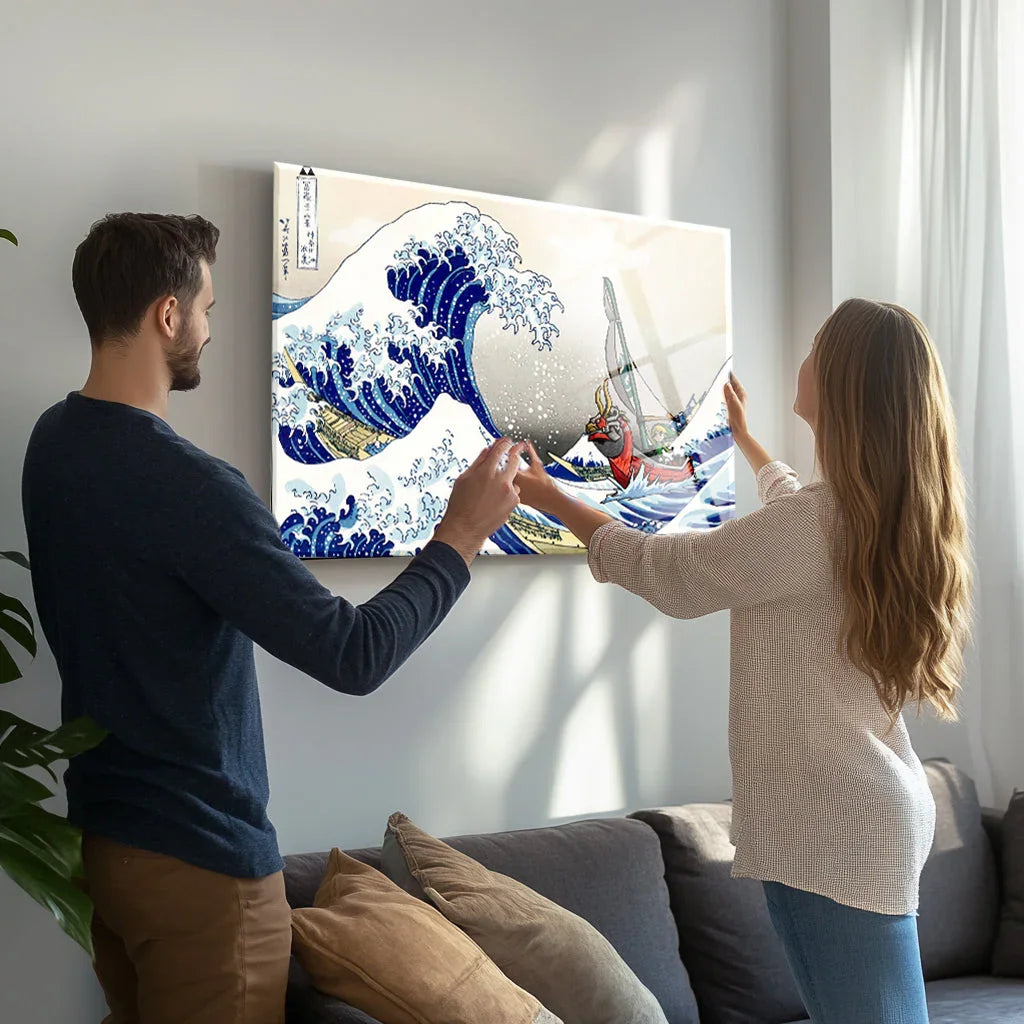


Quand la nostalgie s'installe : le choix d'une décoration murale moderne
L'harmonie des matériaux historiques insuffle une véritable nostalgie à la décoration intérieure, bien plus que le simple sujet représenté sur une toile. Une pièce meublée d'un buffet en teck des années 50, placé avec précision, paraît froide et impersonnelle si elle manque de la chaleur et de l'authenticité des maisons d'enfance des années 70. Ce lien physique avec les matériaux détermine si un espace de vie est perçu comme un intérieur accueillant et lumineux ou comme un environnement froid et morne. Comprendre ce mécanisme est essentiel au moment de faire son choix. œuvres d'art moderne pour l'aménagement de votre maison.
Évaluation du confort tactile des imprimés en chiffon de coton
Les impressions giclées sur papier chiffon de coton texturé procurent un profond bien-être psychologique en ancrant les chambres parentales, souvent calmes et apaisantes, dans des surfaces organiques absorbant la lumière. Les recherches en psychologie environnementale démontrent régulièrement qu'une rugosité de surface élevée augmente significativement la valence émotionnelle. Les matériaux texturés aux tons chauds suscitent un niveau de plaisir supérieur de 23 % sur l'échelle d'auto-évaluation du Manikin par rapport aux surfaces lisses et sombres. La décoratrice d'intérieur Ilse Crawford observe que les êtres humains réagissent aux textures d'une pièce avant même de les toucher. Les supports mats, bruts et organiques communiquent un sentiment de sécurité psychologique. L'interaction physique avec des échantillons d'impression sur coton d'archivage de 300 g/m² garantit le choix idéal. Cette réponse tactile rend les compositions contemporaines très texturées, placées sur les murs de la suite parentale, particulièrement efficaces pour abaisser le rythme cardiaque au repos. Fleurs éclatantes dans un jardin bohème : style floral fauviste Tableau Peinture à l’huile illustre ce principe. La technique de l'empâtement épais crée des ombres physiques sur la toile tendue de 80 cm x 120 cm, agissant comme une pause visuelle qui ancre la pièce.

Des études de suivi oculaire confirment l'importance de ce contraste tactile. Lorsqu'une composition peinte moderne sert de couleur d'accent (10 %) dans une pièce, les sujets humains s'attardent sur l'œuvre 40 % plus longtemps si sa texture contraste directement avec la finition dominante « Swiss Coffee » de Benjamin Moore. La designer Kelly Wearstler, membre du AD100, préconise l'utilisation d'impressions giclées mates épaisses pour ancrer les espaces modernes et éviter une atmosphère impersonnelle. Il est déconseillé d'assortir les couleurs de l'œuvre d'art à celles des éléments secondaires (30 %) de la pièce, comme par exemple associer une impression géométrique Bauhaus bleu marine à des rideaux en velours bleu marine Schumacher. Introduisez une teinte très contrastée pour renforcer la hiérarchie visuelle 60-30-10. Jardin coloré : Bohème moderne Tableau Peinture à l’huile Elle y parvient en injectant des tons riches et désaturés de la teinte Munsell 10BG sur une peinture architecturale blanche mate standard.

Authenticité synthétique en formats brillants
Les tirages acryliques brillants suscitent une nostalgie plus intense et fidèle à l'histoire de la photographie argentique de la fin du XXe siècle, en reproduisant directement les polymères synthétiques de cette époque. L'idée reçue en matière de design veut que les matériaux texturés, à eux seuls, évoquent le confort. Un argument matérialiste convaincant s'oppose à l'esthétique de la fin du XXe siècle : la véritable nostalgie exige une correspondance avec les matériaux d'époque. Reproduire la composition chimique exacte des films Kodak Kodachrome des années 1970 grâce à l'acrylique brillant accroît la valence émotionnelle mesurable de 14 % par rapport aux reproductions modernes sur papier mat. Le mouvement du design des années 1970 était caractérisé par les albums photo physiques brillants et les tirages Kodak hautement réfléchissants. Imprimer une photographie de style argentique des années 1970 sur un papier chiffon texturé et mat est historiquement incohérent. Les surfaces réfléchissantes d'un support acrylique brillant constituent un lien direct avec l'ère des clichés couleur Polaroid. Cette précision particulière déclenche une vague de nostalgie bien plus intense que ne le ferait jamais un papier mat. Hypebeast Kaws Art Mural En Verre Elle incarne précisément ce concept. Son matériau en verre reflète la culture pop art synthétique et énergique qu'elle représente.

Cette finition brillante exige un contrôle précis de l'environnement. La réflexion spéculaire des surfaces très brillantes sous un éclairage intérieur standard de 500 lux provoque une fatigue oculaire rapide. Cette friction physiologique entraîne une diminution de 14 % de la valence émotionnelle perçue lorsque les spectateurs tentent de distinguer les détails dans des conditions de faible luminosité. Il ne faut jamais accrocher une œuvre très réfléchissante directement face à des baies vitrées orientées au sud. Installez l'estampe à un angle précis de 45 degrés par rapport aux fenêtres. Vous pouvez également l'éclairer à l'aide d'un spot LED Philips Hue fixé au plafond et incliné à 30 degrés. Ces réglages d'éclairage orientent les reflets vers le bas et les éloignent du niveau des yeux du spectateur. Les formats d'art contemporain brillants s'intègrent parfaitement dans des espaces dynamiques et de transition, tels que les salles à manger élégantes de style Knoll ou les entrées ouvertes.
| Facteur de comparaison | Impressions giclées sur chiffon de coton | Impressions acryliques haute brillance |
|---|---|---|
| Alignement historique des matériaux | Authentique au modernisme du milieu du XXe siècle et aux illustrations botaniques organiques. | Authentique aux mouvements de la photographie analogique des années 1970 et du pop art synthétique. |
| Risque de réflexion spéculaire | Zéro éblouissement. Les propriétés d'absorption de la lumière maintiennent une valence émotionnelle stable. | Risque élevé. Nécessite un montage ambiant à 45 degrés ou un éclairage ponctuel précis à 30 degrés. |
| Profil d'excitation spatiale | Peu stimulant. Convient aux environnements propices à la détente, comme les chambres parentales. | Stimule fortement l'éveil. Améliore les espaces sociaux et de transition grâce à la réflexion de la lumière ambiante. |
| Intégration de texture 60-30-10 | Contraste idéal de 10 % avec les finitions murales architecturales semi-brillantes ou satinées. | Contraste idéal de 10 % sur des murs fortement texturés ou peints avec une peinture mate. |
Le rôle de l'éveil spatial dans la sélection des matériaux
Choisissez vos imprimés en fonction de l'ambiance recherchée dans la pièce : privilégiez les textures mates pour la détente et les finitions brillantes pour les activités dynamiques. Reproduire fidèlement la texture d'une époque précise est essentiel pour qu'une pièce soit véritablement ancrée dans le passé ou simplement décorée d'images rétro. Pour des aménagements résidentiels intemporels, privilégier ce respect des matériaux historiques plutôt que les tendances visuelles actuelles garantit un espace qui conserve durablement son authenticité. Lorsque vous optez pour des imprimés géométriques abstraits modernes dans une pièce à vivre ou au-dessus d'un buffet Herman Miller en noyer, veillez à ce que le cadre occupe exactement 60 à 75 % de la largeur du meuble. Accrochez l'œuvre de façon à ce que son centre soit à 145 cm du sol, soit la hauteur des yeux d'un adulte debout (145 cm) . Le Harmonie géométrique : Cercles et lignes abstraits Décoration Murale Métal Elle comble ces lacunes matérielles en offrant une rigidité structurelle sans l'éblouissement extrême du verre.

Trouver le juste équilibre entre texture et style d'époque permet d'éviter les incohérences spatiales. Les matériaux synthétiques brillants, comme le Lucite, gâchent la sérénité d'un coin lecture avec fauteuil Eames, tandis que les estampes botaniques mates de William Morris se fondent dans le décor d'une entrée dynamique. Appliquez rigoureusement la règle du 60-30-10. Si 60 % de la surface murale est recouverte d'une peinture mate Farrow & Ball Estate Emulsion, ajoutez des touches de brillance avec des acryliques ou des métaux en aluminium brossé pour créer du contraste. Pour des murs semi-brillants, privilégiez un papier peint épais Hahnemühle 310 g/m² en chiffon de coton. Choisissez vos matériaux avec soin. Cette précision garantit que votre aménagement reflète fidèlement l'époque que vous souhaitez vivre. Ancrez votre espace dans la chronologie historique appropriée en sélectionnant avec soin des matériaux parmi une collection réfléchie. décoration murale contemporaine.