

When Humidity Spikes: The Bathroom Surreal Wall Art Decision
In an environment dominated by non-porous Daltile ceramic subway tiles and glass shower doors, the mathematically correct choice of an impervious metal or tempered glass print amplifies clinical coldness, making a structurally reinforced, vulnerable 300gsm archival cotton matte canvas the superior choice for acoustic and visual warmth. A standard residential walk-in shower system spikes ambient relative humidity from a baseline of 40 percent to a saturated 100 percent in exactly fifteen minutes. That sudden influx of atmospheric water vapor forces a highly specific architectural decision. It demands precision. You choose how to display surrealist compositions in a hyper-humid microclimate. Two identical washrooms contain identical Kohler fixtures and identical Carrara marble vanities. One feels like a sterile wet room. The other feels like a curated Baden-Baden European bathhouse. This dividing line rests on the physical composition of the wall decor.
Understanding the Mechanics of Dye-Sublimation and Glass
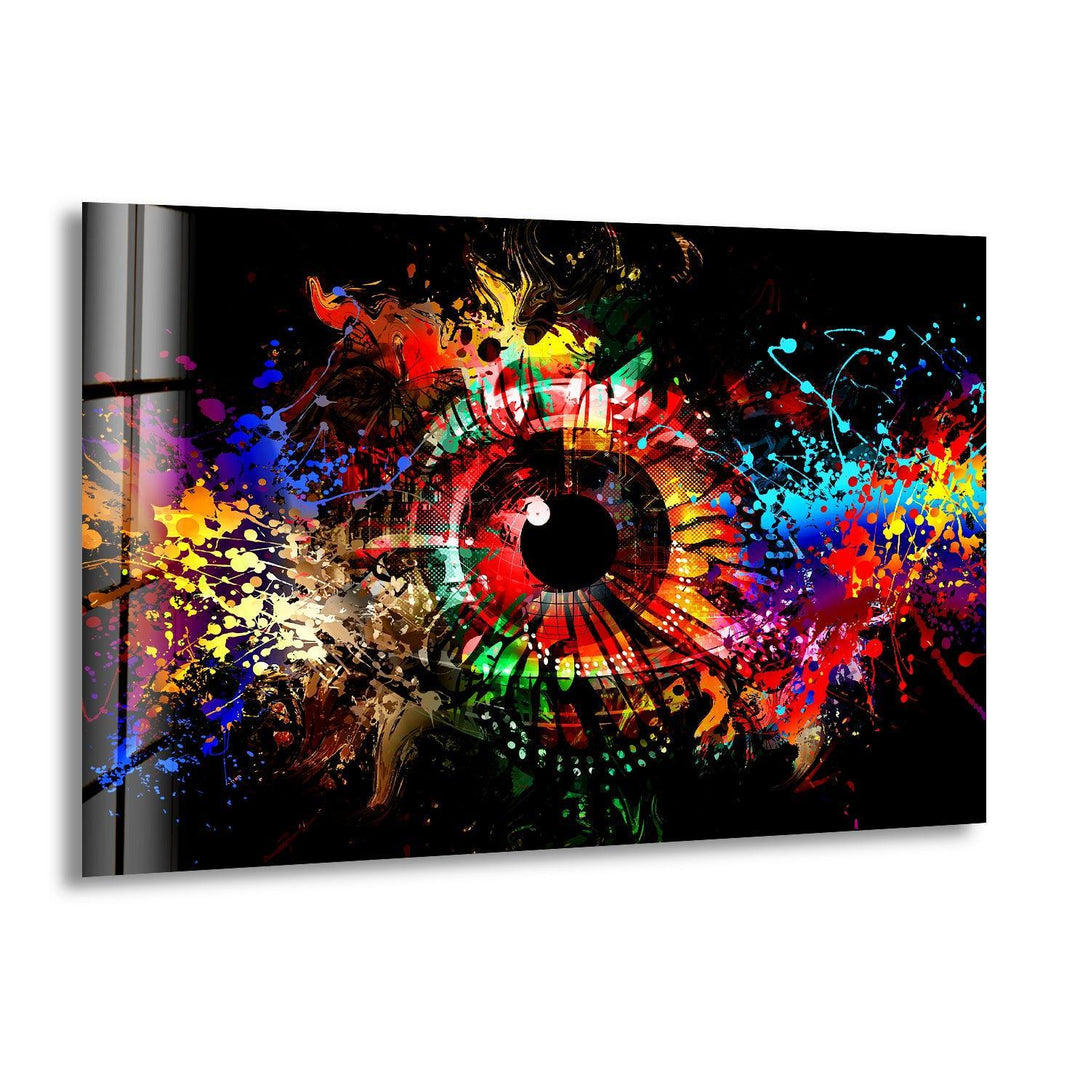
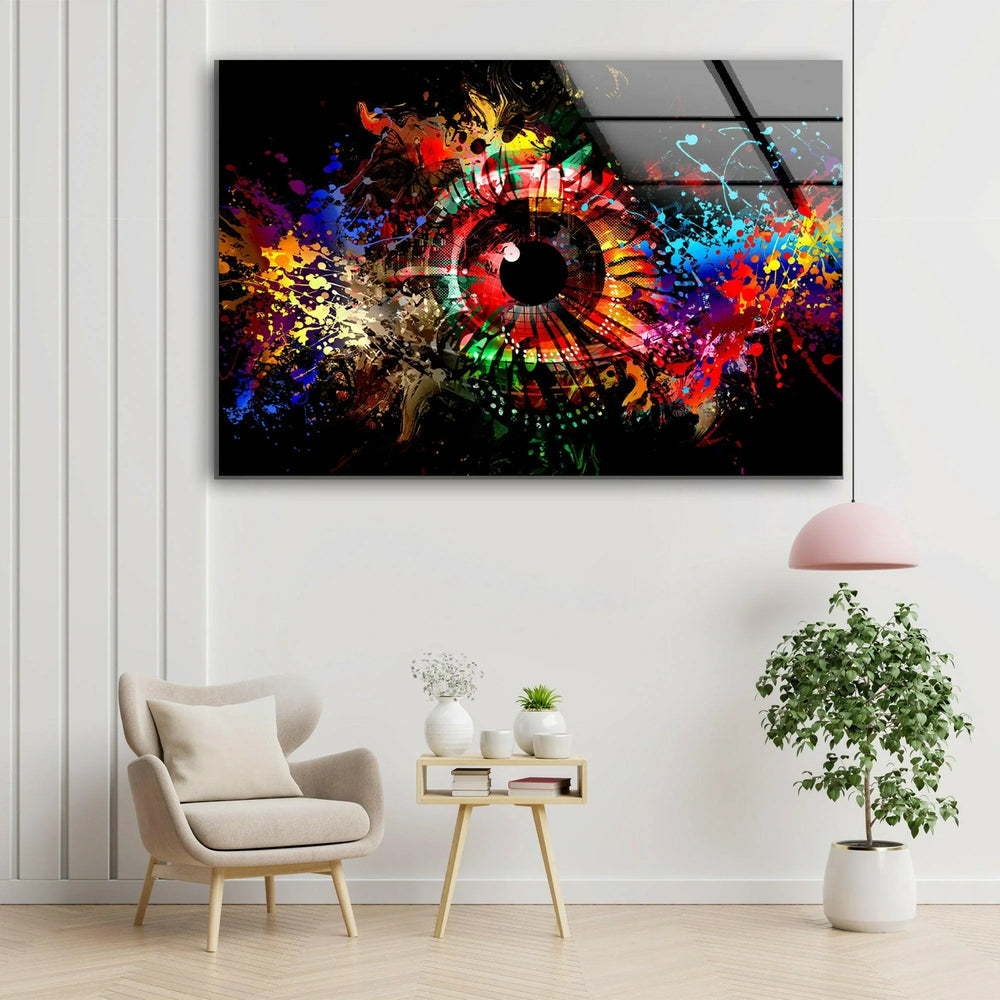
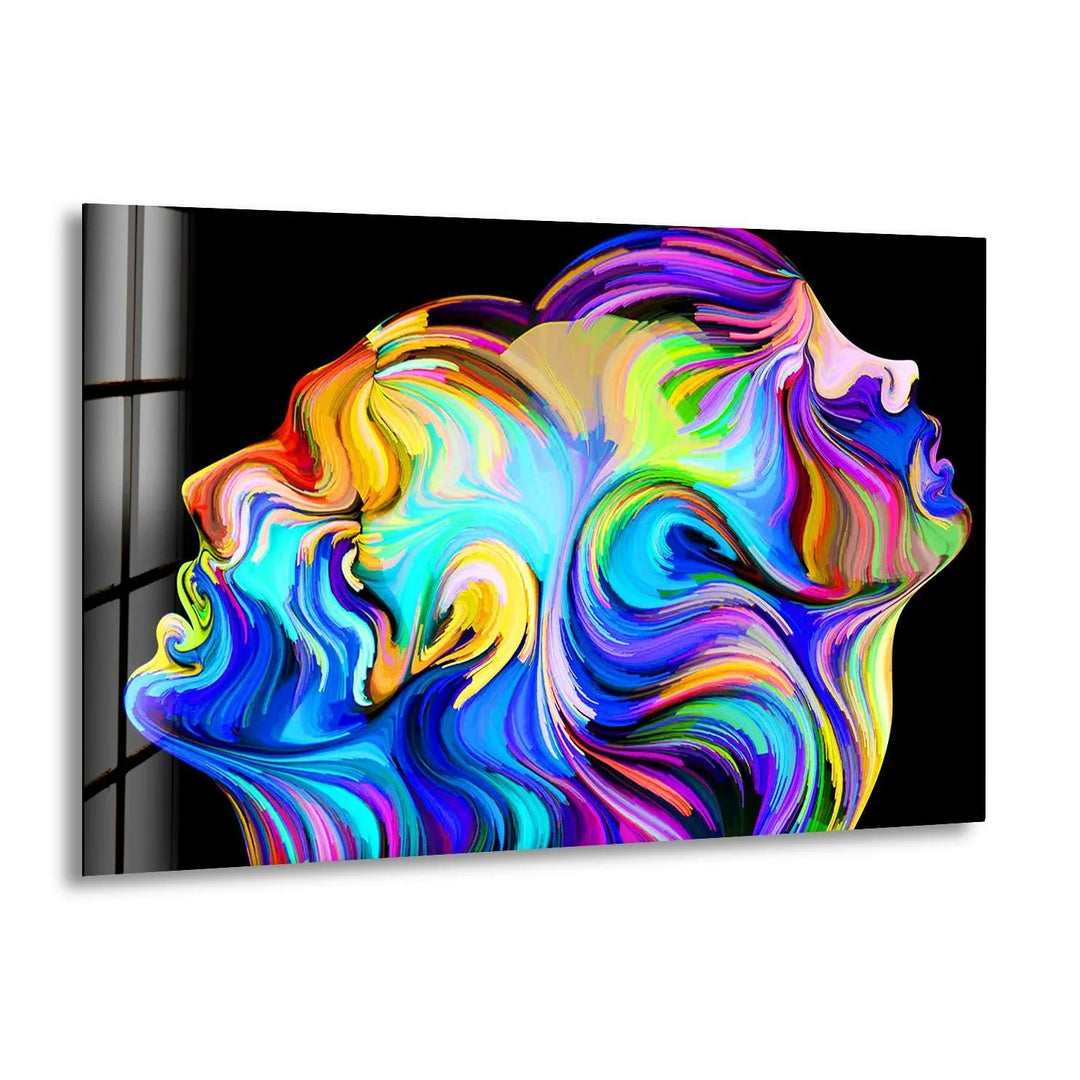
High-gloss, non-porous surfaces like Starphire tempered glass and dye-sublimation aluminum offer absolute immunity to moisture degradation at the cost of exacerbating the acoustic harshness of a washroom. According to extensive print-permanence testing conducted by Wilhelm Imaging Research, a 1.2-millimeter ChromaLuxe aluminum print achieves an indoor display permanence of 65 years under environmental conditions of 25 degrees Celsius and 60 percent relative humidity. This outlasts traditional silver-halide prints by a factor of 3.4. Such materials act as a shield. The substrate undergoes zero dimensional shifting or mold germination under severe moisture cycles. Archival printing standards dictate that high-temperature polymer encapsulation permanently shields dye molecules from airborne pollutants. This exact impermeability makes acrylic and glass variants highly resistant in a washroom environment. The visual weight of the Cool Abstract Eye glass print anchors the room. The sharp, high-contrast Salvador Dalí-inspired surrealism printed on a hard surface creates a magnetic visual anchor. The composition thrives under the cool, bright light of a Philips 4000K LED vanity fixture. The high-contrast visual anchoring effect relies on the exact rendering of desaturated blue-green tones, specifically those matching Munsell hue 10BG. By utilizing a metal or glass substrate, the stark architectural lines found in Giorgio de Chirico-style metaphysical art remain mathematically precise, unaffected by the textural weave of an Epson Exhibition Canvas Matte fabric base.

Introducing another high-gloss surface bounces high-frequency sound waves aggressively around the room, exposing a severe limitation within this impenetrable armor. Bathrooms already contain a massive excess of hard, reflective planes like Carrara marble vanities. Duravit porcelain basins, Daltile ceramic subway tiles, and mirrored cabinets dominate the square footage. Glare also becomes a blinding issue. This strict calculation dictates placement. You position adjustable Halo RL4 recessed ceiling spotlights at a specific 30-degree angle relative to the wall to push reflections downward toward the floor. If vanity lights sit directly opposite the glossy art, the resulting glare entirely obscures the surrealist composition, rendering a curated art piece illegible.
Why Engineered Canvas Solves the Clinical Coldness Problem
While standard design logic dictates 100% waterproof substrates, engineering a moisture-vulnerable 300gsm cotton canvas with sealants provides the exact acoustic dampening and organic warmth that high-gloss aluminum cannot achieve in a sterile space. Standard interior design practices heavily favor waterproof surfaces in wet environments for maximum hygiene. That approach creates an acoustically hostile room. You introduce soft elements. A textured Canon Lucia Pro giclée canvas dampens the sound echoes reflecting off hard porcelain tiles. While a zero-percent absorption rate makes non-porous art impervious to steam, that same hard surface bounces high-frequency vanity light directly into the eye, reinforcing the need for textured cotton-poly blends to absorb ambient harshness. A matte canvas introduces organic texture that softens a clinical washroom. The surrealist aesthetic benefits dramatically from this physical softening. Observing the Surreal Portrait of a Woman glass piece demonstrates how dreamlike, René Magritte-style compositions require careful lighting manipulation when mounted under glass, whereas a raw canvas naturally diffuses that same directional light to maintain the integrity of the pastel color palette of Pantone Serenity and Rose Quartz. Environmental psychology research from the Journal of Interior Design shows that softer, diffused hues lower resting heart rates. A raw canvas executes this psychological mechanism flawlessly.

This atmospheric benefit requires rigorous structural engineering to survive. Organic canvas substrates and kiln-dried Michigan pine wooden stretcher bars act as highly efficient hygroscopic sponges. Ambient water vapor absorbs effortlessly into these materials. Untreated wood frames warp by five to ten percent in alignment under standard 60 to 80 percent humidity cycles, destroying the tension of the canvas. Standard kraft paper dust covers quickly become breeding grounds for Stachybotrys chartarum toxic black mold. You mandate moisture-resistant aluminum or composite stretcher bars for any fabric-based artwork in a wet room. Instruct your framer to omit paper backings entirely. Replace them with a rigid, non-porous 4mm fluted plastic Coroplast board. Apply a clear Minwax polyurethane sealant directly to the internal framework and seal the rear gaps with a DuPont waterproof Tyvek HomeWrap barrier and Lineco moisture-resistant acrylic framing tape.
| Performance Metric | Dye-Sublimation Aluminum & Glass | Engineered Giclée Canvas |
|---|---|---|
| Acoustic Dampening Coefficient | Extremely Low (Highly Reflective) | High (Absorptive Texture) |
| 15-Minute Peak Moisture Absorption | 0% (Non-Porous) | High (Requires Tyvek Barrier) |
| Vanity Glare Index | Severe (Requires 30° Down-Lighting) | Minimal (Natural Matte Diffusion) |
| Archival Lifespan (60% Humidity) | 65 Years (WIR Certified) | 15 to 25 Years (Requires Polyurethane Sealant) |
Sizing and Placement Determine the Final Selection
Choose the structurally reinforced 300gsm matte canvas if your space features extensive ceramic tiling, provided you strictly control the placement distance from active plumbing fixtures. Prioritizing material vulnerability over imperviousness forces you to engineer a moisture barrier, but it rewards you with a bathroom that feels intentional and grounded. The execution of this choice relies heavily on exact spatial coordinates. Hang art with its physical center at exactly 145 centimeters from the floor. This aligns with the National Kitchen and Bath Association standing eye level standard. Do not guess. Measure the total height of the artwork and divide by two. Next, calculate the distance from the top of the frame to the D-ring hardware on the rear. Subtract that hardware gap. Add that exact calculation to the 145-centimeter mark to drive your Toggler drywall anchor.
Prioritize the relationship to the furniture over the standard floor measurement when interacting with Sherwin-Williams painted wainscoting or Toto sanitary fixtures. Hanging a large piece precisely at 145 centimeters above an 80-centimeter Kohler Highline toilet tank awkwardly crowds the plumbing. Severe visual clutter occurs as a result. Establish a clear, visually balanced gap of 15 to 20 centimeters between the top of the porcelain tank and the bottom edge of the artwork frame. A complex piece like the Woman Face with Butterfly glass panel commands intense visual attention, requiring ample negative space to breathe on a busy bathroom wall. The convergence of sharp beadboard wainscoting rails, rounded porcelain tanks, and rectangular frames creates competing visual vectors. Leaving a 20-centimeter negative space allows the human eye to process the surrealist imagery, such as the juxtaposition of natural entomology against human portraiture, without structural distraction.

This intentional tension—choosing to structurally reinforce a vulnerable, sound-dampening matte canvas rather than defaulting to acoustically harsh, sterile waterproof glass—defines the highest tier of modern European bathroom design. Review the acoustic and architectural balance of your room before finalizing a substrate. If the space echoes harshly when you speak or features extensive unmitigated glass, introduce the engineered Epson canvas to absorb the ambient noise. For those lacking the patience for Minwax polyurethane sealants and DuPont Tyvek barriers, mount the heavy Starphire tempered glass or ChromaLuxe aluminum panel and adjust your ceiling lighting accordingly. Whichever material architecture you adopt, apply these geometric spacing rules to your selection of surrealist decor.