

Using Black and White Wall Art as a Home Office Focus Tool
True cognitive restoration requires a physical transition away from the task area. Positioning a high-contrast print directly above your 27-inch 4K IPS monitor does not create a professional oasis; it actively taxes your directed attention. You must mount a 120cm glass panel 70 to 90 degrees away from your primary display to force a physical rotation of the cervical spine. Passive proximity to a monochromatic landscape by Ansel Adams or Michael Kenna actively drains focus. Context dictates cognitive function. Investing in black and white wall art for a Herman Miller-equipped home office is a structural decision about neurological processing.
Passive Proximity Sabotages Sustained Directed Attention
True visual resets are active. Placing decorative elements like Plexiglas acrylic panels directly within your primary 60-centimeter task quadrant actively taxes your directed attention capacity. Interior styling orthodoxy suggests mounting a calming focal point directly above the Apple Studio Display for quick visual breaks. This styling approach fails. Ergonomic studies demonstrate that keeping high-interest objects within 30 degrees of your central gaze requires the prefrontal cortex to actively suppress visual awareness of the art while working. Your eyes need a complete break from the screen's focal depth. Positioning a 90cm wide cotton canvas outside the primary zone, exactly 70 to 90 degrees to the side, forces you to rotate your Steelcase Leap ergonomic office chair, adjust ciliary muscle focal depth, and physically disengage.
This specific distant focal point is provided by the Black & White Dock Glass Wall Art. Its Burlington Bay long wooden pier vanishing point draws the macula outward, resetting the crystalline lens of the eye after hours focused on a nearby 5K Retina display.

Why Fractal Geometries Outperform Binary Graphics
Preventing profound mental exhaustion requires smooth shifts in shading. Viewing organic structures like branching oak trees within a Hausdorff fractal dimension between 1.3 and 1.5 produces a measurable 60 percent drop in cortisol-driven physiological stress. Environmental psychologists Stephen and Rachel Kaplan developed Attention Restoration Theory around the concept of soft fascination. Visual stimuli gently capture attention without depleting the central executive system of the frontal lobe. This balance matters. Epson UltraChrome sharp ink printed on stark Hahnemühle Photo Rag paper generates contrast ratios exceeding 30:1. Clinical research on visual stress indicates that these divergent spectra demand disproportionate metabolic processing in the occipital lobe. You need continuous tonal gradients. Statistical fractal distributions with soft edge transitions preserve mid-tone continuity.
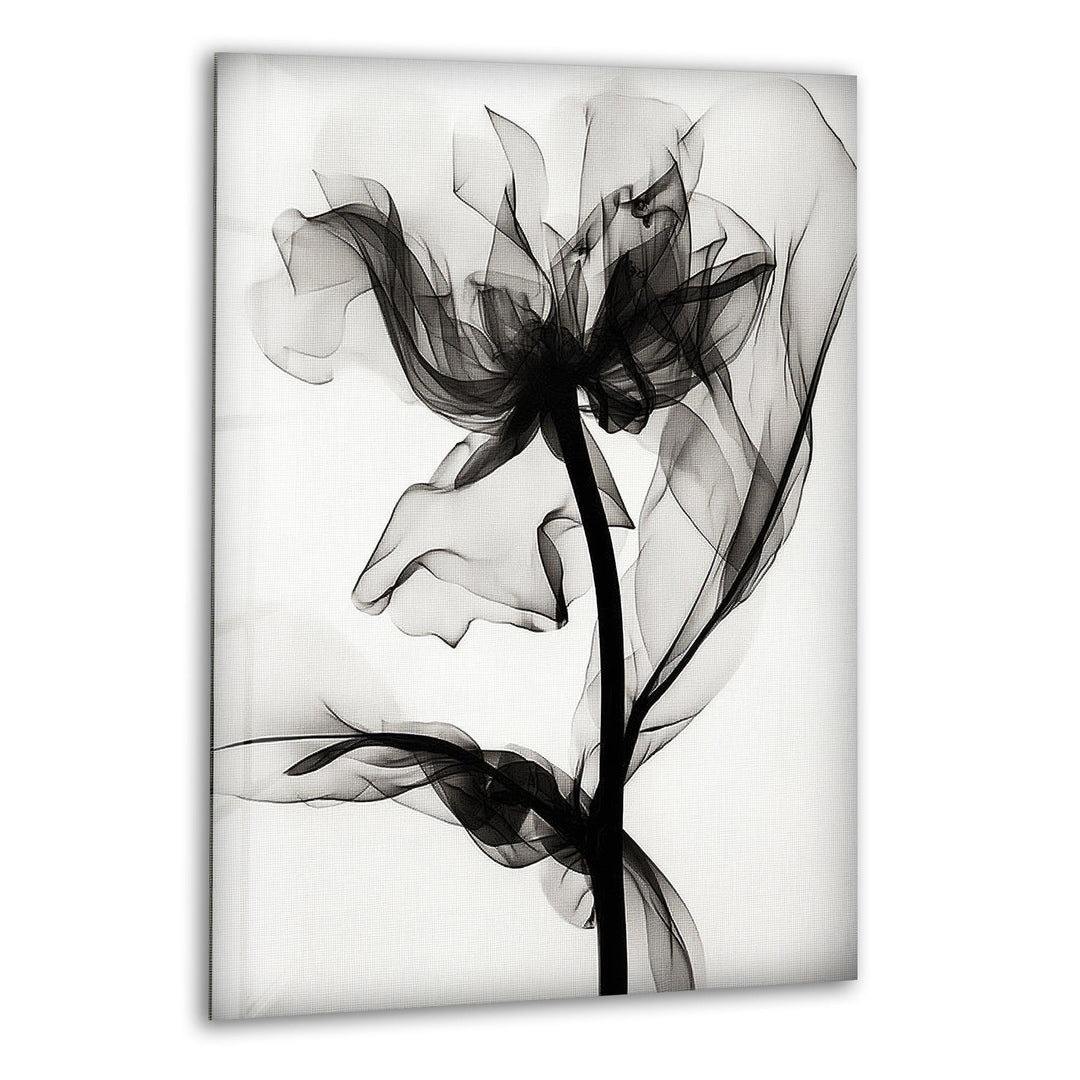
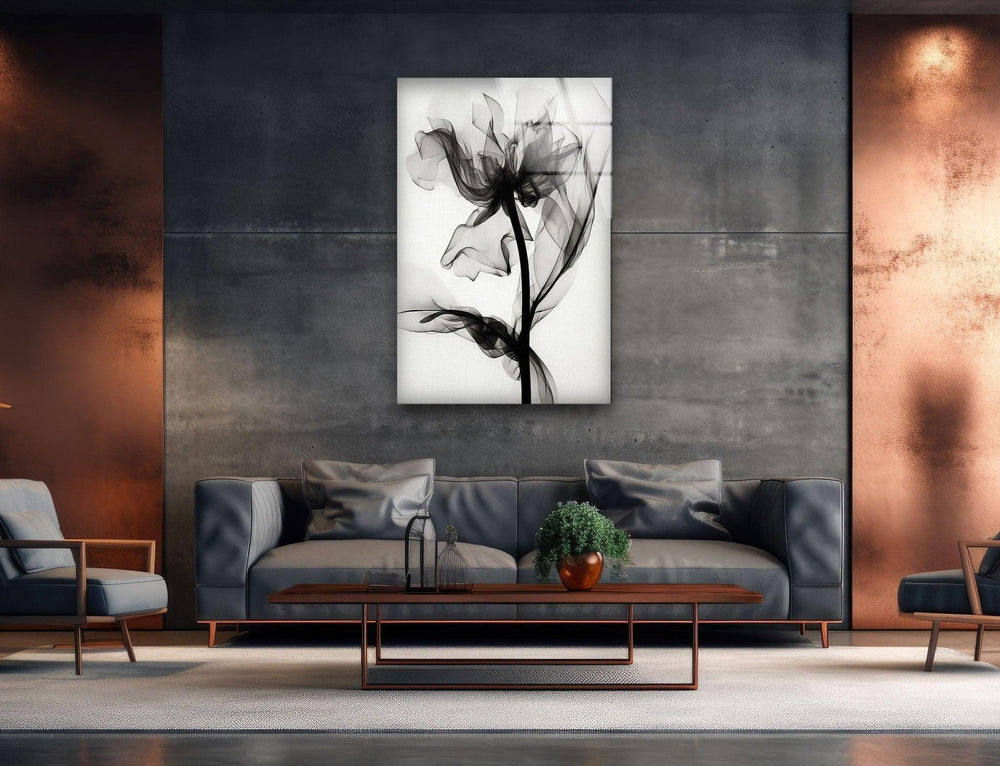
Atmospheric fading in the Black Smoke Glass Wall Art maintains internal luminance ratios between 3:1 and 5:1. When viewed after executing the mandatory 70-to-90-degree physical chair rotation away from your primary workstation, this moderate Michelson contrast range anchors the parasympathetic nervous system rather than triggering the cortical hyperexcitability associated with stark binary vector imagery.

Managing Luminance Ratios Reduces Ocular Strain
Ergonomic guidelines require that peripheral room elements match ambient task lighting. Untreated clear soda-lime glass creates specular glare spikes exceeding 320 candelas per square meter, inducing rapid micro-saccadic eye movements. Standard float glass reflects 8 percent of direct halogen light. Upgrading to Starphire low-iron tempered glass removes the greenish iron-oxide hue, pushing transmitted light to 91.5 percent. This absolute clarity renders reflections sharply focused. Placing bare gloss glass opposite south-facing architectural windows forces the eye into continuous accommodation hunting between the physical art and the reflected outdoor view. Tension headaches inevitably follow. Visual fatigue depends on balance. Specifying magnetron-sputtered anti-reflective coatings scatters specular bounce into a neutral Lambertian sheen.
Consider the tonal structure of The Crow Glass Wall Art for heavily lit commercial spaces. Its deep slate greys restrict primary values to Ansel Adams Zone III, preventing the highly reflective pure white Zone X extremes that exacerbate pattern glare under 500-lux ambient LED office lighting.

The Ergonomics of Downward Reflection Angles
The ergonomic law of reflection requires mapping overhead light paths across the entire room. Angling a 90cm wide poly-cotton canvas downward redirects recessed Philips Hue LED reflections toward the oak floor rather than the seated eye line. Standard gallery installations hang frames flat against the drywall. Parallel alignments trap ambient light. Articulated Z-bar French cleats impart a 5 to 8 degree downward pitch. Installing the panel at exactly 115 centimeters from the floor accommodates standard seated viewing heights while avoiding overhead glare. A mere five-degree tilt makes the absolute difference between a calming focal point and a distracting mirror. This specific mounting technique separates casual decoration from functional visual ergonomics.
Mounting the White and Black Horses Glass Wall Art with a 5-degree forward pitch ensures the Optiwhite low-iron surface avoids ceiling light interference. Continuous mid-tone organic shapes within the piece act as an absolute soft-fascination trigger for your required cognitive breaks.

Strategic Positioning Ensures Authentic Mental Recovery
Moving the artwork away from the immediate workstation to demand a physical 70-to-90-degree chair rotation is the ultimate requirement for sustained mental clarity. Strategic placement of charcoal and white photography fundamentally dictates your cognitive endurance throughout the workday. You look for monochrome prints to systematically fix a chaotic space. Whether sourcing Ilford black-and-white art for bedroom alcoves, specifying moisture-resistant acrylic panels for humid bathroom layouts, or curating a triptych for a corporate boardroom, the underlying optical physics remain constant. A diptych placed in a home office functions differently than large-format living room installations. The architectural demands of Australian shipping standards for fragile glass require robust low-iron tempered material to maintain clarity. Every piece of framed monochrome photography requires deliberate spatial planning. A cohesive collection succeeds exclusively when positioned to allow your prefrontal cortex to fully disengage. Applying these exact atmospheric balances guarantees true restoration when integrating pieces from this curated collection of black and white wall art.