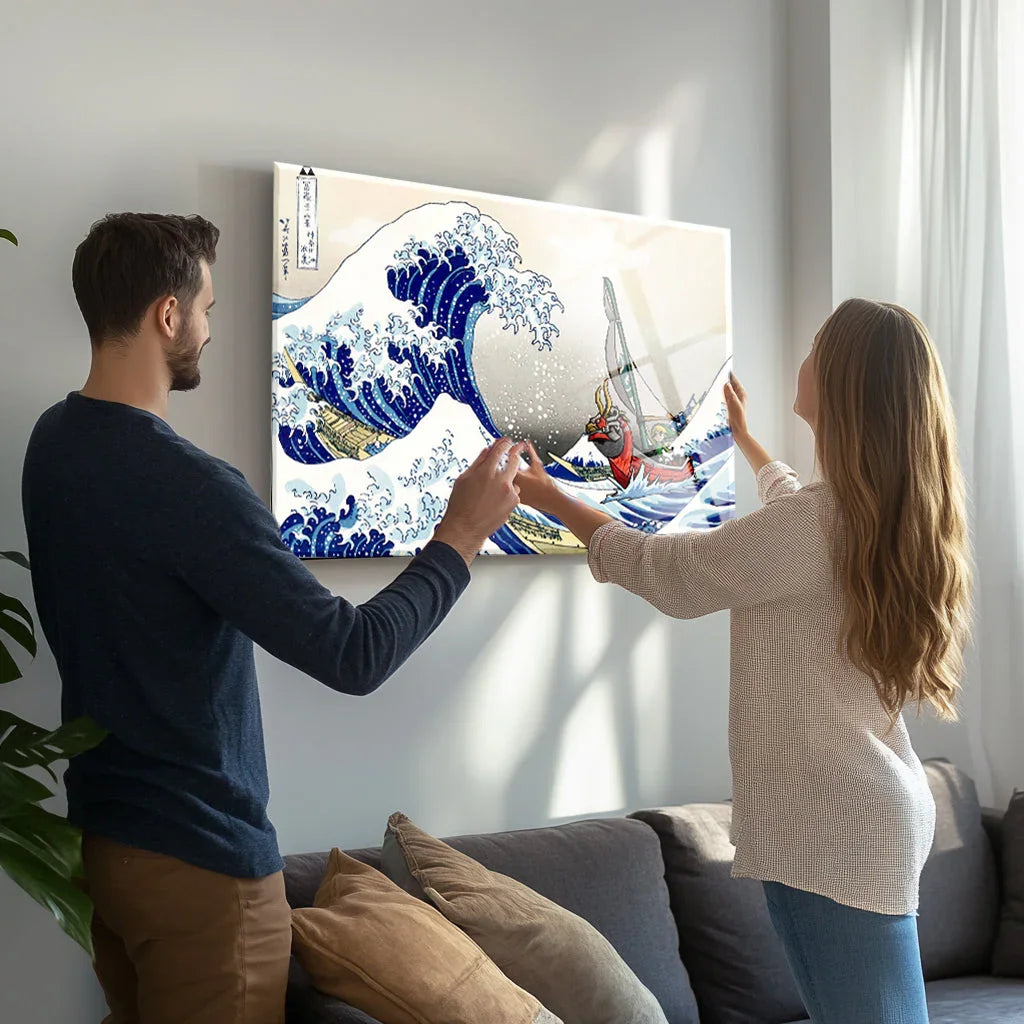


When Budget Planning: The Kraken Wall Art Scale Decision
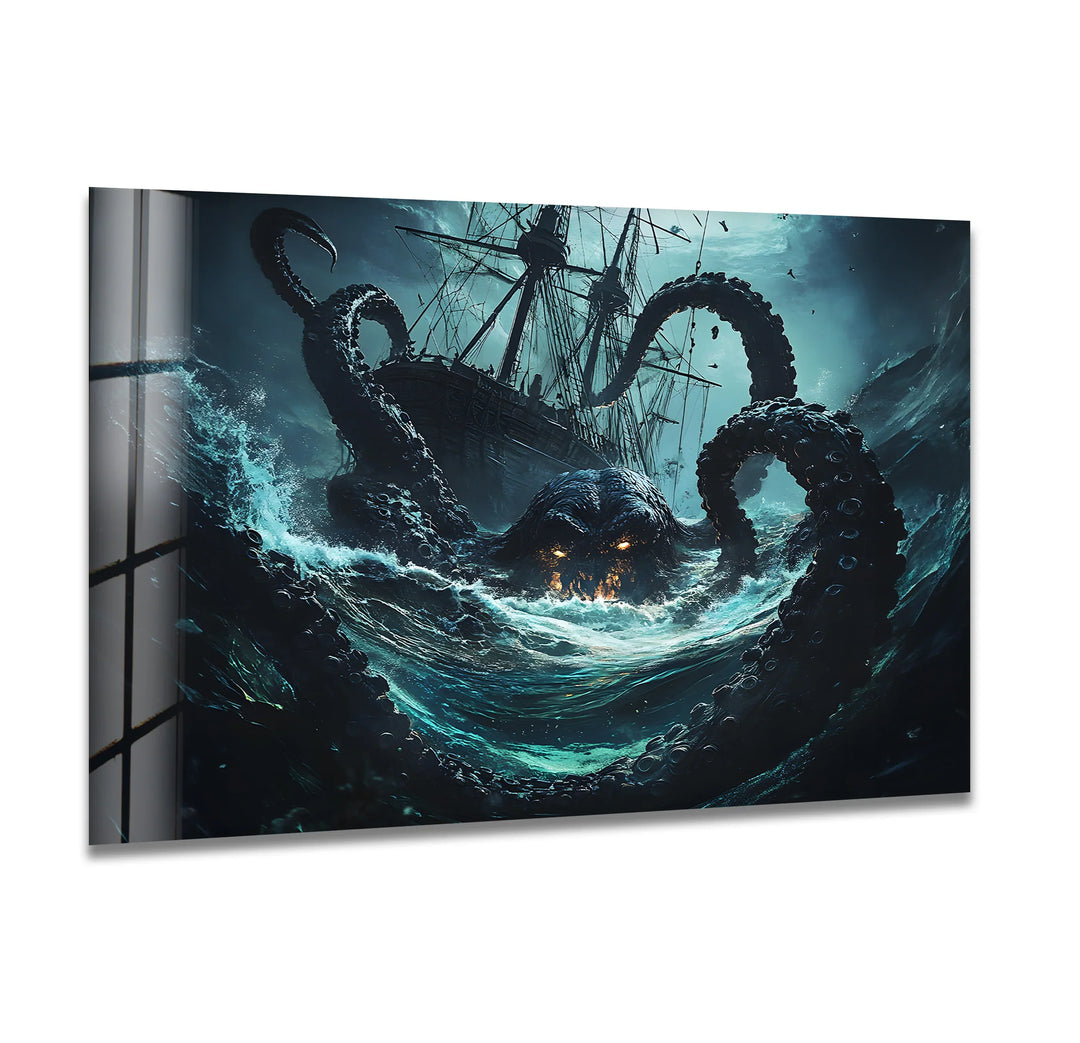
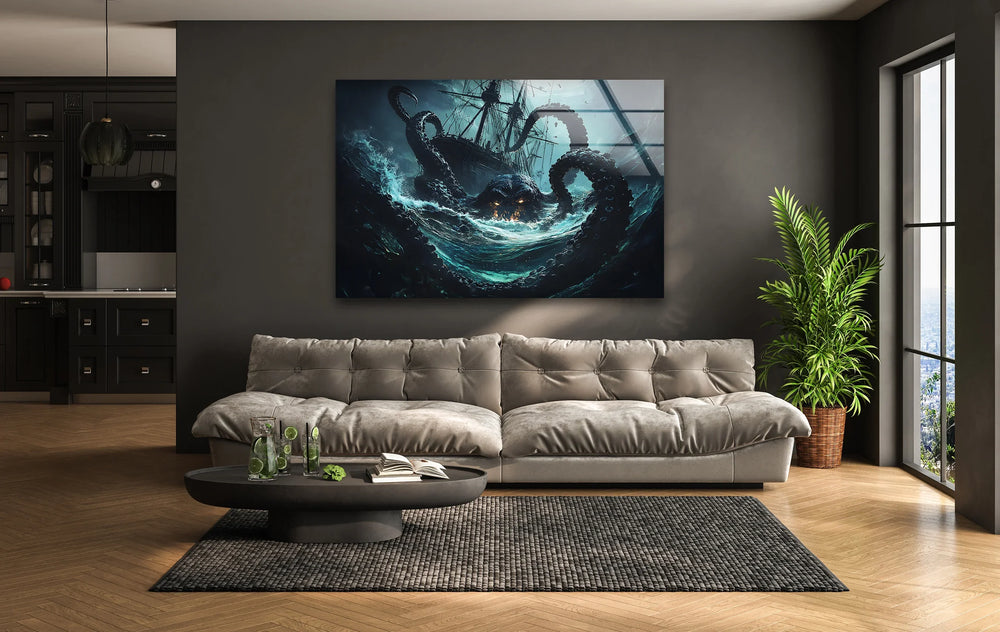
One monumental 56-inch by 36-inch artwork commands the spatial gravity that a triptych of smaller 18-inch frames inherently fractures. The material choice between a glazed archival acrylic barrier and a raw unshielded canvas permanently alters the architectural budget geometry and spatial gravity of the entire room. When calculating the proportions needed to balance an 84-inch architectural focal point like a B&B Italia Camaleonda sofa, the mathematics are absolute. Effective budget planning for oversized statement art forces a critical choice between the chemical longevity of a Tru-Vue Optium Museum Acrylic barrier and the immediate tactile impact of an unshielded Hahnemühle cotton surface. A 56-inch by 36-inch visual anchor requires exactly 2,016 square inches of wall space. This spatial argument rests on the psychological concept of visual anchoring, where the human eye seeks a single, dominant high-contrast mass to interpret the scale of a room. For designers curating large-scale mythological marine pieces like Kraken Wall Art, this material calculation determines whether a room merely displays an image or fully absorbs its oceanic turbulence.
The Case for Museum-Grade Preservation
Archival testing standards consistently show that substrates like Hahnemühle Photo Rag 308 gsm, printed with 12-channel Canon Lucia Pro pigment inks and framed behind 99-percent UV-filtering Tru-Vue Optium Museum Acrylic, achieve display permanence ratings exceeding 200 years. Framing 100-percent cotton rag paper behind this museum-grade acrylic secures two centuries of color stability at a premium structural cost. The science of fine art print preservation remains unforgiving. Conservation experts emphasize that ultimate light stability depends fundamentally on the chemical neutrality of the Hahnemühle cotton substrate and the total exclusion of ultraviolet radiation. This archival execution averages $0.75 to $1.35 per square inch, rendering a 56-inch wide presentation a $1,510 to $2,720 interior design investment. Just one material decision permanently alters the entire budget geometry of a residential design project.
Specialty glazing alone accounts for exactly 55 percent of this framing bill, demanding exact material specifications to justify the expense. Standard non-glare acrylic uses a mechanical acid-etched surface that scatters light across the living room. The resulting milky haze washes out the high-contrast abyssal blacks found in deep-sea subjects like the Kraken Glass Wall Art piece. Optically coated Tru-Vue Optium Museum Acrylic reduces total visible light reflectance to less than 1.6 percent without any optical diffusion. Art installers maintain a minimum 3-millimeter air gap using a solid-core, acid-free 8-ply Rising Museum Board or hidden Econospace acrylic frame spacers to prevent the Epson UltraChrome pigment layer from undergoing ferrotyping during seasonal humidity fluctuations. A 56-inch custom Roma Moulding wood frame paired with 3.0-millimeter museum acrylic weighs between 18 and 25 pounds. This heavy structural load mandates a 30-inch aluminum Z-bar French cleat anchored directly into wooden wall studs.

Why Raw Textures Dominate Experiential Design
Unglazed stretched 400 gsm cotton canvas delivers immediate spatial presence and eliminates light reflection issues for a fraction of the financial investment. This material choice between a $2,720 glazed Tru-Vue acrylic presentation and a $650 raw textile finish permanently alters the architectural budget geometry and spatial gravity of the entire room. Conventional gallery advice dictates that glazed archival paper serves as the authoritative standard for fine art investment. However, from an experiential interior design perspective, large-scale mythological and maritime subjects lose emotional immediacy when trapped behind a Rising Museum Board mat and glazing barrier. Texture requires physical vulnerability. Heavily textured pieces require complete exposure in low-light residential lounges. A heavily woven 400 gsm stretched Breathing Color Lyve cotton canvas mounted in a 2-inch deep unglazed dark walnut floater frame entirely removes the physical boundary between the viewer and the artwork. The raw weave interacts dynamically with directional ERCO spotlighting, creating a three-dimensional illusion of oceanic turbulence breaking into the room. Strategic financial forecasting demands calculating whether a space benefits more from the optical depth of archival acrylic or the tactile surface of raw textiles.
This unglazed Breathing Color Lyve specification accepts a shorter archival lifecycle of 65 to 100 years, limited primarily by atmospheric oxidation and hygroscopic canvas slackening. Unprotected cotton canvas absorbs and releases ambient moisture rapidly. Such moisture cycling causes cyclical expansion, sagging, and micro-cracking of the delicate Canon Lucia Pro pigment layer. Installers prevent mechanical failure by applying an archival, water-resistant, semi-matte Breathing Color Timeless UV-protective liquid laminate via a Fuji Q4 Platinum HVLP spray system, sealing the cotton fibers against humidity and airborne pollutants. Priced at $0.18 to $0.32 per square inch, the final bill caps at exactly $650 for a massive 2,016 square-inch marine canvas installation. Mounting a stretched canvas on 1.5-inch heavy-duty pine stretcher bars yields a piece weighing just 6 to 9 pounds, requiring only dual Floreat D-rings rated at 30 pounds each. Consequently, this low-weight structural profile makes a large-format cephalopod gallery arrangement perfectly suited for standard USG Sheetrock drywall hanging without architectural reinforcement. Kinetic energy from dynamic compositions like the Kraken is Wrapping The Ship Glass Wall Art print translates exceptionally well to sunlit environments like south-facing solariums where window glare control is impossible.

| Specification Metric | Hahnemühle Rag & Tru-Vue Acrylic | Lyve Canvas & Timeless UV Varnish |
|---|---|---|
| Display Permanence Rating | 200+ Years (Certified Data) | 65 to 100 Years (Oxidation Limited) |
| Surface Reflectance Output | Under 1.6% (Magneto-Sputtered Coating) | Minimal (Naturally Diffused by Canvas Weave) |
| Structural Wall Load (56" x 36") | 18 to 25 lbs (Requires Z-bar Aluminum Cleat) | 6 to 9 lbs (Requires Standard Dual D-rings) |
| Average Cost Per Square Inch | $0.75 to $1.35 | $0.18 to $0.32 |
Selecting the Correct Substrate for Your Space
When scaling up to aggressive 56-inch by 36-inch proportions, the selected outer finish defines exactly how the surrounding architecture interprets visual weight. The structural lighting conditions of your room dictate the correct material specification far more than arbitrary fine art preservation goals. Statement art must dominate rather than accessorize; pieces failing to span at least two-thirds of the foundational furniture function as visual clutter rather than architectural focal points. Calculate this exact framing envelope by measuring the total width of a primary credenza or sofa and multiplying by 0.66 to 0.75. For an 84-inch Herman Miller Nelson Marshmallow sofa, mandate a final artwork width between 55.4 and 63 inches. Unlike the rigid industrial aesthetic of Corten steel metal marine sculptures or the heavy acoustic dampening of carved black walnut cephalopod panels, 400gsm stretched canvas and Hahnemühle framed paper rely entirely on surface physics to project their mass.
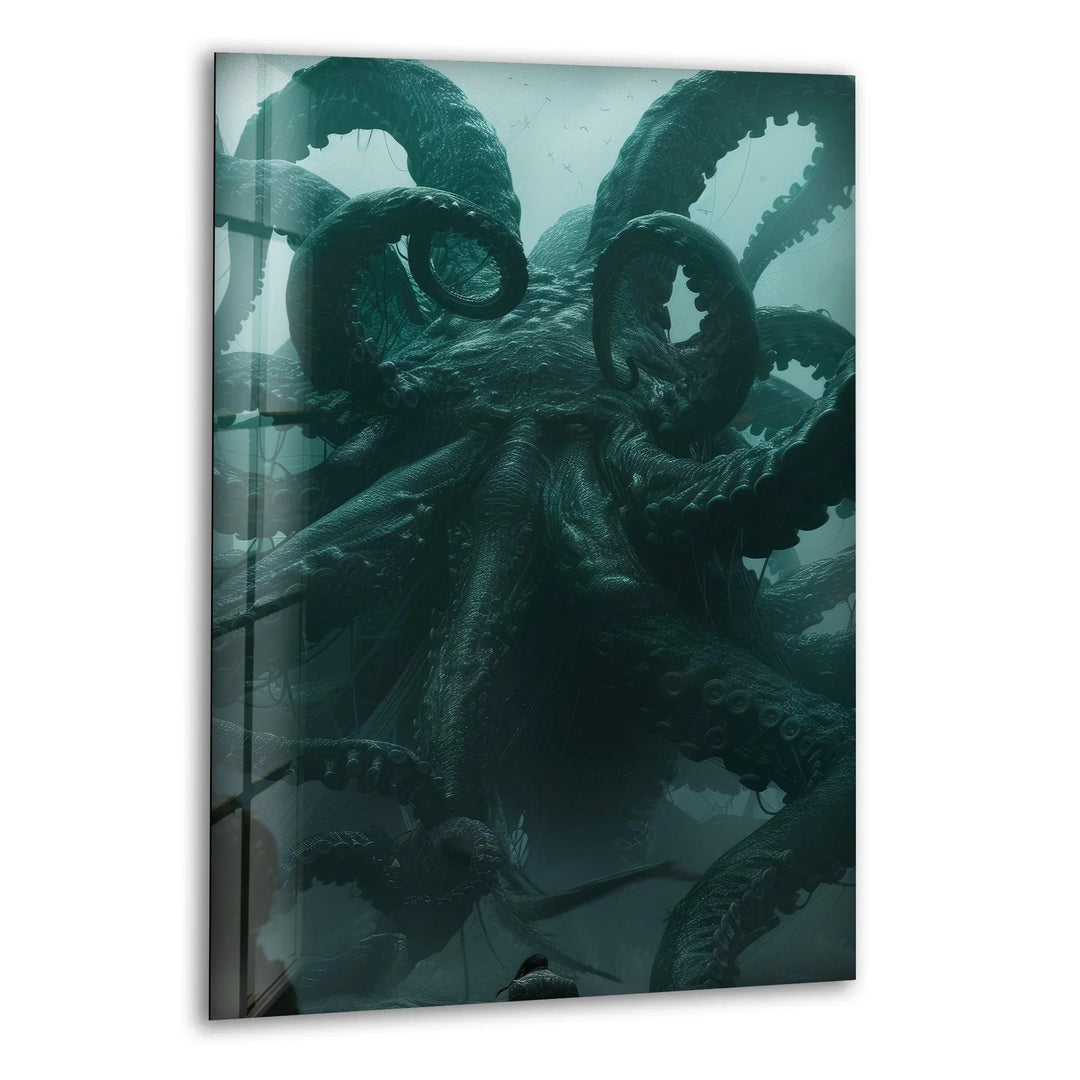
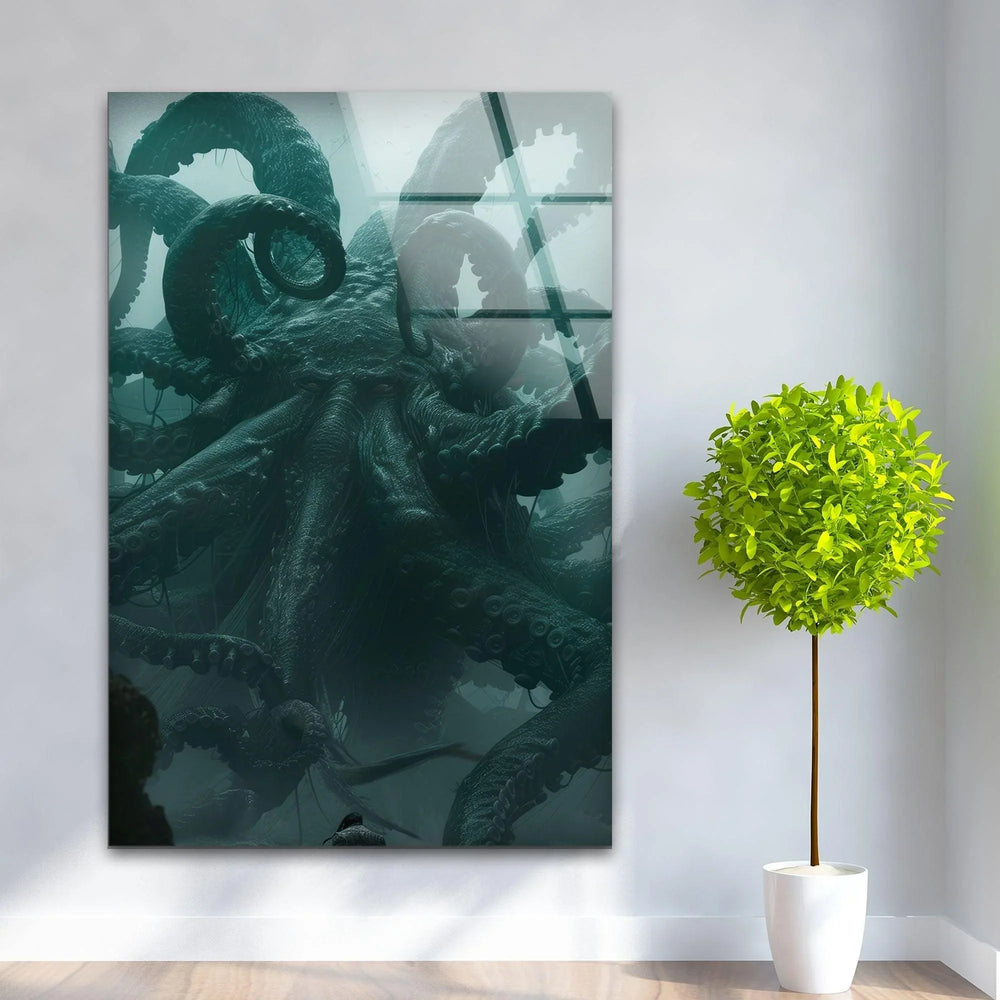
Because the material choice between an archival Tru-Vue Optium Museum Acrylic shield and raw Breathing Color canvas permanently alters the architectural budget geometry and spatial gravity of the entire room, buyers must finalize their substrate decision before mapping their interior layout. Dark maximalist interiors and high-humidity environments like a Kohler luxury wet room demand specific technical adaptations. Placing a large marine installation in a bathroom requires the absolute moisture barrier provided by sealed Facemount Diasec acrylic or museum acrylic. Conversely, dry living spaces with controlled ERCO directional lighting benefit from the raw cinematic energy of an unglazed dark walnut floater frame. A whimsical nursery illustration of marine life absorbs high ambient glare, but the intense contrast of the Cthulhu The Kraken Glass Wall Art piece thrives only when the viewer experiences optical depth without the interference of a reflected window pane. Intelligent budget planning forces a strict choice between the chemical security of a glazed boundary and the vulnerability of tactile surface textures. Determine the dominant room lighting, assess the USG Sheetrock wall load capacity, and select the material format that best anchors the spatial narrative. Reviewing the full scale options within the Kraken Wall Art collection defines the precise interior proportions your specific layout demands.