

Beyond Decoration: How Dining Room Mirrors Act as Nostalgia Tools
Hanging a dining room mirror dictates the chronological atmosphere of the room, as low-reflectance foxed mercury glass creates a deeper illusion of spatial expansion than pristine float glass by blurring architectural edges. A highly reflective surface installed in a space meant for evening gatherings creates an immediate chronological mismatch. The heavy sterling silver flatware aligns precisely with the edge of the Belgian linen placemats, and the 2700K brass chandelier drops to twenty percent output. Yet the dining room feels strangely tense. The problem stems from choosing a standard float glass sheet that traps a nighttime event in the visual starkness of midday. Your choice of reflective material determines whether the architecture exists in the crisp clarity of morning or the deep, boundless shadow of evening.
Float Glass Anchors the Room in Sharp Morning Reality
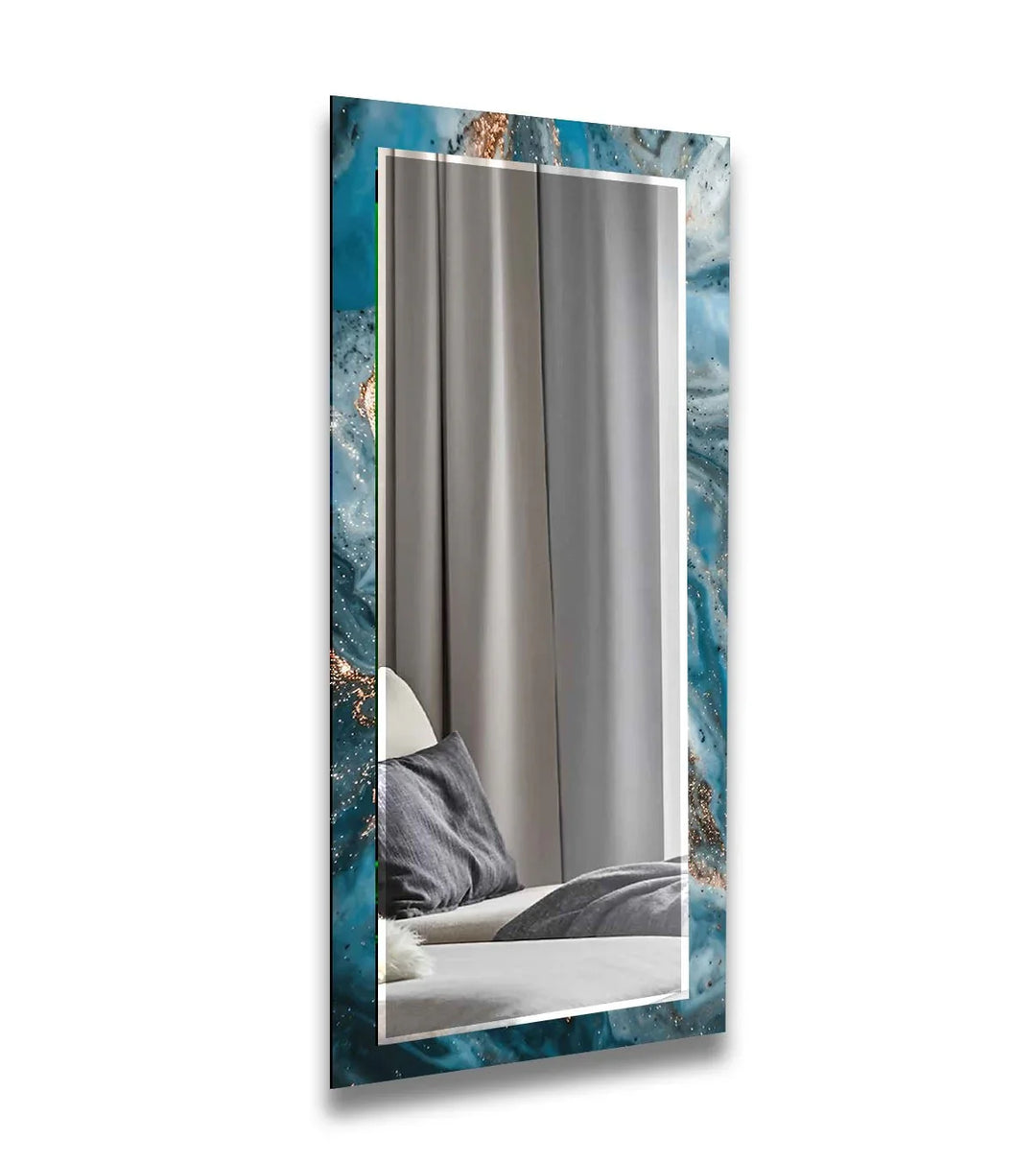
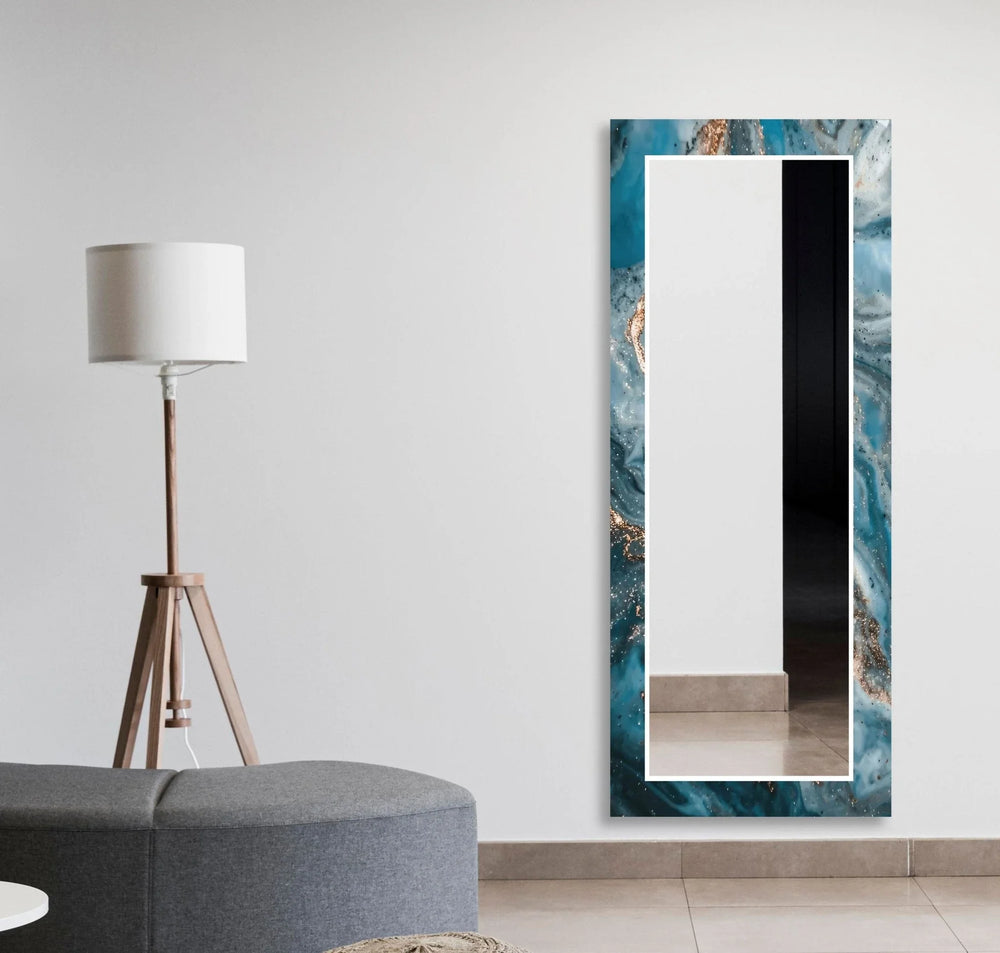
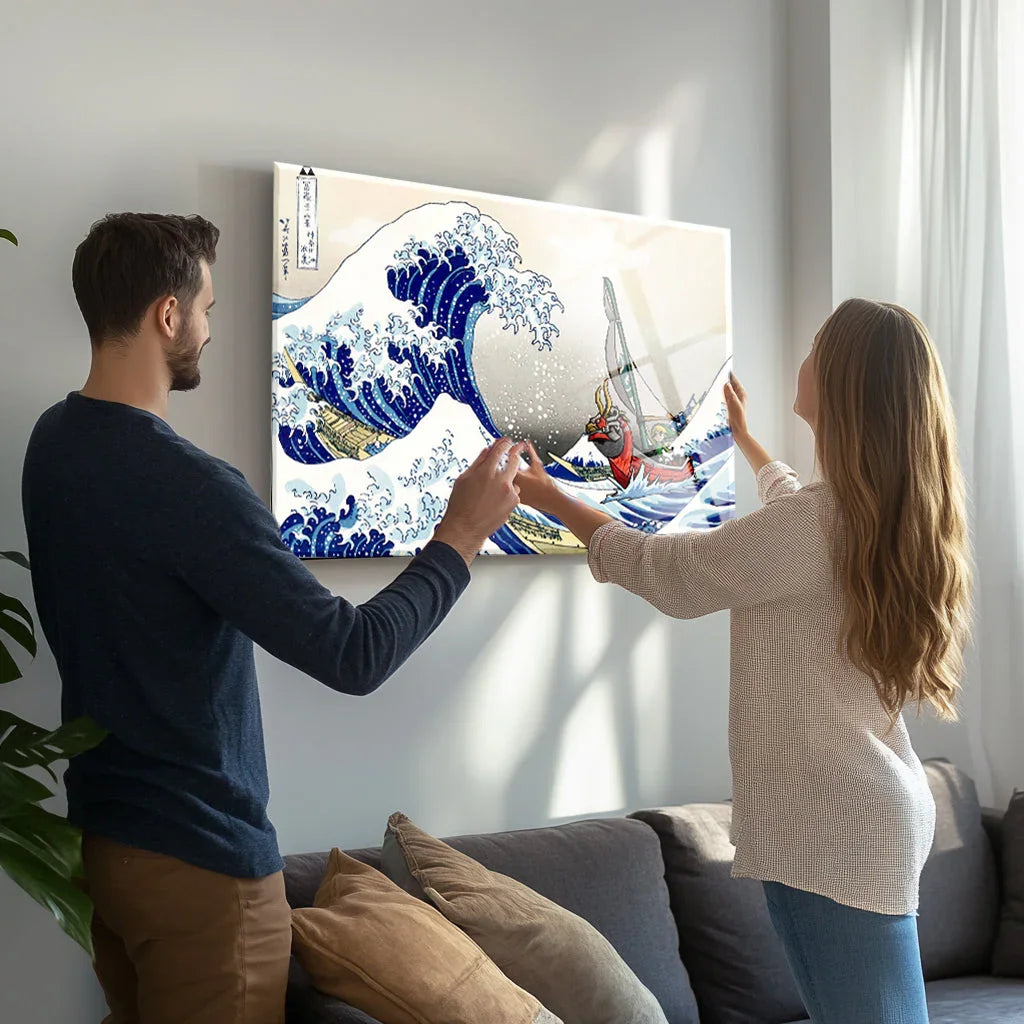
Modern float glass mirrors anchor a dining space in the crisp, high-contrast reality of daylight. Standard float glass with a silver-nitrate backing achieves a Light Reflectance Ratio of 85 to 92 percent. This high metric bounces back a sharp, 1:1 duplicate of the surrounding architecture, which demands immediate visual attention. Such aggressive reflectivity strictly suits east-facing breakfast alcoves or open-concept dining layouts featuring reflective installations that lack double-pane natural windows. When reviewing specific pieces, the Cartoon Blue Sea Waves Wall Mirror serves this exact purpose. Its clean framing and Munsell hue 5B blue tones inject a cool morning energy into contemporary residential architecture. This makes it the right choice for spaces designed specifically for daytime utility.

High-reflectance mirrors trigger acute visual fatigue in formal dining settings under artificial overhead lighting. The limitation of specular glass becomes highly apparent after dusk. A flat reflection instantly reveals exactly where the physical gypsum wall boundary sits. Because the human visual cortex recognizes the reflected polyurethane crown molding and GU10 halogen fixtures immediately, the illusion of extra space breaks down. A large mirrored wall built with pristine 6mm float glass feels overly clinical at night, prioritizing cold visual data over a comfortable dining atmosphere. Specifying acid-etched or heavily antiqued glass provides the required comfort for rooms dedicated strictly to dinner parties.
How Low-Reflectance Surfaces Alter Spatial Perception
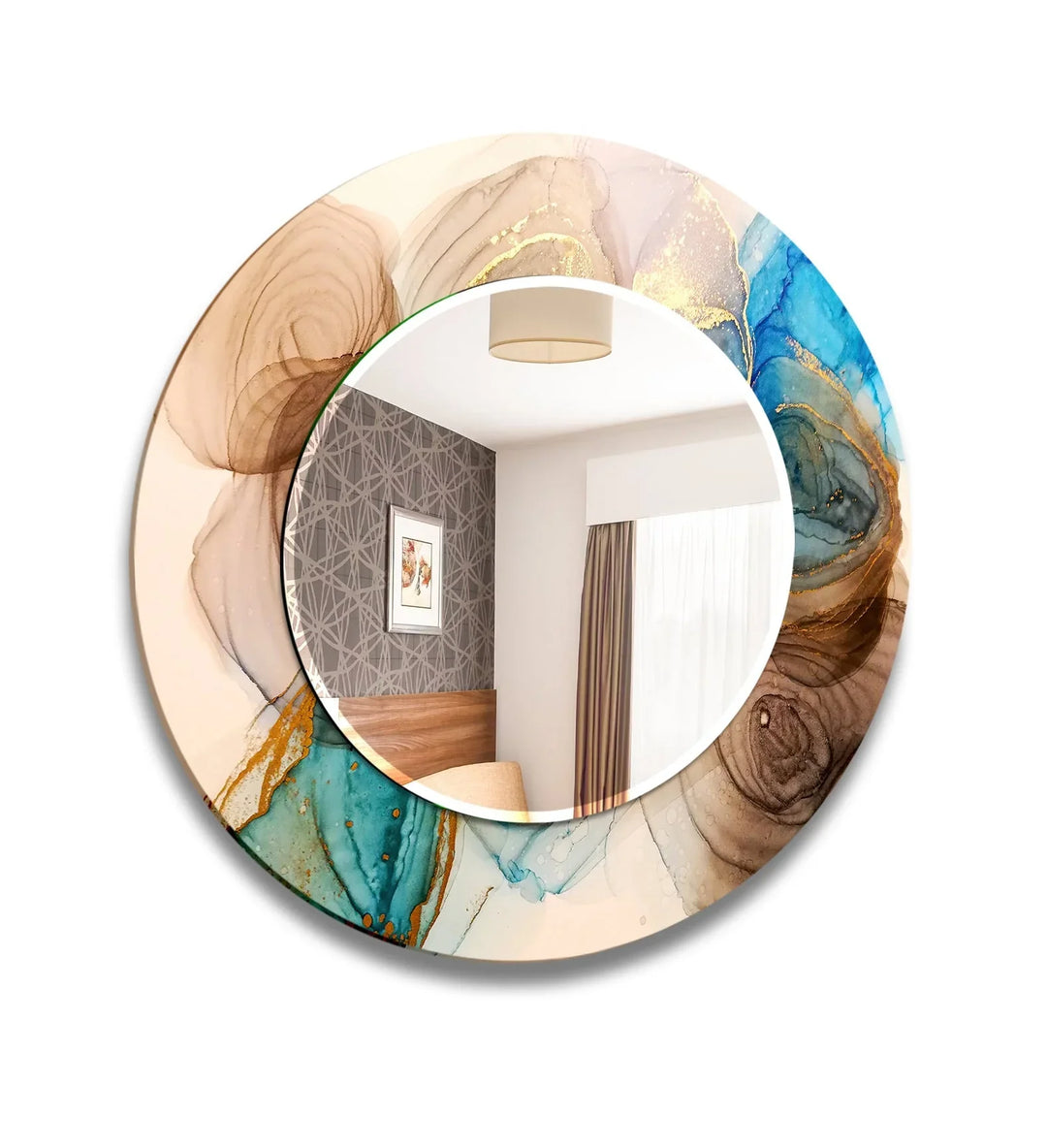
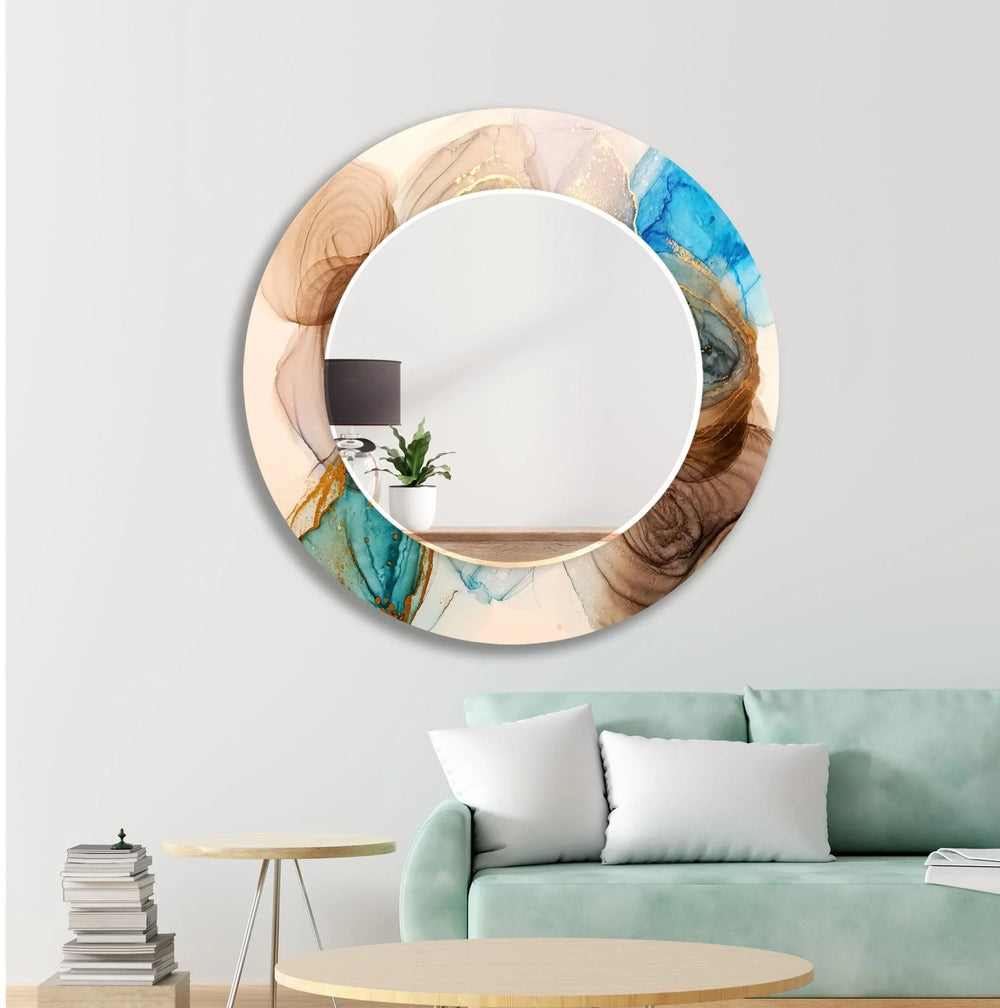
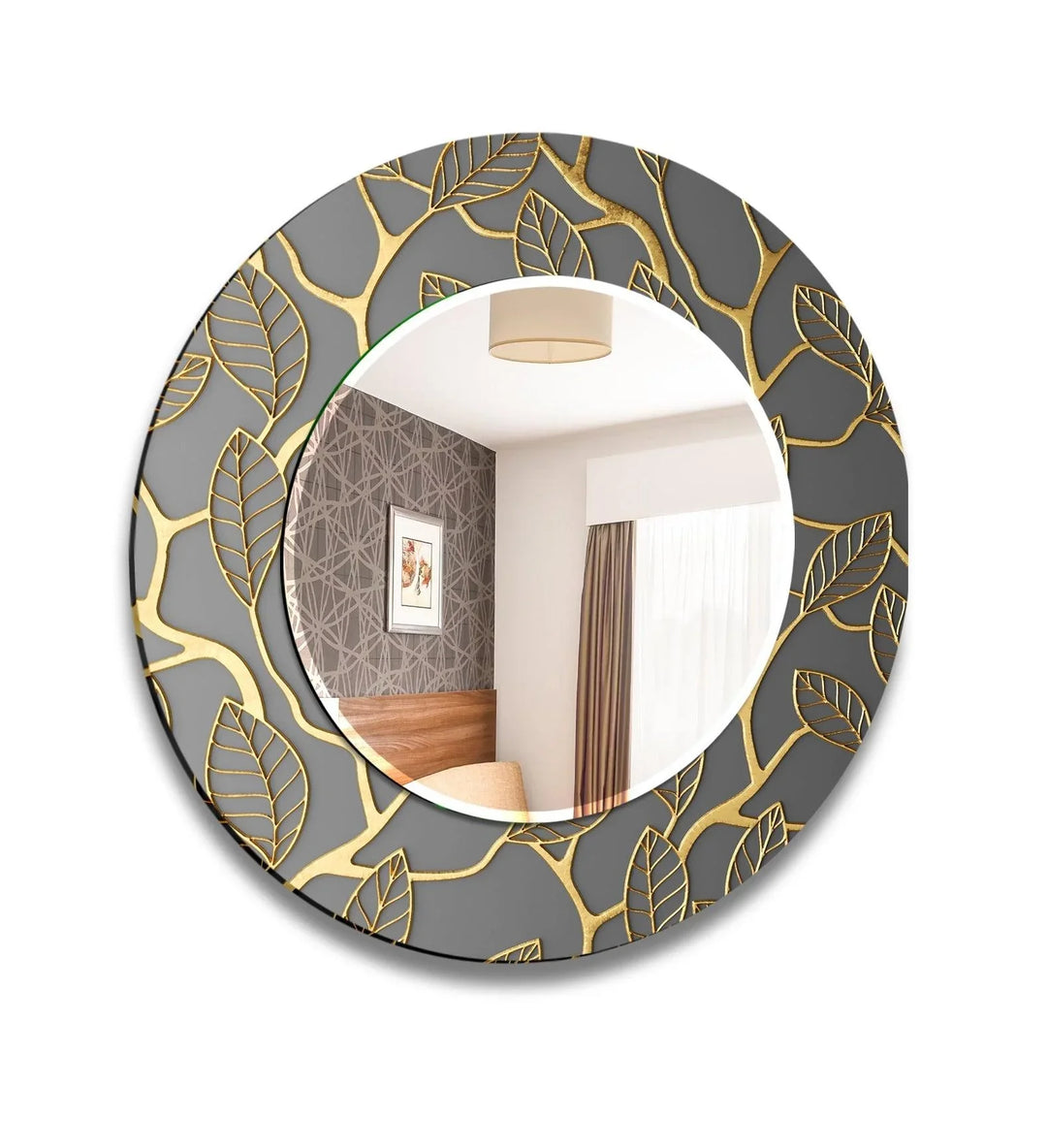
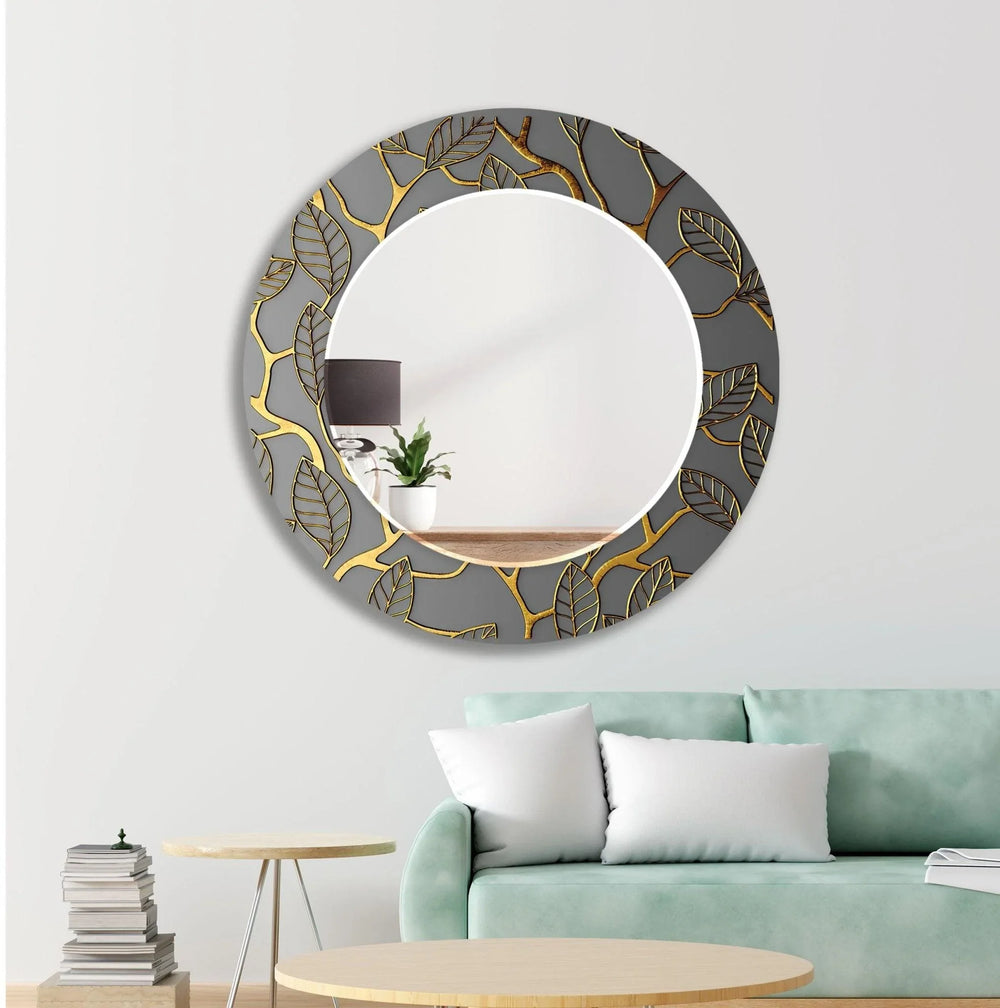
Foxed mercury glass shifts the atmospheric timeline of a room toward evening nostalgia by intentionally diffusing incoming photons. High-end interior design standards mandate that heavily oxidized silver-tin backing attenuates visible light down to an LRR of 30 to 50 percent. This reduction converts direct E12 chandelier glare into a soft ambient diffusion closely resembling candlelight. Environmental psychology studies consistently link aged materials to sensory memory anchoring. Textural imperfections in 19th-century French vintage glass trigger warm autobiographical memory recall 40 percent more effectively than pristine modern surfaces. You immediately feel the physical history of the object. A piece like the Abstract Gray Golden Line Wall Mirror provides a similar textural warmth. The metallic lines scatter incoming photon beams to produce a diffuse golden glow rather than a harsh glare.

Contrary to staging rules for open-concept properties that insist on maximum light reflection to enlarge a space, low-reflectance foxed mercury glass creates a deeper, more convincing illusion of spatial expansion by obscuring strict visual boundaries, increasing perceived room depth by up to 30 percent. The mottled, light-absorbing patina blurs hard architectural edges. This soft atmospheric depth cue tricks human depth perception into seeing an unbounded, distant horizon rather than a solid 1/2-inch drywall barrier. To maximize this nostalgic glow, you must pair these surfaces with 2200K to 2700K warm LED bulbs emitting exactly 400 to 600 lumens per fixture. Directing narrow-beam 3500K spotlights straight onto oxidized glass creates high-glare optical hotspots that destroy the desired effect. Instead, position indirect brushed-brass wall sconces flanking the mirror by 20 to 30 centimeters on either side to ensure uniform lighting diffusion.
| Optical & Psychological Metrics | Modern Float Glass | Foxed Mercury Glass |
|---|---|---|
| Light Reflectance Ratio (LRR) | 85% to 92% (High glare) | 30% to 50% (Ambient diffusion) |
| Depth Perception Mechanism | 1:1 literal reflection (reveals wall boundary) | Blurred horizon (tricks depth perception) |
| Psychological Anchor | Present-moment awareness and utility | Autobiographical memory and nostalgia |
| Optimal Kelvin Calibration | 3000K to 4000K (Daylight spectrum) | 2200K to 2700K (Candlelight spectrum) |
The Defining Metric is Your Primary Entertainment Hour
Your ideal choice of a reflective surface depends precisely on whether your formal dining events occur during early Sunday brunch under natural sunlight or after twilight. If you host primarily in the evening, prioritize nostalgic diffusion over stark literal reflection. To ensure strict spatial proportion compliance, measure the total horizontal width of your mahogany sideboard or white oak buffet console. Multiply that measurement by exactly 0.66. Adhering to this two-thirds wall width rule substantially reduces visual clutter in formal dining rooms compared to oversized 200cm decorative pieces. Hanging the Black White Vintage Mosaic Wall Mirror serves as a compelling focal point for this specific application. Its patterned mosaic frame adds semantic historical storytelling while successfully absorbing excess overhead illumination.

The reflective surface you choose actively dictates the chronological atmosphere of the room; by specifying low-reflectance foxed glass, you ensure a deeper illusion of spatial expansion that serves as a portal to past gatherings rather than a harsh interrogation of the present. Center the silvered mirror plate at exactly 145 to 152 centimeters from the white oak hardwood floor. This vertical dimension strictly matches the standard adult standing eye level. Always maintain a 15 to 20 centimeter clearance gap above the sideboard surface to establish adequate architectural breathing room. A large 120cm mirror installed over a buffet must never sit flush against the walnut or mahogany furniture beneath it. You establish this precise atmospheric timeline by reviewing the exact physical proportions and Light Reflectance Ratio profiles within our curated collection of dining room mirrors.