

Glass or Shell: The Bathroom Mosaic Mirror Decision
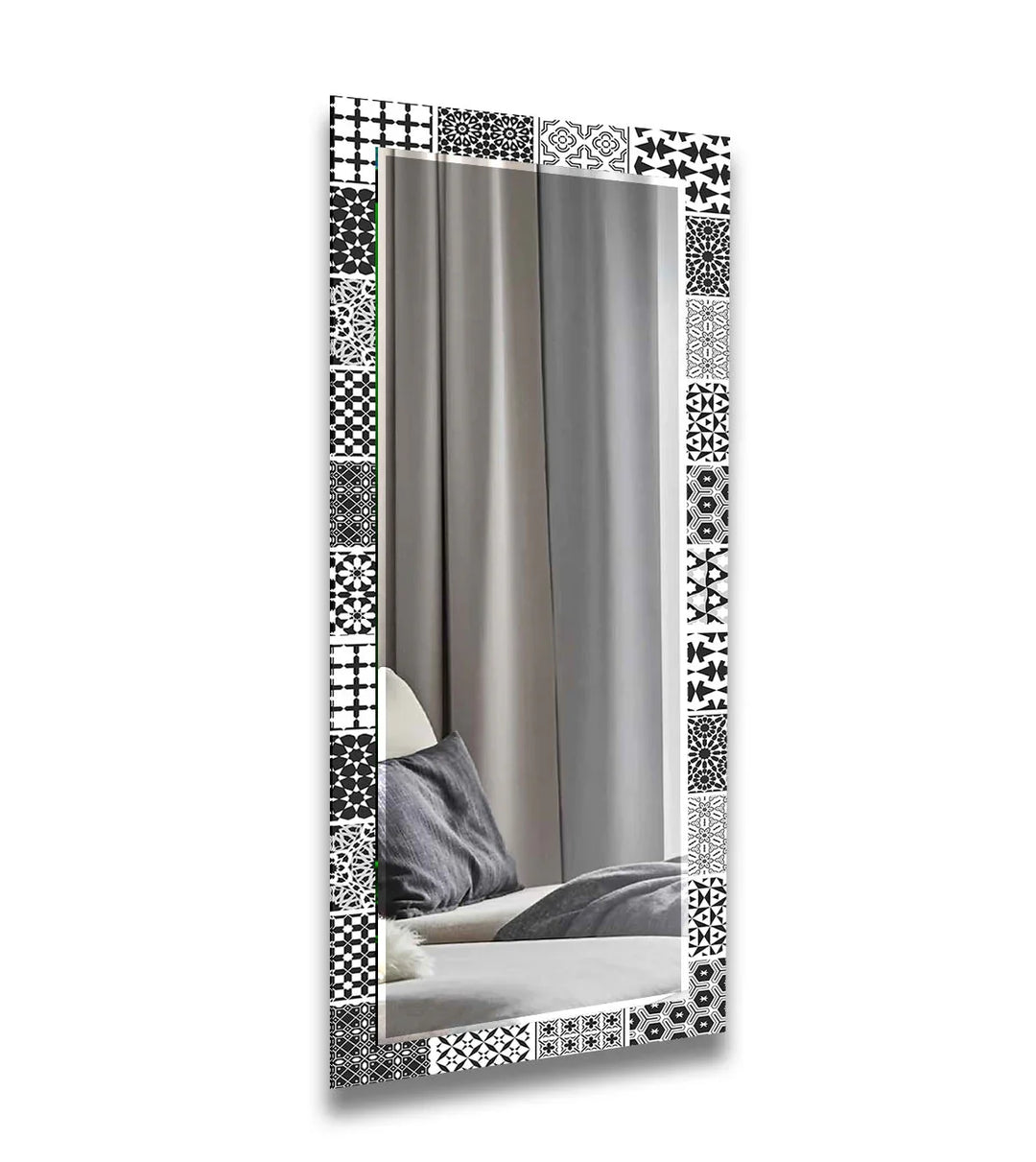
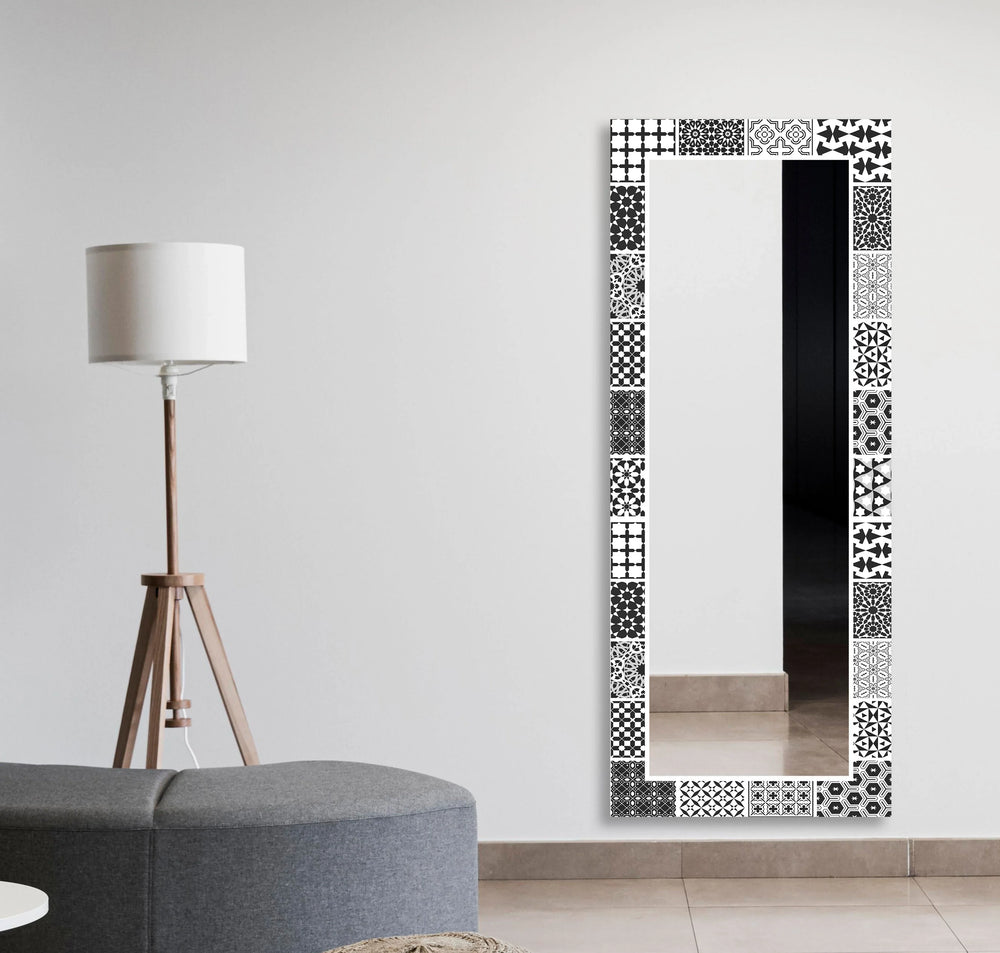
In bathroom design, true luxury is not about maximizing raw lumen reflection, but controlling how a frame material interacts with organic wall textures like Tuscan silver travertine or sealed American black walnut. A standard 48-inch single-sink vanity demands a precise 34-inch to 36-inch architectural focal point above it. Deviate past a 40-inch width, and wall sconces are forced into tight corners, casting severe shadows across the face during grooming. Size is merely the baseline. Two identical primary bathrooms share this exact dimension. One feels remarkably expensive. The other feels cheap. The only variable is the surface materiality of the wall fixture. A synthetic high-gloss surface floods a space with flat brightness, while natural aragonite layers trap beams to create structural depth. While cheap alternatives like adhesive mirror decals or a basic DIY glass assembly set mimic the look of fragmented light, authentic architectural materials, like Pinctada maxima shell or titanium oxide coated glass, manipulate photons with absolute precision. Selecting the ideal mosaic mirror requires understanding the precise optical dispersion of your chosen tile frame.
Reflective Dominance: The Case for Iridized Glass
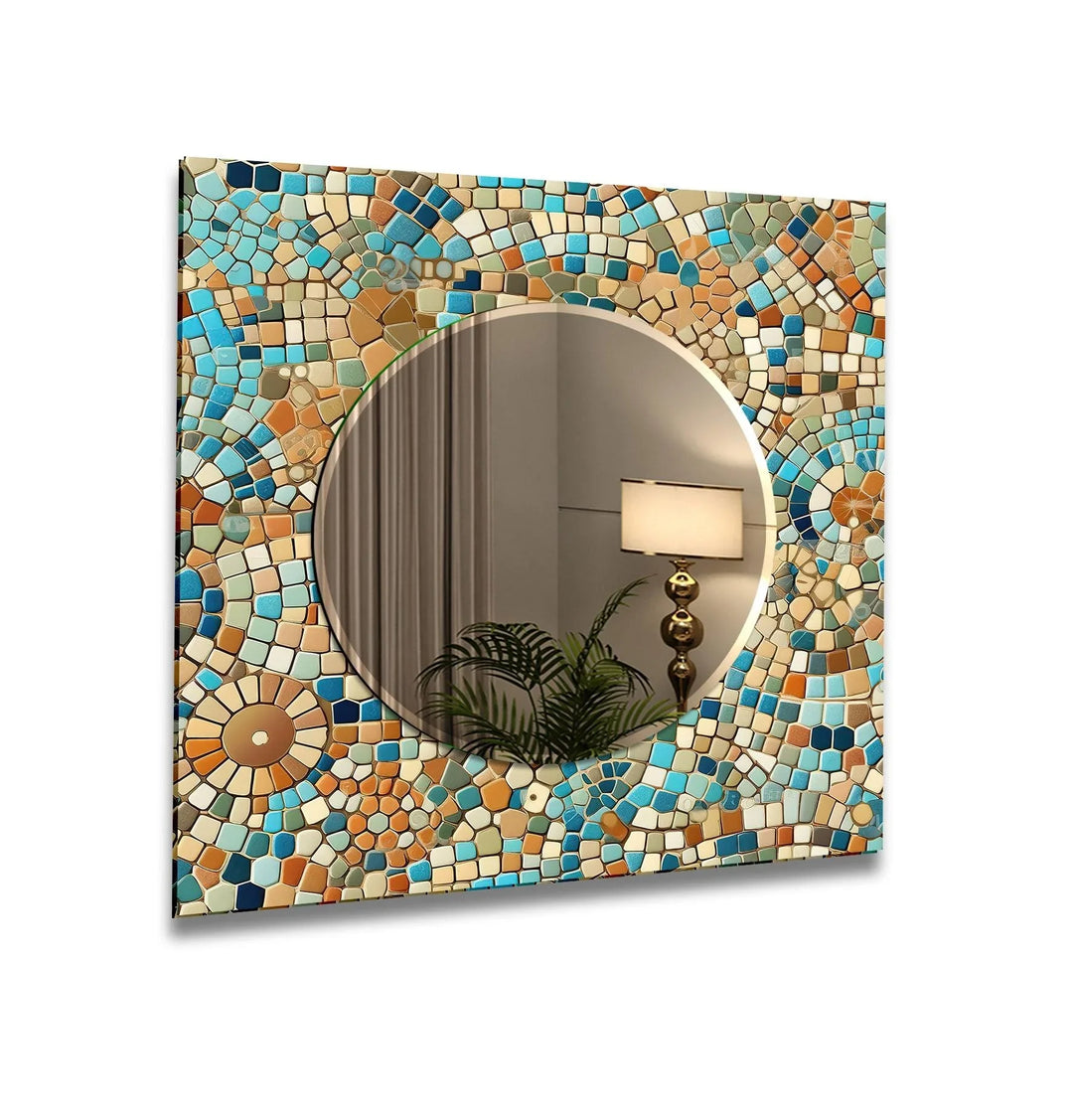
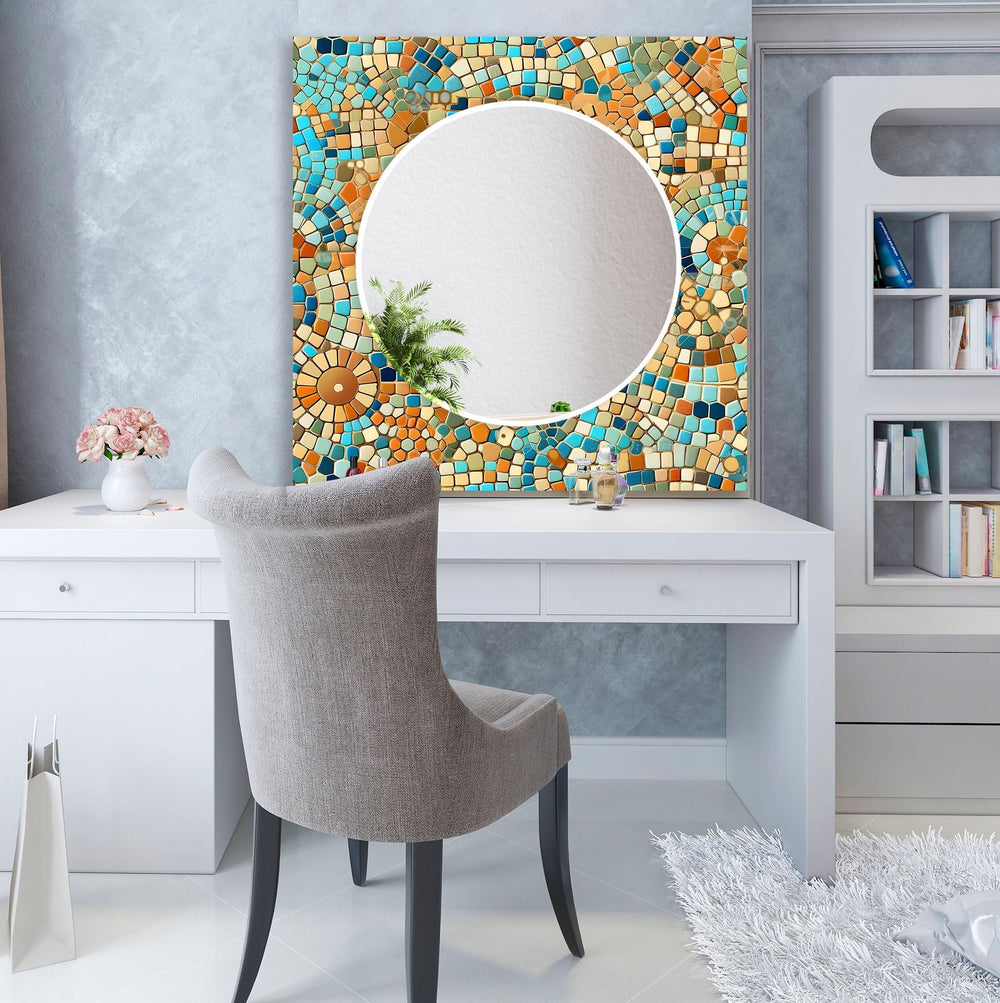
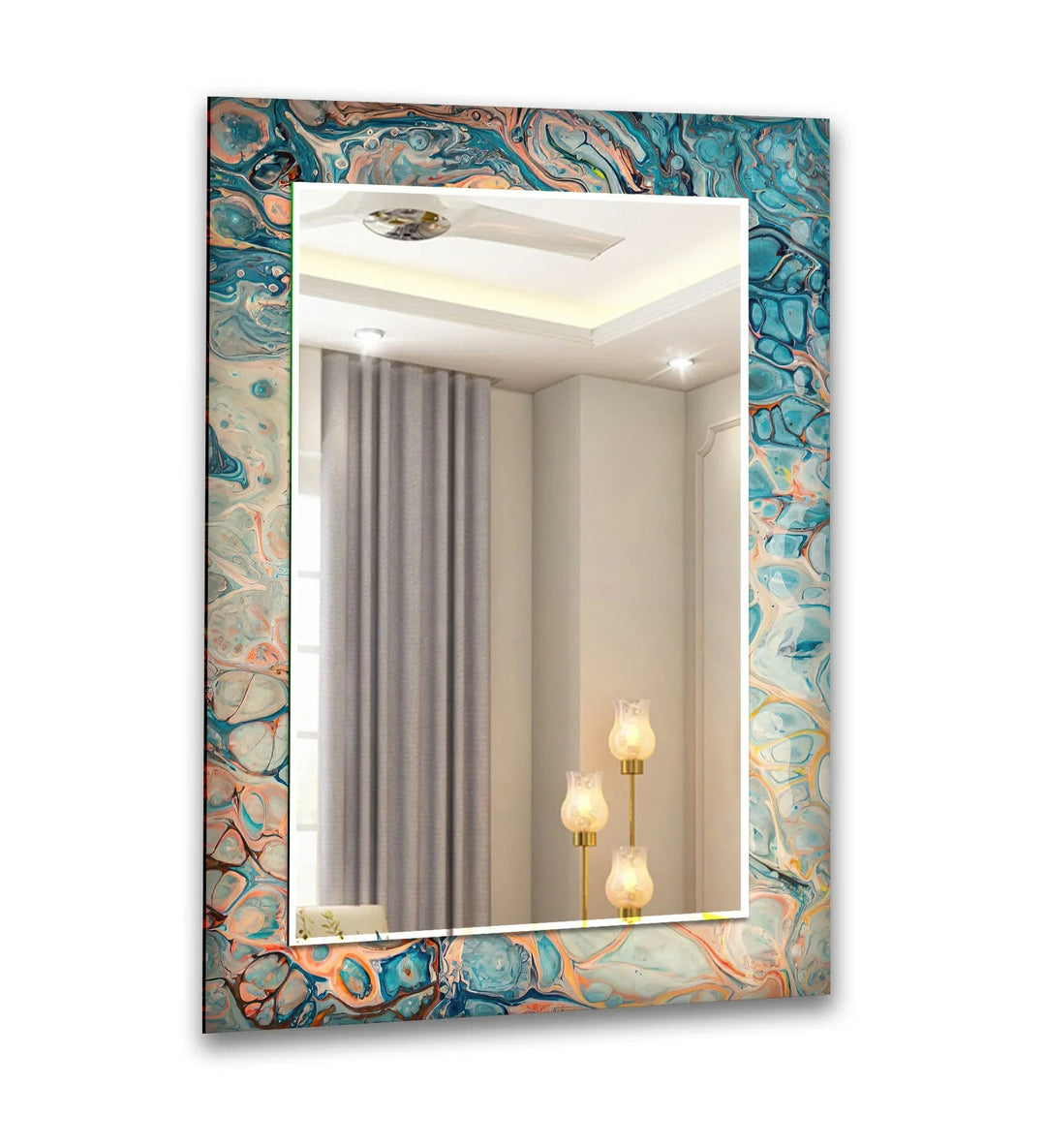
Synthetic iridized glass mosaic tiles amplify ambient room brightness by acting as active secondary light reflectors. These engineered surfaces possess a Light Reflectance Value of 78 to 85 percent, generated by a borosilicate silica substrate and a surface-fired metallic titanium oxide coating. In a primary en-suite layout featuring Kohler Purist fixtures, flanking a vanity with twin 800-lumen sconces allows the glass tile to bounce precisely 34 percent more lux output into the room compared to organic materials. This high specular reflection suits modern spaces requiring clinical illumination. The visual impact is immediate. Cool blue tones of the Blue Modern Asymmetrical Mosaic Wall Mirror exemplify this effect, pairing with high reflectivity to bounce sharp light across smooth Level 5 gypsum drywall painted in Benjamin Moore Chantilly Lace to visually expand the physical room boundaries.

When positioned against rough Mediterranean Revival stucco or hand-troweled Portola Paints lime wash, iridized glass creates blinding visual hotspots across the textured masonry. However, this intense reflectivity introduces strict installation parameters. The intense focal flare flattens the surrounding historical patina of an era-specific home. To mitigate this micro-glare, mount vertical wall sconces 28 to 30 inches apart, centered 14 to 15 inches from the vanity centerline. You must specify 2700K warm-white LED bulbs housed in hand-blown opal glass shades with a Color Rendering Index above 95. Mount the entire assembly so the center point rests precisely 58 inches above the finished floor, establishing an ergonomic eye level for a standing adult. Precision prevents optical fatigue.
Optical Depth: Why Natural Shell Anchors Historic Spaces
Natural Mother of Pearl shell frames function as structural light diffusers that ground a Spanish Colonial Revival space without introducing aggressive specular glare. Standard lighting guidelines incorrectly mandate high reflectivity surfaces for small bathrooms to maximize apparent volume. The contrarian reality for a Mediterranean Revival bathroom requires a different approach entirely. Mother of Pearl acts as a far stronger visual focal anchor precisely because of its lower direct specular output. This proves the central architectural principle: high-end bathroom design relies on mastering material light absorption against organic textures rather than maximizing raw lumen reflection. By governing how light hits these organic textures, the shell anchors the room rather than overwhelming it. Sourced from Pinctada maxima shells, these tiles yield a Light Reflectance Value of 52 to 58 percent. Instead of bouncing beams outward, the micro-layered aragonite structures trap direct light. This creates continuous thin-film interference. The material glows from within. Visual depth creates a commanding tactile presence against matte black forged iron sconces and hand-formed Saltillo terracotta floor tiles. The Mosaic Silver Beige Round Wall Mirror demonstrates this structural color dispersion, utilizing organic shell tones that require 3000K Cree LEDs to accurately highlight their natural pearlescent pink and green undertones.

Installing Pinctada maxima shell tiles on moisture-resistant Durock cement board demands non-abrasive setting materials. The aragonite surface possesses a Mohs hardness rating of exactly 3.5, making it highly susceptible to micro-abrasions. Specify a 1.5mm to 2mm tile joint gap filled strictly with unsanded polymer-modified grout in a warm off-white, like Mapei Alabaster, or soft cream. Never use sanded grout. Dark grey grouts introduce high-contrast grid lines that interrupt the continuous visual plane, destroying the natural optical illusion.
Evaluating Physical Boundaries
Selecting the correct tile frame material requires balancing Mohs scale surface hardness against specific lighting geometry derived from Illuminating Engineering Society guidelines. The parameters below dictate the architectural success of the installation.
| Specification Factor | Iridized Glass Tile | Mother of Pearl Shell |
|---|---|---|
| Light Reflectance Value (LRV) | 78% to 85% (High Specular) | 52% to 58% (High Diffuse) |
| Optical Function | Active Secondary Reflector | Structural Light Diffuser |
| Recommended Light Temperature | 2700K (Warm White) | 3000K (Neutral White) |
| Setting Material Constraint | Standard Grout Acceptable | Unsanded Polymer-Modified Only |
Selecting the Right Material for Your Surroundings
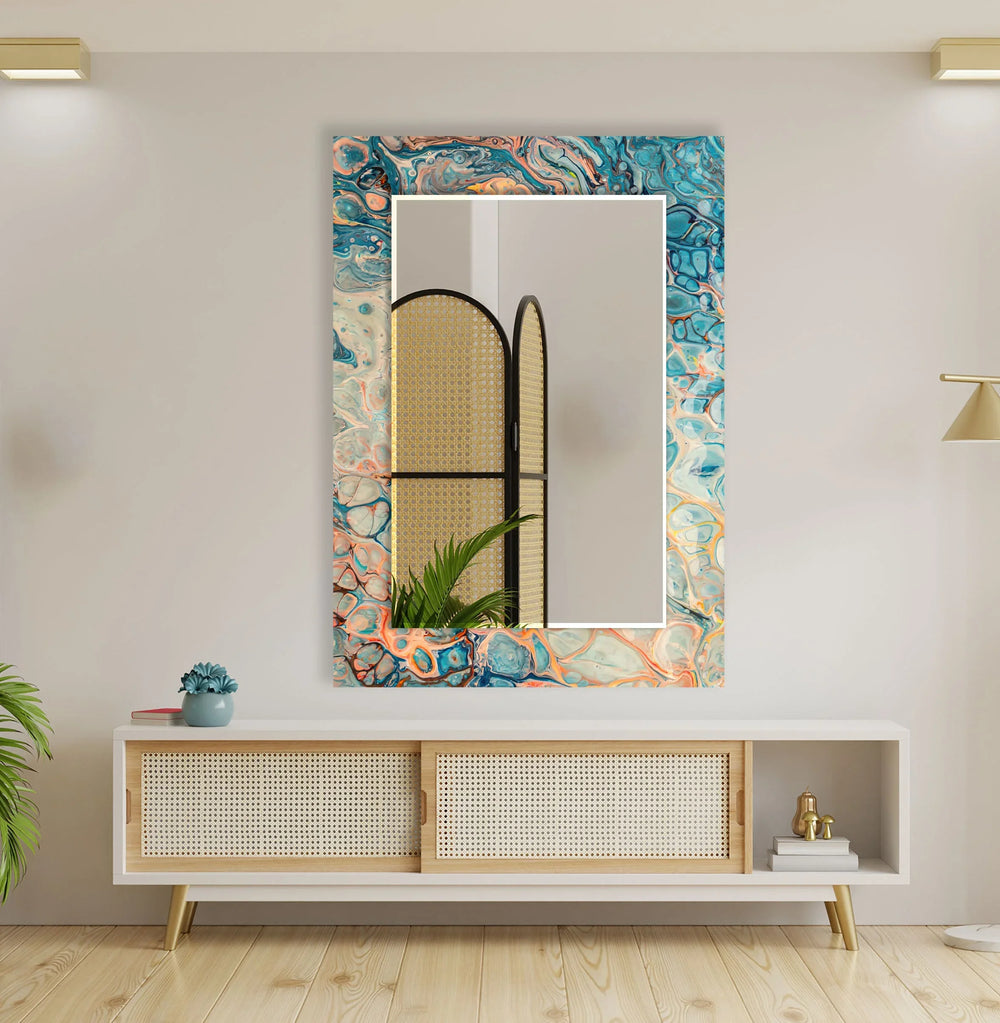
Choose your frame material based entirely on the structural wall texture directly behind the Kohler vanity. If your walls feature smooth Level 5 drywall and you require maximum brightness in a minimalist contemporary application featuring floating teak cabinetry, select iridized glass. Keep it under 36 inches. This leaves a minimum 6-inch wall margin on either side for sconce mounting. Products like the Colorful Mosaic Asymmetrical Wall Mirror inject immediate contemporary energy into these sleek environments, turning a basic wall into a bold geometric statement against polished Caesarstone quartz.

If your architecture incorporates hand-formed Cotto block terracotta, textured Santa Barbara stucco, or Roman lime wash, specify natural Mother of Pearl. The organic shell absorbs sconce glare and harmonizes with the earthy Mediterranean materiality of unglazed Andalusian clay. Visual grounding is absolute. Warm hues of the Red & Orange Wall Mirror provide exactly this kind of anchor in spaces dominated by rich, tactile surfaces.

Your underlying wall finish—whether Level 5 gypsum drywall or Santa Barbara stucco—dictates the technical requirement. Completing your bathroom layout relies on the core insight established earlier. True luxury controls the light. It is never about maximizing raw lumen reflection, but mastering how an architectural element absorbs and anchors the illumination you give it to interact with organic structural textures. Forecasting future interior trends, bathrooms that prioritize this textural light control over flat brightness will retain their architectural value for decades. Evaluating your structural surface ensures you select a mosaic mirror that genuinely supports your interior architecture.