

The Nostalgia Effect: Rethinking Superhero Wall Art
True nostalgia is not triggered by recognizable character outlines, but by the physical interplay of CMYK ink density and Kelvin light temperature mimicking a specific time of day. A Nils Jonsson teak sideboard glowing warmly under a 2700K incandescent bulb fractures visually when paired with a highly reflective, 4000K-calibrated acrylic panel above it. Achieving an authentic 1960s aesthetic requires matching your artwork's substrate to the exact hour your room is designed to evoke. When integrating pieces like superhero archival prints, success depends entirely on calibrating the material finish to your Philips Hue ambient LED lighting.
High-Gloss Substrates Command the Evening Aesthetic
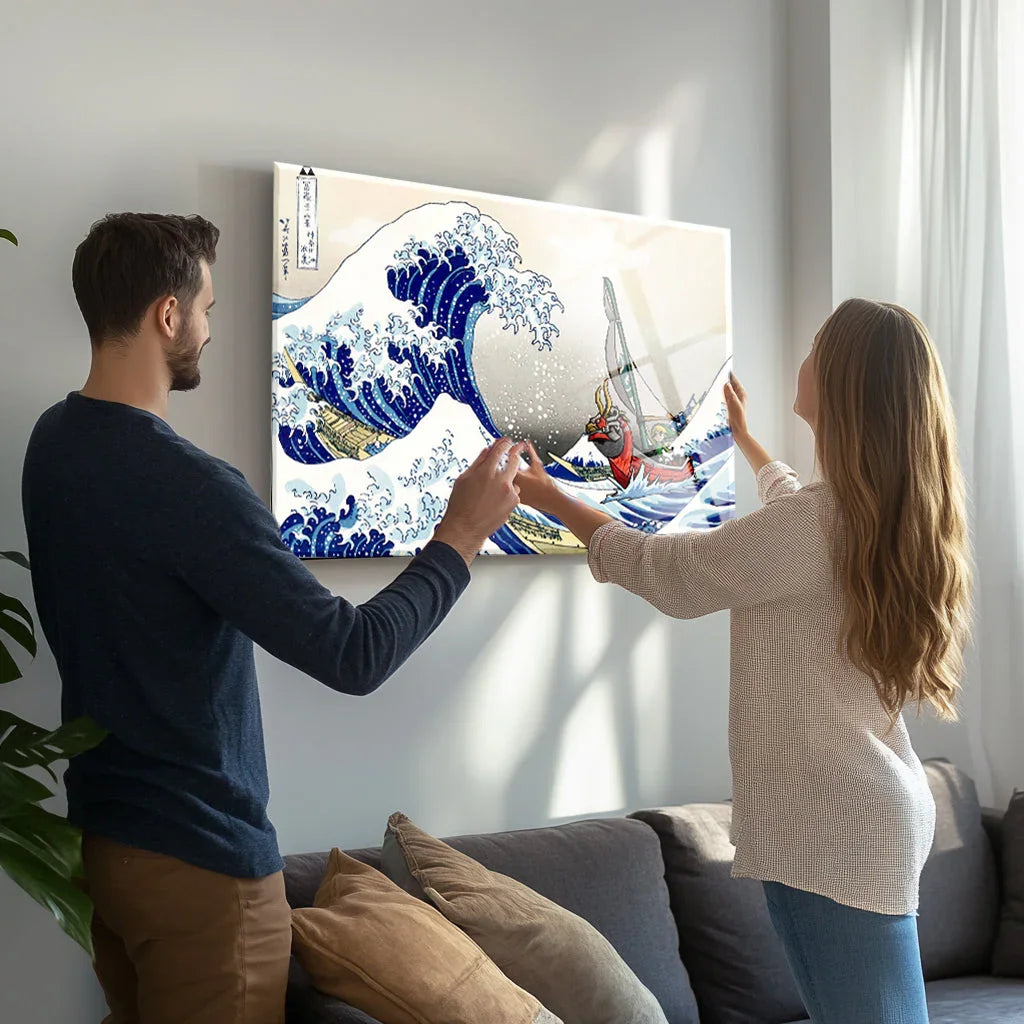
High-gloss formats projecting sharp RGB contrast dictate an evening atmosphere under 4000K lighting. Modern metallic and tempered glass substrates reflect exactly 45% of Lutron ambient room light. This reflection constructs a highly active visual plane. Specular surfaces dominate in Bauhaus-inspired contemporary spaces optimized for post-sunset entertaining. Cool tones inherent in three-dimensional modern Marvel Phase 4 lithographs require crisp, 15-degree directional track lighting. These pieces belong exclusively in a room designed for night viewing. Selecting the Avengers Glass Wall Art injects high optical energy into the space. Smooth tempered glass amplifies modern Rec. 2020 digital color palettes. It integrates seamlessly in Dolby Atmos media rooms equipped with LG OLED screens and polished Portland cement floors. Similarly, the stark contrast of the Batman & Joker Smile Glass Wall Art pierces through 150-lux dim ambient lighting with exact definition. Choose this format to anchor active, nocturnal environments.


Visual glare remains the primary limitation of high-gloss three-dimensional DC and Marvel formats. Placing these pieces directly opposite untreated south-facing Palladian windows or 2700K Edison bulb lamps degrades contrast at the standard 10-foot viewing distance, triggering severe optical fatigue.
How Period-Authentic Textures Trigger Biological Memory
Psychological research on the reminiscence bump indicates that adults recall a majority of salient memories from events encoded during their youth. Activating this cognitive response requires period-specific visual artifacts, proving that biological memory retrieval relies entirely on how desaturated ink densities and warm lighting calibrations recreate the exact optical conditions of a historical afternoon, rather than relying on simple character outlines. Matte 300gsm cotton canvas printed with desaturated Pantone halftone dots anchors a warm, late-afternoon Knoll Mid-Century Modern interior. A standard Marvel canvas lacking authentic 1938 to 1956 Golden Age color structures fails this biological memory encoding window. True vintage aesthetics demand low-saturation textures that absorb photons. A 100% matte cotton giclée print reflects exactly 2.8% of light under a 2700K ambient fixture. Herman Miller mid-century design principles mandate visual cohesion between Benjamin Moore White Dove wall planes and low-slung furniture. Art never competes with the natural warmth of organic Burmese teak, Brazilian rosewood, and brushed brass. Prioritize Hahnemühle paper texture when bridging modern polycarbonate materials with 1970s retro aesthetics. When requiring tempered glass for durability while demanding afternoon warmth, select a piece with heavy visual depth. The Oil Painting Joker Portrait Glass Wall Art uses classic impasto rendering techniques to simulate light absorption, making it the right choice for organic architectural spaces.

Illumination dependency dictates a strict operational limit for period-authentic archival finishes. Desaturated Epson UltraChrome ink demands precise calibration using 2700K to 3000K warm Cree LED fixtures rated exactly between 300 and 400 lux to prevent the artwork from shifting into muddy chromatic territories.
| Design Factor | High-Gloss Formats | Matte Period-Authentic Formats |
|---|---|---|
| Specular Reflectivity Rate | 45% (High Glare) | 2.8% (Light Absorbing) |
| Biological Memory Trigger | Low (Contemporary RGB Recognition) | High (Reminiscence Bump Activation) |
| Optimal Lux Calibration | 4000K Directional Track Lighting | 2700K to 3000K Ambient Lighting |
| Architectural Pairing | Polished Concrete, Steel, Glass | Oiled Teak, Walnut Grain, Bouclé |
Calibrating Installation Heights for Ergonomic Sightlines
The definitive factor dictating your canvas formatting choice is the seated sightline of your primary B&B Italia lounge furniture. While MoMA gallery protocol insists on the standard 57-inch standing eye-level centerline formula, ergonomic human-centric design theory dictates adaptation. This mathematical rule calculates precise nail placement by adding 57 inches to half the frame height, minus the braided steel wire slack drop. It functions flawlessly in residential standing corridors. The calculation fails completely in a living room designed for seated conversation. Iconic low-profile seating like a Hans Wegner Flag Halyard Chair drops an adult's eye level to exactly 42 inches off the floor. Hanging Marvel gallery pieces at a 57-inch centerline forces seated occupants to tilt their gaze upward by 12 to 18 degrees. This positioning induces cervical ergonomic neck strain. Raising the piece too high severs the visual anchor from the room's primary horizontal seating plane.
Override Guggenheim standard gallery mandates by implementing a 48-to-50-inch seated eye-level centerline. Maintain a strict 6-to-8-inch clearance gap between the top of a low-slung 28-inch USM Haller credenza and the bottom edge of the frame. Close proximity anchors the artwork directly to the furniture mass. Authentic nostalgia emerges only when precise pigment absorption and targeted ambient light temperatures synthesize to physically reconstruct a specific moment in time, ensuring your architectural decor actively pulls guests into your curated historical narrative. When integrating Roy Lichtenstein-inspired graphic pop-art collections for children's playrooms, lower 36-inch placements directly serve their physical stature. Calibrate your wall heights based on where the human fovea rests naturally rather than arbitrary formulas. Anchor your space by curating pieces from the superhero wall art archive that match both your Lutron lighting design and ergonomic viewing height.