

When Darkness Falls: Huge Wall Mirror Frame Selection
Large mirrors achieve their greatest spatial impact in low light not through highly reflective glass, but through aggressively light-absorbing frames. A Sony Alpha camera lens seeks the sharpest contrast to find its focal point in the dark, capturing the exact way twilight hits unlit Venetian plaster walls. This quiet observation reveals a fundamental truth about contemporary residential architecture. While conventional design wisdom insists on pairing massive glass with highly reflective 22-karat gold-leaf to maximize room brightness, true spatial depth requires a boundary of pure shadow. Anodized aluminum borders in matte-black operate as visual black holes, swallowing the ambient glow of 2700-Kelvin Flos Arco floor lamps. The sheer lack of peripheral light forces the human eye to perceive the inner reflection as exponentially sharper against dimming walls. Selecting a huge wall mirror based entirely on how its frame behaves after dusk makes the object a structural anchor. That frame defines the darkness.
As a space transitions from day to night, the architectural hierarchy shifts. Brightness recedes. Contrast takes control. The objects holding a Bauhaus-inspired living room together at eight o'clock in the evening are those casting the most deliberate shadows. A heavily framed mirror ceases to be a mere looking glass and becomes a graphic intervention. It dictates the atmosphere. Ignoring the absorptive qualities of ebonized walnut or powder-coated steel frame materials surrenders control of your room's evening geometry.
How Shadow Defines the Edge of Reflected Space
Low-iron float glass with a 95 percent visible light reflectance creates authentic nocturnal depth only when physically bound by an aggressively absorptive perimeter. Mounting a standard soda-lime float glass mirror in a classic Parisian Haussmannian apartment forces the inherent iron-oxide impurities to cast a muddy green tint. This subtle discolouration ruins the warm 2700-Kelvin incandescent glow of Louis Poulsen PH 5 pendant lights. Upgrading the central pane to ultra-clear Pilkington Optiwhite low-iron glass pushes the specular reflectance up to an optimal 92 to 95 percent. That precise material shift drives a measurable 15 percent expansion of light penetration into the darker, recessed corners of the primary bedroom. The glass pulls daylight deeper into the floorplan. Intense clarity demands strict containment. Dense matte-black anodized aluminum frames exhibit a light absorption coefficient of 95 percent, anchoring the spatial geometry by eliminating peripheral light bounce in low-light environments. They reflect almost nothing. Such absorption creates a crisp graphic baseline in the room.
When sourcing oversized Maison Jansen-style wall mirrors, prioritise the frame's capacity to cast a dense shadow over its purely decorative details. Human eyes use this stark lack of light as a visual anchor to make sense of the surrounding architecture. Design orthodoxy mistakenly recommends matching a Baroque giltwood trumeau mirror to classical Louis XVI boiserie to maintain historical integrity. That traditional approach fails spectacularly in low-light conditions. Giltwood scatters warm visible light in the 580 to 700 nanometer spectrum. Scattered light flattens the adjacent plasterwork, turning complex hand-molded cornices into a uniform, glowing blur. Conversely, a zero-reflectance Farrow & Ball Pitch Black matte frame acts as a physical shadow line. It highlights the historic textures of the room with extreme, Louvre-grade contrast. Forcing the eye to recognize the 19th-century plaster moldings as highly detailed, three-dimensional reliefs becomes effortless. The darkness of the metal frame makes the Benjamin Moore Chantilly Lace white plaster appear crisper. Shadow dictates form. Absence of light is a material you must design with.
Calculating Golden Ratio Proportions for Structural Grounding
A large wall mirror installed in a primary suite or formal drawing room anchors the wall exclusively when its frame thickness strictly adheres to the mathematical Golden Ratio of 1:1.618. Interior designers routinely make the fundamental error of pairing a massive 175-centimeter tall mirror with an ultra-thin 1.5-centimeter brass edge. Inside a room featuring 3.2-meter ceilings and ornate chevron-patterned French oak parquet, this narrow metallic line lacks the dense visual weight required to ground the heavy glass. That mirror floats awkwardly above a B&B Italia Camaleonda sofa. It is structurally disconnected, operating as a clinical intrusion rather than a permanent architectural fixture. Architectural design principles demand a highly calculated approach. Inserting sharp-lined modern materials like brushed brass or anodized metals into classical environments requires strict mathematical proportions to maintain harmony. The Golden Ratio exists as a fundamental natural phenomenon, relying on the Fibonacci sequence to create cohesive living areas. To correct spatial imbalance, apply this sequence directly to the frame itself. For a standard 130-centimeter wide Carrara marble mantelpiece, set the mirror's total width to exactly 130 centimeters. Multiplying this total width by 0.618 yields the ideal glass width of 80.3 centimeters. Remaining dimensions dictate that the frame on each side must be exactly 24.85 centimeters wide. Mathematics creates calm.
Dense shadows cast by a heavily proportioned, unreflective border at twilight turn a flat sheet of glass into a recessed architectural window, pulling the ambient glow of sodium-vapor streetlamps directly into the center of the room.
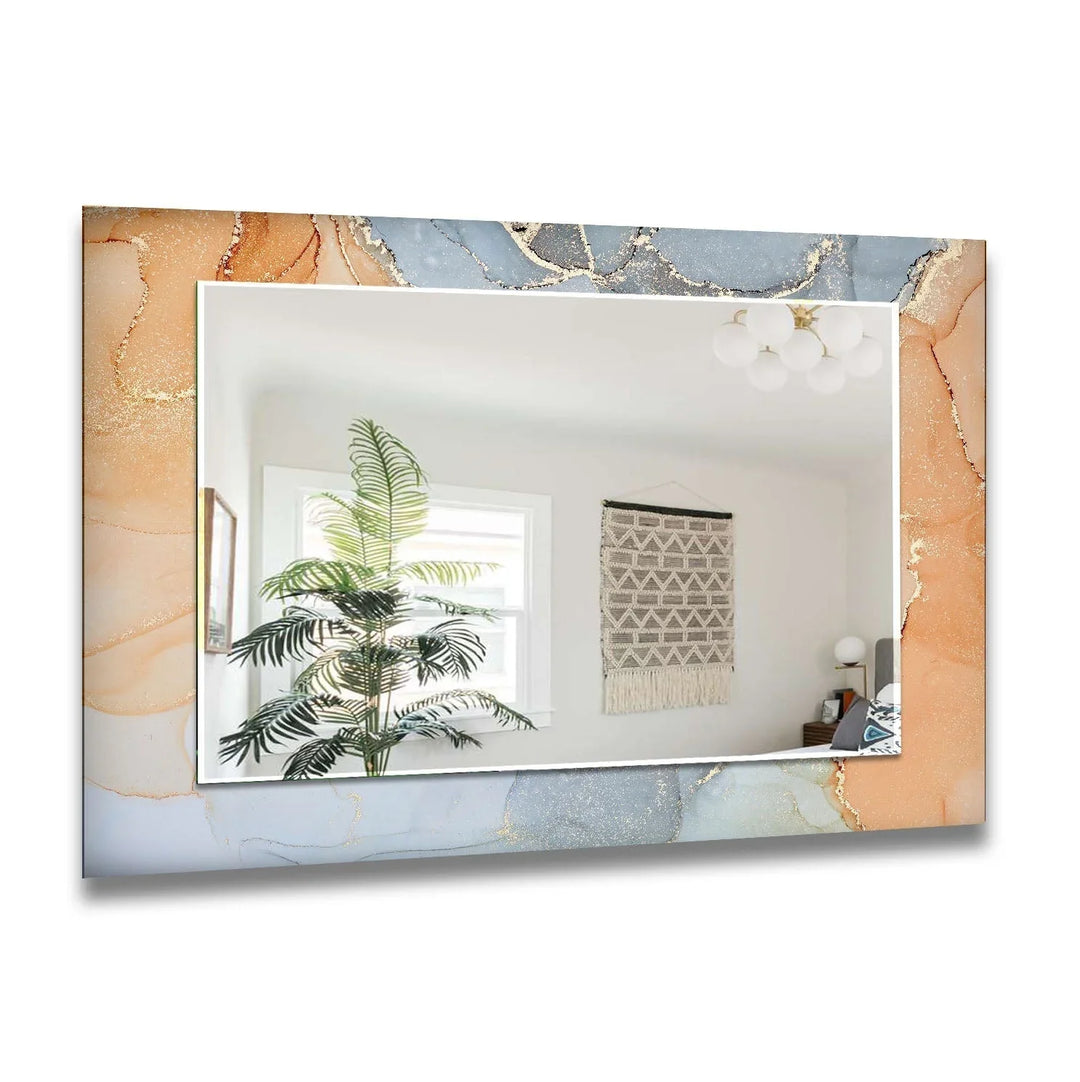
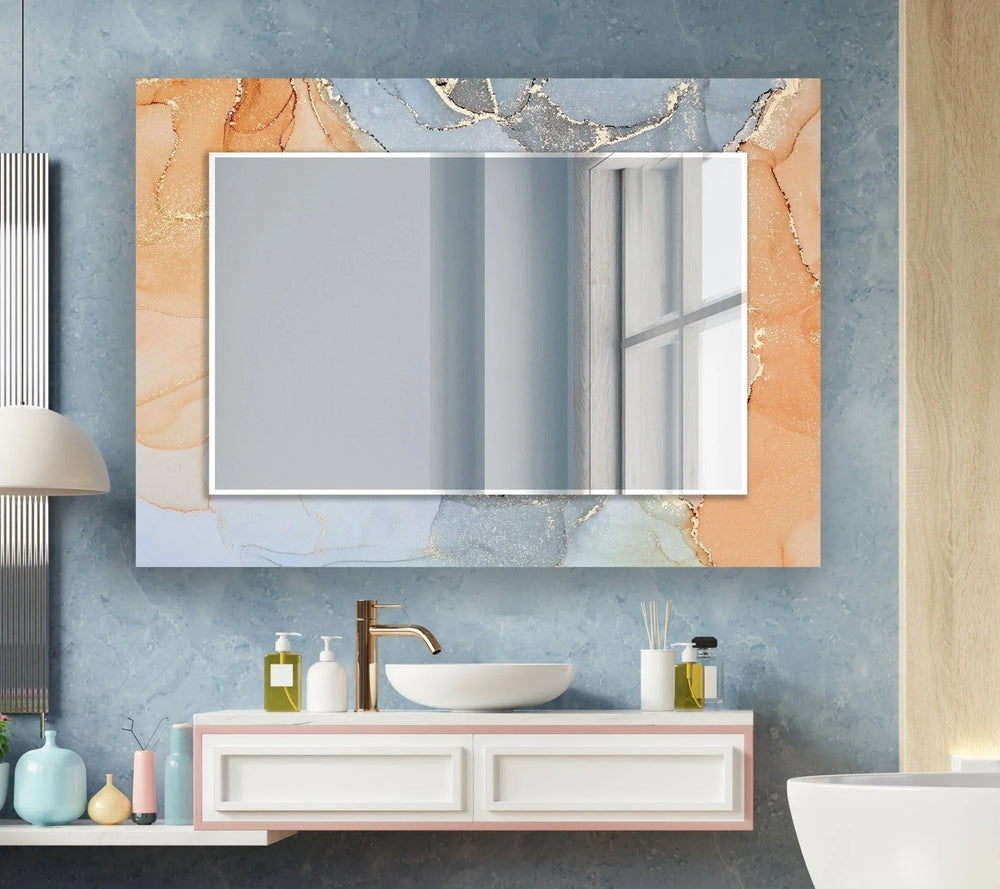
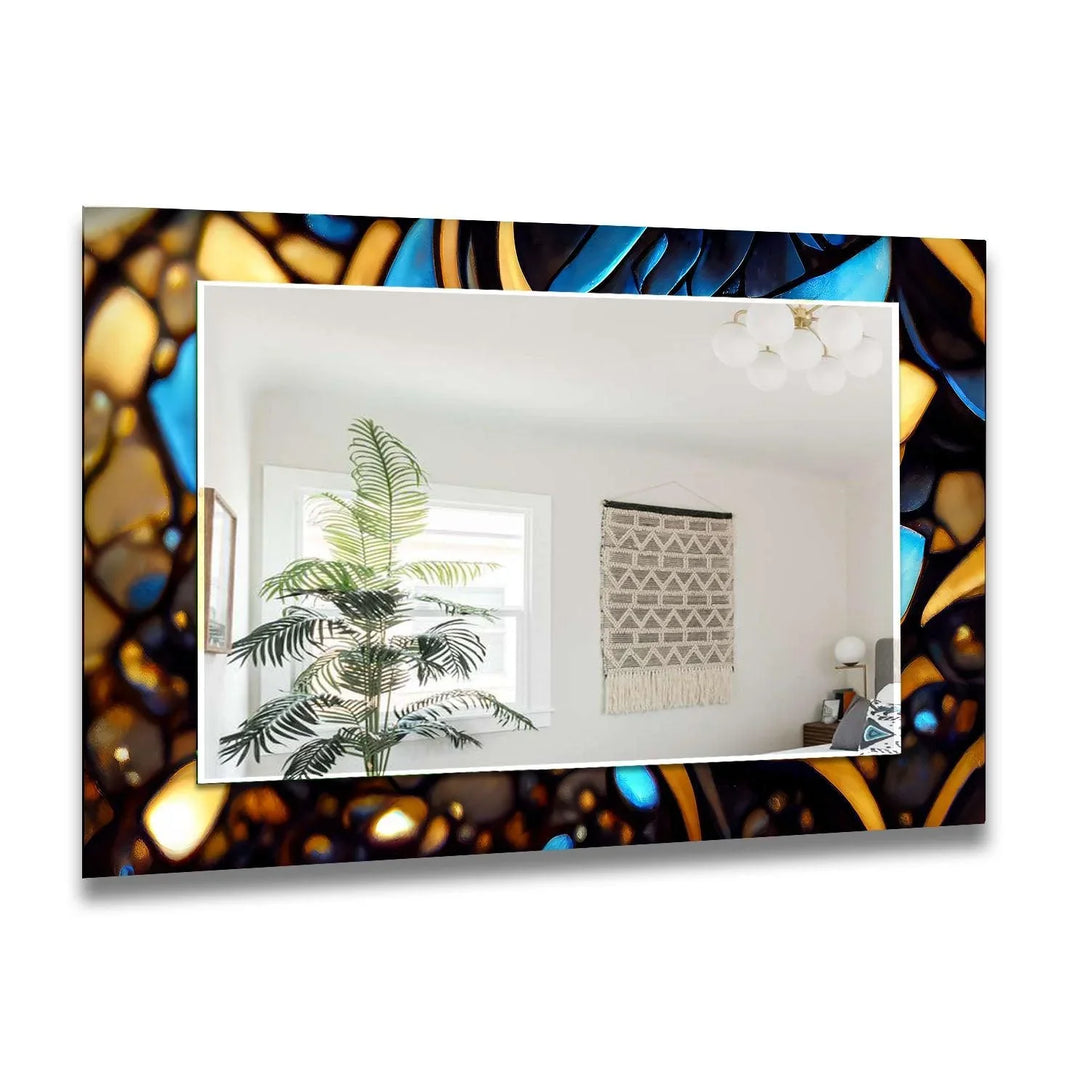
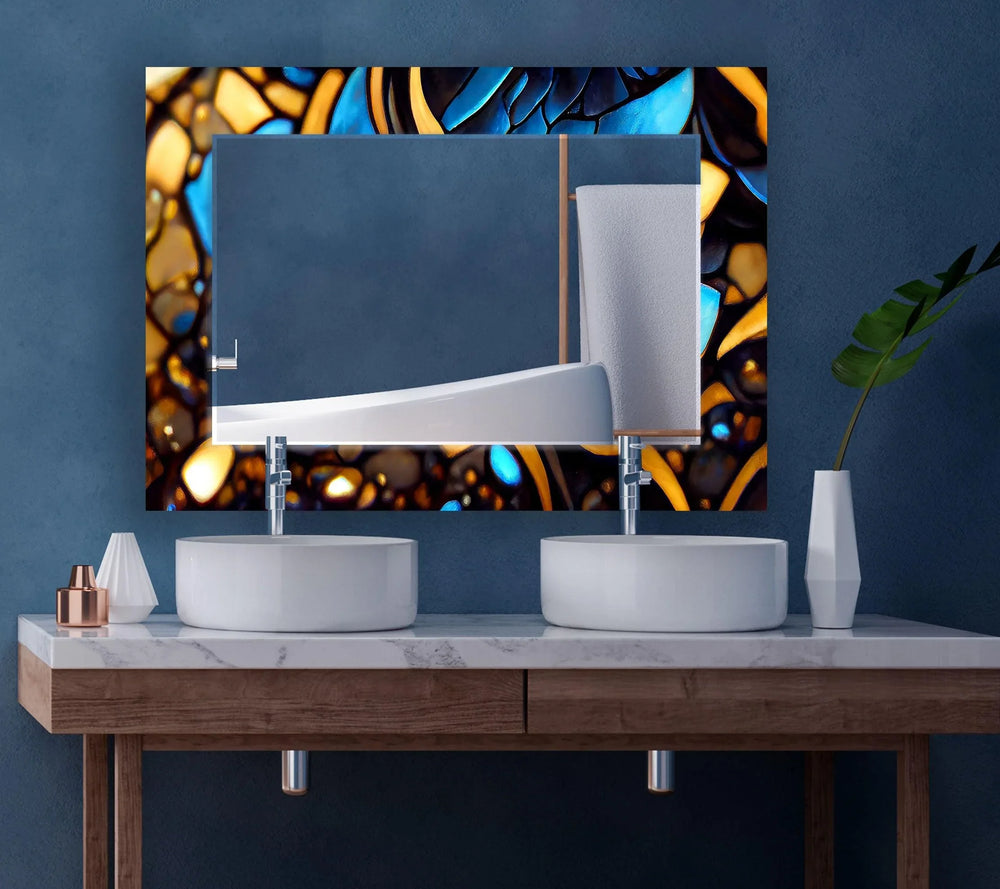
The Beige & Brown Design Wall Mirror utilises heavy border proportions to establish a definitive boundary between the crisp glass and the textured Romo wallpaper behind it.

This earthy, deeply textured perimeter acts as a physical shadow line against smooth Venetian white plaster. It stabilizes the vast reflective plane through pure mathematical mass. Sizing a large wall mirror for expansive Equinox-style residential gymnasiums or wide corridors requires this 38.2 percent visual border to prevent the space from feeling like a sterile commercial studio. Thick dark frames absorb up to 400 lumens of direct peripheral daylight that would otherwise bounce erratically around the room. Trapping this excess light establishes a visual pyramid that heavily grounds the living room's open-concept layout. According to strict styling directives, a fireplace-mounted mirror acts as this type of visual anchor. It claims space through sheer weight. Opting for a minimalist 2-millimeter edge strips the mirror of its structural authority, leaving nothing but a fragile plane of floating Saint-Gobain glass.
The Precise Geometry of Placing Large Glass in Dim Spaces
Strategic placement of a dark, heavy frame dictates exactly how evening shadows pool across your open-concept floorplan. Hanging a big wall mirror precisely 145 centimeters from the floor to its midline maximizes the reflection of low-angle evening light while maintaining standing eye-level ergonomics. Wedging a massive dark border directly between two closely spaced Crittall-style French windows creates a severe spatial bottleneck. Because matte-black anodized aluminum absorbs over 90 percent of incident light, a thick Golden Ratio-proportioned frame positioned here acts as a massive light sink right at the room's brightest entry point. It entirely chokes the peripheral light bounce. The room instantly shrinks in perceived volume. Instead, position the piece on the wall directly opposite or perpendicular to the primary Schuco aluminum windows. Natural twilight hits the low-iron float glass at a shallow 90-degree angle. This alignment allows fading daylight to bounce diagonally across the room, maximizing light redirection into the recessed corners of a 3.2-meter high ceiling space without causing harsh, direct glare.
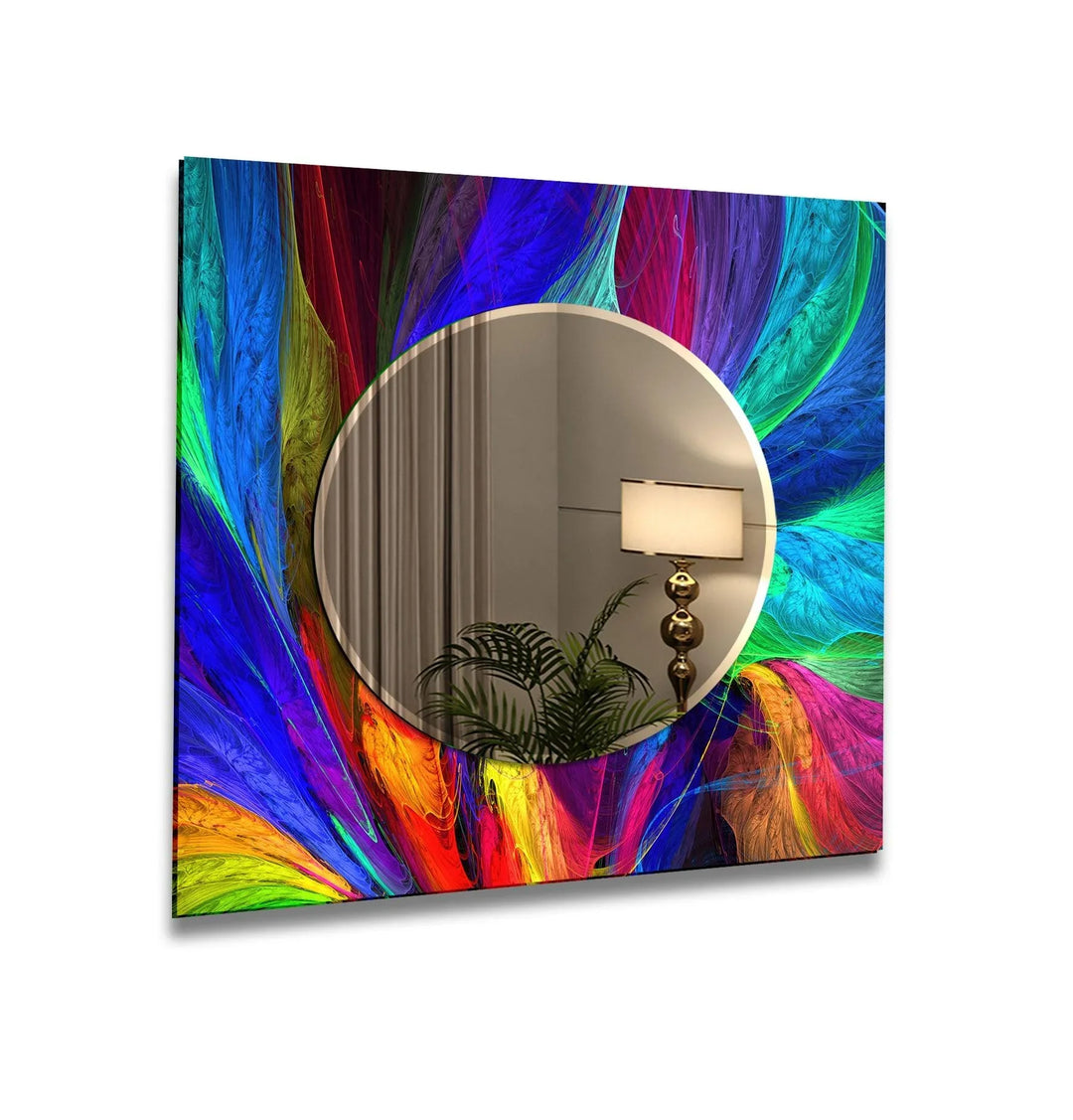
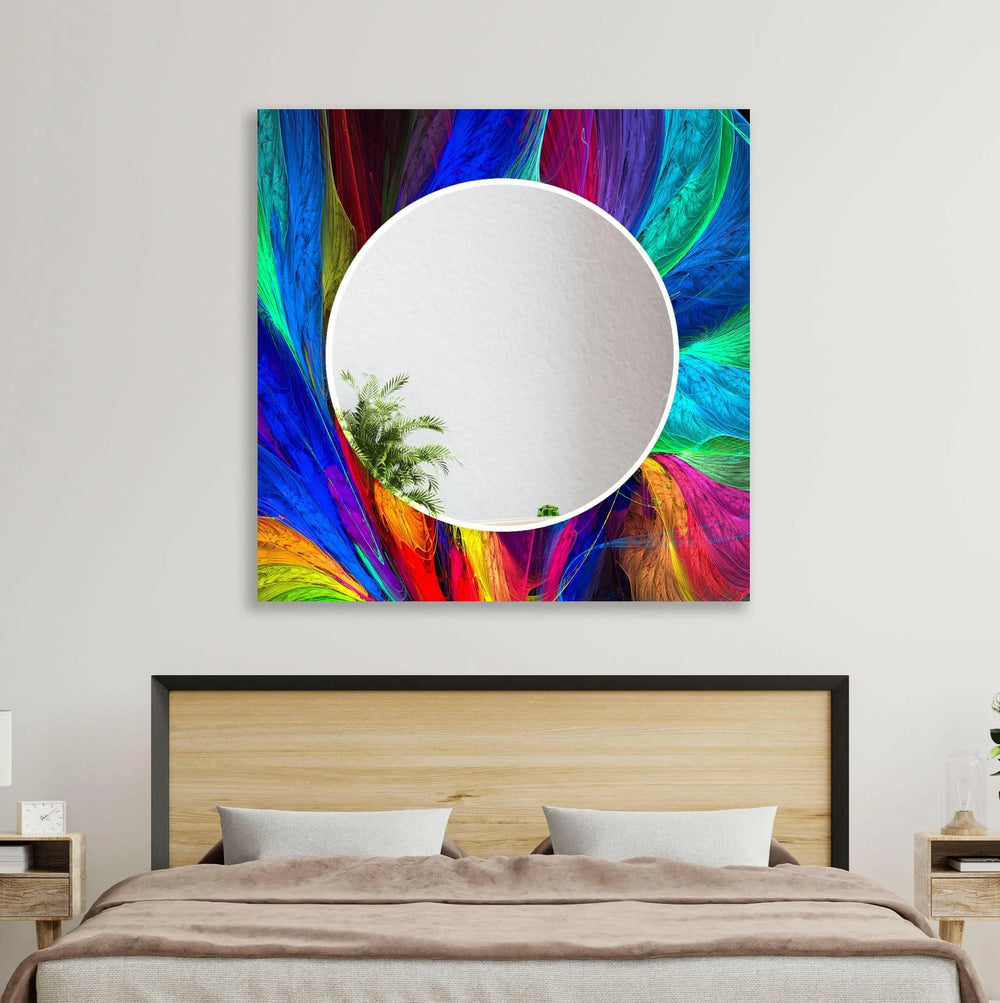
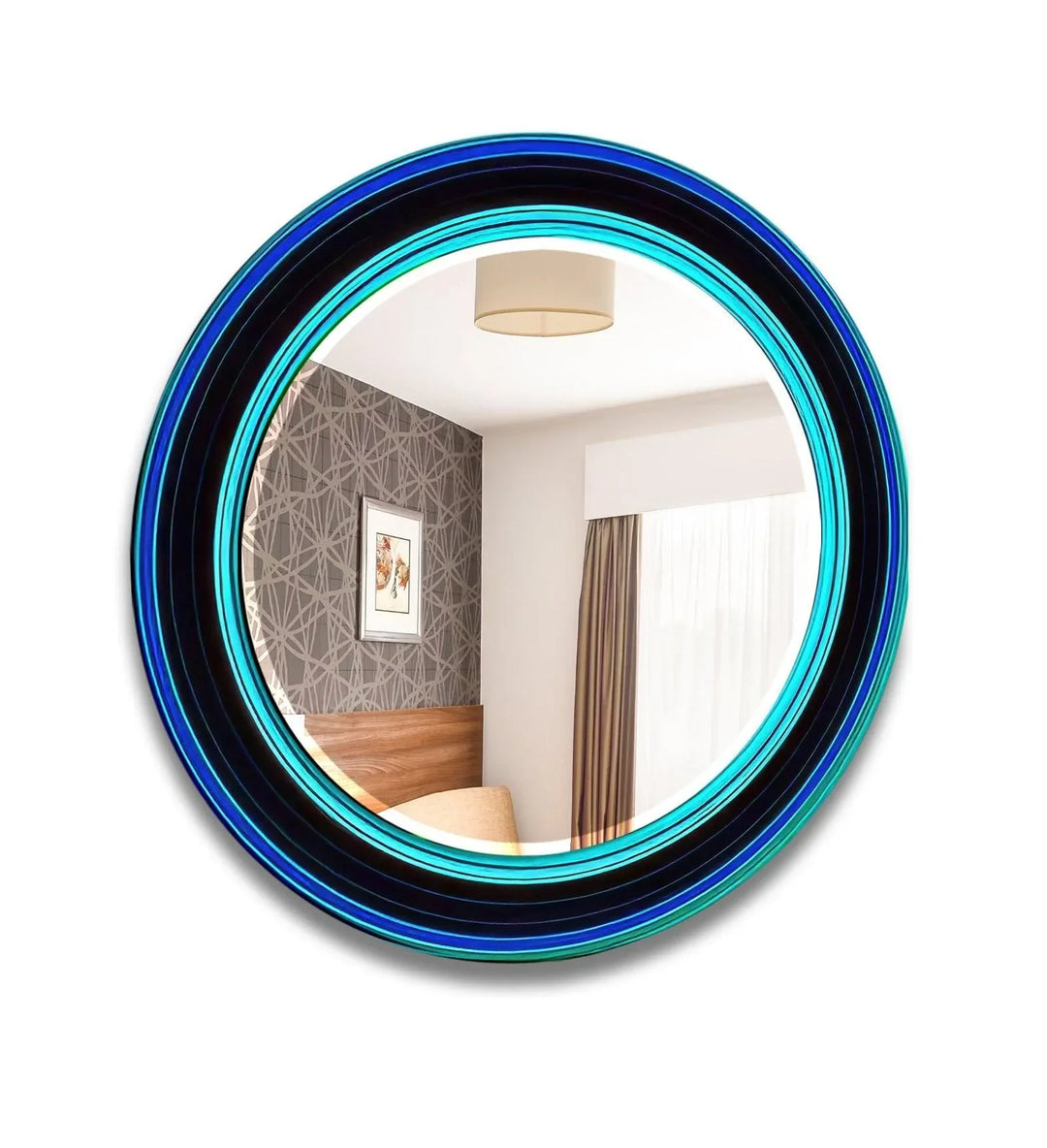
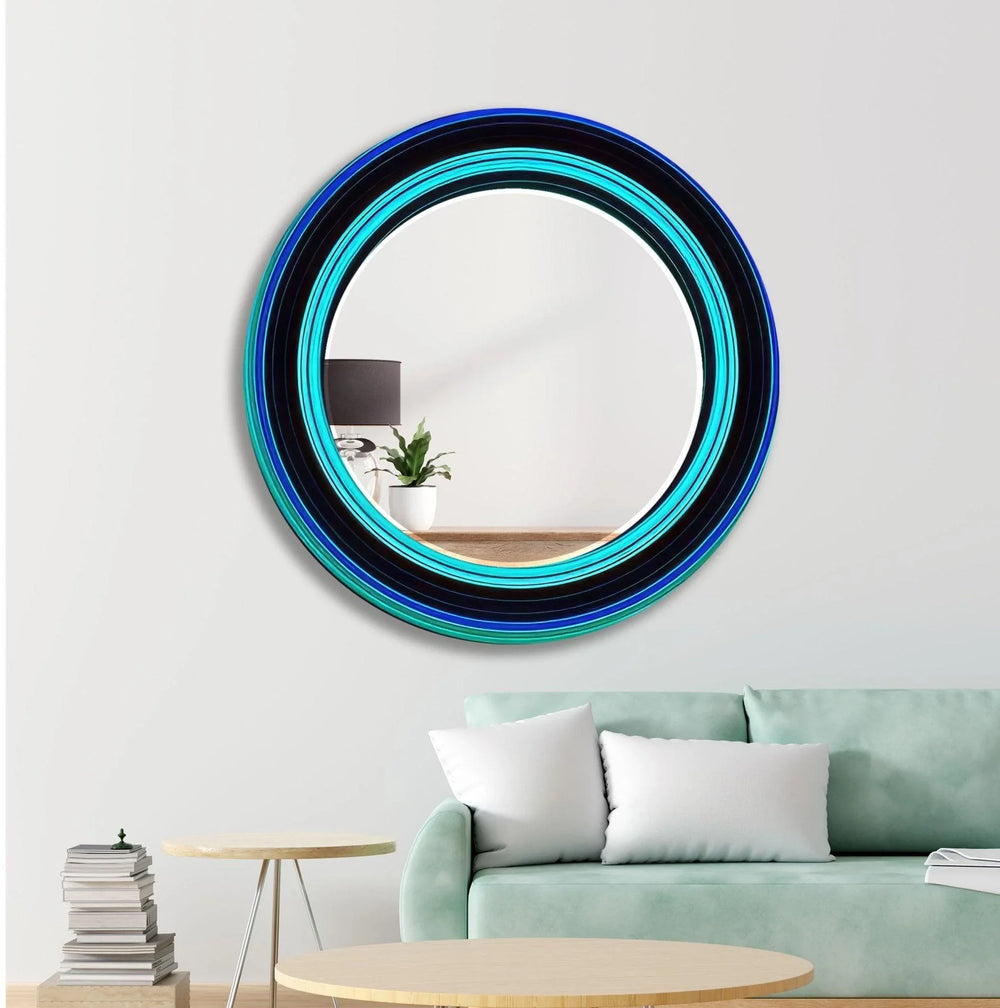
The Abstract Turquoise Round Wall Mirror exploits this exact geometry when positioned on a perpendicular load-bearing brick wall.

Dense perimeters absorb fading ambient light, creating crisp silhouettes that hold their ground as the surrounding environment darkens. High-end large wall mirrors used by Auckland-based architectural designers like Cheshire Architects employ this exact high-contrast strategy to combat the specific low-angle light of the southern hemisphere. Placing a large wall mirror to visually expand a hallway at the far end of a narrow Victorian terrace corridor stops the eye from wandering when bound by a dark, heavy frame. It acts as a definitive full stop in the architectural sentence, establishing an endpoint that gives the narrow space a sense of measured distance. Deliberate application of dark, absorptive framing redefines how domestic space operates at night. Choosing a frame for its distinct shadow-casting presence shifts the piece from a basic household reflective surface into an essential structural tool for night-time architecture. Moving forward, interior architectural planning must rely on these aggressively light-absorbing frames rather than highly reflective borders to physically anchor the spatial geometry of a room in low-light conditions. Consider the darkness as deeply as the light when finalising your huge wall mirror frame selection.