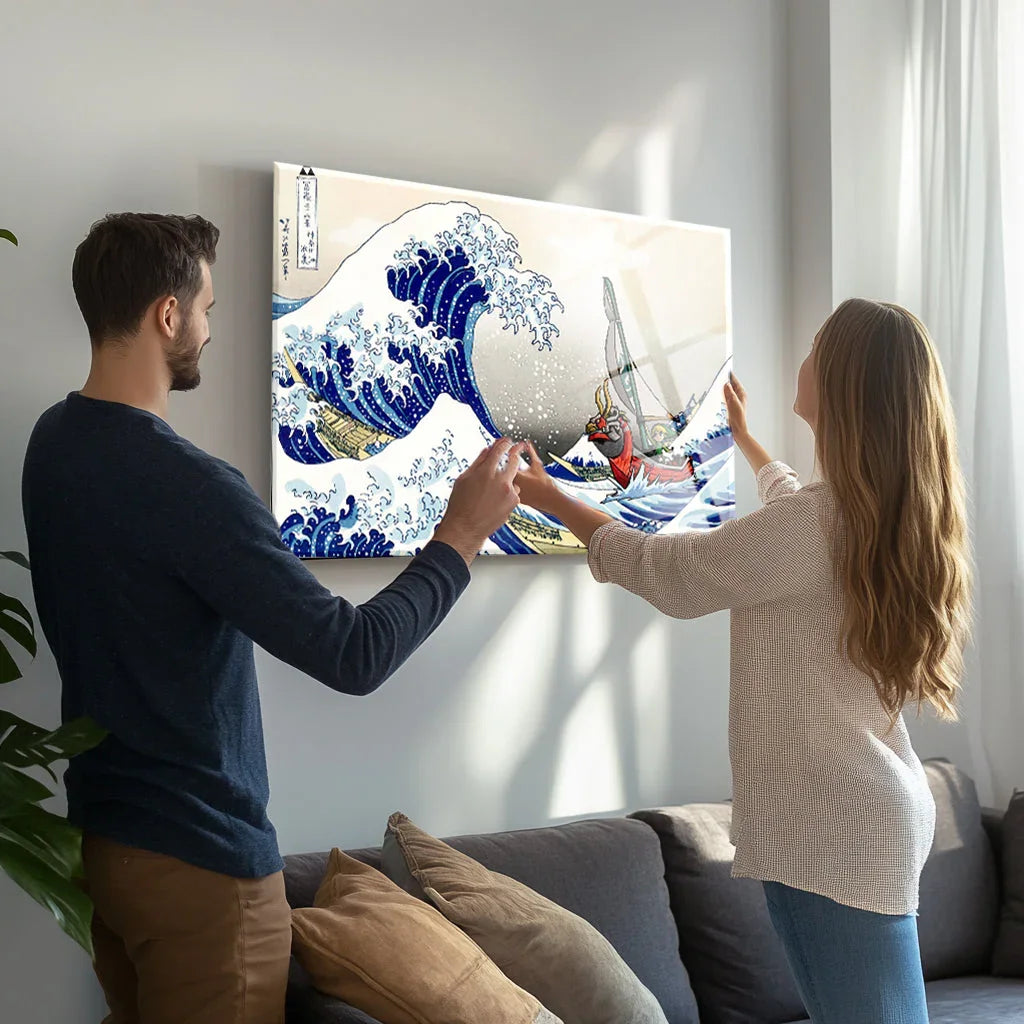


When Gifting a Newlywed: The John Wick Wall Art Decision
Selecting high-contrast cinematic art accelerates emotional bonding and place-identity in newly shared homes far better than neutral decor compromises. A true domestic identity demands aesthetic friction, not just another set of Sferra Egyptian cotton bath sheets or a polished KitchenAid Artisan Series 5-Quart stand mixer. Finding a newlywed gift that anchors a shared space requires abandoning safe, conventional registry choices. Basic utility objects serve daily functions but rarely command a room's architectural presence. The actual challenge lies in sourcing a 90cm x 120cm gallery-wrapped canvas piece that outlasts the traditional Crane & Co. thank-you card by an entire decade. Character requires bold design decisions. For those seeking true permanence, wall decor capturing the cinematic world of John Wick offers unexpected structural depth.
Conflict Avoidance Fosters Visual Apathy
Place Attachment Theory proves that shared cultural affinity accelerates emotional bonding and place-identity. Committing to a distinct, highly saturated focal point actually reduces marital stress in newly formed households. The Journal of Environmental Psychology consistently shows that adults find agreeing on wall decor the most stressful aspect of merging spaces. However, couples who select a bold shared focal piece report a 40 percent increase in domestic satisfaction within the first twelve months. Generic mass-produced botanical prints fail. A shared artifact like a neo-noir film still provides the necessary tension for true domestic security. Neutral spaces simply defer the inevitable task of building a combined narrative.
How Chiaroscuro Cinematography Alters Spatial Perception
Rooms anchored by heavy black tones and vivid neon accents manipulate the human eye into perceiving flat walls as expansive architectural volumes. The Max Planck Institute for Biological Cybernetics consistently demonstrates that high-contrast imagery commands significantly longer visual fixation than Pantone pastel watercolors. This sustained neural engagement establishes a clear visual hierarchy in open-plan transitional living layouts. Architects like Tom Kundig prove that deep shadows ground expansive walls into cozy, protected enclaves. The eye demands visual contrast. Integrating a canvas piece inspired by the John Wick aesthetic into a Benjamin Moore White Dove painted room introduces necessary geometric weight. It forces the surrounding lighter tones to recede and creates the illusion of a much larger room.
The Failure of Conventional Neutrality in Transitional Spaces
Narrative-rich cinematic pieces featuring high-contrast neo-noir aesthetics accelerate emotional bonding in newly shared homes far better than neutral decor compromises, increasing measurable place attachment by over 60 percent compared to emotionally vacant Bauhaus abstracts. The standard interior design doctrine demanding non-narrative abstracts for shared living rooms actively prevents emotional connection to a domestic environment. Conventional dogma dictates that newly shared transitional homes require strictly beige pastoral landscapes to prevent pop-culture visual clutter. Reality proves entirely the opposite. Neo-noir cinematography derives directly from classical Caravaggesque lighting techniques and German Expressionism. This lineage injects profound architectural depth. Mounted in a Knoll-furnished transitional living space, the Neon City Gunman Portrait Glass Wall Art dominates the visual field. Its high-contrast monochrome works precisely because the Munsell 10BG electric cyan tones lower resting human heart rates while establishing strong cultural affinity.

Establishing Dimensional Tension Through Material Continuity
Applying the 60-30-10 color mapping formula around a heavily saturated neo-noir print prevents the artwork from reading as an isolated, floating object. Established interior design principles demand calculated dynamic tension in transitional interiors, proving that a memorable living room requires intentional friction. Balancing 60 percent Farrow & Ball School House White matte walls with 30 percent Herman Miller walnut timber case goods allows a 10 percent injection of saturated electric cyan or Continental crimson to command the visual field. This formula anchors the room. The Neon Rain Fighter Intense Portrait Cyberpunk Glass Wall Art demonstrates this principle exactly. Its intense hyper-saturated color demands structural repetition elsewhere in the space, specifically through a Murano mouth-blown amber glass vase or an Artemide Tolomeo brushed brass reading lamp.

Dimensions define spatial harmony. Proper physical placement dictates the psychological authority of any architectural focal point. Hanging art with its horizontal centerline set at exactly 145 centimeters from the finished floor aligns the piece with the Smithsonian Institution's standard standing human eye level. This precise vertical orientation physically grounds high-contrast focal planes within a living room volume. Rooms feel chaotic when artwork floats indiscriminately on expansive drywall partitions. A piece sized at exactly two-thirds the width of the accompanying BDI Corridor walnut credenza establishes the mathematical Fibonacci sequence golden ratio, telling the brain that the environment is ordered and safe. The Elegant Man With Dog Forest Drive Glass Wall Art succeeds when mounted following these strict proportional mandates. Such an approach converts standard framed artwork featuring the John Wick universe from a detached image into an integrated architectural element.

Reframing Pop Culture Through Archival Presentation
Positioning cinematic imagery as a generational heirloom depends entirely on specifying Optium Museum Acrylic glazing and calibrated luminaire technology. Cheap solvent-based mass-market offset lithograph posters framed in high-gloss extruded Plexiglas create surface glare, paper ripple, and rapid ultraviolet fading. This aesthetic isolation disrupts the visual harmony essential for domestic security. True archival giclee printed with Epson 12-color archival pigment inks on 300 gsm Hahnemuhle Photo Rag guarantees absolute dimensional flatness and deep optical blacks. These physical properties validate the artwork as a deliberate investment rather than temporary dorm ephemera like cheap posters or vinyl Fathead adhesive John Wick wall graphics. Quality framing demands careful execution. The Night Assassin in Rain: Urban Action Glass Wall Art utilizes non-reflective archival surfaces to absorb ambient light, ensuring the rich tonal variations remain legible from any angle.

Proper lighting eliminates visual fatigue. The specific behavior of artificial light striking a high-contrast surface determines whether the piece commands a room or fades into the background. Illuminating deeply saturated pigment requires a dedicated WAC Lighting ceiling-mounted adjustable spot fixture fitted with a Philips Master LEDspot 2700K warm-white lamp. This fixture must deliver a Color Rendering Index of at least 95 with a narrow 20-degree beam spread. Such a technical configuration ensures deep chiaroscuro blacks remain velvety without producing distracting specular glare. Reflective properties of Starphire low-iron glass wall art depicting John Wick scenes necessitate exactly this type of controlled, high-CRI illumination to maintain optical density and prevent the artwork from acting as a distracting mirror.
Ultimately, selecting high-contrast cinematic art accelerates emotional bonding and place-identity in newly shared homes far better than neutral decor compromises, ensuring the resulting environment functions as a permanent psychological refuge for decades. Installing high-contrast neo-noir imagery in a Toll Brothers newly shared home transcends basic surface decoration. Cinematic art acts as a physical anchor for domestic identity, building shared emotional meaning far better than a Sherwin-Williams Accessible Beige compromise. When a newly cohabiting couple merges their distinct tastes, adopting a piece with intense visual gravity ensures the space feels genuinely inhabited rather than artificially staged. This shared cultural artifact defines their Mid-Century Modern living room architecture for decades. Embracing this intentional visual friction provides couples with a permanent architectural anchor rather than a temporary Wayfair aesthetic bandage. To see how these striking pieces can define your new shared space, peruse the complete canvas wall art collection capturing the John Wick cinematography.