

Why Your Hallway Feels Restless Without A Gold Wall Mirror
By deliberately lowering reflective surfaces below the standard 57-inch eye level, you bypass the self-monitoring gaze and force a psychological role exit from public vigilance to private relaxation. The same monochromatic botanical lithograph on 300gsm archival paper that feels deeply restorative in an Aman Tokyo hotel lobby induces subtle restlessness in a standard 36-inch residential corridor because standard home design ignores these mechanics of spatial transition. A reflective surface is a strict boundary transition tool. It forces a cognitive shift called role exit, demanding that you shed your public persona during the three to four seconds it takes to cross the 15-foot entryway threshold. Standard architectural guides like the Neufert Architects' Data treat these entry spaces as purely aesthetic zones, prescribing standard gallery dimensions and bright paints like Benjamin Moore Chantilly Lace to manufacture a superficial sense of volume. This approach completely ignores the neurological function of a decompression zone. Your visual cortex requires immediate sensory grounding, not the illusion of more space upon returning to your primary residence. You signal absolute safety to the parasympathetic nervous system by employing a gold wall mirror at an 80cm x 120cm dimension to manipulate 2700K ambient light deliberately. By viewing these entry corridors through the rigid lens of organizational psychology, you architect a precise physical threshold that initiates private relaxation.
The Psychological Cost of Eye-Level Installations
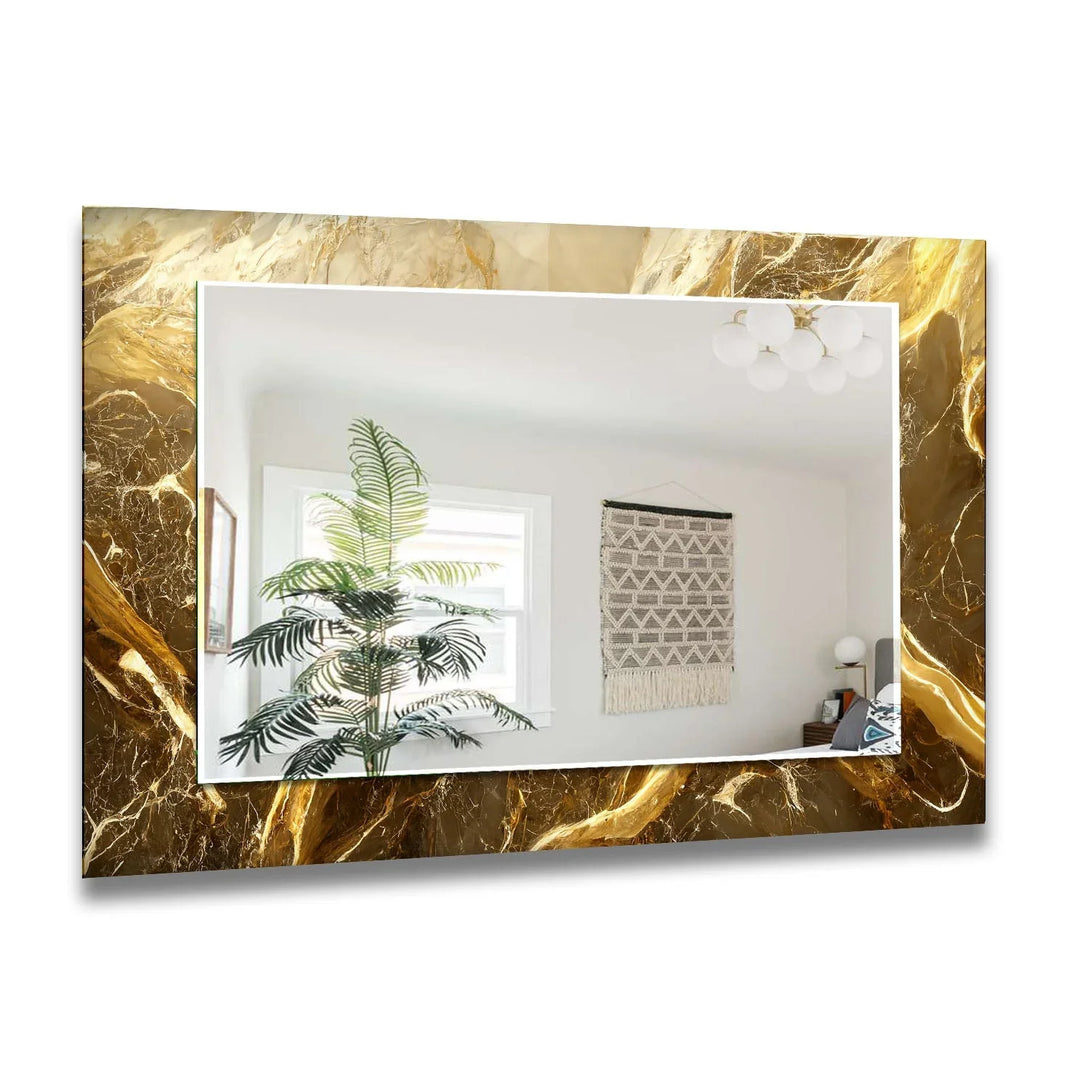
A reflective surface suspended at the globally accepted 57-inch centerline actively prevents psychological rest by triggering an involuntary self-monitoring gaze. Museums like the Musée du Louvre utilize this exact ergonomic measurement because it maps precisely to the 5th-to-95th percentile of adult eye levels, reducing ocular motor strain and cervical spine extension by 15 percent for extended viewing. In a primary residential transition zone, this visual accessibility becomes a distinct psychological liability. Confronting your own reflection the very second you open a solid oak front door forces your brain to inspect your appearance for fatigue, evaluate your posture, and hold tension in your facial muscles. You remain firmly anchored in your self-conscious, public-facing mindset. This reflex directly sabotages the boundary transition theory established by organizational psychologist Blake Ashforth, which states that true relaxation requires a distinct physical threshold to abandon professional hyper-vigilance. The required solution is intentionally dropping the visual horizon. Grounding a heavy piece like the Gold Floor Abstract Mirror against 5-inch MDF hallway baseboards shifts the primary focal point to 48 inches or lower. This low-hung orientation bypasses the eye-level self-monitoring reflex entirely. Your peripheral vision catches the ambient glow of a 2700K Philips Hue floor lamp and the organic texture of an Anatolian Oushak woven wool runner without the cognitive intrusion of your own immediate gaze. You experience the spatial expansion and light-bouncing benefits of the float glass and the elegance of the Art Deco gold frame without visual confrontation. The physical space expands visually, and your conscious mind quiets completely.

Lateral Placements as Boundary Mechanisms
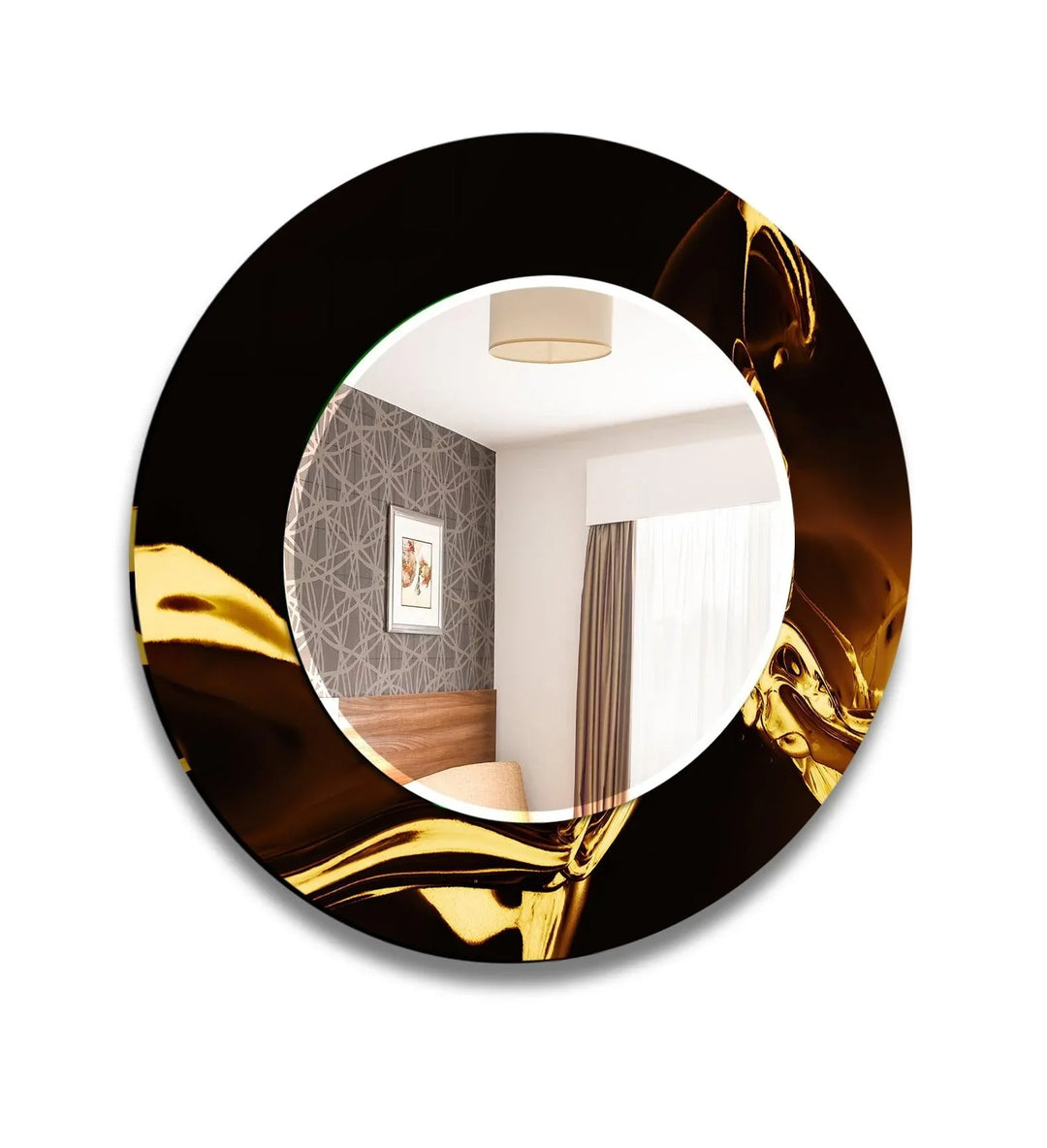
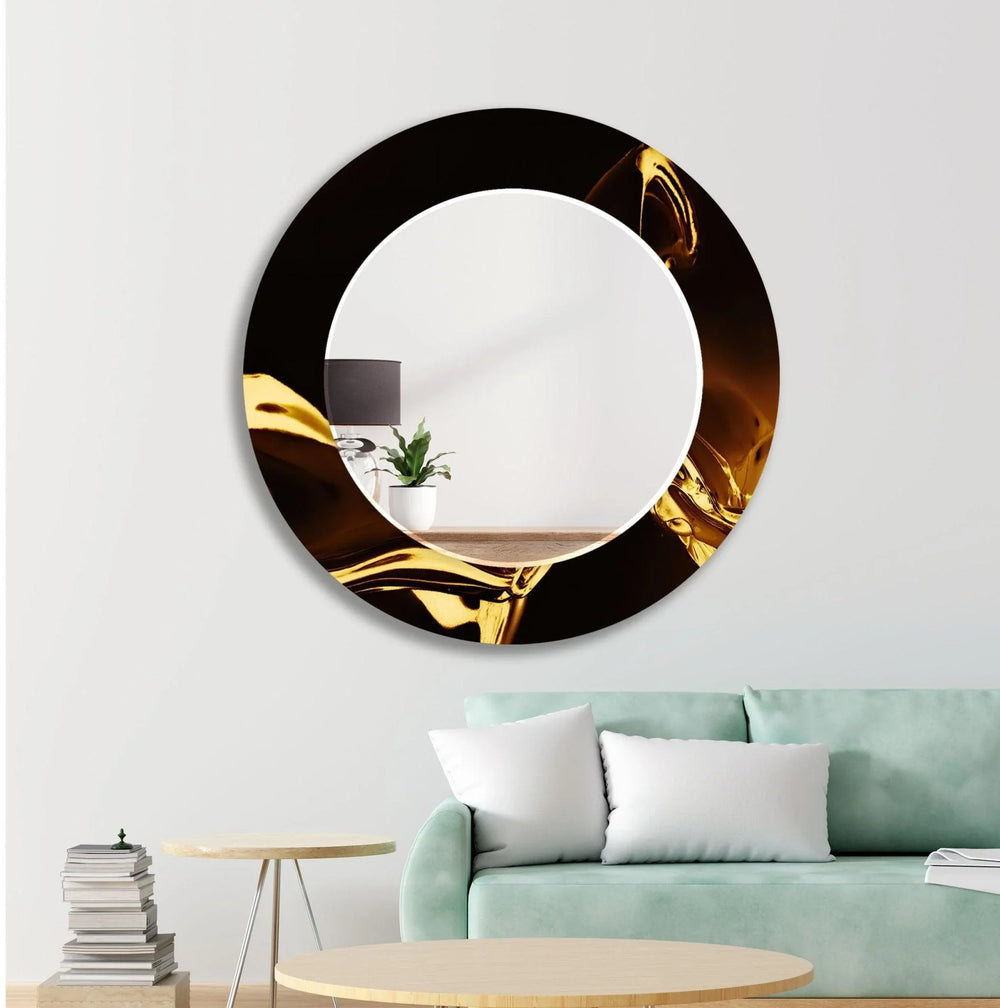
Mirrors mounted exactly perpendicular to the standard 36-inch front door swing interrupt incoming momentum and initiate the necessary psychological buffer dictated by Attention Restoration Theory. Positioning a heavy float glass mirror directly opposite a mahogany entryway acts as a harsh energetic barrier that halts cognitive adaptation. Environmental psychologists Rachel and Stephen Kaplan document that crossing a physical threshold requires specific environmental friction to ease sensory overload. Classical Feng Shui practitioners echo this spatial anthropology, warning that placing highly reflective glass directly opposite the Mouth of Qi reflects positive energy abruptly back out to the street while startling the occupants. A lateral drywall installation solves both the architectural and psychological dilemmas. By aligning the reflective plane at a strict 90-degree angle to the threshold, you manipulate the flow of foot traffic and visual attention. While installing a living room statement piece prioritizes dramatic central focus, a hallway placement directs energy subtly. The Black & Gold Abstract Oval Wall Mirror serves this lateral geometry exactly. Its curvilinear Art Deco frame eases harsh 4000K LED overhead lighting through organic geometry rather than rigid right angles. This lateral orientation slows the energetic velocity of narrow residential corridors, guiding the human eye horizontally rather than aggressively pushing it forward. The reflection widens the residential hallway visually while gently dispersing ambient light deep into adjacent living spaces like the primary lounge. You establish a visual rhythm that forces occupants to linger rather than rush, making the transition entirely effortless.

Controlling Ocular Glare with Matte Paint Finishes
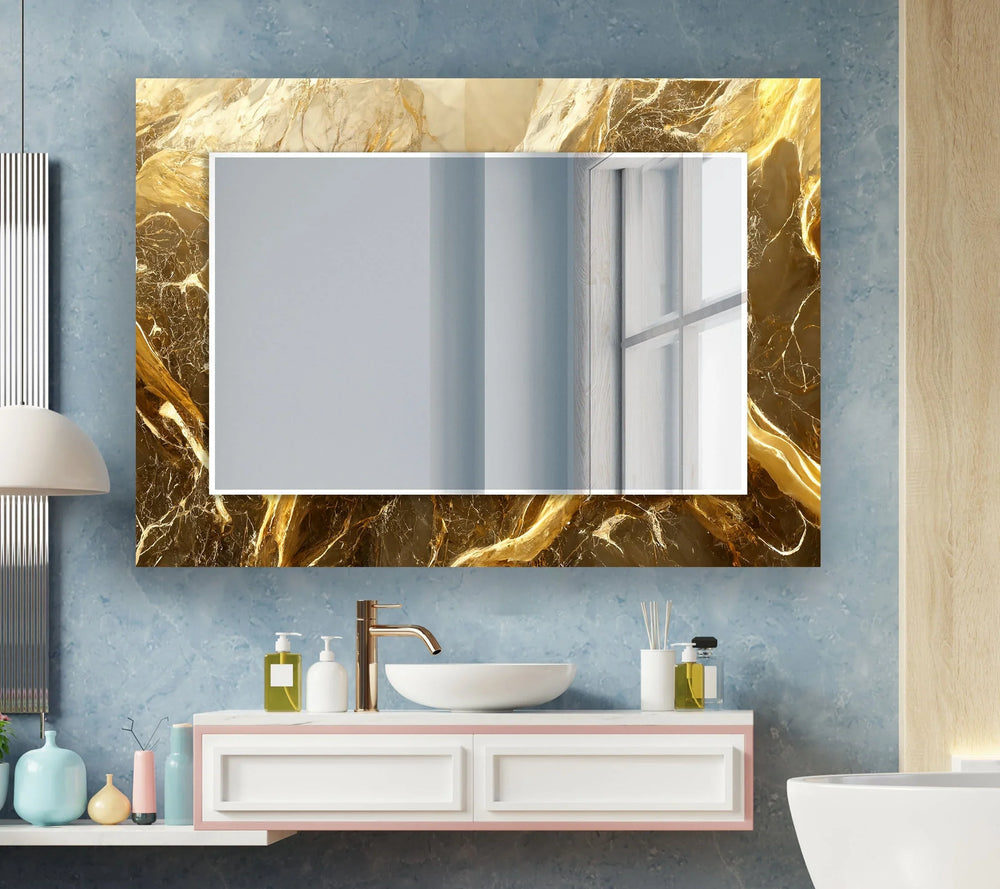
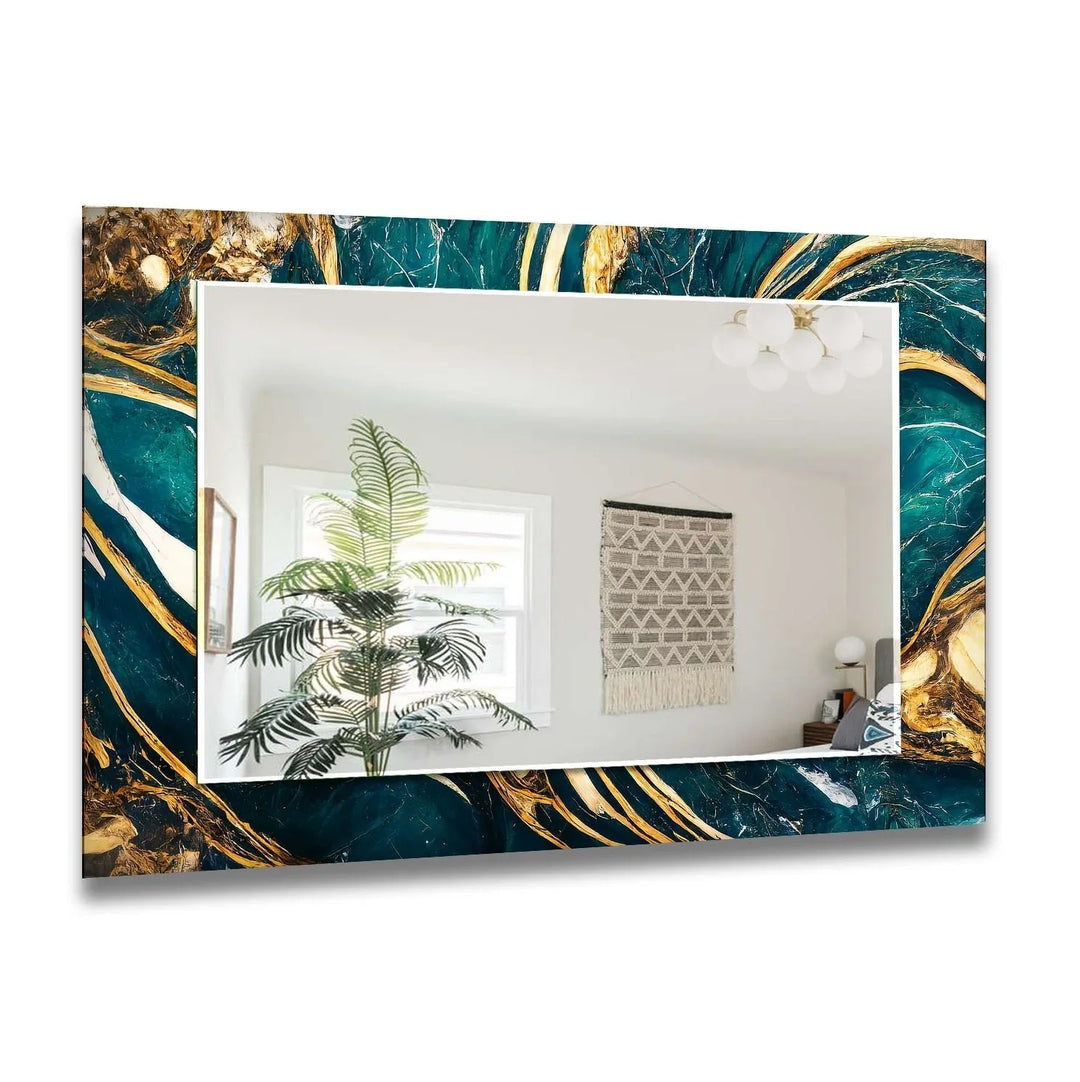
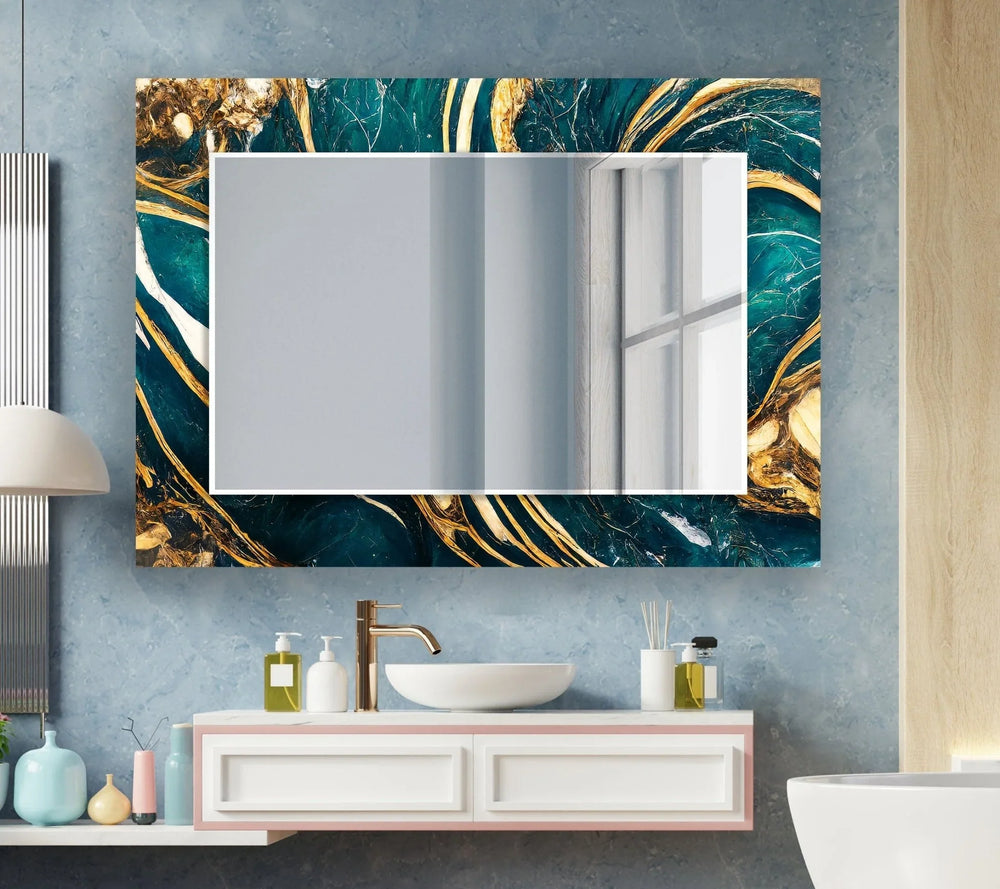
You must control the light scatter precisely to maintain the hallway as a decompression zone. Flat acrylic paints with a Light Reflectance Value (LRV) between 50 and 65 percent prevent the cardiovascular stress response caused by specular hot spots. Artificial lighting drastically alters how metallic frames and architectural wall sheens interact in windowless residential environments. When a high-luster object meets a bright gallery white paint like Farrow & Ball All White carrying an LRV above 80 percent, occupants experience ocular glare due to concentrated light scatter. The resulting visual noise triggers a subconscious squinting reflex that immediately raises resting heart rates and disrupts the neurological decompression process. Conversely, utilizing dark shades with an LRV below 40 percent in a confined space absorbs over 60 percent of ambient light, causing severe light starvation and triggering clinical claustrophobia. Mid-range matte finishes like Sherwin-Williams Accessible Beige SW 7036 absorb excess illumination while preserving the warm color temperature of gilded frame edges. Unlike an illuminated vanity mirror in Carrara marble bathroom settings, the entryway requires this specific subdued backdrop to function effectively. The Abstract with Gold Details Wall Mirror integrates seamlessly with matte surfaces to diffuse the sharp reflections of its brass metallic accents, ensuring the piece acts as a gentle light source rather than a blinding focal point. This careful modulation of surface luster prevents the harsh shadows typical of poorly lit transitional corridors. You avoid the visual exhaustion associated with high-contrast commercial spaces like clinical waiting rooms. Depth replaces glare, and visual calm is restored.

Avoid Spatial Distortion at the Corridor's End
You must utilize these heavy architectural objects to expand width, never depth. Oversized 120cm x 180cm reflective planes placed at the end of a corridor induce mild claustrophobia by generating an unsettling infinite tunnel effect. Interior designers use wall mirrors to aggressively push structural walls back in poorly lit areas, but placing one at the absolute end of a long residential axis distorts spatial proportions severely. It forces an abrupt psychological stop rather than facilitating a smooth entry transition into the main living quarters. Your visual cortex struggles to process the artificial depth, misinterpreting the flat reflection as a physical continuation of the drywall architecture. This spatial confusion forces the human brain to remain on high alert, scanning for navigational markers that do not exist. The Golden Transition Marble Wall Mirror provides the exact visual weight required for long lateral walls. Its heavy Italian Carrara marble texture anchors the eye horizontally, deliberately pulling attention away from the hallway vanishing point. By focusing exclusively on lateral expansion, you mitigate the constricting sensation of narrow suburban Tract home architecture. The eye follows the varied textures of the stone and the warm luster of the 24-karat gold leaf accents, grounding the occupant in the present physical space rather than a manufactured optical illusion. Visual boundaries soften, and the narrow corridor breathes.

Softening Architectural Rigidity Through Organic Geometry
Curved metallic borders inside a corridor dominated by right angles significantly reduce cortisol levels associated with austere residential environments. Standard architectural entryways consist entirely of hard, 90-degree intersections. Pine door frames, 6-inch MDF baseboards, sharp drywall corners, and wide-plank European oak flooring create a rigid, highly structured grid. The human brain associates dense grid patterns with high-stress urban environments and corporate commercial demands. Attention Restoration Theory dictates that breaking these predictable geometric grids with biophilic design elements signals immediate environmental relief to the central nervous system. Unlike a harsh, rectangular standard-issue contractor mirror, an arched or oval silhouette interrupts the severe linearity of the hallway. The warm, 2700K luster of the gilded edge further softens the transition between the flat float glass and the matte acrylic wall. This contrast in shape and material provides a resting point for the macula, slowing visual processing speeds measurably. You introduce the soothing unpredictability of the natural world into a strictly engineered architectural space. Stark hallway geometry yields to a more fluid, restorative atmosphere, and the space resolves completely.
Hallway mirrors act as far more than decorative tools for narrow entryway vestibules; they profoundly impact human behavioral psychology. These reflective surfaces function as strict architectural boundary mechanisms, carefully orchestrating your daily transition from a vigilant public state to a grounded private reality. By specifically lowering your gold wall mirror below the 57-inch centerline, you permanently bypass the self-monitoring gaze, ensuring your physical home continually forces the psychological role exit required for deep, restorative relaxation. Managing ocular glare with matte 50 percent LRV paints like Farrow & Ball Estate Emulsion alongside this lowered installation height engineers a precise cognitive shift. The residential environment commands rest. Transition corridors require as much psychological consideration as a primary living room or master suite, demanding biophilic elements that respect the neurobiology of entering a home. Rejecting standard gallery ergonomics and embracing lateral placement stops the futile attempt to trick the visual cortex with artificial depth. You build a structured environment that actively dismantles daily cortisol accumulation. Selecting a meticulously proportioned gold wall frame anchors this essential psychological transition and permanently establishes your home's decompression zone.