

Budget Planning: The Missing Mathematical Element in Bathroom Art
Calculating the total ten-year cost of moisture defense dictates your material strategy: either invest $150 in a permanent moisture-sealed frame for cheap sacrificial prints, or purchase a $120 direct-to-acrylic piece that eventually succumbs to thermal delamination. Hanging permanent artwork requires a structured mathematical approach. Measuring a 50-square-foot space with a quick glance and ignoring the 2-inch depth of a Nielsen Bainbridge frame leads directly to warped 80lb cellulose paper and irreversible water damage. Securing permanent compositions demands prioritizing spatial chemistry over initial aesthetic appeal. Define your environmental constraints before looking at Pantone color palettes. Establishing a successful plan for orchid botanical prints hinges on treating moisture protection as a primary structural investment rather than an afterthought.
How Humidity Degrades Unprotected Paper
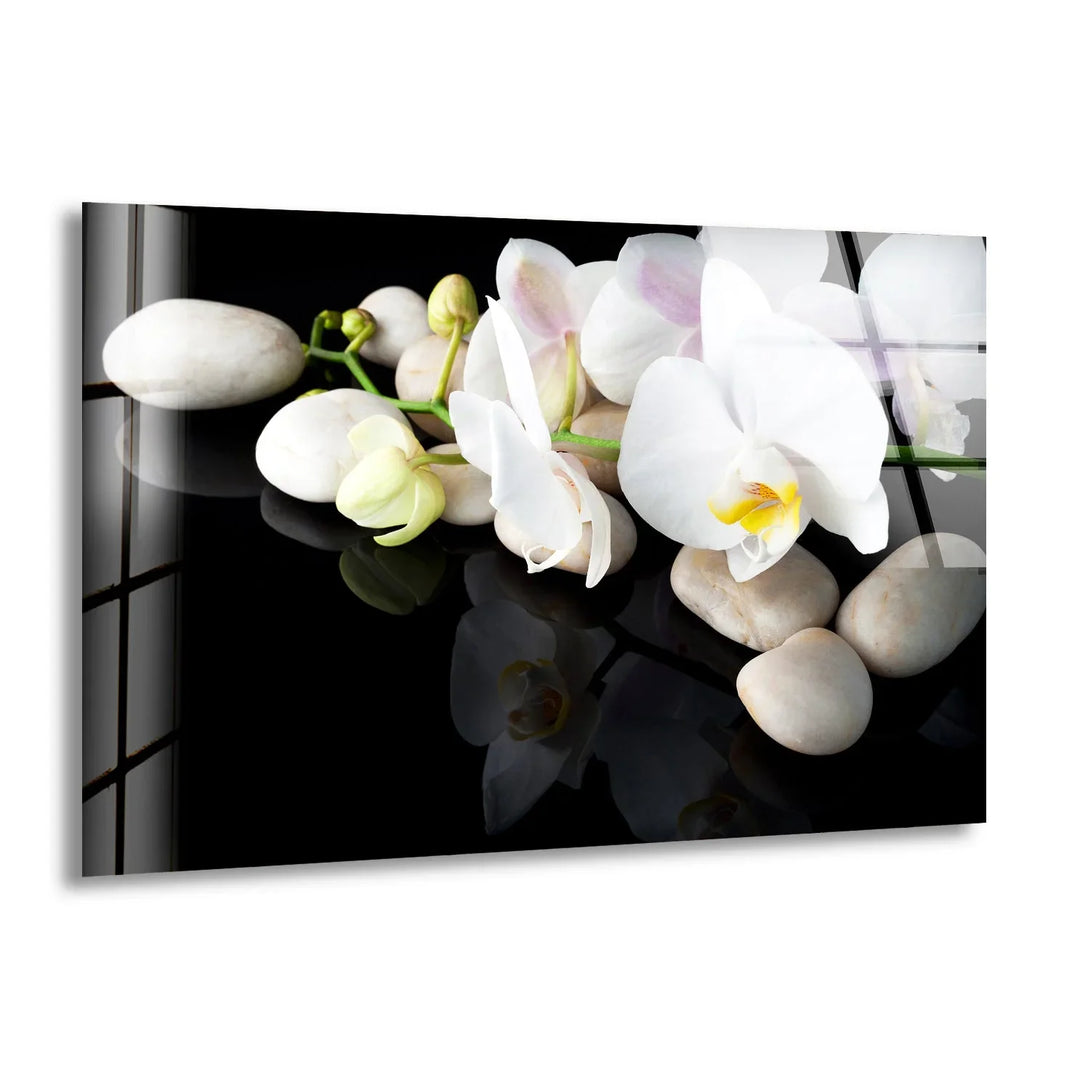
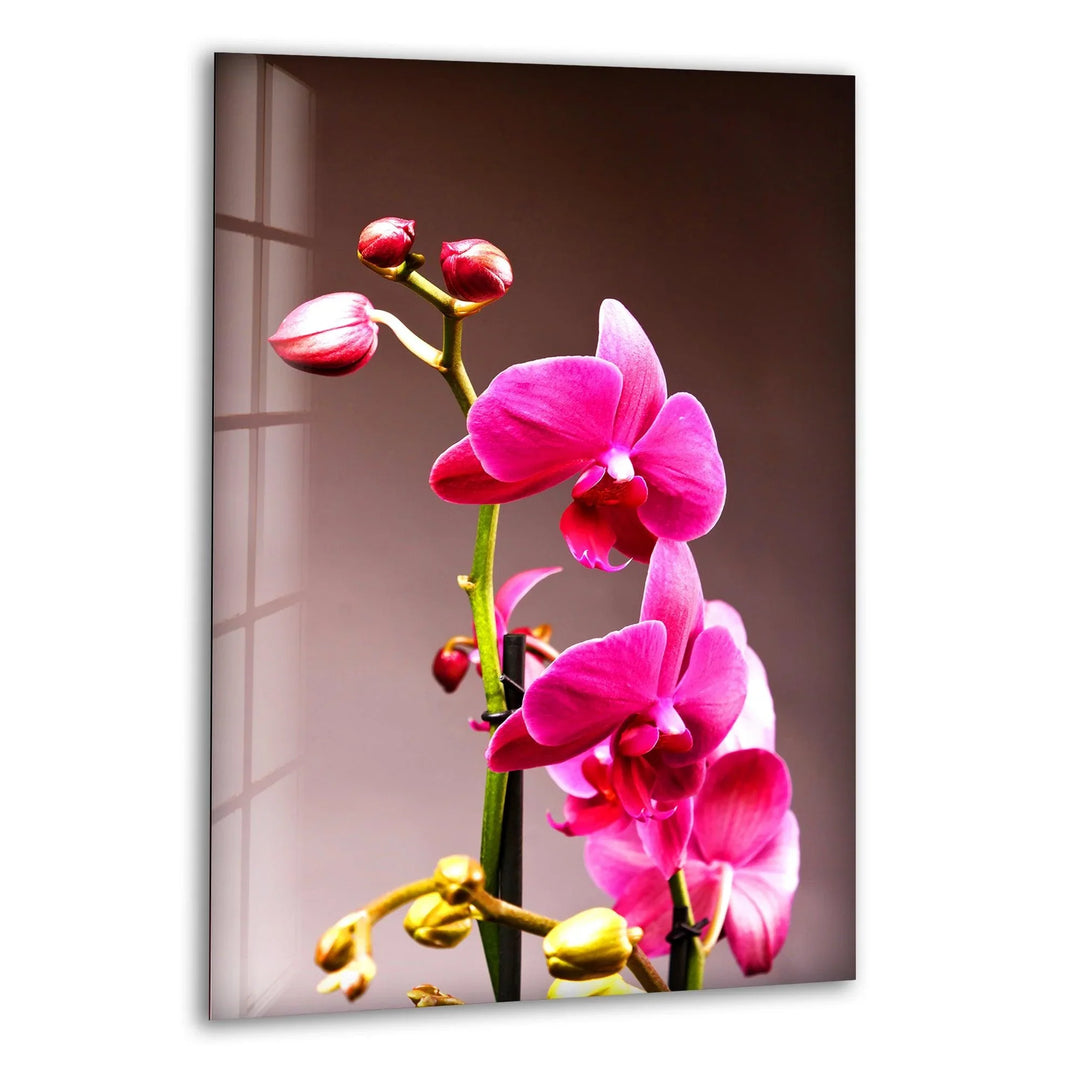
High humidity environments dictate the use of synthetic substrates like DiBond sealed aluminum or rigid PMMA Plexiglas to prevent rapid dimensional warping. Standard 80lb Epson matte cardstock possesses no synthetic moisture barrier. The porous material absorbs ambient water instantly when relative humidity spikes to 100 percent during a 105-degree Fahrenheit shower. This triggers severe paper cockling. Raw cotton fibers swell while the water-resistant HP Latex ink remains rigid. Active Aspergillus mold spores germinate on these damp organic surfaces within 24 to 48 hours in poorly ventilated 60-square-foot en-suite bathrooms. Poly methyl methacrylate (PMMA) acrylic sheets offer a reliable, inert alternative. They exhibit 0.3 percent water absorption rates under ASTM D570 materials testing. The non-porous structure completely blocks steam. The Pink Orchid Glass Wall Art functions correctly in this demanding environment because its rigid PMMA acrylic composition prevents the high-saturation Pantone 212C magenta hues from bleeding when exposed to sudden 20-degree temperature drops.

Assess your Panasonic WhisperCeiling bathroom exhaust fan capacity in cubic feet per minute (CFM) before purchasing any cellulose-based botanical bathroom prints.
Calculating the True Price of Framing
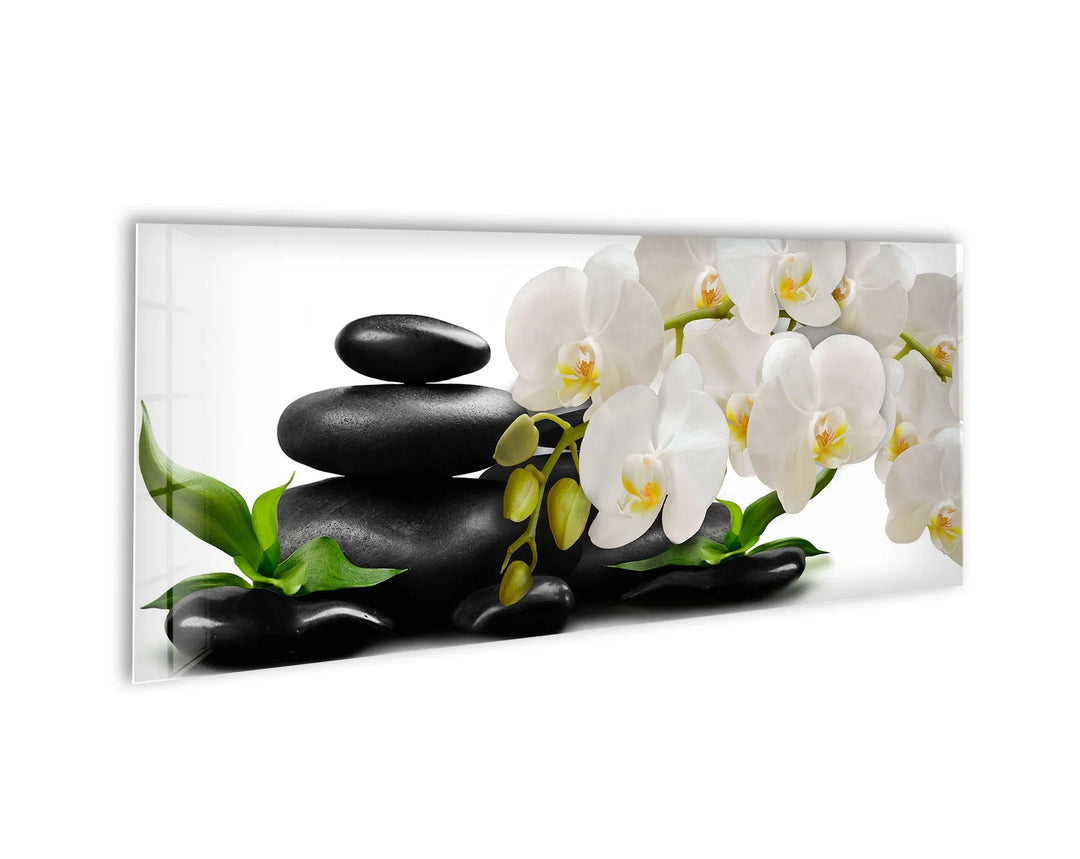
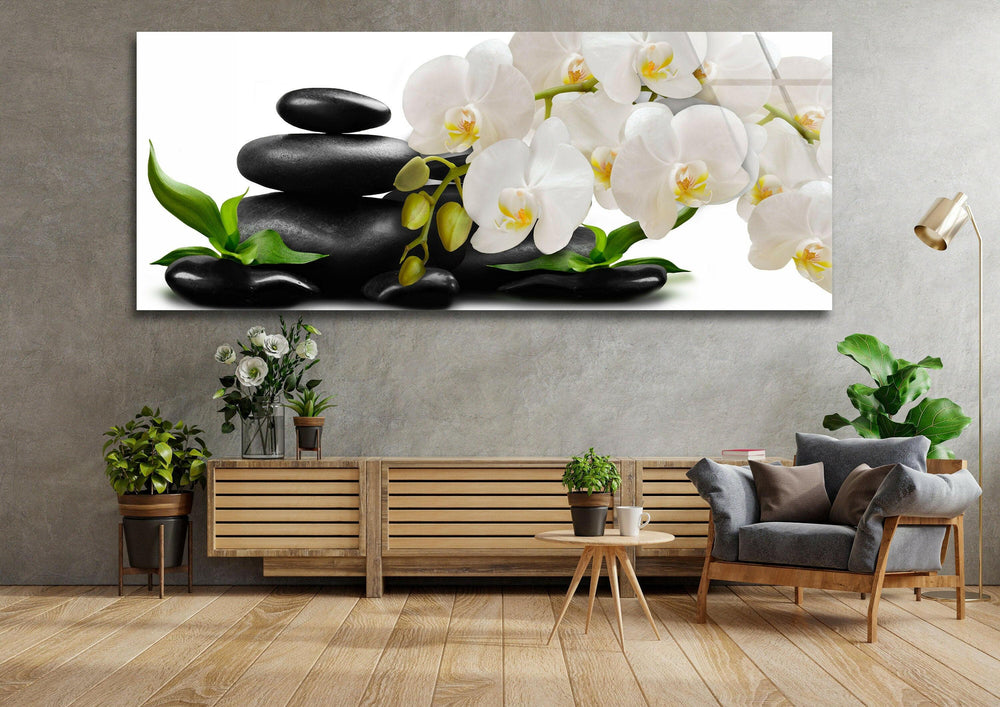
Calculating the true ten-year cost of moisture defense reveals a mathematical divide: choose a $150 sealed frame protecting a replaceable $15 print, or a $120 unmounted acrylic panel facing long-term thermal delamination. Analyzing the total cost of moisture defense turns a direct-printed acrylic panel into a standalone investment rather than a recurring cost. A raw 16x24-inch latex paper print costs exactly $15 to $30 upfront. Securing that Epson Enhanced Matte paper against steam requires a Tyvek sealed dust cover back, an acid-free Peterboro mat board creating a 5mm air gap, and lightweight Tru Vue Optium Museum Acrylic glazing rather than standard heavy silica glass. This specialized moisture-resistant framing package ranges exactly from $90 to $199. Direct-to-substrate UV-cured acrylic prints remove this secondary expense entirely. The 0.25-inch thick acrylic piece retails between $83 and $120 and arrives ready to hang via French cleats. Calculate your financial limits early in the architectural design process. The White Orchids in Golden Glow Elegant Botanical Canvas Print demonstrates how eliminating a bulky external frame allows the warm yellow ochre (Hex #CC7722) hues to define the room palette without visual interruption from a 2-inch thick brass border.

Calculate your combined print and frame estimate, and bypass cellulose paper entirely if the total structural cost exceeds the $150 budget ceiling.
Why Framing Strategies Favour Rotational Art
Treating a $15 paper print as a sacrificial medium provides a highly adaptable strategy over a multi-decade timeline. Rapid thermal cycles between 105-degree showers and 65-degree ambient drafts cause rigid PMMA acrylic substrates and UV-cured polymer ink layers to expand and contract at different rates. This progressive thermal stress causes irreversible ink delamination over exactly ten years. You must then discard the entire 16x24-inch piece. A $15 Mohawk Superfine cardstock print housed in a durable Nielsen Profile 11 anodized aluminum gallery frame breathes naturally. It absorbs and releases airborne moisture slowly. This setup minimizes long-term waste. When the paper eventually warps or mildews after 36 to 60 months, the expensive archival frame remains fully preserved. You swap in fresh high-resolution TIFF botanical image files cheaply. The Tranquil Orchid Elegance Delicate Pink Orchid Canvas Wall Art illustrates this rotational approach, offering a muted pastel pink (Pantone 13-1520) composition that you swap for darker charcoal grey tones as seasonal interior design trends shift.

Secure a high-quality brushed aluminum Nielsen gallery frame with 3M silicone backing tape to establish a permanent housing for rotating 80lb matte prints.
The Metrics of Safe Installation
Wall placement dictates the long-term survival of your artwork regardless of the chosen material. Avoid hanging any framed floral lithographs directly above a Kohler porcelain bathtub, inside a tiled walk-in shower enclosure, or adjacent to a primary double-sink vanity basin. Condensation pools rapidly in these high-humidity micro-zones. The safest location is the USG Sheetrock drywall opposite the vanity, directly in the path of the 110-CFM exhaust fan airflow. Proper installation requires precise spatial alignment using a Stanley laser level to avoid moisture traps.
- Locate the wall space directly opposite your primary vanity mirror or centered above the brushed-nickel towel rack.
- Measure and mark the central focal point precisely 145cm from the bathroom floor tile to align with standard adult eye level.
- Mount the 50lb drywall anchors securely to ensure the center of the frame sits directly in the active exhaust fan draft pathway.
The Flying Duck Orchid Glass Wall Art demands this specific 145cm mounting height because its complex geometric patterns require exact eye-level viewing angles to capture ambient LED 3000K room light off the PMMA acrylic glazing.

Wipe the Tru Vue acrylic surface once every 90 days using a dry Zwilling microfiber cloth and a single drop of Dawn mild dish soap to safely lift aerosol hairspray residue.
Finalizing Your Material Selection
Forecasting the total cost of moisture protection over a ten-year horizon is the core requirement of architectural budget planning. Your 10-year moisture defense calculation dictates the outcome: commit $150 for an aluminum moisture-sealed frame protecting rotational sacrificial prints, or accept that a $120 direct-to-acrylic piece falls victim to thermal delamination. You face a distinct choice between the immediate sleekness of a floating PMMA acrylic panel and the pragmatic flexibility of a sealed Nielsen metal frame containing a replaceable Epson matte paper print. A direct-printed piece offers zero upfront framing costs but guarantees the long-term risk of UV-ink thermal delamination. Framed cardstock prints survive only if you invest heavily in the initial Tyvek-sealed protective housing. Make your structural material choice early in the bathroom renovation timeline. Avoid Windex and ammonia-based glass cleaners entirely to prevent chemical micro-fissures in synthetic glazing. Evaluate your room relative humidity levels using a digital hygrometer, calculate the $150 required protective measures, and build a concrete dimensional strategy to support your orchid decor investments.